
Australia High-Speed Rail 2026: New Electric Network Connecting Sydney, Melbourne, and Brisbane
Australia is transforming East Coast transit with a 1,700km high-speed electric rail network, slashing Sydney-to-Newcastle travel to 60 minutes and offering a sustainable alternative to domestic flights.

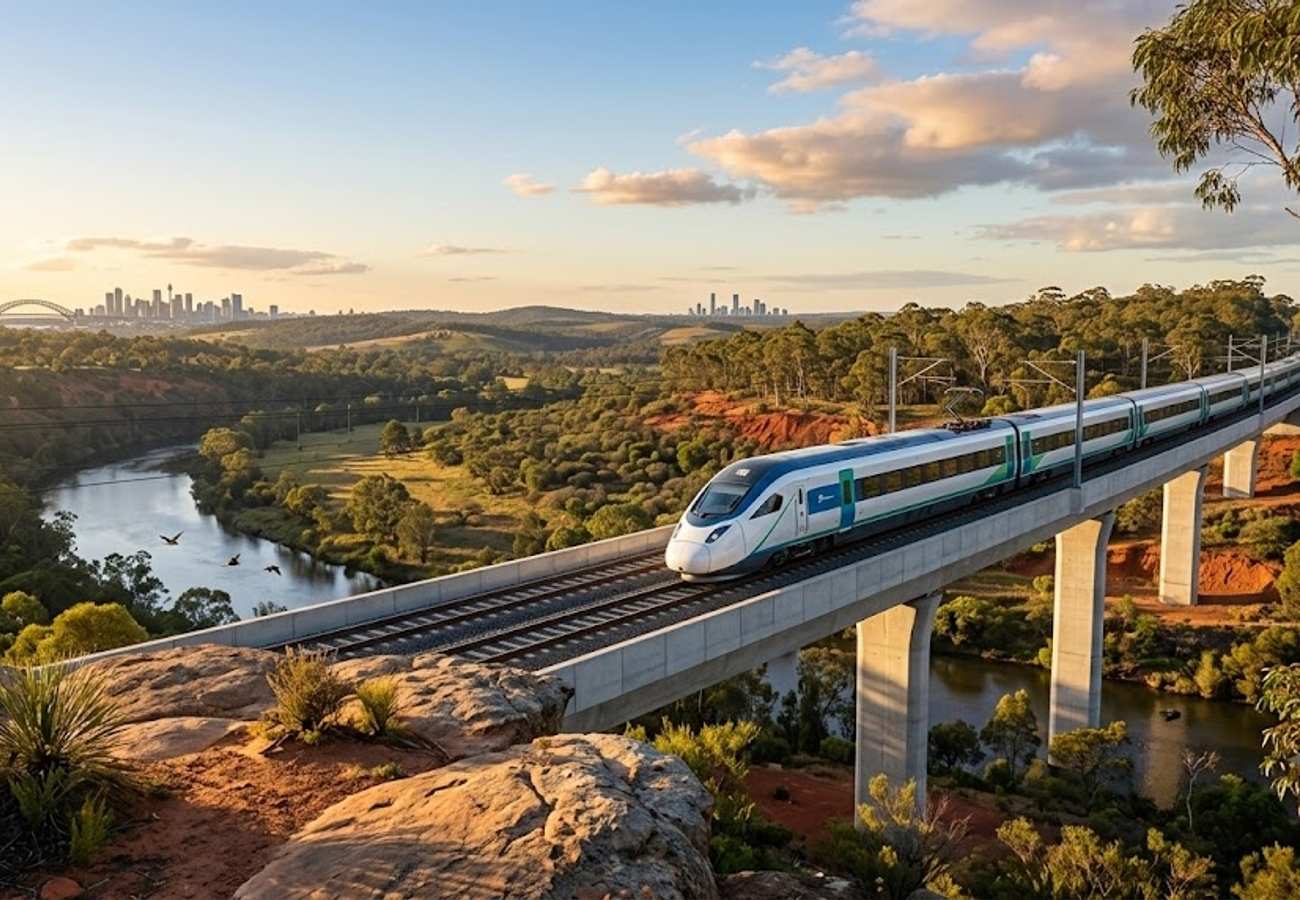
Image generated by AI
Are you tired of the airport security grind for short-haul trips across Australia's East Coast? Starting with the rollout of the new electric rail network, you can now swap clogged freeways and overcrowded terminals for a seamless, downtown-to-downtown transit experience.
The East Coast High-Speed Rail Transformation
Australia is currently executing a massive overhaul of its eastern transport spine, implementing a dedicated high-speed electric rail network that spans 1,700 kilometres. This project, governed by the High Speed Rail Authority Act 2022, is designed to move passengers at operational speeds of up to 320 kilometres per hour.
The primary objective is to decarbonize national mobility in alignment with the Climate Change Act 2022, which targets a 43 percent reduction in emissions by 2030. By utilizing isolated rail lines that avoid heavy freight interference, the network ensures high-frequency scheduling and reliability that traditional regional trains cannot match. The project is being built using sustainable materials, including green steel produced via hydrogen energy and low-carbon geopolymer concrete.
Route and Schedule Details
The rollout is divided into strategic stages, beginning with the most densely populated corridors before extending to the northern and southern hubs.
| Route | Frequency | Aircraft/Train | Duration | Status |
|---|---|---|---|---|
| Sydney Central $\rightarrow$ Newcastle | High-Frequency | Electric HSR | 60 Minutes | Stage 1 Priority |
| Central Coast $\rightarrow$ Sydney/Newcastle | High-Frequency | Electric HSR | 30 Minutes | Stage 1 Priority |
| Sydney $\rightarrow$ Melbourne | Planned | Electric HSR | Under 3 Hours | Future Phase |
| Sydney $\rightarrow$ Brisbane/Gold Coast | Planned | Electric HSR | Planned | Future Phase |
| Sydney $\rightarrow$ Canberra | Planned | Electric HSR | Planned | Future Phase |
Traveler Logistics Guide
For those planning to integrate this new system into their travel itineraries, the shift from air to rail requires a change in how you book and move.
Booking and Check-in Unlike the traditional airport experience, the high-speed rail network focuses on "downtown-to-downtown" transit. You will no longer need to account for the 2-3 hour pre-flight arrival window. Digital ticketing is the standard, and because there are no TSA-style security queues for rail, arriving 15-20 minutes before departure is generally sufficient.
Optimal Connection Strategies If you are traveling between Sydney and Melbourne, the goal is to keep total travel time under three hours. When rail travel hits this threshold, it typically captures 70 to 80 percent of the passenger traffic from airlines. To optimize your trip:
- Use the Australian Government Department of Infrastructure portal to check the latest corridor openings.
- Prioritize rail for trips under 500km to avoid the suburban terminal transfers associated with Sydney Kingsford Smith Airport or the new Western Sydney International Airport.
Baggage and Customs Since these are domestic electric lines, there are no customs checks between cities like Sydney, Melbourne, and Brisbane. Baggage policies are significantly more lenient than those of budget airlines, though you should still verify the specific carriage limits for the high-speed sets.
Ground Transport Integration The network is designed around "transit-oriented developments." This means that stations in regional hubs like Gosford, Lake Macquarie, and the Hunter Valley are integrated with local transport. I recommend using local ride-share or municipal bus links directly from the HSR terminal to your final destination to avoid renting a car.
Regional Connectivity Impact
This infrastructure is doing more than just moving people faster; it is reshaping where people live and work. By reducing the commute from regional centers like Maitland, Wollongong, and Goulburn to under an hour, the high-speed rail is decentralizing housing demand away from the hyper-congested inner suburbs of Sydney and Melbourne.
The financial scale of this project is immense. The federal government began with a $659.6 million allocation for the initial two-year planning phase. The construction of Stages 1A and 1B (Sydney to Newcastle) is estimated at $61.2 billion, with Stage 1C adding another $32.4 billion, totaling an initial investment of $93.6 billion. To fund the remainder of the 1,800-kilometer network, the High Speed Rail Authority is utilizing "land value capture," where re-zoning land near new stations is expected to generate between $48 billion and $140 billion in revenue.
For the traveler, this means that regional cities are becoming more vibrant economic zones with better amenities, making them viable options for long-term stays or "work-from-anywhere" setups. You can track the progress of these urban developments through the National Rail Corporation or relevant state transport authorities.
FAQ: Australia High-Speed Rail 2026
Do I need a transit visa for these rail routes? No. These are domestic routes within Australia. If you already hold a valid Australian tourist or work visa, you can travel freely between these cities.
How long is the new Sydney to Newcastle trip? The express commute has been reduced from 150 minutes to just 60 minutes.
Can I check bags through like at an airport? No, high-speed rail typically operates on a carry-on basis with dedicated luggage racks. There is no "check-in" baggage system similar to airlines.
Is the train fully electric? Yes, the trains operate on 100 percent renewable energy sourced from solar, wind, and battery assets via long-term Power Purchase Agreements.
The era of the short-haul flight is ending; the era of the electric corridor has arrived.
Related Travel Guides
Disclaimer
This article is for informational and educational purposes only. It does not constitute legal, financial, or professional advice. While we strive to provide accurate and up-to-date information, travel policies, regulations, and conditions change rapidly. Always verify information with official sources before making travel decisions. Nomad Lawyer makes no representations about the accuracy, reliability, completeness, or suitability of the information provided. Readers should consult qualified professionals for advice specific to their circumstances. The views expressed in this article are those of the author and do not necessarily reflect the views of Nomad Lawyer.
Kunal K Choudhary
Co-Founder & Contributor
A passionate traveller and tech enthusiast. Kunal contributes to the vision and growth of Nomad Lawyer, bringing fresh perspectives and driving the community forward.
Learn more about our team →