
Australia Issues Emergency Travel Warnings for Middle East Amid Iran-US Tensions and Gulf Aviation Disruptions 2026
Australia has updated travel advisories for 14 Middle Eastern nations, citing missile threats and airspace uncertainty that could disrupt global flight corridors and transit hubs in 2026.

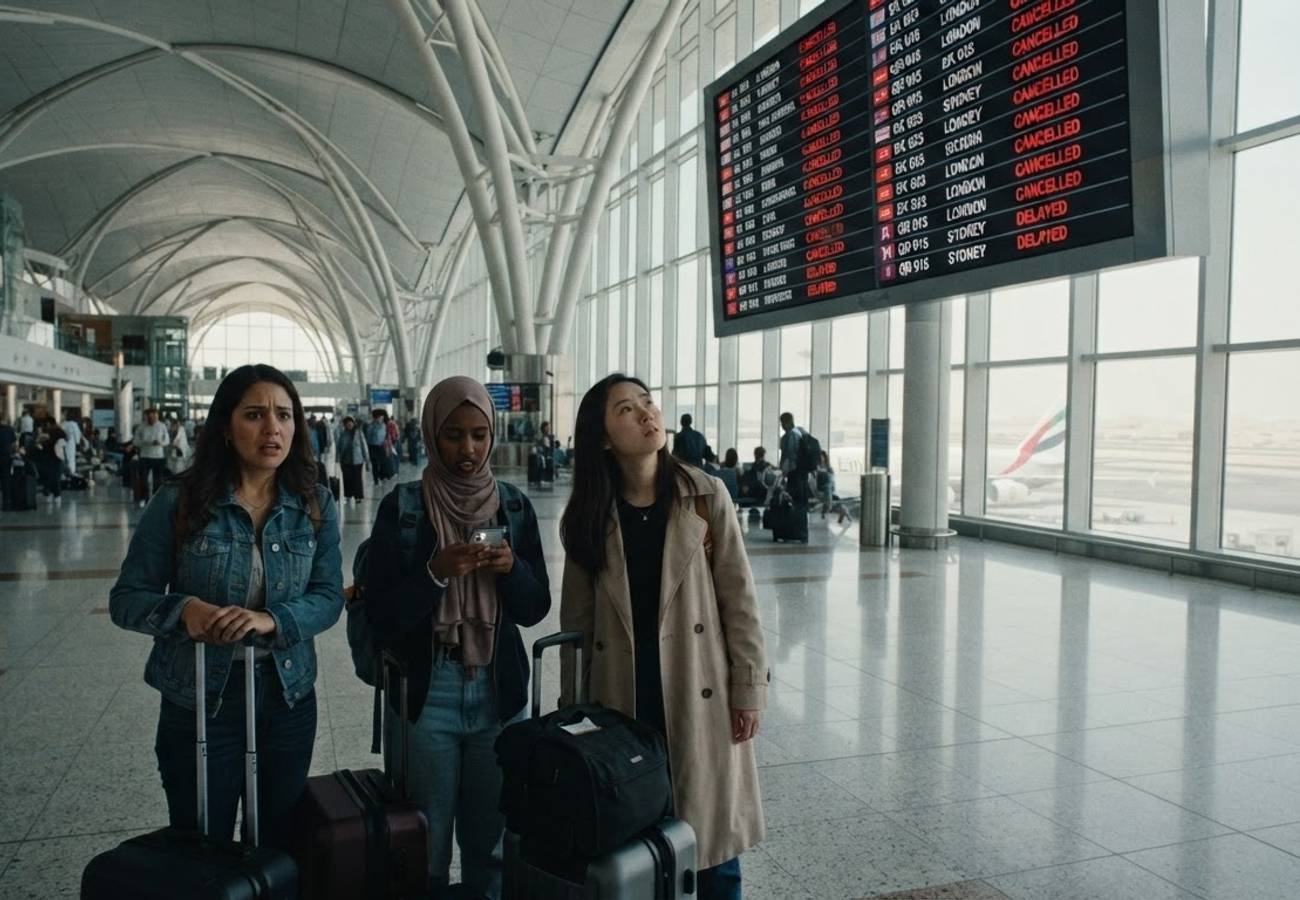
Image generated by AI
Australia has tightened its Middle East travel warnings as renewed military exchanges between Iran and the United States increase security risks across 14 nations. The updated advisory warns of missile threats, airspace instability, and potential flight disruptions affecting major global aviation hubs.
The Australian government has issued a strengthened security advisory for international travellers, focusing on the unpredictable environment in the Middle East. The guidance emphasizes that rising geopolitical tensions are directly impacting the stability of regional airspace, which serves as a critical link for passengers travelling between Australia, Europe, Asia, and North America.
Regional Security Risk Classifications
The updated advisory categorizes Middle Eastern destinations based on the severity of current security conditions. A significant number of countries are now under high-risk warnings due to armed conflict, instability, and the potential for sudden military escalations.
| Risk Level | Affected Countries | Primary Concerns |
|---|---|---|
| Do Not Travel | Iran, Iraq, Lebanon, Palestine, Syria, Yemen | Armed conflict, security instability, limited travel services |
| Reconsider Travel | Bahrain, Israel, Jordan, Kuwait, Oman, Qatar, Saudi Arabia, UAE | Rapidly changing security conditions, regional tensions |
Aviation Impact and Airspace Uncertainty
The Middle East's aviation network is currently highly sensitive to military developments. Recent missile and drone attacks have forced carriers to reassess flight paths and safety procedures. Major international aviation centers, specifically airports in Dubai, Abu Dhabi, Doha, Bahrain, and Kuwait, have already experienced temporary operational disruptions.
While airport operations have largely returned to baseline levels, the threat of sudden airspace closures or rerouting remains active. Because these Gulf hubs facilitate thousands of weekly international services, any localized security event can trigger a ripple effect of delays and cancellations across global flight schedules.
Traveler Logistics Guide: Navigating Middle East Transit
For passengers utilizing Gulf hubs as connecting points, the current security climate requires a shift in planning and risk management.
Booking and Connections
- Optimal Layover Windows: Increase layover times to a minimum of 4–6 hours. Sudden airspace restrictions can lead to delayed arrivals, risking missed connections.
- Flight Monitoring: Use real-time tracking apps and airline communication channels. Carriers are making rapid decisions on rerouting based on active security feeds.
- Alternative Hubs: Consider routing through non-regional hubs (e.g., Singapore or Istanbul) if your itinerary involves high-risk zones.
Insurance and Documentation
- Policy Verification: Confirm with insurance providers that coverage remains valid for destinations under "Reconsider Travel" or "Do Not Travel" warnings. Many policies are voided when a traveller ignores official government advice.
- Digital Transit Policies: Ensure all digital visas and transit permits are updated, as sudden border policy changes can occur during regional crises.
Airport Navigation
- Arrival Times: Allow additional time for security screenings. Increased regional tensions often lead to more rigorous passenger and baggage checks at major hubs like DXB (Dubai) and DOH (Doha).
Infrastructure Impact Assessment
The current volatility marks a reversal of the stability seen in previous years, which had allowed international tourism in the Gulf to recover. The reliance of the global aviation industry on these specific corridors makes the region a single point of failure for intercontinental travel.
The shift toward "Reconsider Travel" status for the UAE, Qatar, and Saudi Arabia indicates that while these nations remain open for business and tourism, the external security environment is now viewed as a primary risk factor. If tensions escalate further, the region could see a return to widespread flight diversions, significantly increasing operational costs for airlines and travel times for passengers.
Travellers are urged to monitor official government updates and maintain flexible itineraries to mitigate the impact of sudden regional disruptions.
Related Travel Guides
Disclaimer
This article is for informational and educational purposes only. It does not constitute legal, financial, or professional advice. While we strive to provide accurate and up-to-date information, travel policies, regulations, and conditions change rapidly. Always verify information with official sources before making travel decisions. Nomad Lawyer makes no representations about the accuracy, reliability, completeness, or suitability of the information provided. Readers should consult qualified professionals for advice specific to their circumstances. The views expressed in this article are those of the author and do not necessarily reflect the views of Nomad Lawyer.
Raushan Kumar
Founder & Lead Developer
Full-stack developer with 11+ years of experience and a passionate traveller. Raushan built Nomad Lawyer from the ground up with a vision to create the best travel and law experience on the web.
Learn more about our team →