
Australia Cruise Tourism Sector Hits Record 1.45 Million Passengers in 2026 Amid Capacity Crisis
Australia has become the world's fourth-largest cruise market with 1.45 million passengers in 2026, though rising port fees and regulations are driving ships away from domestic ports.

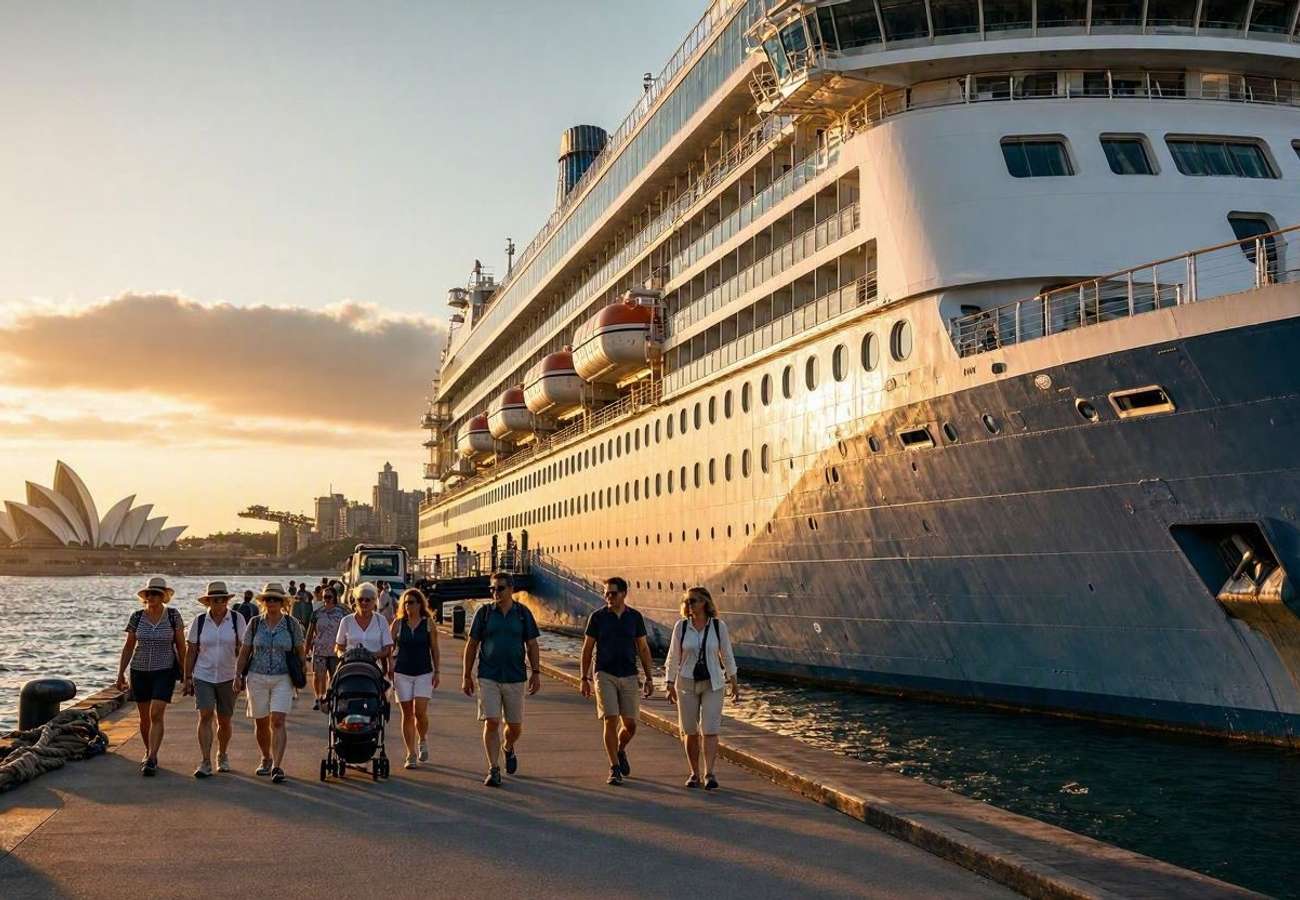
Image generated by AI
[Sydney, September 18, 2026] — Australia has officially ascended to the position of the fourth-largest cruise market globally, recording a record-breaking 1.45 million passengers in 2026. This represents a near 10% surge in passenger volume, shattering previous benchmarks and signaling a massive return of consumer confidence in maritime travel.
The growth is driven by a combination of macroeconomic pressures and a shift in traveler demographics. While the Cruise Lines International Association (CLIA) reports that more than one in twenty Australians embarked on a cruise last year, the industry is grappling with a severe paradox: record-high demand paired with a shrinking number of vessels homeporting in Australian waters.
The Catalyst for Record Growth
The primary driver behind the 9.5% year-on-year increase is the perceived value proposition of all-inclusive cruising. As cost-of-living pressures mount across Australia, families are increasingly turning to fixed-price cruise packages to manage holiday budgets. This shift has pushed passenger numbers well beyond the 2018 pre-pandemic peak of 1.35 million.
However, this growth is not evenly distributed. While regional cruising remains the dominant choice, there is a marked trend toward long-haul outbound travel. Australians are increasingly bypassing domestic ports to start their vacations in international hubs, a move prompted by a tightening supply of ships within the Asia-Pacific region.
Market Impact and Passenger Distribution
The 2026 data reveals a fragmented market where demand is surging but local capacity is contracting. The following table breaks down the current passenger distribution:
| Passenger Segment | Total Count | Year-on-Year Growth | Market Share |
|---|---|---|---|
| Total Passengers | 1.45 Million | ~10% | 100% |
| Local/Regional Cruises | 1.16 Million | 8% | 80% |
| Long-Haul Outbound | 286,000 | 17% | 20% |
The surge in long-haul travel—a 17% increase—indicates that nearly 20% of Australian cruisers now seek destinations outside their immediate region. This shift is partly a reaction to the reduced availability of ships departing from major hubs like Sydney and Melbourne.
What This Means for Travelers
For the average traveler, the "Cruise Paradox" of 2026 creates a mixed experience. While there are more options for international itineraries, booking a cruise departing from an Australian port is becoming more competitive and potentially more expensive.
Passenger Impact Assessment:
- Higher Competition for Local Berths: With fewer ships homeporting in Australia, cabins on domestic departures are filling faster.
- Increased Cost of Local Cruises: Escalating port fees are being passed down to the consumer, potentially eroding the "value" appeal of domestic sailing.
- Shift to International Hubs: Travelers may find better deals and more diverse ship models by flying to international embarkation points rather than sailing from home.
- Demographic Shift: The entry of Millennials and Gen Z into the market is forcing cruise lines to modernize onboard amenities and itinerary pacing.
Regulatory Friction and Capacity Loss
Despite the record passenger counts, the operating environment for cruise lines has deteriorated. The Australian Cruise Association (ACA) and CLIA have warned of a supply-side crisis. Major operators, including Carnival Australia, have publicly reduced their local presence, citing "more favorable market conditions" in other global markets.
The exodus of vessels is attributed to three primary factors:
- Onerous Regulations: Stringent maritime labor conventions and complex border force protocols have increased the administrative burden on operators.
- Prohibitive Port Fees: Australia currently maintains some of the highest port fees in the entire Asia-Pacific region, making it less attractive for ship deployments.
- Infrastructural Bottlenecks: While there is a push toward decentralizing ports away from Sydney and Melbourne, many secondary ports lack the necessary infrastructure to handle modern, high-capacity vessels.
The Australian government is now facing pressure to reform its marine policy and the International Cruising Ships Security plan to prevent further capacity loss. Without these reforms, the industry risks a scenario where record demand exists, but the ships required to service that demand are deployed elsewhere.
FAQ: Australia Cruise Tourism 2026
Why are there fewer ships departing from Australian ports despite record passenger numbers? High port fees and strict regulatory requirements have made Australia less profitable for cruise operators. Consequently, companies like Carnival Australia are deploying vessels to regions with lower overhead costs, forcing more Australians to travel abroad to embark.
Is cruising becoming more popular with younger generations? Yes. 2026 data shows a significant demographic shift, with Millennials and Gen Z increasing their share of the passenger base. This is driving a change in ship design and the types of excursions offered.
How does Australia rank globally in the cruise market? Australia is currently the 4th largest cruise market in the world. It trails the United States (20.56 million passengers), Germany (2.83 million), and the United Kingdom (2.47 million).
Will port fees increase the price of my next cruise? Likely. Because port fees in the Asia-Pacific region are among the highest, cruise lines often offset these costs by increasing ticket prices or adding surcharges to domestic itineraries.
The Australian cruise industry is sailing into a storm of its own making, where record demand meets regulatory resistance.
Related Travel Guides
Disclaimer
This article is for informational and educational purposes only. It does not constitute legal, financial, or professional advice. While we strive to provide accurate and up-to-date information, travel policies, regulations, and conditions change rapidly. Always verify information with official sources before making travel decisions. Nomad Lawyer makes no representations about the accuracy, reliability, completeness, or suitability of the information provided. Readers should consult qualified professionals for advice specific to their circumstances. The views expressed in this article are those of the author and do not necessarily reflect the views of Nomad Lawyer.
Preeti Gunjan
Contributor & Community Manager
A passionate traveller and community builder. Preeti helps grow the Nomad Lawyer community, fostering engagement and bringing the reader experience to life.
Learn more about our team →