
Austin Tech Hub Faces AI Reality Check in Corporate Travel Evolution
A look at how Austin, Texas, as a major corporate travel hub, is experiencing the shift from AI hype to practical digital transformation.

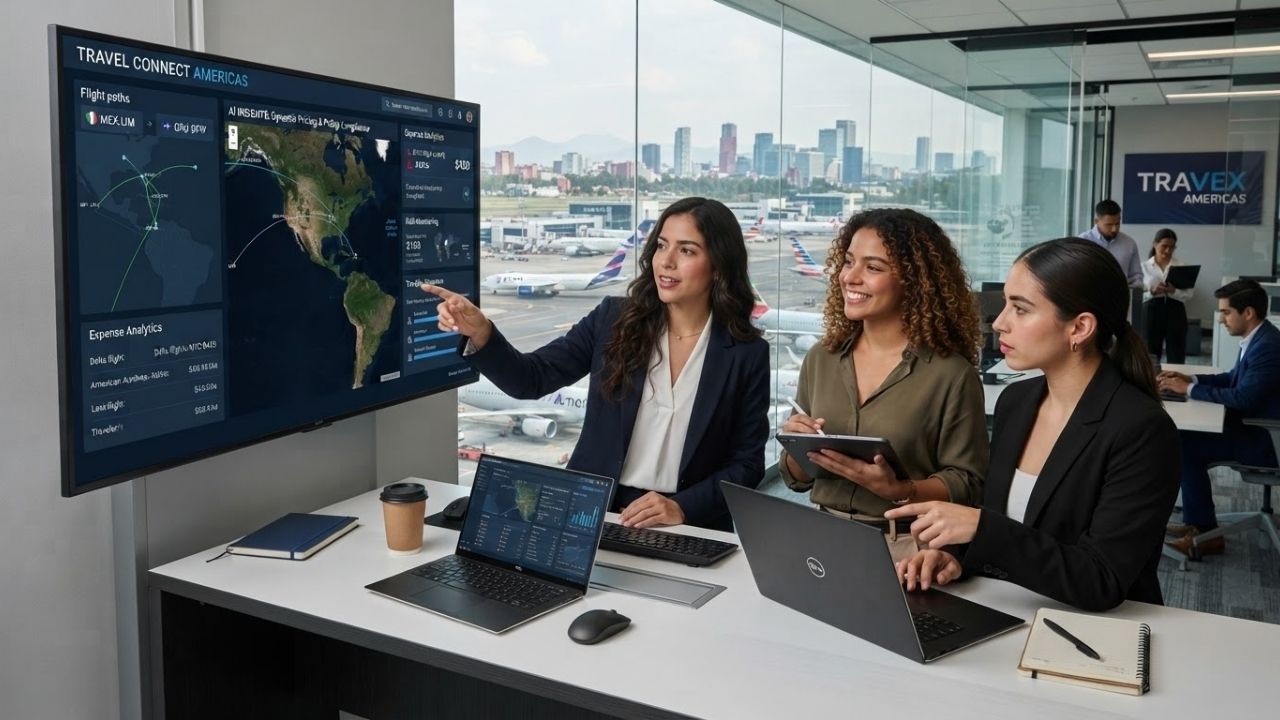
Image generated by AI
Corporate travel buyers navigating Austin’s tech-heavy business corridors are demanding a transition from speculative AI marketing to functional booking systems. As the major Texan technology hub prepares for upcoming business summits, a survey of 200 travel decision-makers reveals significant friction between high artificial intelligence expectations and rigid legacy software.
Austin Corporate Travel Hub and the AI Reality Check
Central Texas has established itself as a primary destination for global corporate travelers and remote executives. Austin, frequently referred to as the silicon hills, sees a constant flow of project managers, software engineers, and corporate event planners who require seamless connectivity. The influx of technology giants, including Tesla, Oracle, and Apple, has established major corporate hubs in the region, bringing thousands of business travelers to the city each week. When these business travelers arrive at Austin-Bergstrom International Airport or check into downtown properties, they expect their logistics to be handled by modern, predictive tools.
However, a new survey of 200 travel decision-makers across the Americas highlights a growing divide between expectations and the current tech stack. Companies are moving past the initial excitement surrounding artificial intelligence. Instead of pilot projects that act as mere marketing features, managers want functional integrations that reduce booking windows, lower overhead costs, and ensure traveler safety. The emphasis has shifted from what technology could do in theory to what it must deliver in practice.
For the corporate traveler on the ground, the immediate impact of this tension is obvious. A system that promises automated rebooking but fails to sync with local flight data causes delays rather than solving them. Corporate buyers now insist that basic system integration and data accessibility must be resolved before companies invest in additional AI features. Business travel tech needs to stop being a hurdle before it can become a strategic priority.
Behind the Screens: Major Integration Obstacles Facing Corporate Planners
The research conducted in anticipation of the Business Travel Show America 2026 points to deep-seated frustrations with the flexibility of current platforms. Rather than demanding brand-new algorithms, buyers are struggling with system updates and basic usability. The underlying problem is that many organizations are attempting to introduce advanced AI capabilities on top of legacy travel systems. These older platforms were built on decades-old Global Distribution System (GDS) architectures that were never designed for modern digital demands. The data outlines the exact hurdles that travel departments face:
- System updates and customization take too long: 44% of respondents cite this as a major frustration, highlighting the slow pace of software vendors.
- Lack of customization options: 41% of buyers find their software platforms too rigid to accommodate unique corporate policies and workflows.
- Additional fees for customization: 37% object to hidden or extra charges for software modifications that should be standard features.
- Poor integration between different tools: 31% report disconnects between booking platforms, expense systems, and HR databases.
- Insufficient access to travel data: 26% are blocked from viewing real-time travel patterns and metrics, limiting their analytical capabilities.
- Slow AI integration: 21% express frustration with the slow pace at which modern predictive features are actually implemented.
This friction directly translates into low user satisfaction. Only 7% of surveyed buyers rate their existing corporate travel technology a perfect 5 out of 5. Meanwhile, 49% score their systems a moderate 3 out of 5, and nearly 14% hand out poor ratings of 1 or 2 out of 5. These figures demonstrate that while business travel has rebounded, the backend systems supporting it are failing to keep pace with the needs of modern organizations.
Grounding Tech: Eco-Tourism and Sustainable Business Mobility in Central Texas
As organizations seek to improve their digital infrastructure, they are also aligning travel policies with environmental sustainability. In Austin, this shift is supported by regional initiatives aimed at reducing the carbon footprint of incoming business delegations. The City of Austin Office of Sustainability and the local Chamber of Commerce encourage corporations to utilize public transit systems and choose accommodation partners with recognized environmental certifications.
Rather than relying entirely on individual rental cars, corporate planners are increasingly integrating shared electric transit options, such as the CapMetro electric bus fleet, into their itineraries. In addition, organizations are partnering with local conservation organizations to offset travel impacts. Delegates visiting the region frequently participate in volunteer activities with the Hill Country Alliance or support urban forestry and watershed protection efforts managed by the TreeFolks organization.
By prioritizing local food sourcing and eco-certified meeting spaces, corporate travel programs can direct their budgets to support the regional economy. Choosing minority-owned culinary businesses in East Austin and utilizing LEED-certified convention facilities ensures that corporate spending directly benefits the local community while lowering transit emissions.
Cultural Etiquette and Local Austin Insider Tips
For corporate visitors traveling to Austin, understanding the local culture is key to a successful trip. The city operates on a casual, community-driven ethos that stands in contrast to more traditional business hubs.
- Off-Peak Visit Windows: To avoid peak lodging rates and severe summer temperatures, schedule business meetings and corporate retreats during late autumn (October to November) or early spring (late February to early March). Be sure to avoid the massive crowds and inflated prices associated with the South by Southwest festival in mid-March.
- Cultural Etiquettes: The local culture is famously relaxed. Boardroom attire in Austin rarely requires formal suits; neat casual wear, including high-quality denim and leather boots, is standard. When engaging with local business owners, respect the community focus on independent trade and avoid pushing aggressive corporate jargon.
- Local Dining Specialties: Skip the standard hotel chains and support local establishments. Experience classic central Texas barbecue at family-owned spots in the area, or visit the food truck parks on South Congress Avenue which support independent culinary entrepreneurs.
- Under-the-Radar Spots: Take a break between meetings at Barton Springs Pool, a natural spring-fed pool located in Zilker Park that maintains a constant temperature of 68 degrees Fahrenheit year-round. Alternatively, take a morning walk along the Ann and Roy Butler Hike-and-Bike Trail to enjoy views of the downtown skyline.
Long-Term Digital and Tourism Outlook for the Texas Capital
The demand for more flexible travel systems is expected to reshape the digital tools used by companies visiting the Texas capital. Travel technology providers are shifting their focus from standalone chat assistants to integrated systems that handle duty of care, real-time tracking, and automated fare mitigation.
The long-term outlook shows that regional travel demands will continue to rise. Visit Austin, the local convention and visitors bureau, projects steady growth in corporate group bookings through 2027. However, the success of these visits will depend heavily on the reliability of the underlying systems.
Corporate travel buyers are no longer willing to buy into technology demonstrations without seeing results. They are demanding structured pilot programs to test integrations, measure return on investment, and verify data security before signing long-term contracts. The future of corporate travel belongs to platforms that can successfully bridge the gap between artificial intelligence promises and actual performance on the ground.
Frequently Asked Questions About Business Travel Tech in Austin
What are the main challenges with corporate travel tech in Austin?
Corporate buyers report that platform updates and customization take too long (44%) and that platforms lack critical customization capabilities (41%). Poor integration between booking tools and expense systems (31%) also remains a significant frustration.
How can business travelers practice sustainable tourism in Austin?
Visitors can utilize CapMetro electric transit services, stay in certified green hotels, and dine at independent, locally-sourced restaurants. Organizations can also coordinate volunteer opportunities with regional conservation groups to offset their visit footprint.
When is the best time to visit Austin for business travel?
The ideal windows are October through November and February through early March. These periods offer pleasant weather and lower lodging rates, provided you avoid major regional festivals like South by Southwest.
Why are companies demanding AI pilot programs?
Given that only 7% of buyers rate their current travel tech as excellent, organizations want to test data accuracy, integration capabilities, and real-time support systems in a trial phase before making major financial commitments.
Navigating the future of business travel requires a balance of advanced system integration and authentic local engagement.
Related Travel Guides
Singapore Airlines and Navan Partner on Advanced NDC Integration for Corporate Travel
EaseMyTrip Launches Resave AI for Automated Flight Fare Protection and Monitoring
The 10 Best Corporate Travel Hacks for Digital Nomads, According to Reddit
Disclaimer
This article is for informational and educational purposes only. It does not constitute legal, financial, or professional advice. While we strive to provide accurate and up-to-date information, travel policies, regulations, and conditions change rapidly. Always verify information with official sources before making travel decisions. Nomad Lawyer makes no representations about the accuracy, reliability, completeness, or suitability of the information provided. Readers should consult qualified professionals for advice specific to their circumstances. The views expressed in this article are those of the author and do not necessarily reflect the views of Nomad Lawyer.
Raushan Kumar
Founder & Lead Developer
Full-stack developer with 11+ years of experience and a passionate traveller. Raushan built Nomad Lawyer from the ground up with a vision to create the best travel and law experience on the web.
Learn more about our team →