
Austin-Bergstrom Travel Chaos: Delta Air Lines Grounds Flights Triggering Severe Airport Disruptions Across the US and Mexico: Airline News
A wave of Delta Air Lines flight cancellations at Austin-Bergstrom International Airport triggers massive travel chaos, severing connections to San Diego, Denver, and Los Cabos.

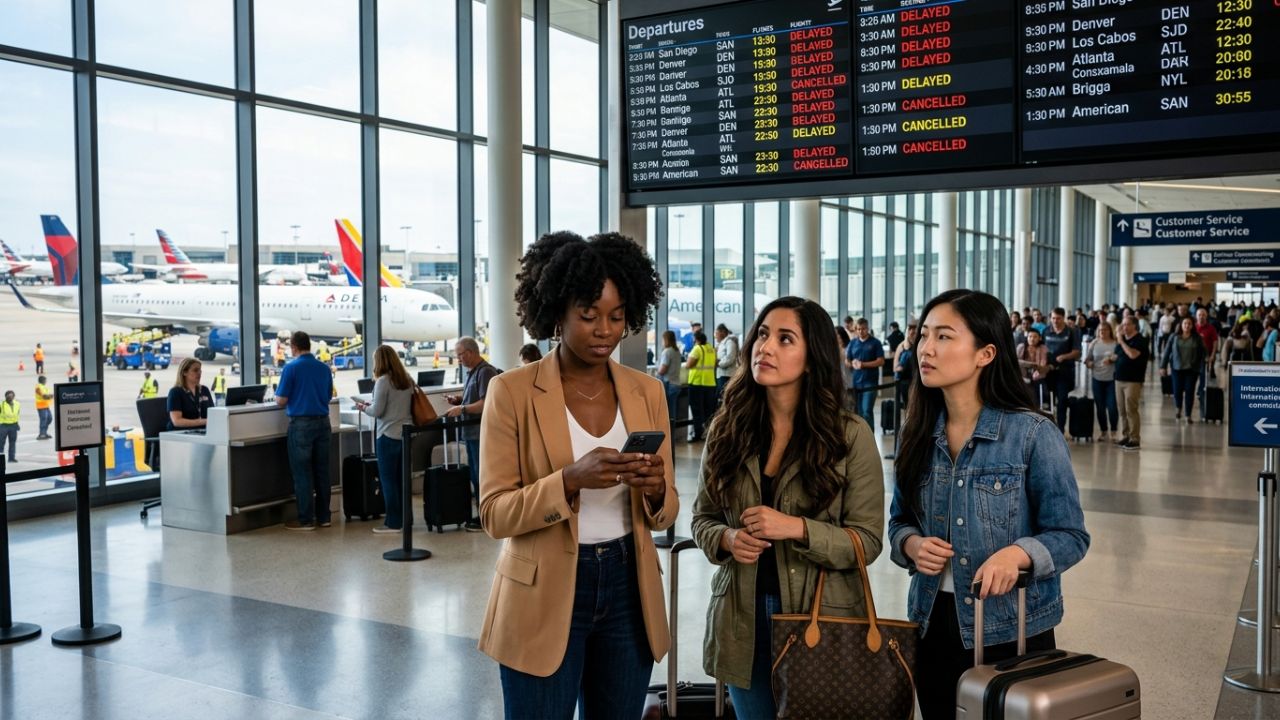
Image generated by AI
In a massive demonstration of how rapidly a major Texas aviation hub can succumb to cascading operational strain, Austin-Bergstrom International Airport (AUS) has been paralyzed by severe travel chaos. Reported on June 21, 2026, as stranded domestic and international passengers frantically monitor the latest airline news for stable rebooking options, a sweeping wave of flight cancellations executed by Delta Air Lines has severely degraded the southern transit grid. Driven by widespread operational pressures that crippled the carrier's daily schedule, authorities confirmed a targeted grounding of 3 direct flights out of Austin alongside 9 rolling delays. For passengers attempting to navigate this logistical nightmare and secure reliable transit out of the highly congested Texas hub without becoming trapped in worsening airport disruptions, understanding the exact scale of this multi-carrier collapse is the only tactical method to bypass today's breaking aviation updates.
By introducing direct passenger coordination and dynamic scheduling backups, aviation hubs target growing passenger demand across vital commerce sectors. The choice to coordinate flight departures helps to manage gate capacity, supporting the broader domestic transportation network without succumbing to massive aviation gridlock.
Context: Navigating the Texas Aviation Collapse
For the modern domestic traveler, relying on high-frequency routes during periods of intense operational scrutiny is routinely an exercise in mitigating vulnerability and potential transit failure.
Historically, the US aviation model relies heavily on seamless connectivity feeding out of rapidly growing tech and leisure hubs like Austin-Bergstrom. When operations run smoothly, connectivity across the Sun Belt and down into Mexico is incredibly efficient. However, when sudden operational bottlenecks strike Delta Air Lines, the resulting travel chaos instantly severs critical links, grounding vital aircraft and trapping passengers in unfamiliar terminal environments. Today's disruption at AUS perfectly illustrates the sheer fragility of this interconnected network. By grounding specific routes, Delta Air Lines completely exposes the traveler to the immediate logistical nightmare of missed connections, invalid itineraries, and delayed arrivals. The impact is not isolated to Texas; the ripple effect has instantly degraded arrival schedules in San Diego, Denver, New Orleans, and international leisure destinations like Los Cabos and San Juan. This cascading failure forces airlines to scramble ground resources to execute massive recovery operations while stranded passengers compete for a rapidly shrinking pool of available seats.
To view live flight recovery schedules, verify the active deployment of replacement aircraft, or to track potential airport access prior to heading to the terminal, stranded travelers must consult the official Delta Air Lines application. For direct updates regarding how this localized disruption might shield your onward itinerary from further flight cancellations out of regional hubs, travelers should aggressively utilize the digital portals of Delta's rebooking network. To explore live transit tracking and monitor the exact severity of the cascading bottlenecks paralyzing alternative US airspace, passengers can consult the official FlightAware tracking service.
Section-Wise Breakdown: The Tactical Route Disruption
The Epicenter: Austin-Bergstrom International Airport (AUS)
The operational timeline of this collapse centers entirely on Austin-Bergstrom International Airport. As one of the fastest-growing airports in the United States, AUS handles massive volumes of daily traffic. However, on June 21, Delta Air Lines operations buckled under operational pressure, resulting in the direct cancellation of 3 flights and 9 extensive delays during the primary reporting period (with an additional cancellation noted in secondary reports). This grounding immediately trapped hundreds of passengers inside the terminal, overwhelming customer service desks and triggering localized travel chaos.
The Western and Midwestern Impact
The flight cancellations out of Austin immediately severed vital links to the West Coast and Midwest. Passengers scheduled to fly into San Diego, San Francisco, Seattle, and Burbank found their itineraries completely erased. Similarly, routes heading into Denver, Grand Junction, and Minneapolis suffered severe delays. Because these cities serve as secondary connection points for onward travel, the initial disruption in Texas guaranteed that thousands of passengers across the country would subsequently miss their connecting flights, compounding the disaster.
The International Leisure Collapse
The operational failure extended deeply into highly lucrative leisure routes. Passengers attempting to escape to Mexico and the Caribbean were heavily impacted, with direct disruptions striking flights bound for Los Cabos, Cancun, and San Juan, Puerto Rico. Furthermore, the delays rippled into major East Coast and Southern hubs, including Atlanta, Orlando, Miami, Houston, and New Orleans, proving that a localized failure at a single Delta station in Texas possesses the capability to cripple the entire continental schedule.
Technical Roster: Official Flight Disruption Matrix
To ensure absolute factual accuracy regarding the specific groundings, the impacted carrier, and the verified operational metrics defining this domestic disruption, the following matrix details the strictly verified data sourced from flight analytics:
Official Flight Disruption & Cancellation Matrix
| Flight Disruption Metric | Verified Operational Data |
|---|---|
| Impacted Airport | Austin-Bergstrom International Airport (AUS) |
| Primary Operating Carrier | Delta Air Lines |
| Total Cancelled Flights | 3 (Primary reporting period) |
| Total Delayed Flights | 9 (Rolling delays impacting connections) |
| Impacted Western Hubs | San Diego, San Francisco, Seattle, Denver, Phoenix |
| Impacted Eastern Hubs | Atlanta, Orlando, Miami, Charlotte, Baltimore |
| Impacted International Routes | Los Cabos (Mexico), Cancun (Mexico), San Juan (PR) |
| Incident Status | Active travel chaos requiring immediate passenger rebooking |
Data accurately reflects the verified FlightAware telemetry logs and the explicit cancellations executed by Delta Air Lines regarding the June 21, 2026 operational environment.
Industry Analysis: The Lethal Ripple of Hub Fragility
Aviation analysts monitoring the highly interconnected US domestic network note that the breakdown at Austin-Bergstrom is a textbook example of "cascading network failure."
Analysts emphasize that high-density operations in growing cities like Austin are incredibly vulnerable to singular operational pressures. When an airline the size of Delta grounds just 3 flights and delays 9 others, the mathematical reality of modern aviation guarantees widespread disaster. Analysts warn that because Delta runs on extremely tight turnaround schedules, trapping aircraft in Texas means those planes are not arriving in Atlanta or Minneapolis to operate their subsequent legs. As passengers are unexpectedly unloaded or prevented from boarding in Austin, Delta must rapidly coordinate massive rebooking algorithms, dispatch replacement crews, and absorb massive financial penalties. This inevitably leads to severe travel chaos for the impacted passengers. Modern aviation operates at near maximum capacity; removing even a fractional percentage of available seats from the daily rotation creates an immediate logistical bottleneck that can take 48 to 72 hours to fully resolve.
Actionable Advice for Domestic Travelers
Because sudden groundings fundamentally alter the logistics of domestic transit, all passengers must execute this strategic travel checklist immediately:
- Exploit Airline Recovery Logistics: If your flight is abruptly canceled out of Austin, immediately engage the Delta Air Lines mobile application. Do not wait in the massive lines forming at the physical ticketing counter; use the app's automated recovery systems to instantly secure seats on the next available onward flight.
- Audit Connecting Flights Aggressively: When facing localized airport disruptions, explicitly audit the status of your international connections. If you were flying from Austin to Atlanta to catch a flight to Europe, the Austin cancellation guarantees you will miss the transatlantic leg. Proactively demand rerouting on partner airlines (like Air France or KLM) immediately.
- Understand Passenger Rights: Familiarize yourself with airline compensation policies. If the cancellation is within the airline's control (such as crew shortages or maintenance), you are legally entitled to specific rebooking options, meal vouchers, and potential hotel accommodations depending on the length of the delay.
FAQ: Austin-Bergstrom Disruption
Which airline is primarily responsible for the cancellations at Austin?
Delta Air Lines is responsible for the majority of the operational failures, accounting for 3 canceled flights and 9 delays.
What major cities and regions are impacted by this disruption?
The travel chaos has impacted routes across the US, Mexico, and Puerto Rico, severely degrading travel to San Diego, Denver, Los Cabos, Cancun, Atlanta, and Minneapolis.
Where can I check if my specific Delta flight is canceled?
Passengers must utilize the official Delta Air Lines mobile application or check independent live trackers like FlightAware for immediate, real-time status updates before traveling to the airport.
The Reality of Fragile Domestic Transit
The widespread travel chaos triggered by Delta Air Lines at Austin-Bergstrom proves definitively that succumbing to the severe fragility of the modern aviation grid is a constant threat. By actively grounding flights in Texas, the airline inadvertently collapsed itineraries spanning from the Pacific Northwest down to the Caribbean. As stranded passengers frantically attempt to secure their onward transit, they must accept a critical new reality: surviving the massive disruptions of modern domestic aviation demands tactical adaptability. Navigating the highly congested US travel sector requires a complete refusal to accept passive stranding, and the absolute discipline to aggressively seek stable, alternative rebooking solutions when major carriers inevitably fail to execute their published schedules.
Key Takeaways
- Targeted Groundings: Delta Air Lines canceled 3 flights and delayed 9 others at Austin-Bergstrom International Airport.
- Widespread Ripple Effect: The localized Texas disruption triggered cascading travel chaos across the US, Mexico, and Puerto Rico.
- Major Hubs Hit: Vital connection points like Atlanta, Minneapolis, Denver, and San Diego experienced severe arrival degradations.
- Leisure Routes Collapsed: Flights heading to vacation destinations like Los Cabos, Cancun, and San Juan were heavily impacted.
- Proactive Defense: Stranded passengers must utilize official airline applications to bypass physical lines and secure immediate rebooking options.
Related Travel Guides
Massive Travel Chaos Paralyzes Chicago O'Hare with 1,425 Disruptions
Delta Air Lines Triggers US Domestic Flight Cancellations
Austin-Bergstrom Flight Cancellations Live Updates on Reddit
Disclaimer
This article is for informational and educational purposes only. It does not constitute legal, financial, or professional advice. While we strive to provide accurate and up-to-date information, travel policies, regulations, and conditions change rapidly. Always verify information with official sources before making travel decisions. Nomad Lawyer makes no representations about the accuracy, reliability, completeness, or suitability of the information provided. Readers should consult qualified professionals for advice specific to their circumstances. The views expressed in this article are those of the author and do not necessarily reflect the views of Nomad Lawyer.
Kunal K Choudhary
Co-Founder & Contributor
A passionate traveller and tech enthusiast. Kunal contributes to the vision and growth of Nomad Lawyer, bringing fresh perspectives and driving the community forward.
Learn more about our team →