
Aurora Expeditions Elevates Arctic Travel Experience With Multi-Region Northern Lights Expedition Itineraries : Know More
Aurora Expeditions expands Arctic Northern Lights itineraries for 2026-2027 across Iceland, Norway, and Greenland with a

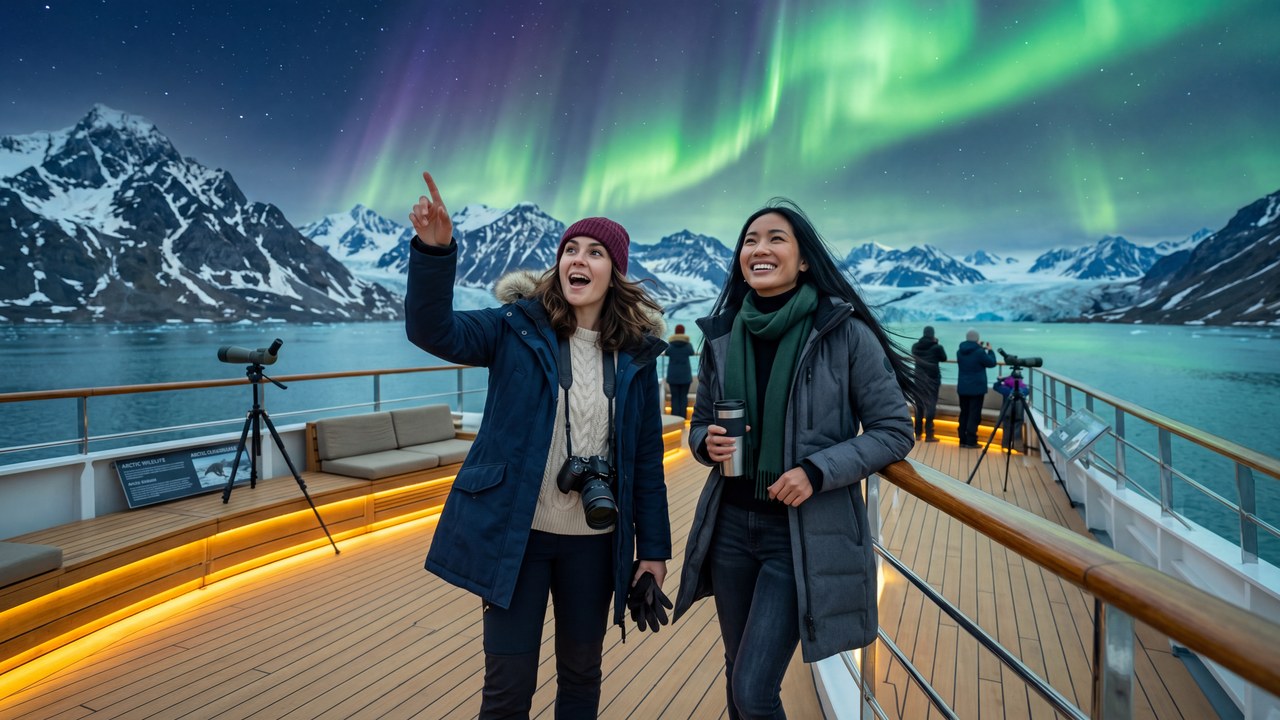
Image generated by AI
[Reykjavik, June 28, 2026] — Aurora Expeditions is expanding its polar operations by launching a sophisticated multi-region Northern Lights expedition program covering Iceland, Norway, Svalbard, and Greenland. The initiative introduces a dynamic routing system designed to maximize the probability of Aurora Borealis sightings by utilizing real-time environmental intelligence. To stimulate early interest for these specialized seasonal windows, the operator is offering discounts of up to 30 percent on selected Arctic sailings for the 2026 and 2027 seasons.
The expansion comes as global demand for immersive, high-latitude travel grows, shifting the focus from traditional leisure cruising toward experience-led exploration. By integrating multiple Arctic territories into a single strategic framework, the program aims to transform standard polar cruises into coordinated scientific and observational journeys.
Adaptive Navigation Strategies in the Arctic Circle
Unlike the rigid scheduling found in mainstream cruise tourism, these new itineraries utilize a flexible navigation model. The operational focus is centered on regions within or adjacent to the Arctic Circle, where geomagnetic activity is most frequent during the transition from late summer to autumn.
Industry reports indicate that vessel positioning is determined by a continuous analysis of cloud coverage, ice drift patterns, and weather systems. This adaptive approach allows expedition teams to steer clear of obscuring cloud layers and move toward "dark-sky zones," significantly increasing the likelihood of witnessing the Northern Lights.
Specialized Polar Monitoring and Real-Time Execution
Each voyage is managed by specialist polar teams who employ a rigorous framework of environmental monitoring. These experts analyze solar activity forecasts, meteorological data, and ice charts to make daily tactical decisions regarding the ship's location.
This level of agility is essential in the Arctic, where atmospheric conditions can fluctuate violently within a few hours. The ability to recalibrate routes in real-time ensures that the vessel can bypass ice-blocked corridors and locate open skies. Beyond the celestial observations, this operational model facilitates terrestrial exploration, allowing passengers to conduct shore landings at volcanic sites, glaciers, and untouched Arctic ecosystems.
Strategic Itinerary Breakdown for 2026 and 2027
The expanded program features three primary expedition corridors, each timed to align with the deepening darkness of the polar autumn.
Arctic Golden Autumn and Northern Lights
Scheduled from August 18 to September 3, 2026, this 17-day voyage begins in Reykjavik and ends in Tromsø. The route traverses Iceland, Jan Mayen, Svalbard, and northern Norway. By launching during the transition to the darker season, the expedition leverages the lengthening nights and proximity to the geomagnetic pole to enhance Aurora visibility.
Northern Lights Explorer
This 18-day itinerary operates across two separate windows: September 2 to 19, 2026, and August 25 to September 9, 2027. Connecting Tromsø and Reykjavik, the route follows the coastal belts of Norway, Iceland, and Greenland. This region is specifically chosen for its deep fjords and low population density, which minimizes artificial light pollution and provides a clearer canvas for celestial observation.
Iceland and East Greenland Exploration
A shorter, 11-day round-trip departing from Reykjavik in September 2027 focuses on the stark contrast between volcanic landscapes and glacial ice. East Greenland is highlighted as a premier location for Aurora activity due to its extreme isolation and near-total absence of human-made light.
| Expedition Name | Duration | Dates | Key Destinations |
|---|---|---|---|
| Arctic Golden Autumn & Northern Lights | 17 Days | Aug 18 – Sept 3, 2026 | Iceland, Jan Mayen, Svalbard, Norway |
| Northern Lights Explorer | 18 Days | Sept 2–19, 2026 / Aug 25–Sept 9, 2027 | Norway, Iceland, Greenland |
| Iceland & East Greenland | 11 Days | September 2027 | Iceland, East Greenland |
Market Shift Toward Experience-Led Polar Tourism
The diversification of these itineraries reflects a broader evolution in the cruise sector. There is a growing preference among high-net-worth travelers for "rarity-based" tourism—experiences that are dictated by natural phenomena and strict seasonal windows rather than fixed tourist circuits.
Because Arctic expeditions are limited by environmental constraints and narrow operational windows, they possess an inherent scarcity. This has driven a surge in demand for low-density, high-impact travel where the primary goal is scientific interest and natural observation.
Why This Matters: The Evolution of Expedition Cruising
The shift toward "environmental intelligence-led" routing marks a departure from the traditional cruise industry's reliance on fixed itineraries. By prioritizing geomagnetic data and real-time atmospheric monitoring over pre-set ports of call, Aurora Expeditions is effectively treating the Arctic as a living laboratory rather than a static destination.
This approach solves a primary pain point in Aurora tourism: the unpredictability of the lights. By linking four distinct Arctic regions (Iceland, Norway, Svalbard, and Greenland) into a fluid network, the operator reduces the risk of "blackout" voyages where weather prevents sightings. For the wider aviation and maritime industry, this signals a move toward "dynamic tourism," where the value proposition is based on the expert's ability to navigate unpredictability rather than the ability to provide a consistent, repetitive schedule. This trend is likely to influence other extreme-environment operators in Antarctica and the deep Pacific, moving the industry toward a more agile, data-driven model of exploration.
Related Travel Guides
Disclaimer
This article is for informational and educational purposes only. It does not constitute legal, financial, or professional advice. While we strive to provide accurate and up-to-date information, travel policies, regulations, and conditions change rapidly. Always verify information with official sources before making travel decisions. Nomad Lawyer makes no representations about the accuracy, reliability, completeness, or suitability of the information provided. Readers should consult qualified professionals for advice specific to their circumstances. The views expressed in this article are those of the author and do not necessarily reflect the views of Nomad Lawyer.
Preeti Gunjan
Contributor & Community Manager
A passionate traveller and community builder. Preeti helps grow the Nomad Lawyer community, fostering engagement and bringing the reader experience to life.
Learn more about our team →