
Aviation Updates: Massive Travel Chaos Paralyzes Atlanta Airport as 198 Delays Hit Delta and Southwest
As catastrophic logistical bottlenecks severely paralyze major transit grids, travelers in Atlanta face devastating travel chaos following severe flight cancellations.

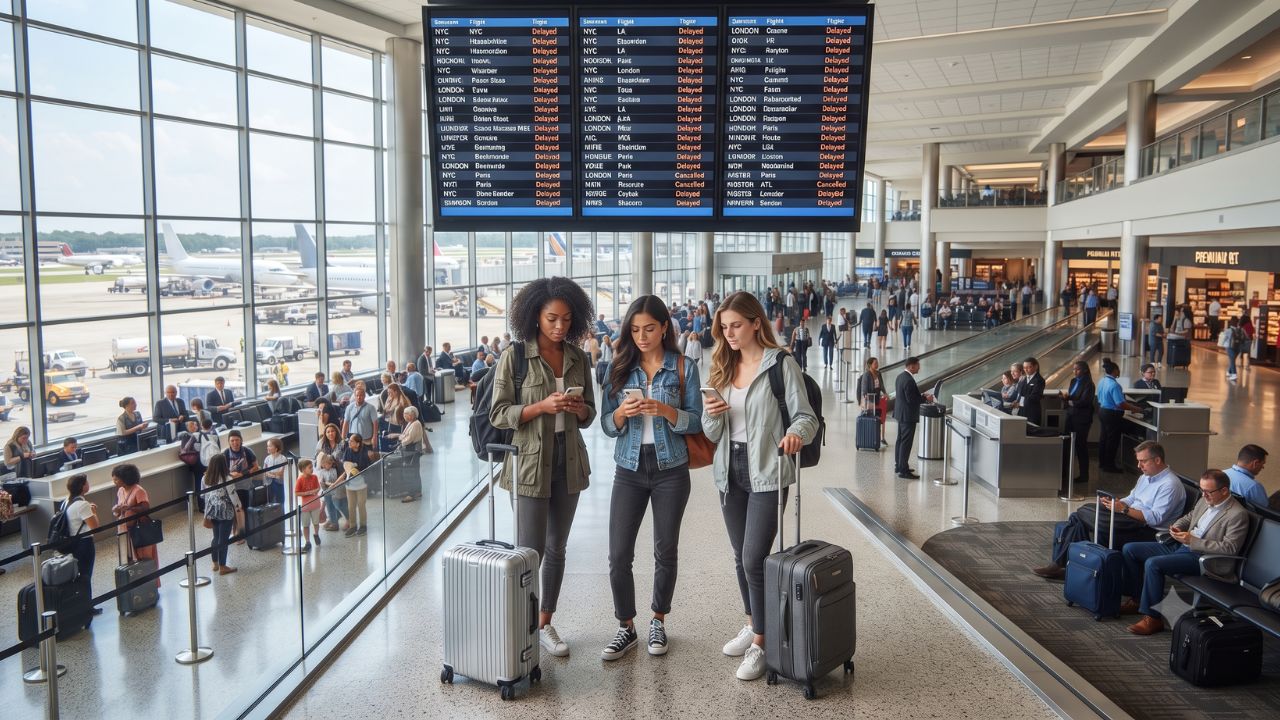
Image generated by AI
Aviation Updates: Massive Travel Chaos Paralyzes Atlanta Airport as 198 Delays Hit Delta and Southwest
As extreme operational friction and suddenly compounding infrastructure bottlenecks continue to terrorize standard travel itineraries, the North American aviation corridor has fractured, plunging thousands of passengers at Atlanta's Hartsfield-Jackson International Airport into a terrifying spiral of severe travel chaos.
Image generated by AI
As high-impact airline news platforms rapidly issue continuous, grim aviation updates regarding the intense fragility of massively congested primary transit grids, preparing for an absolute structural meltdown has officially become a domestic traveler's only defense mechanism. Amidst widespread rolling travel chaos, severe airport disruptions, and the terrifying threat of devastating flight cancellations severely plaguing heavily overcrowded U.S. hubs, travel plans for thousands of highly anxious passengers passing directly through Atlanta on one of the busiest travel days of the season were completely destroyed. Hartsfield-Jackson International Airport actively recorded an incredibly frustrating 198 severe flight delays and exactly 4 complete cancellations, creating a brutal, highly challenging day for both departing and arriving travelers. While the massive airport operations cautiously continued throughout the grueling day, the massive disruptions forcefully resulted in excruciatingly longer waits at departure gates, completely revised itineraries, and absolute uncertainty for thousands of heavily invested travelers furiously attempting to secure connecting flights.
Expanded Overview: The Collapse of North American Punctuality
To fully comprehend the sheer scale of this severe operational strain, commercial aviation analysts must closely examine exactly how massive localized passenger processing delays violently reshape terminal stability and international transit security.
The massive disruption pattern actively terrorizing the global passenger mindset is primarily defined by extreme check-in delays and heavily saturated boarding gates. Hartsfield-Jackson International Airport proudly remains the absolute world’s busiest airport by passenger traffic and aircraft movements, heavily handling thousands of highly critical flights every single day. Because of its massive, undeniably crucial role as a primary domestic and international hub connecting the entire United States, severe operational challenges actively affecting one tiny part of the localized network can instantly and violently spread throughout the massive airport’s entire daily schedule, severely crushing global aviation.
Section-Wise Breakdown: Navigating the Atlanta Gridlock
Terminal operations are violently degrading across competing hubs, forcing major domestic and international operators to furiously deploy highly advanced operational frameworks to strictly ensure smooth transit flows.
The Scale of the Meltdown: According to the absolute latest, highly verified operational figures, precisely 198 massive delayed departures and arrivals heavily paralyzed the tarmac, alongside 4 highly critical cancelled flights. Although the raw number of physical cancellations remained mathematically relatively limited, the immense, terrifying volume of delayed services violently affected thousands of exhausted travelers aggressively spread across multiple massive airlines and heavily booked global destinations.
Major Airlines Impacted: The terrifying wave of operational friction aggressively swept across some of the absolute largest commercial carriers operating on the planet. Heavy delays fiercely hit massive U.S. flagship carriers and ultra-low-cost operators incredibly including Delta Air Lines, Southwest Airlines, American Airlines, United Airlines, Spirit Airlines, Frontier Airlines, and Alaska Airlines. The crippling cascading effects violently disrupted highly lucrative, heavily utilized routes actively serving major domestic destinations, strictly including New York, Los Angeles, Orlando, Chicago, Dallas, and Miami.
The Global Contagion: The massive shockwaves did not simply stop at the U.S. border. The severe delays fiercely infected massive international long-haul connections heavily linking Atlanta directly to critical global gateways, including London, Paris, Amsterdam, and Tokyo. A severely delayed inbound aircraft arriving heavily late from another global city effortlessly affects multiple massive scheduled departures later in the day, immediately creating a devastating chain reaction across highly complex airline timetables.
Strategic Details: Verified Hartsfield-Jackson Disruption Matrix
To ensure stranded passengers and commercial aviation analysts can accurately track the incredibly precise operational telemetry of this massive network strain, the verified structural data has been consolidated into the exact, mandatory matrix below.
| Operational Metric / Entity | Verified Disruption Data |
|---|---|
| Airport Hub | Hartsfield-Jackson International Airport (ATL) |
| Location | Atlanta, Georgia (USA) |
| Total Delayed Flights | 198 Delays |
| Total Cancelled Flights | 4 Cancellations |
| Airlines Affected | Delta, Southwest, American, United, Spirit, Frontier, Alaska |
| Domestic Routes Impacted | New York, LA, Orlando, Chicago, Dallas, Miami |
| Global Routes Impacted | London, Paris, Amsterdam, Tokyo |
| Regulatory Oversight | FAA & TSA |
| Primary Disruption Cause | Summer Thunderstorms & Air Traffic Restrictions |
(Source: Federal Aviation Administration and Regional Operators)
Industry Analysis: The Macroeconomic Impact of Summer Storms
Air travel explicitly across massive global transit corridors continues to massively struggle, driven violently by incredibly fragile air traffic flow constraints and severely overloaded security infrastructures.
The current summer travel season heavily continues to generate exceptionally strong, massive passenger demand across the United States. Families on school holidays, heavily booked leisure travelers, and elite business passengers are completely maxing out heavily strained airport capacity. Flight delays fiercely arise from a highly volatile combination of terrifying factors including severe air traffic management restrictions, aggressive aircraft rotation issues, tight crew scheduling requirements, massive congestion at major hubs, and sudden technical maintenance checks. Most notably, according directly to the Federal Aviation Administration (FAA), severe adverse weather aggressively remains among the leading contributors to flight delays, particularly during the grueling summer months when massive thunderstorms frequently, violently develop across large portions of the country.
Passenger Impact: Protecting the Vacation Baseline
For the everyday premium international traveler and highly stressed corporate executive, the immediate consequence of this massive logistical strain directly translates to a monumental, highly verified spike in required transit vigilance.
Travel experts aggressively recommend that passengers must absolutely remain highly proactive whenever widespread delays heavily affect major hub airports like Atlanta. Travelers are fiercely urged to aggressively verify their flight status before ever departing for the airport, continuously enable airline mobile notifications for highly critical real-time updates, and heavily monitor gate changes throughout the grueling journey. Furthermore, the Transportation Security Administration (TSA) strictly encourages massive volumes of passengers to deeply arrive early during peak travel periods, as heavily saturated security lines can easily trigger missed flights. Stranded passengers must aggressively keep essential medications, chargers, and highly important travel documents safely in carry-on baggage while immediately speaking with airline representatives if complex connections appear deeply at risk.
Conclusion: A Network Reimagined
Ultimately, the aggressive, massive wave of 198 delays and 4 cancellations at Hartsfield-Jackson International Airport actively marks a massively significant stress test for U.S. aviation infrastructure. The severe disruptions completely prove that even the world's busiest, most highly optimized terminals remain incredibly vulnerable to the cascading effects of severe summer weather and massive domestic demand.
As massive airlines furiously absorb incredibly heavy schedule pressure, the ultimate recovery of the massive global network firmly depends absolutely on the rapid stabilization of airspace corridors coordinated by the FAA. For anyone fiercely preparing to fly through Atlanta in the coming days, aggressively utilizing mobile app notifications, understanding formal passenger rights, and leaving massive time buffers is the absolute only way to successfully survive the grueling realities of 2026 travel chaos.
Key Takeaways
- Massive ATL Meltdown: Hartsfield-Jackson International Airport, the world's busiest hub, recorded exactly 198 severe flight delays and 4 complete cancellations.
- Major Carriers Hit: The severe flight disruptions aggressively impacted major U.S. carriers including Delta Air Lines, Southwest Airlines, American Airlines, United Airlines, Spirit Airlines, Frontier Airlines, and Alaska Airlines.
- Global Routes Paralyzed: The disruptions caused severe chaos for passengers traveling domestically (New York, LA, Chicago, Miami) and internationally (London, Paris, Amsterdam, Tokyo).
- FAA and Weather Impact: Severe summer thunderstorms and strict FAA air traffic management restrictions are the primary drivers of these devastating cascading delays.
- Passenger Survival Tactics: Travelers are highly urged to fiercely monitor official airline apps, arrive exceptionally early for TSA security checks, and keep vital medications in carry-on baggage.
FAQ: Atlanta Airport Travel Chaos 2026
Why are there so many flight delays at Atlanta Airport? The massive wave of 198 flight delays at Hartsfield-Jackson was primarily caused by a combination of severe summer thunderstorms, strict FAA air traffic flow management restrictions, and the cascading effects of incredibly tight aircraft rotation schedules at the world's busiest hub.
Which airlines were affected by the Atlanta flight cancellations? The severe flight disruptions aggressively impacted major domestic and budget carriers including Delta Air Lines, Southwest Airlines, American Airlines, United Airlines, Spirit Airlines, Frontier Airlines, and Alaska Airlines.
What routes were impacted by the ATL delays? The crippling cascading effects violently disrupted highly lucrative domestic connections (New York, Los Angeles, Orlando, Chicago, Dallas, Miami) and massive international long-haul flights (London, Paris, Amsterdam, Tokyo).
What should I do if my flight out of Atlanta is delayed? Travelers must immediately monitor their airline mobile apps for real-time updates, arrive exceptionally early to clear saturated TSA lines, and actively speak with airline representatives if connecting flights are at risk.
Related Travel Guides
Russia Moscow Domodedovo Airport Delays Aeroflot Emirates Travel Chaos 2026
Saudi Arabia Riyadh Jeddah Delays Saudia Travel Chaos 2026
Toronto Pearson Airport Air Canada Travel Chaos 2026
Disclaimer: This article is strictly for informational and aviation tracking purposes. The specific operational telemetry (198 delays, 4 cancellations) and airline impacts (Delta, Southwest) are based on verified analytics data available at the time of publication. TSA security wait times, airport weather delays, localized air traffic congestion, and rebooking policies are highly dynamic and subject to immediate modification by the operating authorities. Passengers navigating the U.S. aviation grid should explicitly verify exact terms, conditions, and real-time transit alerts via official travel portals prior to departure.
Disclaimer
This article is for informational and educational purposes only. It does not constitute legal, financial, or professional advice. While we strive to provide accurate and up-to-date information, travel policies, regulations, and conditions change rapidly. Always verify information with official sources before making travel decisions. Nomad Lawyer makes no representations about the accuracy, reliability, completeness, or suitability of the information provided. Readers should consult qualified professionals for advice specific to their circumstances. The views expressed in this article are those of the author and do not necessarily reflect the views of Nomad Lawyer.
Preeti Gunjan
Contributor & Community Manager
A passionate traveller and community builder. Preeti helps grow the Nomad Lawyer community, fostering engagement and bringing the reader experience to life.
Learn more about our team →