
Athens At Twilight, The Incredible Dark-Sky Travel Boom That Is Transforming Seaside Holidays Into Intellectual Journeys In Greece
Greece leads a global shift toward "intentional night-seeing," transforming Athens and Meteora into hubs for dark-sky to

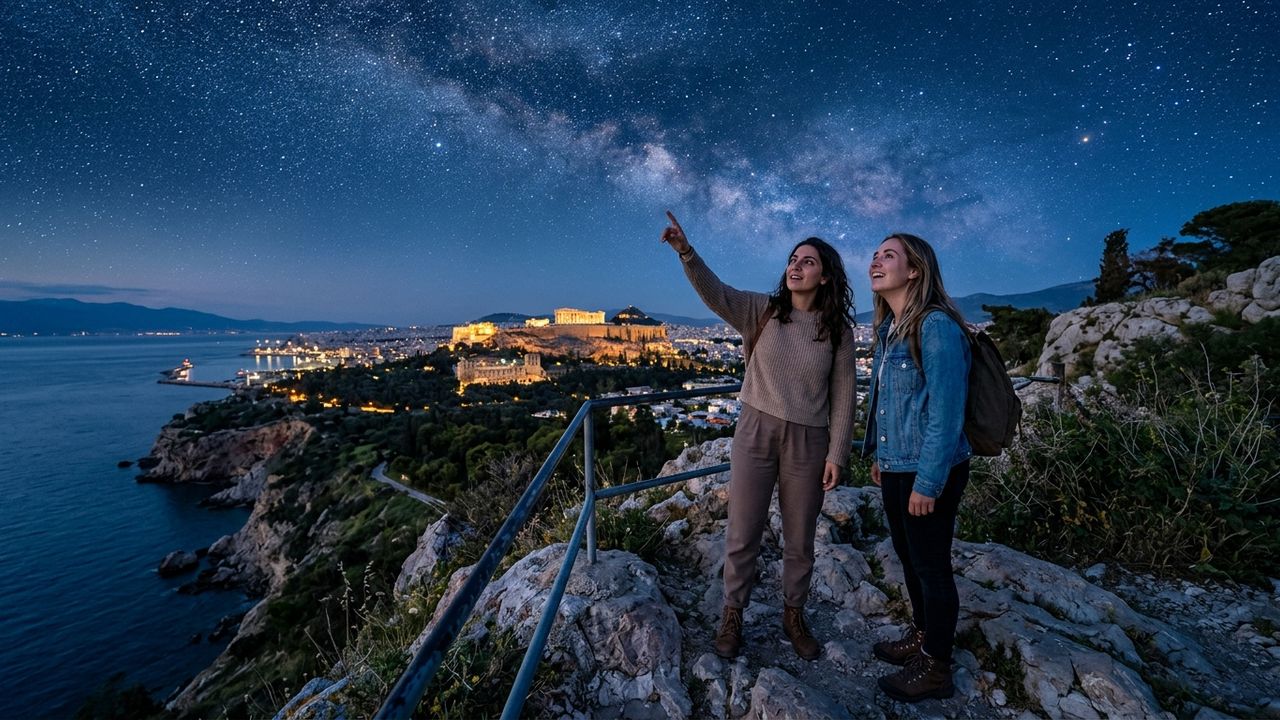
Image generated by AI
[Athens, June 26, 2026] — The international travel sector is experiencing a significant paradigm shift as "intentional night-seeing" replaces traditional daytime sightseeing, with Greece emerging as a global hub for this movement. Travelers are increasingly abandoning crowded midday excursions in favor of multi-sensory, low-light experiences that leverage the country's ancient monuments, vast coastlines, and preserved dark skies.
Global Shifts in Traveler Behavior and Evening Itineraries
Modern vacationers are fundamentally reorganizing their travel plans to align with lunar cycles and celestial events, moving away from the high-energy, loud nightlife of previous decades. Industry observers note that this pivot toward serenity and environmental awareness is placing new demands on hospitality infrastructure. Hotels and transportation providers are now required to offer greater 24-hour flexibility to accommodate guests who prioritize the tranquility of the night over the congestion of the day.
This behavioral change is driving a migration of astronomy enthusiasts from light-polluted urban centers toward remote, pristine environments. From a macroeconomic perspective, this trend is fostering a more sustainable distribution of tourism revenue. By encouraging visitors to explore rural landscapes during hours previously ignored, the industry is reducing the pressure on over-touristed hotspots and stimulating economic growth in neglected countryside regions.
The ripple effects are extending into operational logistics. Flight schedules, the operating hours of local eateries, and the accessibility of historical landmarks are all being re-evaluated to meet the needs of the nocturnal voyager. This shift represents a psychological transition where the "beach holiday" is evolving into an immersive nighttime expedition focused on tactile sensory engagement and a deeper connection with the natural world.
Redefining Classical History Through Nocturnal Access in Athens
In Greece, the transition from day to night offers a radical alternative to the stifling crowds that typically characterize peak tourism hours. For example, exploring the promenade beneath the Acropolis on a summer evening provides a sense of tranquil isolation that is impossible to achieve during the day. This shift allows for an intimate encounter with classical architecture, removing the noise and pressure of mass tourism and replacing it with a reflective experience.
The Acropolis Museum is also adapting to this trend. Visitors to the top floor during evening hours can observe the Parthenon Marbles illuminated in a way that mirrors the actual Parthenon standing outside. This visual synchronization creates a dialogue between the preserved indoor artifacts and the raw outdoor ruins. According to facility managers, these quiet hours amplify the intellectual and spiritual impact of the exhibits. This evolution suggests a global need for cultural institutions to implement extended, low-light operating frameworks to satisfy the demand for crowd-free access to iconic heritage sites.
Spiritual Tourism and Economic Revitalization in Meteora
The monolithic peaks of Meteora have become a primary destination for those seeking the intersection of spirituality and stargazing. Under a dark canopy, the cliffside monasteries glow softly, transforming the geological pillars into silent sentinels. This atmosphere attracts a specific demographic of travelers searching for contemplation and awe, a demand that is growing as the world becomes increasingly noisy.
Travel operators are recognizing that the natural acoustics and lack of artificial lighting in these rocky landscapes add significant value to wilderness excursions. Regions that actively restrict light pollution are seeing a measurable increase in high-value, environmentally conscious visitors.
The economic impact on the surrounding valleys is substantial. What were once brief daytime stops are now evolving into multi-day overnight stays. This has spurred a rise in specialized late-night hospitality, the introduction of stargazing amenities, and the growth of expert nighttime transport services, proving that night-centric natural assets can revitalize rural economies.
Sustainable Coastal Exploration and Maritime Asset Optimization
Across the thousands of kilometers of the Greek coastline, there is a rising demand for remote, sandy beaches where travelers can host moonlit picnics away from urban light pollution. This desire for geographic isolation is fostering a new style of coastal exploration centered on the natural soundscapes of the sea and absolute silence.
From an industry standpoint, this trend allows for the strategic repositioning of maritime assets. Boat captains and coastal resorts are diversifying their offerings to include:
- Specialized twilight cruises
- Bioluminescent night swimming experiences
- Shorefront astronomy lectures
These operational pivots allow operators to double the revenue utility of coastal spaces without investing in ecologically destructive infrastructure. However, this growth presents a challenge: the need to protect pristine marine environments from commercial light encroachment. The preservation of "dark coastlines" is now a competitive advantage for beachfront destinations aiming to attract thoughtful, high-spending travelers.
Intellectual Luxury and Astrotourism in the Cyclades
On the island of Tinos in the Cycladic archipelago, luxury retreats are pioneering "academic hospitality." These properties have launched sophisticated astronomy programs that integrate ancient Greek mythology with practical astrophotography and stargazing sessions timed to lunar phases.
Guests are encouraged to map star patterns while learning how ancient navigators used the same constellations to traverse the seas. This blend of modern science and ancient history sets a new benchmark for premium hospitality. Discerning travelers are moving beyond basic luxury, now demanding curated educational encounters that stimulate the mind.
By aligning activities with celestial cycles, operators create exclusive, time-sensitive events that command premium pricing. This success indicates that astrotourism is becoming a lucrative sector, necessitating collaboration between hospitality designers, professional astronomers, and local historians to elevate the cultural profile of the destination.
Why This Matters: The Evolution of the Travel Experience
The transition toward "intentional night-seeing" represents more than a simple change in timing; it is a fundamental shift in the value proposition of global tourism. By decoupling the travel experience from the daylight hours, the industry is effectively expanding its operational capacity and reducing the environmental and social strain caused by "overtourism" during peak hours.
The integration of academic rigor—such as the astronomy programs in Tinos—suggests a move toward "intellectual journeys" where the destination serves as a classroom. This increases the "information gain" for the traveler, transforming a passive holiday into an active pursuit of knowledge. Furthermore, the economic shift toward rural, dark-sky preserves demonstrates a viable model for sustainable development that protects natural assets rather than exploiting them through heavy infrastructure. As light pollution becomes a global crisis, the ability to offer "true darkness" is becoming a rare and highly marketable luxury commodity in the aviation and travel sectors.
Related Travel Guides
Disclaimer
This article is for informational and educational purposes only. It does not constitute legal, financial, or professional advice. While we strive to provide accurate and up-to-date information, travel policies, regulations, and conditions change rapidly. Always verify information with official sources before making travel decisions. Nomad Lawyer makes no representations about the accuracy, reliability, completeness, or suitability of the information provided. Readers should consult qualified professionals for advice specific to their circumstances. The views expressed in this article are those of the author and do not necessarily reflect the views of Nomad Lawyer.
Preeti Gunjan
Contributor & Community Manager
A passionate traveller and community builder. Preeti helps grow the Nomad Lawyer community, fostering engagement and bringing the reader experience to life.
Learn more about our team →