
Asian Aviation Crisis 2026: 5,631 Flight Delays and 208 Cancellations Hit Jakarta and Major Hubs
Massive travel disruptions across 26 Asian airports, led by Beijing and Jakarta, result in over 5,600 delays and 200 cancellations due to weather and congestion.

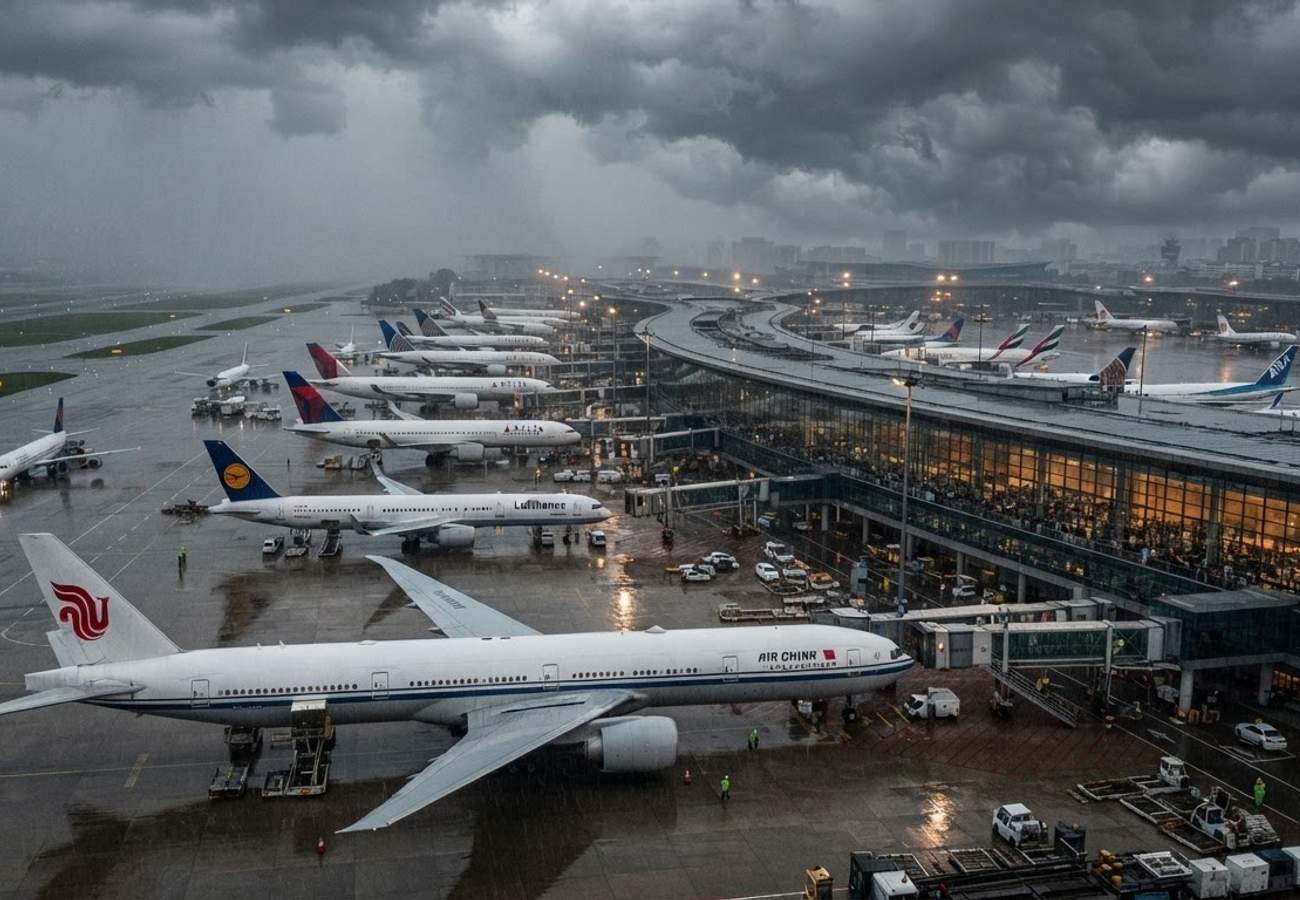
Image generated by AI
Widespread operational failure across 26 major Asian aviation hubs has resulted in 5,631 flight delays and 208 cancellations. Passengers in China, India, Indonesia, and the Middle East are facing severe transit interruptions.
Regional Aviation Breakdown
Analysis of flight tracking data indicates a systemic collapse in scheduling across key corridors. The disruption is attributed to a combination of severe weather events in East Asia, acute airport congestion, aircraft rotation failures, and cascading network delays.
The impact is most concentrated in China, where 15 major airports are reporting significant operational pressure. Beijing Capital International Airport is the primary epicenter of the crisis, recording 861 delays and 46 cancellations.
Critical Airport Impact Statistics
| Airport | Delays | Cancellations |
|---|---|---|
| Beijing Capital (PEK) | 861 | 46 |
| Jakarta Soekarno-Hatta (CGK) | 314 | 17 |
| Antalya Airport (AYT) | 299 | 11 |
| Dubai International (DXB) | 244 | 3 |
| Delhi Indira Gandhi (DEL) | 243 | 13 |
| Hangzhou Xiaoshan (HGH) | 213 | 6 |
| Chengdu Tianfu (TFU) | 204 | 4 |
| Kunming Changshui (KMG) | 190 | 4 |
| Tokyo Haneda (HND) | 177 | 2 |
| Xi’an Xianyang (XIY) | 166 | 8 |
| Chongqing Jiangbei (CKG) | 164 | 4 |
| King Khalid Intl (RUH) | 120 | 2 |
| King Abdulaziz Intl (JED) | 114 | 3 |
| Changsha Huanghua (CSX) | 112 | 3 |
| Nanjing Lukou (NKG) | 107 | 9 |
| Sultan Hasanuddin (UPG) | 93 | 6 |
| Mumbai Chhatrapati Shivaji (BOM) | 92 | 4 |
| Sharjah International (SHJ) | 80 | 5 |
| Juanda International (SUB) | 72 | 4 |
| Shenyang Taoxian (SHE) | 64 | 6 |
| Hefei Xinqiao (HFE) | 63 | 4 |
| Osaka Itami (ITM) | 55 | 5 |
| Seeb International (MCT) | 48 | 1 |
Airline Operational Performance
Carrier data shows that state-owned enterprises and regional low-cost carriers are bearing the brunt of the rotation issues. Air China is currently the most impacted airline globally in this event.
- Air China: 721 delays, 45 cancellations
- China Eastern: 624 delays, 14 cancellations
- China Southern: 403 delays, 16 cancellations
- Batik Air: 83 delays, 19 cancellations
- IndiGo: 175 delays, 5 cancellations
- Cathay Pacific: 162 delays, 1 cancellation
- SpiceJet: 57 delays, 8 cancellations
- Shenzhen Airlines: 217 delays, 2 cancellations
- Hainan Airlines: 238 delays, 1 cancellation
- XiamenAir: 244 delays, 1 cancellation
Passenger Rights & Advisory
For the affected passenger, these disruptions trigger specific legal protections depending on the jurisdiction of the airline and the point of departure. Our analysis of aviation policy suggests the following actions:
Compensation Eligibility If your flight departs from an EU/UK airport or is operated by an EU/UK carrier arriving into the region, you may be eligible for compensation under EU261/2004 or UK261. However, "extraordinary circumstances"—such as the severe weather reported in East Asia—often allow airlines to avoid cash payouts. For the passenger, this means you are still entitled to "Duty of Care" (meals, hotels, and communication) regardless of the cause of the delay.
Rebooking and Refunds Under US DOT guidelines (for flights touching US soil) and similar regional policies in Asia, passengers are entitled to a full refund if the airline cancels a flight and the passenger chooses not to travel on the alternative offered. If you are rebooked, ensure the airline provides a written confirmation of the new itinerary to avoid further rotation errors.
Immediate Action Steps
- Verify Status: Do not rely on airport screens; use FlightAware or direct airline apps to confirm aircraft rotation.
- Document Everything: Save screenshots of cancellation notices and keep all receipts for food and accommodation.
- Transfer Buffers: For those connecting through Jakarta, Delhi, or Dubai, we advise adding a minimum of 4 hours to your connection window to account for baggage delays.
Industry Analyst View
This event underscores a fragility in the Asian aviation network's "hub-and-spoke" model. When primary nodes like Beijing Capital or Jakarta Soekarno-Hatta experience failure, the lack of redundant routing leads to immediate systemic collapse. The concentration of delays within Chinese carriers suggests that local infrastructure is struggling to absorb weather-related shocks, creating a ripple effect that has reached as far as Türkiye and the UAE.
Recovery will depend entirely on the stabilization of East Asian weather patterns and the aggressive repositioning of aircraft to clear the current backlog.
Related Travel Guides
Disclaimer
This article is for informational and educational purposes only. It does not constitute legal, financial, or professional advice. While we strive to provide accurate and up-to-date information, travel policies, regulations, and conditions change rapidly. Always verify information with official sources before making travel decisions. Nomad Lawyer makes no representations about the accuracy, reliability, completeness, or suitability of the information provided. Readers should consult qualified professionals for advice specific to their circumstances. The views expressed in this article are those of the author and do not necessarily reflect the views of Nomad Lawyer.
Raushan Kumar
Founder & Lead Developer
Full-stack developer with 11+ years of experience and a passionate traveller. Raushan built Nomad Lawyer from the ground up with a vision to create the best travel and law experience on the web.
Learn more about our team →