
Over Three Hundred Flights Cancelled and Three Thousand Delayed Across Asia Affecting Saudia, Akasa Air, and Air China Hubs
A major flight disruption swept across Asia with 350 cancellations and 3,533 delays affecting Saudia, Akasa Air, and Air China. Read the full operational analysis.

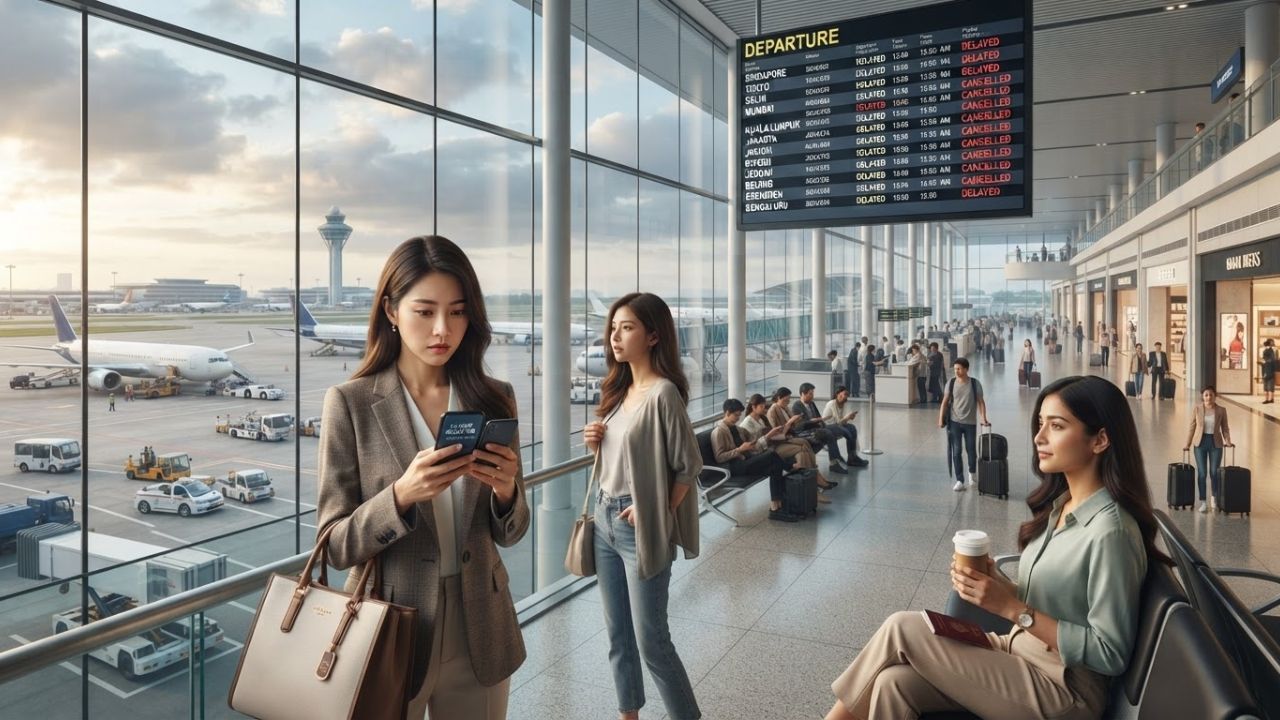
Image generated by AI
A major aviation disruption swept across Asia on July 15, 2026, resulting in 350 flight cancellations and 3,533 delays. The operational crisis heavily affected Saudia, Air China, and Akasa Air due to a combination of geopolitical conflicts, weather, and airspace restrictions.
The Disruption Details
[Singapore – July 16, 2026] — Commercial aviation operations throughout the Asian continent faced severe delays and cancellations on July 15, 2026. Flight tracking systems indicate that carriers operating in Singapore, Japan, India, China, Saudi Arabia, Indonesia, and Malaysia cancelled 350 flights and delayed 3,533 others. The massive disruptions left thousands of travelers stranded at major international transit hubs.
Our analysis indicates that the widespread disruptions stem from three distinct operational catalysts. First, a sharp escalation of regional conflict involving drone and missile strikes targeting southern Saudi Arabian airports prompted significant security precautions. Saudi national carrier Saudia and other local operators were forced to cancel or reroute dozens of flights to protect passengers and crew. Consequently, Abha Airport in southern Saudi Arabia became one of the most affected regional airports with 52 cancellations.
Second, severe weather conditions and airspace congestion across mainland China created significant delays, particularly in the industrial corridors of southern China. Shenzhen Bao’an International Airport recorded the highest volume of delayed services in the region. Third, ongoing Middle East airspace restrictions have created prolonged flight corridors for long-haul routes connecting Europe and Asia. The resulting detours have reduced aircraft availability and created scheduling bottlenecks for Indian carriers like Akasa Air and Chinese carriers like Air China.
Flight & Airport Impact Breakdown
The cascading delays and cancellations affected several major hubs across the Asia-Pacific and Middle East regions:
- Shenzhen Bao’an (SZX): Recorded the highest delays in the region with 832 delayed flights and 16 cancellations, impacting Shenzhen Airlines, China Southern, Hainan Airlines, and Air China.
- King Abdulaziz (JED - Jeddah): Logged 71 delays and 60 cancellations, with Saudia, flyadeal, and Flynas bearing the brunt of the flight reductions.
- Abha Airport (AHB): Registered 52 cancellations as security concerns and airspace restrictions affected regional flights in southern Saudi Arabia.
- Singapore Changi (SIN): Recorded 197 delays and 5 cancellations, with Singapore Airlines and Scoot experiencing the largest share of delays.
- Kuala Lumpur (KUL): Logged 281 delays and 5 cancellations, affecting Malindo Air, AirAsia, and Malaysia Airlines.
- Jakarta Soekarno-Hatta (CGK): Registered 255 delays and 24 cancellations, representing the highest cancellation rate outside Saudi Arabia, impacting Garuda Indonesia, Citilink, and Indonesia AirAsia.
- Tokyo Haneda (HND): Logged 250 delays and 2 cancellations, affecting All Nippon Airways, Japan Airlines, and Skymark.
- Akasa Air: The Indian carrier recorded 32 cancellations, primarily affecting routes out of Mumbai, Bengaluru, and Delhi.
Passenger Rights & Advisory (Information Gain)
Passengers affected by these widespread cancellations and delays are protected under various national and international aviation frameworks. Travelers should review the guidelines below to determine their rebooking and compensation rights:
- Saudi Arabia (GACA Regulations): The General Authority of Civil Aviation of Saudi Arabia mandates that if a flight is delayed or cancelled, the airline must provide passengers with refreshments, meals, and free hotel accommodations if the delay exceeds six hours. In cases of security-related force majeure, the airline is exempt from paying additional cash compensation but must offer a full refund for untraveled segments or alternative rebooking.
- India (DGCA Guidelines): Under the Directorate General of Civil Aviation rules, if an Indian airline (such as Akasa Air or IndiGo) cancels a flight, they must provide an alternative flight or a full refund. If the passenger is notified of the cancellation less than 24 hours prior to departure, the carrier may be required to pay compensation of up to INR 10,000, depending on the route, unless the cancellation is caused by extraordinary circumstances like air traffic control restrictions or adverse weather.
- China (CAAC Rules): The Civil Aviation Administration of China dictates that if a delay or cancellation is caused by airline operations (such as maintenance or crew issues), the carrier must provide meals and accommodation free of charge. If the delay is weather-related or due to traffic control, the airline must assist in arranging accommodation, though the costs are typically borne by the passenger.
- European Union (EU261/2004): For flights departing from EU airports to Asian destinations, passengers are protected under EU261 rules. Although airspace closures and weather are classified as "extraordinary circumstances" that exempt airlines from cash compensation, carriers are still required to provide duty-of-care (meals, phone calls, and hotel vouchers for overnight delays) and offer a choice between rebooking and a full refund.
Operational Analysis & Industry Analyst View
The scale of the disruptions across Asia highlights the vulnerabilities of modern commercial aviation networks to localized geopolitical and weather shocks. Because airlines operate with highly optimized, sequential flight schedules, a delay at a primary hub like Shenzhen Bao'an or Jeddah's King Abdulaziz Airport quickly cascades throughout the day. When aircraft are forced into elongated flight paths to bypass restricted airspace, carriers lose the operational buffers needed to recover from ground stops.
Additionally, these disruptions present significant crew management challenges. Airline operations controllers must carefully monitor crew duty limits established by regulators. Extended flight times due to routing detours mean that flight crews reach their legal duty limits faster, requiring carriers to position reserve crews at intermediate airports or cancel downline flights. As airspace restrictions persist, airlines will likely need to adjust their schedule block times and allocate additional spare aircraft to mitigate the financial and operational impact of these disruptions.
Related Travel Guides
Disclaimer
This article is for informational and educational purposes only. It does not constitute legal, financial, or professional advice. While we strive to provide accurate and up-to-date information, travel policies, regulations, and conditions change rapidly. Always verify information with official sources before making travel decisions. Nomad Lawyer makes no representations about the accuracy, reliability, completeness, or suitability of the information provided. Readers should consult qualified professionals for advice specific to their circumstances. The views expressed in this article are those of the author and do not necessarily reflect the views of Nomad Lawyer.
Kunal K Choudhary
Co-Founder & Contributor
A passionate traveller and tech enthusiast. Kunal contributes to the vision and growth of Nomad Lawyer, bringing fresh perspectives and driving the community forward.
Learn more about our team →