
Asia Aviation Disruption 2026: 3,314 Delays and 191 Cancellations Hit Shanghai, Delhi, Bangkok, and Dubai Hubs

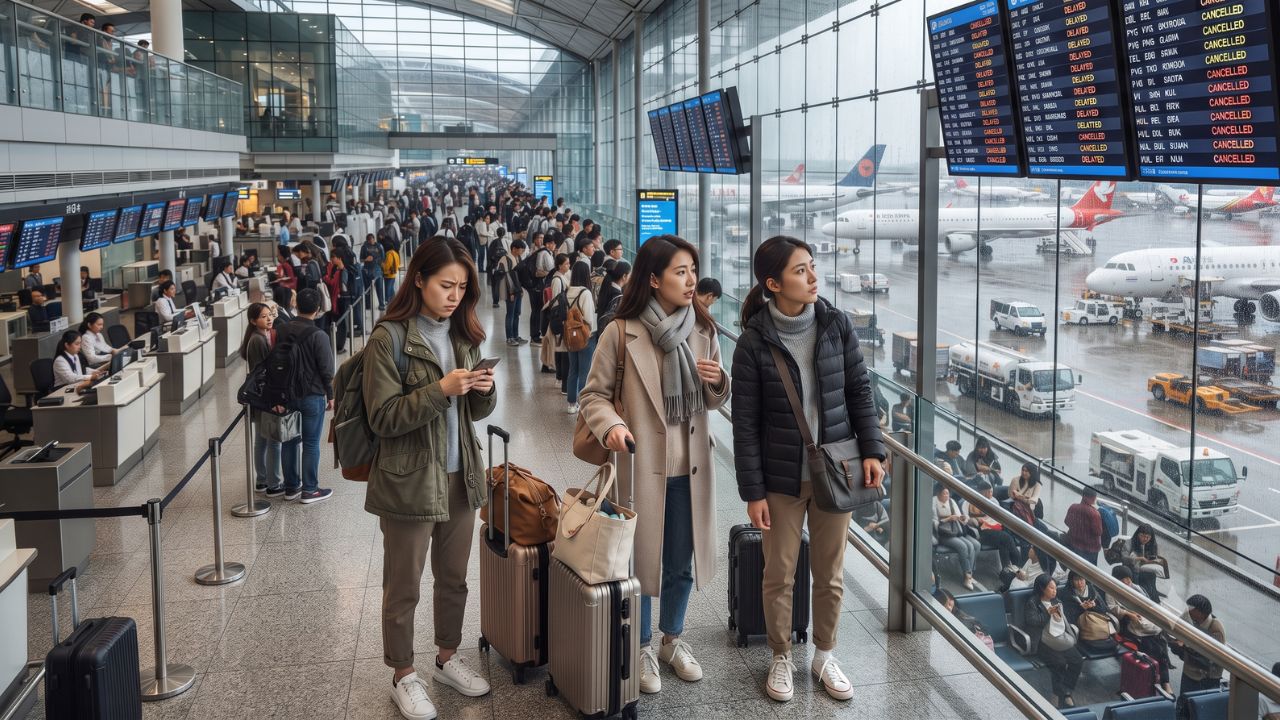
A single delayed rotation across Shanghai or Delhi can trigger an operational ripple effect that grounds aircraft from Pontianak on the equator to the desert megahubs of the Persian Gulf. Verified aviation tracking data recorded on September 25, 2026, at 2:59 PM ET (10:59 PM GST) reveals that 3,314 flight delays and 191 outright cancellations cascaded across major Asian and Middle Eastern corridors. Driven by a combination of dense airspace saturation, adverse seasonal weather bands, and tight turnaround rotations, the disruption has tested ground handling capacity from East Asia to South Asia.
For international passengers connecting between Europe, Australia, and regional Asian destinations, this operational bottleneck has led to missed connections, extended terminal hold times, and last-minute gate reassignments. Understanding which carriers and transit hubs bear the brunt of these delays is essential for executing successful same-day reroutings.
Regional Hotspots: From East Asian Runways to Gulf Transfer Points
The operational strain was heavily concentrated across China’s commercial aviation network. Guangzhou Baiyun International Airport (CAN) logged the highest delay volume in East Asia with 388 delayed flights and 2 cancellations. In Shanghai, Shanghai Pudong International Airport (PVG) recorded 290 delays and 11 cancellations, while the city's domestic hub, Shanghai Hongqiao International Airport (SHA), suffered 65 delays alongside 17 cancellations. Beijing Capital International Airport (PEK) reported 119 delays and 7 cancellations, with additional disruptions noted at Chongqing Jiangbei (CKG, 134 delays, 1 cancellation), Xi’an Xianyang (XIY, 60 delays, 8 cancellations), and Qingdao Jiaodong (TAO, 47 delays, 5 cancellations).
South Asian airspace faced severe congestion centered on India’s primary international gateways. Indira Gandhi International Airport in Delhi (DEL) recorded 236 delays and 15 cancellations, while Mumbai’s Chhatrapati Shivaji Maharaj International Airport (BOM) reported 146 delays and 4 cancellations. Regional hubs in Hyderabad (HYD, 88 delays, 3 cancellations) and Kolkata (CCU, 53 delays, 4 cancellations) also experienced significant schedule friction, alongside severe localized spikes at Birsa Munda Airport in Ranchi (IXR), which saw 55 percent of inbound and 36 percent of outbound services cancelled.
Across Southeast Asia and connecting Gulf transfer nodes, Suvarnabhumi Airport in Bangkok (BKK) logged 281 delays and 4 cancellations, while Jakarta Soekarno-Hatta (CGK) recorded 206 delays and 14 cancellations, with West Kalimantan’s Supadio Airport in Pontianak (PNK) seeing an 8 percent origin cancellation rate. In the Middle East, Dubai International Airport (DXB) posted 305 delays and 6 cancellations, with Abu Dhabi (AUH, 132 delays, 2 cancellations) and Sharjah (SHJ, 66 delays, 2 cancellations) absorbing significant schedule shifts.
Carrier Performance Breakdown
Both low-cost carriers and legacy flag operators registered schedule adjustments. India’s IndiGo recorded the highest absolute cancellation volume among regional carriers with 28 cancellations (1 percent of daily operations) and 293 delays (14 percent). SpiceJet experienced an operational bottleneck, logging 8 cancellations (13 percent) and 37 delays affecting 60 percent of its scheduled sectors. Air India recorded 97 delays (16 percent) and 1 cancellation, while Akasa Air posted 10 delays (5 percent) and 2 cancellations.
In mainland China, state-owned network carriers absorbed heavy rotation delays. China Eastern recorded 26 cancellations (1 percent) and 306 delays (12 percent), Air China registered 19 cancellations (1 percent) and 138 delays (7 percent), and China Southern reported 13 cancellations and 107 delays (5 percent). Regional Chinese operators including Shanghai Airlines (7 cancellations, 55 delays), China Express (4 cancellations, 70 delays), and XiamenAir (4 cancellations, 51 delays) also faced widespread turnaround delays.
In Southeast Asia, Batik Air recorded 19 cancellations (6 percent) and 68 delays (22 percent), while Vietnam Airlines logged 145 delays affecting 39 percent of its schedule alongside 2 cancellations. Citilink posted 43 delays (16 percent) and 2 cancellations, Garuda Indonesia logged 45 delays (19 percent) and 2 cancellations, and TransNusa registered 17 delays (22 percent) and 1 cancellation. Middle Eastern carriers managing connecting banks saw FlyDubai record 97 delays (32 percent) and 5 cancellations, Air Arabia log 54 delays (23 percent) and 1 cancellation, and Oman Air record 9 delays (9 percent) and 2 cancellations. Additional delays were noted by Cathay Pacific (81 delays, 18 percent, 1 cancellation) and Uzbekistan Airways (19 delays, 20 percent, 1 cancellation).
What Makes Asian Airspace Congestion Different
Aviation management across Asia operates under distinct geopolitical and geographic constraints compared to European or North American corridors. In China, strict civil airspace allocations managed through the Civil Aviation Administration of China funnel thousands of daily commercial flights through narrow air traffic corridors. When regional convective weather or seasonal air traffic control flow control protocols are instituted, ground delay programs quickly cascade across the entire domestic system.
Similarly, the monsoon transition period across South and Southeast Asia brings sudden atmospheric instability, resulting in prolonged holding patterns over major coastal hubs like Mumbai, Bangkok, and Jakarta. Because airlines operate aircraft on tight multi-sector rotations—often flying four to six domestic legs per aircraft daily—a sixty-minute delay in the early morning at Delhi or Guangzhou inevitably turns into a multi-hour evening delay or midnight cancellation downline.
Standards published by the International Air Transport Association stress that real-time aircraft rotation visibility is essential for preventing passenger misconnections across interlined itineraries.
Visitor Insider Tips
When navigating transit itineraries across Asia during periods of widespread schedule volatility, adopting proactive communication strategies saves hours of terminal frustration.
- Buffer Minimum Connection Times (MCT): When booking self-transfers or connecting flights through major hubs like Shanghai Pudong, Delhi, or Bangkok, build in a minimum connection buffer of three to four hours. Standard 90-minute international-to-domestic transfers are frequently missed during multi-carrier delays.
- Leverage Direct Airline App Chatbots: Rather than joining terminal queue lines exceeding 300 passengers, use your smartphone to open the airline's official app or WeChat mini-program (for Chinese carriers). Digital self-rebooking portals often release available alternative seats faster than gate agents can process paper tickets.
- Keep Physical Boarding Passes for Immigration: Several Asian airports, including Jakarta and Shanghai Hongqiao, require physical boarding passes or stamped transit vouchers to clear security screening and access transit hotels if an involuntary overnight stay is required.
- Monitor Airport Ground Transport Deadlines: If your flight into Shanghai Pudong or Delhi arrives after midnight due to rolling delays, verify whether airport express metro lines have ceased operations. Have licensed taxi booking apps like Grab (Southeast Asia), Didi (China), or prepaid airport taxi vouchers ready.
- Carry On Essential Medications and Electronics: Never place critical prescription medications, baby supplies, or lithium-ion laptop batteries into checked baggage during volatile schedule periods, as luggage short-checking during rapid rebookings remains a common risk.
Cultural and Environmental Context
The Asia-Pacific aviation sector represents the fastest-growing travel market globally, but rapid expansion brings significant environmental challenges. Airline fleets operating through high-density hubs are adopting advanced continuous-descent approaches and ground-power electrification to reduce fuel burn during prolonged holding patterns.
Policy guidelines outlined by the International Civil Aviation Organization encourage regional carriers to integrate sustainable aviation fuels (SAF) and optimize cross-border air navigation routes to minimize the carbon footprint of regional transit. Supporting efficient hub-and-spoke connectivity while improving railway alternatives—such as China’s extensive high-speed rail and India’s Vande Bharat express network—offers travelers a lower-carbon alternative for intermediate distances.
FAQ: Navigating Asian Flight Delays 2026
What should I do if my connecting flight in Shanghai or Delhi is delayed? Check your airline mobile app immediately for automated rebooking options. If your itinerary is on a single ticket, the operating airline is responsible for rebooking you onto the next available departure.
Do Asian airlines provide complimentary hotels for weather delays? Policies vary by country and ticket class. While severe weather is often classified as an uncontrollable event, full-service carriers like China Eastern, Air China, and Garuda Indonesia frequently arrange subsidized or complimentary transit lodging for long overnight misconnections on single-ticket bookings.
Can I switch from a flight to a high-speed train in China? Yes. In hubs like Shanghai and Beijing, high-speed rail stations connect seamlessly with airport transit. If your domestic flight is heavily delayed, requesting a ticket refund and booking a bullet train via 12306 or official travel portals is often faster.
Are refunds guaranteed for cancelled regional flights? Yes. If an airline cancels your flight, aviation regulations across India, China, Thailand, and Indonesia entitle you to a full refund or free rebooking on alternative flights without penalty fees.
When flight boards flicker across the continent from Pudong to the Arabian Sea, staying informed and acting decisively turns unexpected transit delays into manageable travel detours.
Related Travel Guides
Disclaimer
This article is for informational and educational purposes only. It does not constitute legal, financial, or professional advice. While we strive to provide accurate and up-to-date information, travel policies, regulations, and conditions change rapidly. Always verify information with official sources before making travel decisions. Nomad Lawyer makes no representations about the accuracy, reliability, completeness, or suitability of the information provided. Readers should consult qualified professionals for advice specific to their circumstances. The views expressed in this article are those of the author and do not necessarily reflect the views of Nomad Lawyer.
Naina Thakur
Contributor & Travel Specialist
Travel enthusiast and legal writer covering visa regulations, responsible tourism, and cultural journeys across global destinations.
Learn more about our team →