Asia Aviation Disrupted as Monsoons and Storms Trigger 212 Cancellations and 6,639 Delays


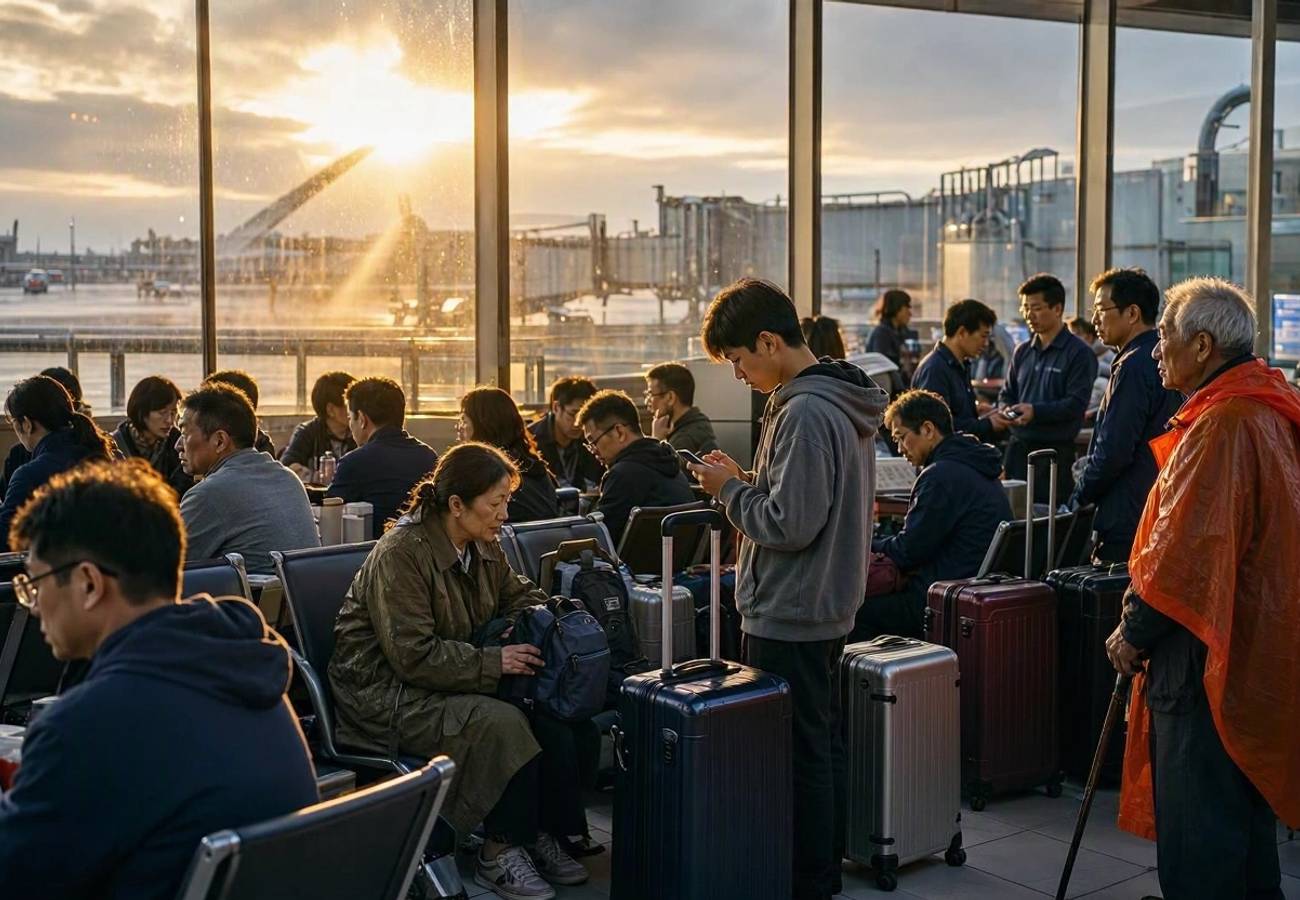
Image generated by AI
Severe monsoon weather and convective thunderstorms have disrupted aviation networks across Asia and the Middle East. Real-time flight tracking data recorded 6,639 delays and 212 cancellations in a single day, causing major backlogs across primary transit hubs including Shanghai, Dubai, Jakarta, and Bangkok.
Monsoon Systems and Airspace Restrictions Trigger Regional Bottlenecks
[JAKARTA, Indonesia] — Widespread weather fronts across East, South, and Southeast Asia have severely reduced runway throughput and air traffic management capacities. Commercial flight tracking data compiled on August 31, 2026, confirms 6,639 delays and 212 cancellations across Asia-Pacific and Middle Eastern transit gateways.
Primary operational bottlenecks driving today's schedule disruptions include:
- South Asian Monsoons: Heavy downpours and low visibility across Indian hubs reduced runway landing rates and slowed aircraft turnarounds.
- Convective Thunderstorms: Intense summer storm cells across Southern and Eastern China triggered strict Air Traffic Control (ATC) flow management restrictions and extended holding patterns.
- Western Pacific Fronts: Active tropical weather systems impacted flight corridors connecting Japan, Taiwan, Hong Kong, and coastal Mainland China.
- Restricted Airspace Rerouting: Compressed transit corridors in West Asia increased long-haul block times, reducing aircraft turnaround windows at major Middle Eastern hubs.
East Asia Airport Disruptions: Shanghai, Guangzhou, and Tokyo
Mainland China and Hong Kong recorded the highest overall volume of flight interruptions across East Asia:
- Shanghai Pudong International (PVG): 557 delays, 7 cancellations.
- Guangzhou Baiyun International (CAN): 517 delays, 4 cancellations.
- Beijing Capital International (PEK): 305 delays, 2 cancellations.
- Shanghai Hongqiao International (SHA): 273 delays, 7 cancellations.
- Hong Kong International (HKG): 243 delays, 1 cancellation.
- Other Chinese Hubs: Hangzhou Xiaoshan logged 219 delays (1 cancellation), Chongqing Jiangbei recorded 141 delays (1 cancellation), Kunming Changshui saw 141 delays (8 cancellations), and Chengdu Tianfu logged 135 delays (12 cancellations).
Chinese carriers recorded major delay volumes: China Eastern logged 603 delays (22% of schedule) and 2 cancellations; China Southern registered 428 delays (16%) and 3 cancellations; Air China recorded 338 delays (16%) and 1 cancellation. High delay rates were also recorded by Shanghai Airlines (95 delays, 26%), Juneyao Airlines (104 delays, 25%), and Spring Airlines (131 delays, 20%).
In Japan, Tokyo International (Haneda) logged 124 delays and 1 cancellation. Regional Japanese disruptions were recorded at Fukuoka (41 delays, 3 cancellations), Hakodate (5 delays, 4 cancellations), and Sapporo Okadama Airfield (2 delays, 6 cancellations). Japan Airlines registered 65 delays (8%) and 1 cancellation, while Hokkaido Air System suffered 6 cancellations, representing 15% of its total daily operating schedule.
South, Southeast, and Middle East Hubs: Jakarta, Bangkok, and Dubai
South Asia, Southeast Asia, and Middle Eastern hub gateways experienced severe delay cascading across connecting networks:
Southeast Asia Operations
- Jakarta Soekarno-Hatta (CGK, Indonesia): 269 delays, 10 cancellations.
- Bangkok Suvarnabhumi (BKK, Thailand): 248 delays, 1 cancellation.
- Kuala Lumpur International (KUL, Malaysia): 219 delays, 5 cancellations.
- Manila International (MNL, Philippines): 214 delays, 2 cancellations.
- Singapore Changi (SIN): 202 delays, 1 cancellation.
- Bali Ngurah Rai (DPS, Indonesia): 124 delays, 2 cancellations.
Regional carrier impact in Southeast Asia included MAI (Myanmar) logging 18 delays (28% rate) and 2 cancellations (3%), PAL Express recording 37 delays (20%) and 4 cancellations (2%), AirAsia Malaysia seeing 91 delays (17%) and 8 cancellations (1%), and Indonesia AirAsia logging 12 delays (12%) and 1 cancellation.
South Asia Operations
In India, Indira Gandhi International in Delhi logged 163 delays and 7 cancellations, while Mumbai Chhatrapati Shivaji registered 87 delays and 4 cancellations. Among Indian carriers, SpiceJet recorded a high 32% delay rate (34 delays, 9 cancellations), IndiGo logged 170 delays (8%) and 6 cancellations, while Akasa Air saw 7 delays (4%) and 3 cancellations.
Middle East & West Asia Hubs
Transcontinental transit hubs faced high schedule pressure: Dubai International (DXB) recorded 436 delays and 7 cancellations, while Istanbul Airport (IST) logged 252 delays and 1 cancellation. In Saudi Arabia, Riyadh King Khalid logged 109 delays (12 cancellations) and Jeddah King Abdulaziz saw 89 delays (12 cancellations). Regional carriers FlyDubai registered 146 delays (43% rate), Etihad Airways logged 147 delays (41% rate), Air Arabia recorded 69 delays (26%), and Saudia logged 41 delays alongside 22 cancellations (3%).
The table below outlines key international airport gateways across Asia and the Middle East affected by today's severe weather disruptions:
| Airport Gateway | Country / Region | Recorded Flight Delays | Recorded Flight Cancellations | Primary Operational Bottleneck |
|---|---|---|---|---|
| Shanghai Pudong (PVG) | China | 557 Delays | 7 Cancellations | Convective storms & ATC flow control |
| Dubai International (DXB) | United Arab Emirates | 436 Delays | 7 Cancellations | Airspace rerouting & transit congestion |
| Beijing Capital (PEK) | China | 305 Delays | 2 Cancellations | Convective weather & airspace holding |
| Jakarta Soekarno-Hatta (CGK) | Indonesia | 269 Delays | 10 Cancellations | Regional monsoon fronts & heavy rain |
| Istanbul Airport (IST) | Türkiye | 252 Delays | 1 Cancellation | Regional weather & transit bottlenecks |
| Bangkok Suvarnabhumi (BKK) | Thailand | 248 Delays | 1 Cancellation | Tropical rainstorms & runway flow control |
| Hong Kong International (HKG) | Hong Kong SAR | 243 Delays | 1 Cancellation | Western Pacific coastal fronts |
| Kuala Lumpur (KUL) | Malaysia | 219 Delays | 5 Cancellations | Heavy monsoon downpours |
| Manila International (MNL) | Philippines | 214 Delays | 2 Cancellations | Western Pacific tropical weather |
| Singapore Changi (SIN) | Singapore | 202 Delays | 1 Cancellation | Regional thunderstorms & ground holds |
| Delhi Indira Gandhi (DEL) | India | 163 Delays | 7 Cancellations | South Asian monsoon downpours |
The table below outlines airline disruption metrics and operational delay percentages across major carriers operating in the region:
| Operating Airline | Primary Region | Recorded Delays | Delay Rate (%) | Recorded Cancellations | Cancellation Rate (%) |
|---|---|---|---|---|---|
| China Eastern Airlines | China | 603 Delays | 22% | 2 Cancellations | 0% |
| China Southern Airlines | China | 428 Delays | 16% | 3 Cancellations | 0% |
| Air China | China | 338 Delays | 16% | 1 Cancellation | 0% |
| IndiGo | India | 170 Delays | 8% | 6 Cancellations | 0% |
| Etihad Airways | UAE | 147 Delays | 41% | 1 Cancellation | 0% |
| FlyDubai | UAE | 146 Delays | 43% | 2 Cancellations | 0% |
| Spring Airlines | China | 131 Delays | 20% | 2 Cancellations | 0% |
| Sichuan Airlines | China | 126 Delays | 14% | 2 Cancellations | 0% |
| Pegasus Airlines | Türkiye | 122 Delays | 15% | 1 Cancellation | 0% |
| Hainan Airlines | China | 119 Delays | 13% | 1 Cancellation | 0% |
| AirAsia | Malaysia | 91 Delays | 17% | 8 Cancellations | 1% |
| SpiceJet | India | 34 Delays | 32% | 9 Cancellations | 8% |
| Saudia | Saudi Arabia | 41 Delays | 7% | 22 Cancellations | 3% |
| Hokkaido Air System | Japan | 0 Delays | 0% | 6 Cancellations | 15% |
Essential Action Guide for Affected Passengers
Passengers traveling through Asian or Middle Eastern gateways today should take active measures to manage disrupted travel plans:
- Digital Status Tracking: Monitor live aircraft status via mobile airline applications and official carrier portals rather than relying solely on airport terminal screens.
- Self-Service Rebooking: Use airline digital self-service tools immediately upon receiving cancellation alerts to secure automatic rebooking on the next available flight.
- Care and Assistance Vouchers: For delays exceeding several hours, request airline meal vouchers at customer service desks. If an operational cancellation requires an overnight stay, request airline-provided hotel accommodations and ground transfers.
- Documentation & Receipts: Retain all boarding passes, delay SMS notifications, and out-of-pocket expense receipts to support travel insurance claims or passenger rights reimbursements.
Why This Matters for Passengers and International Travelers
For passengers connecting through major Asian hubs like Shanghai, Jakarta, Bangkok, or Dubai, severe weather delays can quickly result in missed flight connections. Understanding carrier delay rates and monitoring live flight status before leaving for the airport allows travelers to rebook early or adjust hotel arrangements. Carrying essential medications and electronic chargers in hand luggage ensures comfort if stranded during extended airport ground holds.
Frequently Asked Questions
What caused the massive flight cancellations and delays across Asia today?
The disruptions were caused by severe South Asian monsoon downpours, summer convective thunderstorms across Southern and Eastern China, tropical weather fronts in the Western Pacific, and restricted West Asia airspace rerouting.
How many total flight disruptions were recorded across Asia today?
Real-time aviation data recorded 6,639 delays and 212 flight cancellations across major Asian and Middle Eastern airports on August 31, 2026.
Which airports recorded the highest number of flight delays?
Shanghai Pudong (557 delays), Guangzhou Baiyun (517 delays), Dubai International (436 delays), Beijing Capital (305 delays), and Jakarta Soekarno-Hatta (269 delays) recorded the highest disruption volumes.
Related Travel Guides
- British Airways to Deploy Crew Rest Facilities in First Class Cabins on Extended Long-Haul Routes
- Zooom Air Relaunches Regional India Flight Networks to Shillong and Aizawl, Combating Metro Flight Cancellations, Airport Disruptions, and Domestic Travel Chaos: New Airline News and Aviation Updates
- AEGEAN Airlines Cancels Middle East Flights, Offers Flexible Rebooking and Refunds
This article is for informational purposes. Flight routes, passenger regulations, visa rules, and transit advisories are subject to change by airlines and aviation authorities. Readers are advised to verify schedules and travel documentation with relevant carriers and border agencies before departure.
Related Stories
754 Flight Cancellations and 6,264 Delays Across Asia: Typhoon Champi Disrupts Air Travel in 2026

Villa Vie Odyssey Residents Stranded in Cambodia as 'Cruise for Life' Operations Halt in 2026