
Widespread Flight Disruptions Across Asia Lead to One Hundred Fifty-Nine Cancellations and Over Five Thousand Five Hundred Delays
Aviation networks across China, India, and Japan experience 159 flight cancellations and 5,597 delays, disrupting major airlines on July 9, 2026.

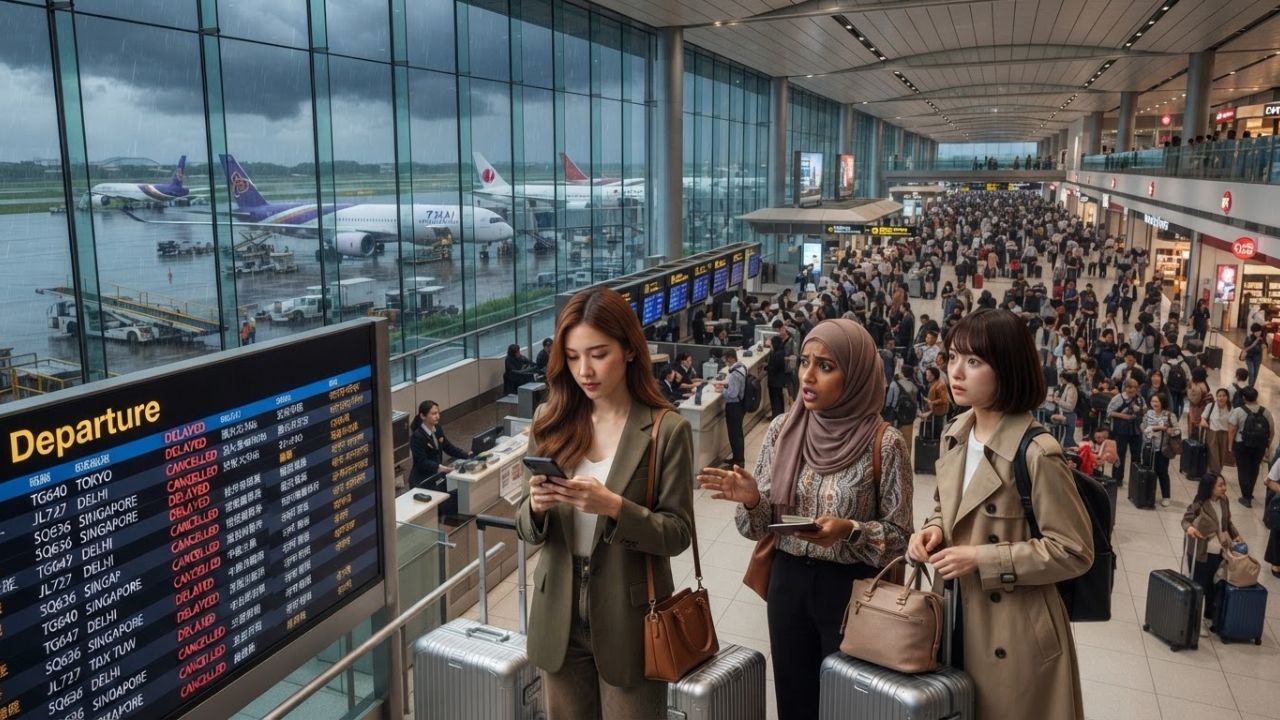
Image generated by AI
[Beijing, July 9, 2026] — A wave of flight cancellations and delays has impacted the Asian aviation network. A total of one hundred and fifty-nine departures were suspended and five thousand five hundred and ninety-seven flights experienced delays across the region.
The disruptions have affected major domestic and international hubs in China, India, Japan, Thailand, Indonesia, and Hong Kong. Travelers are experiencing extended terminal wait times, missed connections, and baggage handling backlogs.
Airlines are working to manage crew rotations and reposition aircraft to stabilize flight schedules. Passengers are advised to verify their flight status before departing for the terminal.
Airport Disruption Statistics in China, India, and Japan
Guangzhou Baiyun Airport recorded the highest level of disruption today. The major Chinese hub registered one thousand and sixteen delays and seven cancellations.
Beijing Capital Airport experienced thirty-six five delays and twenty-five cancellations, the highest cancellation count in the region. Delhi Indira Gandhi International Airport reported three hundred and eighty-three delays and thirteen cancellations.
Mumbai Chhatrapati Shivaji Maharaj Airport registered two hundred and eighty-seven delays and sixteen cancellations. Meanwhile, Bangkok Suvarnabhumi, Jakarta Soekarno-Hatta, and Hong Kong International Airports also recorded substantial flight delays.
Carrier Operations Analysis and Scheduling Delays
Our analysis of the flight data indicates that China Eastern Airlines registered the highest delay count. The carrier reported nine hundred and fifty-two delays and forty cancellations.
Air China recorded five hundred and twenty-six delays and forty-nine cancellations, the most cancellations of any airline today. Indian carrier Akasa Air also experienced significant disruptions, with forty delays and forty-one cancellations.
Other affected carriers include Cathay Pacific, which reported one hundred and fifteen delays, and Thai Airways, which faced sixty-two delays. Japan Airlines reported fifty-three delays and four cancellations across its domestic network.
The Domino Effect of Regional Weather Congestion
Aviation observers note that disruptions are rarely caused by a single isolated event. Instead, summer storms and air traffic restrictions at major hubs create a domino effect across the region.
An aircraft delayed in Guangzhou might be scheduled to operate subsequent flights to Bangkok, Delhi, or Jakarta. If the initial flight is held up, all subsequent departures using that airframe will run behind schedule.
Airlines often select to cancel specific regional flights to prevent delay backlogs from carrying over into the next day. This helps restore schedule reliability for long-haul international departures.
Passenger Rights and Checked Baggage Management Guides
During large-scale disruptions, passengers must coordinate with baggage handling agents to locate checked suitcases. If a flight is cancelled, airlines will typically hold bags or reroute them to the new booking.
Passengers should keep essential medications, electronic chargers, and travel documents in their carry-on bags. It is advisable to obtain printed confirmations of rebooked tickets before leaving the transfer desk.
Under passenger rights regulations in several Asian countries, travelers may be eligible for meals and accommodation during extended delays. Passengers are encouraged to monitor flight status updates via airline mobile applications.
The tables below summarize the flight cancellations and delays by airline and airport:
Disruptions by Airport
| Airport | Delays | Cancellations |
|---|---|---|
| Guangzhou Baiyun (CAN) | 1016 | 7 |
| Delhi Indira Gandhi (DEL) | 383 | 13 |
| Beijing Capital (PEK) | 365 | 25 |
| Bangkok Suvarnabhumi (BKK) | 303 | 3 |
| Jakarta Soekarno-Hatta (CGK) | 298 | 13 |
| Mumbai Chhatrapati Shivaji (BOM) | 287 | 16 |
| Hong Kong International (HKG) | 278 | 1 |
| Tokyo Haneda (HND) | 145 | 3 |
Disruptions by Airline
| Airline | Delays | Cancellations |
|---|---|---|
| China Eastern | 952 | 40 |
| Air China | 526 | 49 |
| Cathay Pacific | 115 | 1 |
| Thai Airways | 62 | 0 |
| Japan Airlines | 53 | 4 |
| Akasa Air | 40 | 41 |
Key Takeaways
- Guangzhou Congestion: Guangzhou Baiyun Airport registered over 1,000 delays, the most in Asia today.
- Beijing Cancellations: Beijing Capital Airport experienced 25 cancellations, leading regional hubs.
- Air China Impacted: Air China suffered the most route cancellations overall, reporting 49 suspensions.
- Akasa Air Disruption: Akasa Air recorded 41 cancellations, impacting travel across key Indian cities.
Why This Matters
This widespread disruption demonstrates the fragile state of Asia's air travel infrastructure. Because the Asian market is dominated by major hubs like Beijing, Guangzhou, and Delhi, a delay in one hub quickly spreads across the entire region.
Our analysis of the flight data indicates that regional airlines like Akasa Air and China Eastern's domestic branches are highly vulnerable to airport congestion. By cancelling regional routes, carriers can protect their mainline international flights and crew assignments.
Additionally, this incident shows that passenger protection regulations have not yet forced airlines to build more buffer time into their schedules. Carriers continue to run tight aircraft rotations to maximize revenue, leaving them vulnerable to weather disruptions.
Future Outlook
Market trends suggest that flight delays will remain common during peak summer travel periods. Labor shortages in ground handling and air traffic control continue to limit operational recovery speeds.
Furthermore, airlines will need to invest in advanced scheduling software to better manage crew rotations during disruptions. Improving coordination between regional and mainline carriers remains essential to reducing passenger delays.
Related Aviation News Guides
- Philippine Airlines Expands Flight Networks to Japan and Australia to Capitalize on Peak Holiday Travel Demand in Late 2026
- Middle East Flight Cancellations and Delays Drive Widespread Schedule Adjustments for Emirates and flydubai
- Bahrain International Airport Experiences Widespread Flight Cancellations and Delays Disrupting Gulf Air and Regional Partners
Disclaimer
This article is for informational and educational purposes only. It does not constitute legal, financial, or professional advice. While we strive to provide accurate and up-to-date information, travel policies, regulations, and conditions change rapidly. Always verify information with official sources before making travel decisions. Nomad Lawyer makes no representations about the accuracy, reliability, completeness, or suitability of the information provided. Readers should consult qualified professionals for advice specific to their circumstances. The views expressed in this article are those of the author and do not necessarily reflect the views of Nomad Lawyer.
Preeti Gunjan
Contributor & Community Manager
A passionate traveller and community builder. Preeti helps grow the Nomad Lawyer community, fostering engagement and bringing the reader experience to life.
Learn more about our team →