Asia Dive Tourism Surges for Winter 2026: Maldives, Indonesia, India, and Thailand Lead Tropical Scuba Getaways

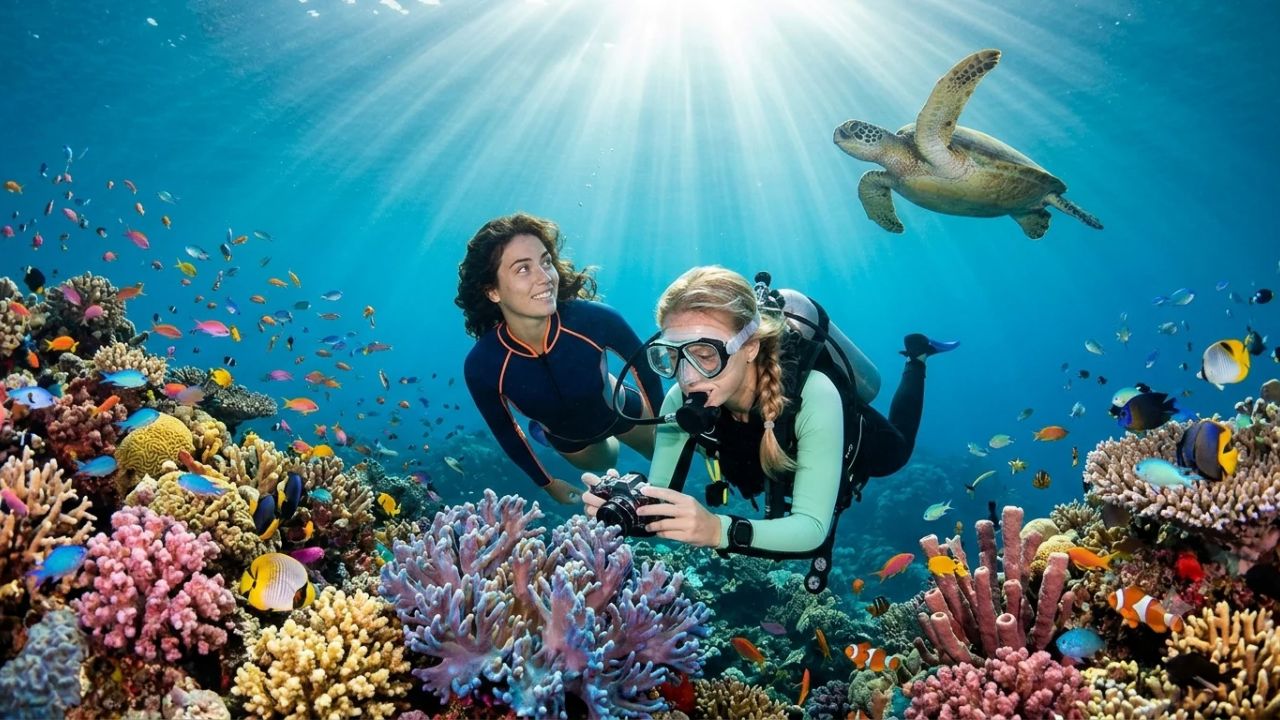
Winter travel demand is driving record visitor interest across Asia's premier scuba diving and marine biodiversity corridors
[BANGKOK, Oct 30, 2026] — Fuelled by northern hemisphere travelers seeking warm-water coastal escapes between October and December, Asia's dive tourism sector is experiencing a significant winter expansion, propelled by iconic megafauna encounters in the Maldives and Indonesia alongside emerging frontier reefs in India, Timor-Leste, and Sri Lanka.
[!NOTE] Seasonal Travel Outlook: Between October and April, tropical Asia enters its primary scuba diving season as the northeast monsoon establishes calm seas, dry weather, and underwater visibility exceeding 30 meters. Established destinations such as the Maldives (Hanifaru Bay and South Ari Atoll), Indonesia (Raja Ampat and Komodo), Thailand (Similan Islands and Koh Tao), and Malaysia (Sipadan) are seeing elevated bookings, while emerging markets in the Andaman and Lakshadweep archipelagos of India and Ataúro Island in Timor-Leste are gaining international prominence.
ASIA WINTER DIVE TOURISM GEOGRAPHIC CORRIDORS
| Column 1 |
|---|
| [ INDIAN OCEAN PELAGIC SANCTUARIES ] |
| - Sri Lanka: Southern & Eastern Wrecks (Mirissa & Trincomalee) |
| +----------------------------+-----------------------------+ |
| v [ CORAL TRIANGLE BIODIVERSITY HEAVYWEIGHTS ] v [ ANDAMAN SEA & GULF HUBS ] |
| INDONESIA & TIMOR-LESTE THAILAND & MALAYSIA |
| - Raja Ampat: Dampier Strait & Misool - Similan Islands: Richelieu Rock |
| * 75% of world's known coral species * Granite pinnacles & whale sharks |
| - Komodo National Park: High-current drifts - Koh Tao: Global certification hub |
| - Timor-Leste: Ataúro Island & Dili coast - Sipadan (Malaysia): Barracuda Point |
| * World's highest recorded reef fish density * Strict daily permit quotas |
| +----------------------------+-----------------------------+ |
| v |
| [ CITIZEN SCIENCE & SUSTAINABILITY INTEGRATION ] |
Winter Migration: Escaping Cold Climates for Tropical Coral Ecosystems
As autumn gives way to freezing temperatures across Europe, North America, and Northern Asia, international travel demand shifts decisively toward equatorial coastlines. For millions of holidaymakers, traditional fly-and-flop beach vacations are being replaced by active, experiential travel centered on underwater exploration.
Scuba diving has evolved from an extreme subculture into a pillar of international eco-tourism. Travelers increasingly plan extended multi-week vacations around marine biodiversity corridors, booking dedicated liveaboard vessels, boutique dive resorts, and island-hopping expeditions.
The October to December window marks an ideal seasonal transition across the Indo-Pacific basin. Shifting monsoon winds bring flat, mirror-like seas, reduced surface swell, and plankton-rich upwellings that draw majestic pelagic megafauna—including manta rays, whale sharks, schooling hammerheads, and sea turtles—into accessible coastal waters.
Concurrently, the demographic profile of international divers is broadening. The sector is seeing expanded participation from female adventurers, solo travelers, and multi-generational families. Modern dive operators cater to this varied audience by pairing entry-level discovery dives and reef snorkeling with technical deep-water excursions, luxury hospitality, and dedicated marine biology workshops.
The Maldives: Pelagic Encounters, Manta Gatherings, and Strict Protection
The Republic of Maldives remains the crown jewel of Indian Ocean dive tourism, celebrated for its expansive ring-shaped atolls, crystalline lagoons, and dramatic submarine topography.
MALDIVIAN DIVE ARCHITECTURE & MEGAFAUNA SITES
| Column 1 |
|---|
| [ BAA ATOLL: HANIFARU BAY BIOSPHERE RESERVE ] |
| - Natural funnel shape traps dense concentrations of oceanic zooplankton. |
| - Seasonal aggregations of hundreds of reef manta rays performing cyclone-feeding loops. |
| - Strict environmental protections: SCUBA diving is completely banned in Hanifaru Bay; |
| snorkeling only with licensed rangers to prevent acoustic and physical disturbance. |
| [ SOUTH ARI ATOLL: YEAR-ROUND WHALE SHARK NURSERY ] |
| - South Ari Marine Protected Area (SAMPA): Global hotspot for juvenile whale sharks. |
| - Shallow outer reef walls allow snorkelers and divers to encounter oceanic giants. |
| [ CENTRAL & SOUTHERN CHANNELS: ADDU & NORTH MALÉ ] |
| - High-energy kandu (channel) drift dives with incoming tidal currents. |
| - Home to the historic British Loyalty shipwreck (140m torpedoed tanker) in Addu Atoll. |
| - Deep cleaning stations hosting gray reef sharks, eagle rays, and pelagic gamefish. |
Baa Atoll and the Hanifaru Bay Phenomenon
Located in the northern central Maldives, Baa Atoll is designated as a UNESCO World Biosphere Reserve. Its most famous site, Hanifaru Bay, is an underwater cul-de-sac whose unique bathymetry traps massive concentrations of plankton pushed inward by south-westerly currents.
This nutrient soup triggers one of the natural world's greatest spectacles: hundreds of reef manta rays (Mobula alfredi) gather simultaneously, performing coordinated "cyclone feeding" formations where dozens of mantas swim in tight spirals to create localized vortexes.
To safeguard this fragile feeding ground, Maldivian conservation authorities enforce strict protection protocols. Scuba diving is completely banned inside Hanifaru Bay; visitors may enter the water only with certified local guides for restricted snorkeling sessions. Motorized watercraft and flash photography are strictly prohibited, ensuring that mass tourism does not disrupt the mantas' natural feeding cycles.
South Ari Atoll and Deep Southern Channels
To the south, the South Ari Marine Protected Area (SAMPA) represents one of the few places on Earth where whale sharks (Rhincodon typus) can be encountered year-round along shallow outer reef ledges.
Further south, Addu Atoll and North Malé Atoll offer exhilarating drift diving through deep ocean passes known locally as kandus. When ocean tides push clear water into the inner lagoons, divers drift alongside schools of eagle rays, barracudas, and reef sharks. Addu Atoll also features the British Loyalty, a 140-meter oil tanker torpedoed during World War II that now serves as an artificial reef encrusted with hard corals and sea fans.
| Dive Region | Geographic Focus | Signature Marine Encounters | Topography & Experience Type | Recommended Certification Level |
|---|---|---|---|---|
| Baa Atoll (Maldives) | Central Indian Ocean | Hundreds of feeding manta rays, whale sharks | Shallow lagoons, bay snorkeling | Open Water / Snorkeler |
| South Ari Atoll (Maldives) | Central Indian Ocean | Year-round whale sharks, hawksbill turtles | Outer barrier reef walls | Open Water / Advanced |
| Raja Ampat (Indonesia) | Southwest Papua | 75% of global coral species, wobbegongs, mantas | Coral gardens, pinnacles, mangrove reefs | Advanced Open Water |
| Komodo (Indonesia) | Lesser Sunda Islands | Oceanic mantas, white-tip sharks, giant trevally | High-current submerged pinnacles | Advanced (Drift Experience) |
| Similan Islands (Thailand) | Andaman Sea | Whale sharks, leopard sharks, manta rays | Submerged granite boulders, deep walls | Open Water / Advanced |
| Sipadan Island (Malaysia) | Celebes Sea (Borneo) | Tornado schools of barracuda, green turtles | 600m oceanic drop-offs, underwater caverns | Advanced Open Water |
| Andaman Islands (India) | Bay of Bengal | Dugongs, reef sharks, manta rays, volcanic reefs | Fringing coral shelves, volcanic sea mounts | Open Water / Advanced |
| Ataúro Island (Timor-Leste) | Coral Triangle | World's highest recorded reef fish biodiversity | Vertical oceanic drop-offs, pristine coral | Open Water / Advanced |
Indonesia’s Coral Triangle Epicenters: Raja Ampat and Komodo National Park
Indonesia sits at the very heart of the Coral Triangle, the global center of marine biodiversity encompassing more than 500 species of reef-building corals and thousands of species of reef fish. Within this archipelago, Raja Ampat and Komodo National Park represent two of the planet's most revered diving destinations.
INDONESIA DIVE CORRIDORS: RAJA AMPAT & KOMODO
| Column 1 |
|---|
| [ RAJA AMPAT (SOUTHWEST PAPUA) ] |
| - The Global Marine Epicenter: More than 1,500 fish species and 550 coral species. |
| - Dampier Strait: World-class sites including Cape Kri, Blue Magic, and Sardine Reef. |
| - Misool: Southern paradise of soft coral walls, sea fan forests, and protected shark nurseries. |
| - Signature Species: Oceanic mantas, endemic epaulette (walking) sharks, pygmy seahorses. |
| [ KOMODO NATIONAL PARK (FLORES / LABUAN BAJO) ] |
| - Dynamic confluence of the warm Flores Sea (Pacific) and cool Sumba Strait (Indian Ocean). |
| - Massive tidal flows fuel intense nutrient upwellings and exhilarating drift dives. |
| - Premier Sites: Batu Bolong, Castle Rock, Crystal Rock, and Manta Point. |
| - Dual Adventure: World-class diving paired with terrestrial Komodo dragon wildlife trekking. |
Raja Ampat: The Global Biodiversity Benchmark
Located off the northwest tip of New Guinea in Southwest Papua, Raja Ampat (The Four Kings) is widely considered the ultimate destination for underwater enthusiasts. Scientific surveys indicate that its waters harbor approximately 75% of all known coral species on Earth.
In the Dampier Strait, sites like Cape Kri hold world records for the highest number of fish species recorded on a single dive (over 370 species). Divers float through clouds of fusiliers, red snappers, and giant trevally, while carpet sharks (wobbegongs) rest on coral ledges below.
In southern Raja Ampat, the Misool marine reserve showcases kaleidoscope walls of soft corals and giant gorgonian sea fans, protected by a network of community-managed marine sanctuaries that have successfully restored local reef shark populations.
Komodo National Park: High-Current Adrenaline
Accessed through the harbor town of Labuan Bajo on the island of Flores, Komodo National Park offers high-energy diving powered by dramatic tidal currents. As tides surge through the narrow straits separating Komodo, Rinca, and Padar islands, nutrient-rich upwellings fuel thriving coral pinnacles.
Sites like Batu Bolong—a submerged rock pinnacle dropping into deep oceanic trenches—are blanketed in vibrant orange and yellow soft corals, home to hawksbill turtles and hunting white-tip reef sharks. At Manta Point (Makassar Reef), divers hover over shallow gravel bottoms while oceanic mantas visit active cleaning stations.
Beyond its waters, Komodo offers travelers the unique opportunity to combine marine adventures with guided overland treks to observe the world's largest living lizard, the endangered Komodo dragon.
Southeast Asian Giants: Thailand’s Andaman Jewels and Malaysia’s Oceanic Pinnacle
Thailand and Malaysia offer an established network of diving destinations, combining professional training academies with world-class offshore marine preserves.
THAILAND & MALAYSIA DIVE INFRASTRUCTURE
| Column 1 |
|---|
| [ THAILAND: ANDAMAN EXPEDITIONS & GULF TRAINING ] |
| - Similan & Surin Islands: Seasonal liveaboard routes open mid-October through mid-May. |
| * Richelieu Rock: World-famous horseshoe pinnacle attracting whale sharks and ghost pipefish. |
| - Phi Phi Islands: Towering limestone karst dive sites with leopard sharks and green turtles. |
| - Koh Tao: Global capital for beginner scuba certifications, dive academies, and reef ecology. |
| [ MALAYSIA: SIPADAN OCEANIC PINNACLE (SABAH, BORNEO) ] |
| - Oceanic island rising 600 meters from the deep Celebes Sea basin. |
| - Barracuda Point: Legendary swirling schools of thousands of chevron barracudas. |
| - Strict Environmental Governance: Zero resorts permitted on Sipadan Island; |
| daily diver quota system strictly enforced by Sabah Parks to protect coral health. |
Thailand’s Dual-Coast Marine Diversity
Thailand offers two distinct diving regions:
- The Andaman Sea: The Similan Islands National Park and Surin Islands represent Thailand's premier offshore diving grounds, accessible primarily via multi-day liveaboard cruises departing from Khao Lak and Phuket between mid-October and mid-May. The standout site is Richelieu Rock, an isolated granite pinnacle discovered internationally by ocean pioneer Jacques Cousteau, famous for close encounters with pelagic whale sharks, manta rays, and rare macro critters like harlequin shrimp.
- The Gulf of Thailand: Centered on the island of Koh Tao, this region functions as one of the world's leading centers for scuba training. With sheltered bays, gentle currents, and dozens of PADI and SSI five-star dive centers, Koh Tao certifies tens of thousands of new divers annually while leading regional coral propagation and beach cleanup initiatives.
Sipadan: Malaysia’s Living Marine Sanctuary
Located off the east coast of Sabah in Malaysian Borneo, Sipadan is an oceanic island formed by living corals growing atop an extinct volcanic seamount that plunges 600 meters to the seafloor.
The steep drop-offs attract astonishing marine life. At Barracuda Point, divers are engulfed by massive spiraling schools of thousands of chevron barracudas, alongside herds of giant bumphead parrotfish and dozens of resident green and hawksbill sea turtles.
To prevent habitat degradation, Malaysian authorities dismantled all tourist resorts on Sipadan Island in 2004, requiring divers to stay on nearby islands like Mabul or Kapalai and obtain daily entry permits allocated through a quota system managed by Sabah Parks.
India’s Emerging Frontiers: The Andamans, Lakshadweep, and Urban Training Pipelines
India is rapidly ascending as both an international dive destination and an expanding domestic market for underwater sports. With thousands of kilometers of coastline and two pristine island territories, the country is investing in marine infrastructure and professional training.
INDIA'S GROWING DIVE TOURISM ECOSYSTEM
| Column 1 |
|---|
| [ ANDAMAN & NICOBAR ISLANDS (BAY OF BENGAL) ] |
| - Swaraj Dweep (Havelock Island) & Shaheed Dweep (Neil Island). |
| - Pristine fringing reefs, deep wall dives, and grazing dugong habitats. |
| - Barren Island: Remote diving along black volcanic sand shelves of an active volcano. |
| [ LAKSHADWEEP ARCHIPELAGO (ARABIAN SEA) ] |
| - Coral atoll formations: Agatti, Bangaram, Kadmat, and Kavaratti. |
| - Crystal-clear turquoise lagoons, high visibility, and healthy hard coral gardens. |
| [ DOMESTIC CONFINED-WATER TRAINING PIPELINES ] |
| - Accredited scuba training centers in metro cities (Hyderabad, Chennai, Mumbai, Bengaluru). |
| - Dedicated deep-water dive pools allowing students to complete theory and skills locally |
| before flying to island destinations for open-water certification dives. |
The Andaman and Nicobar Islands
Situated in the Bay of Bengal, the Andaman archipelago provides some of the most pristine coral environments in South Asia. Swaraj Dweep (formerly Havelock Island) and Shaheed Dweep (Neil Island) serve as the primary hubs, offering sites like Dixon’s Pinnacle, Minerva Ledge, and Johnny’s Gorge. Divers regularly encounter reef sharks, manta rays, giant groupers, and occasional sightings of the shy dugong (sea cow).
For advanced adventurers, liveaboards travel to Barren Island, South Asia’s only active volcano, where divers explore submarine lava flows covered in vivid purple soft corals and black volcanic sand shelves patrol by manta rays.
Lakshadweep: Untouched Atolls of the Arabian Sea
Off the southwestern coast of India lies Lakshadweep, an archipelago of 36 coral atolls and sandbanks. Islands such as Bangaram, Agatti, and Kadmat offer calm, crystal-clear lagoons and outer reef slopes with underwater visibility often reaching 35 meters. Because commercial tourist numbers have been strictly regulated through entry permits, Lakshadweep's coral reefs remain healthy, supporting abundant green sea turtles, stingrays, and reef fish.
Urban Confined-Water Pipelines
To support this growing enthusiasm, India has pioneered an urban training pipeline. Rather than spending vacation days studying textbooks in a resort classroom, aspiring divers in metropolitan centers like Hyderabad, Chennai, Bengaluru, and Mumbai can complete their academic coursework and confined-water pool training locally. Equipped with standard dive training pools, these urban centers allow travelers to arrive at their tropical island destinations ready to complete open-water qualifying dives immediately.
DIVER SKILL PROGRESSION & DESTINATION MAPPING
| Column 1 |
|---|
| ENTRY-LEVEL & NOVICE DIVERS (0 - 20 LOGGED DIVES) |
| - Ideal Destinations: Koh Tao (Thailand), Havelock (Andamans), Baa Atoll Lagoons (Maldives). |
| - Conditions: Minimal currents, shallow depths (10-18m), sandy bottoms, sheltered bays. |
| - Primary Activities: Open Water Diver certification, buoyancy mastery, macro photography. |
| v |
| INTERMEDIATE DIVERS (20 - 50 LOGGED DIVES) |
| - Ideal Destinations: Similan Islands (Thailand), South Ari (Maldives), Kadmat (Lakshadweep). |
| - Conditions: Moderate tidal currents, wall diving, open-water descents, depths up to 30m. |
| - Primary Activities: Advanced Open Water, Nitrox certification, drift diving techniques. |
| v |
| ADVANCED & EXPERIENCED DIVERS (50+ LOGGED DIVES) |
| - Ideal Destinations: Raja Ampat (Indonesia), Komodo (Indonesia), Sipadan (Malaysia). |
| - Conditions: Powerful surge, down-currents, washing-machine eddies, remote open-ocean sites. |
| - Primary Activities: Liveaboard expeditions, reef-hook drift diving, pelagic megafauna tracking. |
Frontier Horizons: Timor-Leste, Sri Lanka, and Brunei
For seasoned divers seeking remote destinations far from crowded tour itineraries, several emerging Asian frontiers are establishing a reputation for pristine marine biodiversity.
EMERGING ASIAN FRONTIER DIVING DESTINATIONS
| Column 1 |
|---|
| [ TIMOR-LESTE: ATAÚRO ISLAND & DILI COAST ] |
| - Scientific surveys confirm Ataúro holds the world's highest average reef fish diversity. |
| - Pristine vertical drop-offs dropping thousands of meters into the Ombai-Wetar Strait. |
| - Protected by traditional indigenous "tara bandu" customary conservation agreements. |
| [ SRI LANKA: HISTORIC SHIPWRECKS & BLUE WHALE CORRIDORS ] |
| - Southern coast (Mirissa) & Eastern coast (Trincomalee / Pigeon Island National Park). |
| - Proximity to deep continental shelf drop-offs hosting blue and sperm whale migrations. |
| - Historic colonial and maritime wrecks encrusted with hard corals. |
| [ BRUNEI DARUSSALAM: PRISTINE SOUTH CHINA SEA WRECKS ] |
| - Undiscovered diving along uncrowded oil platforms, reefs, and wartime shipwrecks. |
| - Standout sites: The Australian Wreck, American Wreck, and Dolphin Wreck. |
Timor-Leste: World Record Reef Biodiversity
Situated in the eastern Lesser Sunda Islands, Timor-Leste is one of the world's most exciting frontier dive destinations. A landmark biological survey conducted by Conservation International around Ataúro Island, located 25 kilometers north of the capital city of Dili, recorded an average of 253 reef fish species per dive site—the highest biodiversity density ever recorded on Earth.
The island’s reefs drop into deep ocean trenches that serve as migratory superhighways for blue whales, pilot whales, and spinner dolphins. To protect these waters, local coastal communities enforce tara bandu, an ancestral customary legal system that designates community-managed marine protected areas, ensuring that dive tourism revenue directly benefits indigenous island villages.
Sri Lanka and Brunei: Wrecks and Cetaceans
Sri Lanka offers an enticing blend of coastal diving and marine megafauna. In the south around Mirissa and the east around Trincomalee, the continental shelf drops rapidly into deep water, allowing divers to explore coral reefs and historic shipwrecks while watching migrating blue whales and sperm whales offshore.
Brunei, located on the northern coast of Borneo, offers pristine wreck diving across the South China Sea. Free from commercial dive tourism crowds, Brunei’s waters hold historic World War II shipwrecks, commercial freighters, and decommissioned oil platforms that now function as thriving artificial reefs teeming with pelagic fish.
Conservation and Responsible Diving: Citizen Science, Equipment, and Etiquette
As international diver numbers expand, responsible environmental stewardship is essential to safeguard fragile marine habitats from physical damage and ecological disturbance.
RESPONSIBLE DIVER ENVIRONMENTAL PROTOCOL
| Column 1 |
|---|
| 1. BUOYANCY CONTROL & TOUCH-FREE DIVING |
| - Master neutral buoyancy; keep fins, gauges, and cameras elevated above living coral heads. |
| - Never stand on, kick, or anchor to coral formations; avoid creating sediment clouds. |
| 2. RESPECTFUL MEGAFAUNA INTERACTION |
| - Maintain a minimum distance of 3 to 4 meters from whale sharks, manta rays, and turtles. |
| - Never chase, touch, or ride marine life; do not block an animal's path or path to the surface. |
| - Eliminate flash photography in sensitive nurseries like Hanifaru Bay. |
| 3. REEF-SAFE SUN PROTECTION |
| - Use non-nano zinc oxide mineral sunscreens; avoid oxybenzone and octinoxate chemicals. |
| - Wear long-sleeved UV rashguards to minimize sunscreen wash-off into coral lagoons. |
| 4. CITIZEN SCIENCE CONTRIBUTION |
| - Log marine sightings on global scientific platforms (PADI AWARE, Sharkbook, Manta Trust). |
| - Submit photo-identification images of manta bellies and whale shark flank spots to researchers. |
The Rise of Citizen Science
Recreational divers are increasingly contributing to international marine conservation through citizen-science programs. Initiatives such as the Global Shark and Ray Census and the PADI AWARE Foundation encourage divers to document their wildlife encounters.
By uploading photographs of the unique spot patterns on a whale shark’s flank to databases like Wildbook for Whale Sharks, or unique spot markings on a manta ray’s ventral belly to the Manta Trust, divers provide critical tracking data that helps marine biologists map migration routes, population health, and nursery grounds across Asia.
Minimizing Ecological Impact
Responsible dive travelers should adopt strict environmental habits:
- Refining Buoyancy: Poor buoyancy control is the leading cause of accidental coral breakage. Divers should conduct weight checks at the start of every trip, streamline loose hoses, and practice gentle finning techniques like the frog kick to avoid kicking up seafloor silt.
- Reef-Safe Sunscreens: Chemical compounds like oxybenzone and octinoxate bleach coral reefs and disrupt marine reproduction even in minuscule concentrations. Divers should utilize non-nano mineral sunscreens or wear protective UPF 50+ rashguards.
- Choosing Certified Eco-Operators: Patronize dive shops accredited by programs like Green Fins, an initiative led by the United Nations Environment Programme (UNEP) and The Reef-World Foundation that audits dive centers against environmental standards, including garbage management and responsible boat handling.
Asia's dive tourism sector is entering an inspiring era of growth and environmental awareness. By combining world-class marine biodiversity across the Maldives, Indonesia, Thailand, Malaysia, and India with strict conservation protocols and accessible community education, the region offers travelers transformative encounters with the ocean while safeguarding fragile submarine ecosystems for generations to come.
Frequently Asked Questions (PAA)
What are the best months for scuba diving in Asia?
The peak scuba diving season across most of South and Southeast Asia runs from October through April. During these months, the northeast monsoon brings calm sea conditions, minimal rainfall, and exceptional underwater visibility to top destinations including the Maldives, Thailand’s Andaman Sea, and the Andaman Islands of India.
Where can divers see manta rays and whale sharks in Asia?
The Maldives is a premier global destination for pelagic encounters, featuring seasonal aggregations of hundreds of feeding manta rays at Hanifaru Bay in Baa Atoll, and year-round whale sharks in South Ari Atoll. Other top locations include Richelieu Rock in Thailand, Manta Point in Komodo, and the Dampier Strait in Raja Ampat, Indonesia.
Can beginners go scuba diving in India?
Yes. India offers excellent diving for beginners in the Andaman and Nicobar Islands (particularly Swaraj Dweep/Havelock) and Lakshadweep (Agatti and Bangaram). Additionally, major urban centers like Hyderabad, Chennai, and Bengaluru have certified dive training facilities with deep pools where beginners can complete classroom and confined-water training before traveling to the islands.
What makes Raja Ampat in Indonesia unique for scuba diving?
Raja Ampat sits at the heart of the Coral Triangle in Southwest Papua and holds the world's highest marine biodiversity. It is home to approximately 75% of all known coral species and more than 1,500 species of reef fish. Its waters feature pristine soft coral walls, mangrove reefs, and rare endemic species like the epaulette (walking) shark.
Why is scuba diving banned in Hanifaru Bay in the Maldives?
Scuba diving is banned in Hanifaru Bay to protect the massive aggregations of reef manta rays and whale sharks that gather there to feed on dense plankton. The exhaust bubbles, acoustic noise, and physical crowding from scuba equipment were found to disrupt the mantas' natural cyclone-feeding behavior. Visitors can still snorkel in the bay under the supervision of licensed environmental rangers.
Related Travel Guides
This article is for informational purposes. Flight routes, passenger regulations, visa rules, and transit advisories are subject to change by airlines and aviation authorities. Readers are advised to verify schedules and travel documentation with relevant carriers and border agencies before departure.
Related Stories

Taiwan Overtakes China in Japan Tourism Spending: Inbound Expenditure Reaches ¥2.21 Trillion in Q3 2026 Despite Visitor Dips
Vietnam Tourism Surge: 83.2% of 17.68 Million Arrivals Travel by Air as Russia, Canada, and Western Markets Power 2026 Growth