
Over 10,000 Flight Delays and 2,300 Cancellations Disrupt Asian Air Travel
FlightAware logs 10,162 delays and 2,323 cancellations across Asia. Typhoon Noul and Middle East routing changes drive severe disruption.

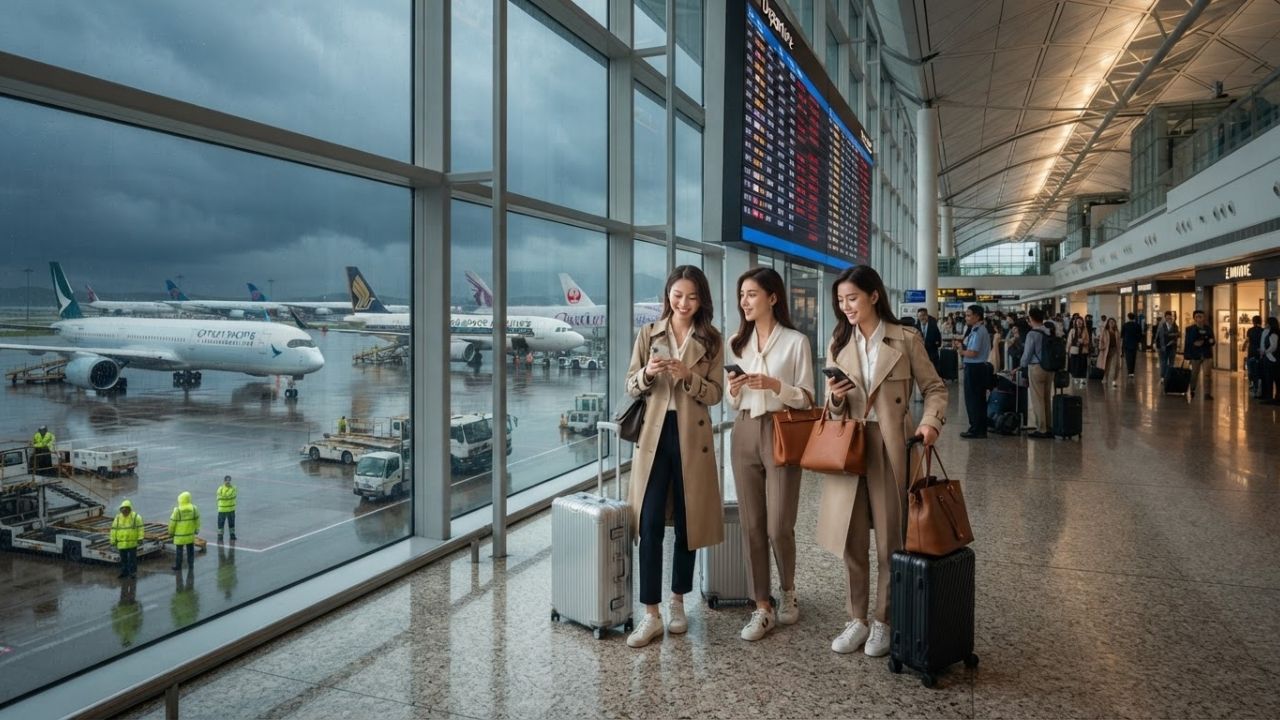
Image generated by AI
Bilateral aviation databases and global flight tracking confirm that Asia flight delays and cancellations have surged across regional networks, stranding thousands of passengers. FlightAware tracked 10,162 delays and 2,323 cancellations across the continent, driven by Typhoon Noul in China and airspace routing changes in the Middle East.
Data logs from July 25 at 4:50 PM ET verify that carriers, including China Southern, China Eastern, Air China, Cathay Pacific, and Saudia, adjusted aircraft and crew allocations. While weather disruptions dominated southern China corridors, military tensions added scheduling buffers across Middle Eastern networks.
Geographic Breakdown of Flight Disruptions Across Asian Nations
Operational performance varied across regional networks, with China bearing the largest share of schedule modifications:
Table 1: Regional Aviation Disruption Metrics in Asia (July 25, 2026)
| Country / Territory Profile | Delays Recorded | Cancellations Recorded | Primary Disruption Characteristic |
|---|---|---|---|
| Mainland China | 5,776 | 1,940 | Typhoon Noul weather disruptions |
| Japan | 831 | 44 | Hub rotation delays (Haneda, Narita) |
| Saudi Arabia | 532 | 173 | Localized operational and security pressures |
| Hong Kong | 410 | 289 | Signal No. 8 typhoon warnings active |
In Japan, major gateways like Tokyo Haneda, Narita, New Chitose, Kansai, and Osaka Itami managed flight delays while keeping cancellations low. Haneda recorded 477 delays, representing the highest delay count outside mainland China.
Typhoon Noul Airspace Closures and Coastal Evacuations
The primary cause of the eastern disruptions is Typhoon Noul, which tracked across the South China Sea toward Guangdong with sustained winds reaching 145 km/h. Moving toward Huizhou and Shanwei, the storm closed busy coastal flight paths.
Mainland China authorities issued a Red Typhoon Alert and evacuated 340,000 residents across Guangdong. Hong Kong raised its Signal No. 8 warning, which led to 289 cancellations at the hub. In Taiwan, outbound rain bands caused flight delays at Taiwan Taoyuan.
For airlines, the storm reduced runway capacities due to crosswinds and visibility limits. This forced controllers to increase spacing between arrivals, creating backlogs that affected subsequent regional rotations.
Mid-East Airspace Management and Security Routing Pressures
In the Middle East, airports in Saudi Arabia, Qatar, and the UAE managed flight delays. Saudi Arabia recorded 532 delays and 173 cancellations, driven by domestic flight trims at King Abdulaziz, King Khalid, Abha, Najran, and Gizan airports.
Airlines adjusted flight routes to navigate regional security conditions. Military activities involving Saudi coalition operations, Red Sea security risks, and Iran-related airspace checks require carriers to adopt longer flight paths and expand fuel buffers.
These security adjustments reduce fleet utilization flexibility. When aircraft are forced onto longer flight paths, the lack of backup aircraft makes it harder for airlines to recover schedules after unrelated operational disruptions.
Carrier Operational Pressures and Hub Performance
Airlines adjusted schedules to manage crew duty time limits and coordinate aircraft swaps:
Table 2: Busiest Hub Delay and Cancellation Points
| Airport Gateway Name | Code | Delays Recorded | Cancellations Recorded | Performance Status |
|---|---|---|---|---|
| Guangzhou Baiyun | CAN | 688 | High volume | Highest delays in mainland China |
| Tokyo Haneda | HND | 477 | Low count | Highest delays outside China |
| Shenzhen Bao’an | SZX | High volume | 412 | Highest cancellations recorded |
- China Southern: Recorded 1,155 delays and 575 cancellations, representing 11% of all delays and 25% of all cancellations.
- Cathay Pacific: Reported 255 delays and 320 cancellations, affecting international connections transiting Hong Kong.
- Saudia: Handled 532 delays and 173 cancellations across its domestic and regional networks.
Transit Passenger Rights and Rebooking Care Rules
For travelers affected by delays and cancellations across Asian hubs:
- Transit Accommodation Protections: Under CAAC and GCAA guidelines, if your delay occurs at a connecting airport (such as transiting through CAN, PVG, or DXB), the airline must provide free meals, drinks, and hotel lodging if the delay extends overnight.
- Uncontrollable Events: Weather and military airspace closures are extraordinary circumstances. Airlines are not legally required to pay cash compensation, though they must offer free rebooking or a full refund.
- EU261 Protections on Outbound Flights: If traveling on an EU/UK carrier from Europe to Asia, the airline's duty of care remains active. Even during typhoon closures, they must provide free meals and hotels at the European hub.
- Traveler App Tools: Passengers should monitor real-time updates via airline apps to verify gate swaps and luggage transfers.
Why This Matters
For the traveler, this means that flying through southern China during typhoon seasons or the Middle East during regional airspace adjustments requires booking flight segments on a single ticket to ensure transit protection. From a logistical standpoint, the high ratio of delays to cancellations in Japan indicates that high-frequency networks can recover schedules without canceling flights. Travelers should carry extra currency or payment cards in case transit hotel bookings are congested.
Industry Outlook
Airlines are adopting real-time airspace monitoring tools to calculate alternative routings during weather and security disruptions. As regional airports upgrade runway systems, delays caused by airspace saturation will decrease. Over the next year, expect carriers to offer automatic rail-link rebooking services during regional flight cancellations in China and Europe. This operational integration will improve passenger mobility.
Related Travel Guides
Disclaimer
This article is for informational and educational purposes only. It does not constitute legal, financial, or professional advice. While we strive to provide accurate and up-to-date information, travel policies, regulations, and conditions change rapidly. Always verify information with official sources before making travel decisions. Nomad Lawyer makes no representations about the accuracy, reliability, completeness, or suitability of the information provided. Readers should consult qualified professionals for advice specific to their circumstances. The views expressed in this article are those of the author and do not necessarily reflect the views of Nomad Lawyer.
Kunal K Choudhary
Co-Founder & Contributor
A passionate traveller and tech enthusiast. Kunal contributes to the vision and growth of Nomad Lawyer, bringing fresh perspectives and driving the community forward.
Learn more about our team →