
Argentina Launches Latin America’s First Solar Train Reviving Ancient Andean Heritage Corridor 2026
Argentina introduces the Quebrada Solar Train, the first solar-powered passenger rail in Latin America, connecting Indigenous communities and UNESCO sites in the Andes.

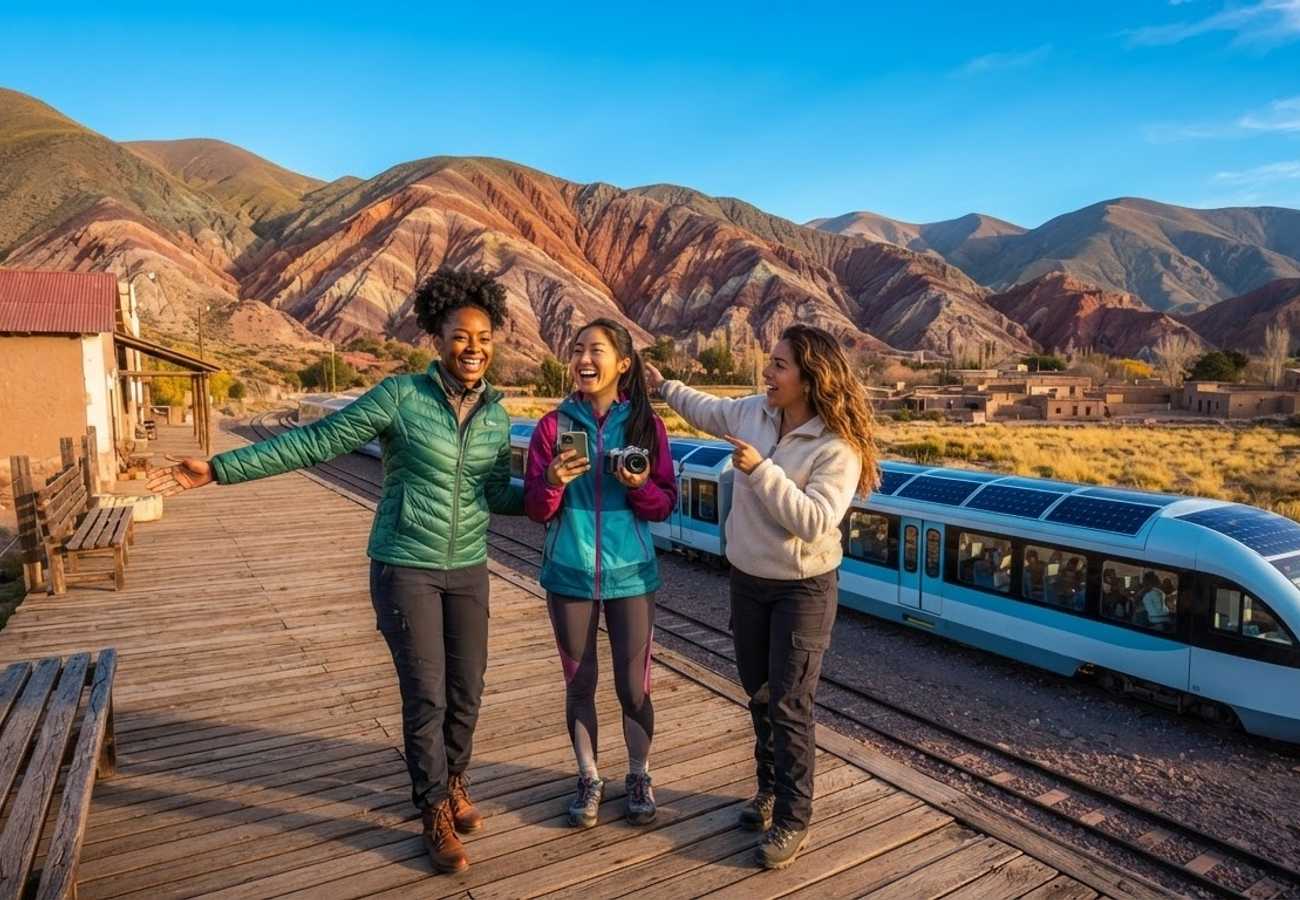
Image generated by AI
Argentina is transforming the intersection of renewable energy and cultural preservation with the introduction of Latin America’s first solar-powered passenger railway. Operating within the Jujuy Province, this initiative focuses on the Quebrada de Humahuaca, a region defined by its deep Indigenous roots and striking geological formations.
The project is not merely a transportation upgrade but a strategic effort to revive a corridor that has facilitated human movement for over 10,000 years. By linking historic communities and archaeological sites, the railway serves as a modern bridge to the ancient trade routes that once unified Argentina, Chile, and Bolivia.
This shift toward solar-powered "slow travel" reflects a broader global trend where high-value tourism is moving away from rapid transit and toward immersive, low-impact experiences that prioritize the longevity of local ecosystems and traditions.
Engineering a Sustainable Heritage Experience
The Quebrada Solar Train officially entered service in June 2024. It utilizes a restored section of a 19th-century rail corridor, integrating 21st-century photovoltaic technology into a UNESCO World Heritage-listed landscape.
By utilizing solar energy as its primary power source, the railway minimizes the carbon footprint typically associated with tourism in sensitive mountain environments. The operational model emphasizes a deliberate pace, allowing passengers to engage deeply with the surroundings rather than rushing between hubs.
Technical Specifications of the Quebrada Solar Train
| Feature | Details |
|---|---|
| Train Type | Solar-powered passenger railway |
| Location | Quebrada de Humahuaca, Jujuy, Argentina |
| Launch Date | June 2024 |
| Route Length | Approximately 42 km |
| Maximum Speed | Around 33 km/h |
| Tourism Focus | Sustainable cultural tourism |
| UNESCO Status | Quebrada de Humahuaca World Heritage Site |
Reconnecting the Andean Cultural Axis
The railway follows the trajectory of the Qhapaq Ñan, the legendary Inca road system. For millennia, this valley served as a vital artery for hunter-gatherers and later for the expanding Inca Empire, facilitating the exchange of goods, spiritual practices, and diplomatic communication across the Andes.
Today, the train allows visitors to witness an uninterrupted cultural continuity. This is evident in the region's adobe architecture, the persistence of the Pachamama (Mother Earth) spiritual traditions, and the continued use of ancestral farming techniques.
Indigenous Hubs and Regional Highlights
The route is designed to distribute tourism revenue across several distinct villages, ensuring that the economic benefits of the railway reach the grassroots level.
| Village | Visitor Highlights |
|---|---|
| Volcán | Historic departure point and mountain scenery |
| Tumbaya | Colonial church, adobe homes and pilgrimage traditions |
| Purmamarca | Hill of Seven Colors and artisan markets |
| Maimará | Dramatic geological formations and local culture |
| Tilcara | Archaeological heritage and museums |
| Hornillos | Historic postal museum and colonial history |
Travelers encounter a living gallery of Andean craftsmanship, from llama-wool textiles to cactus-wood handicrafts. These markets are not just commercial points but cultural touchstones that preserve the identity of the Jujuy Province.
Geological Wonders of the Jujuy Province
The railway's slow speed is a strategic choice, enabling passengers to observe the dramatic mineral deposits of the region through panoramic windows. The landscape is characterized by towering mountains in shades of red, purple, orange, pink, ochre, and green.
A primary draw is the Cerro de los Siete Colores (Hill of Seven Colors) near Purmamarca. The train provides a non-invasive way to access these geological anomalies, reducing the congestion and pollution often caused by traditional bus and car tours.
Socio-Economic Impact of Renewable Rail
Beyond the environmental metrics, the solar train is a tool for regional development. By creating a sustainable infrastructure, Argentine authorities are incentivizing younger generations to remain in their ancestral villages by providing viable, modern employment in the tourism sector.
Sustainability and Economic Synergy
- Environmental Gain: Solar operations drastically reduce operational emissions compared to diesel locomotives.
- Economic Distribution: Increased spending at family-owned guesthouses, local restaurants, and artisan workshops.
- Cultural Protection: The "slow travel" model prevents the "over-tourism" effect, protecting Indigenous sites from rapid degradation.
- Employment: Direct job creation for local guides and railway operators.
A Blueprint for Global Heritage Tourism
The success of the Quebrada Solar Train offers a scalable model for other nations. It proves that renewable energy can be integrated into heritage sites without compromising the aesthetic or historical integrity of the location.
As international demand for "conscious travel" grows, the integration of clean technology with authentic storytelling transforms the passenger from a mere tourist into a witness of living history. This project demonstrates that the path to a sustainable future often involves revisiting and honoring the ancient paths of the past.
A seamless blend of ancient Andean wisdom and futuristic energy solutions.
Related Travel Guides
Disclaimer
This article is for informational and educational purposes only. It does not constitute legal, financial, or professional advice. While we strive to provide accurate and up-to-date information, travel policies, regulations, and conditions change rapidly. Always verify information with official sources before making travel decisions. Nomad Lawyer makes no representations about the accuracy, reliability, completeness, or suitability of the information provided. Readers should consult qualified professionals for advice specific to their circumstances. The views expressed in this article are those of the author and do not necessarily reflect the views of Nomad Lawyer.
Kunal K Choudhary
Co-Founder & Contributor
A passionate traveller and tech enthusiast. Kunal contributes to the vision and growth of Nomad Lawyer, bringing fresh perspectives and driving the community forward.
Learn more about our team →