
Antarctica21 and Leica Partner to Enhance Wildlife Observation for 2026-27 Expedition Season
Antarctica21 is integrating professional Leica optical equipment across its fleet and facilities to provide travelers with unprecedented wildlife viewing capabilities during the 2026-27 season.

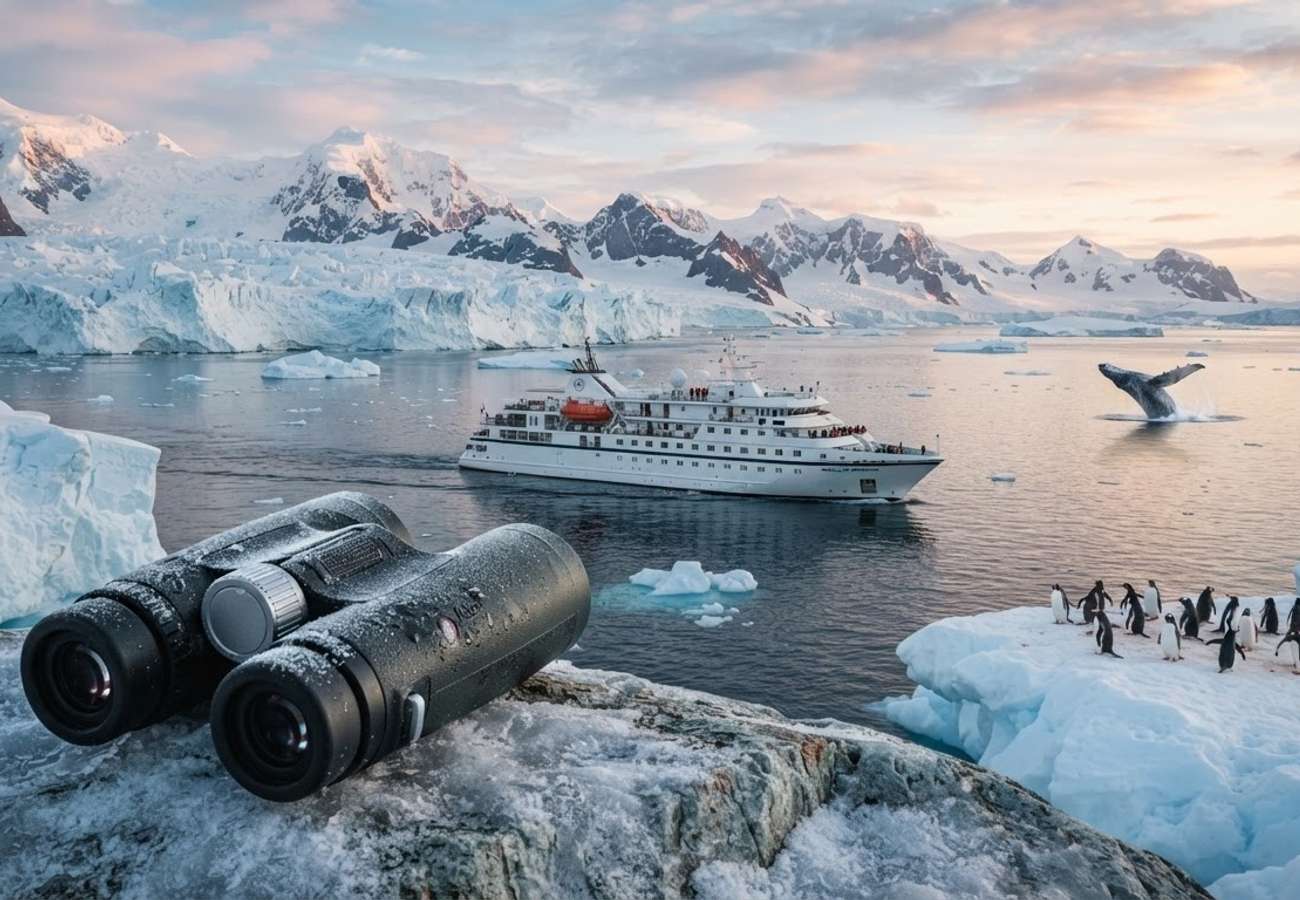
Image generated by AI
Beginning in the 2026-27 expedition season, travelers booking with Antarctica21 will gain access to professional-grade Leica optical equipment to enhance wildlife and landscape observation. This strategic partnership integrates high-end imaging and viewing technology across the fleet and pre-departure facilities to deepen the immersive nature of polar exploration.
The remote nature of the Antarctic continent presents unique challenges for nature observers. While the region is home to some of the planet's most extraordinary biodiversity, environmental regulations and the safety of the animals necessitate strict distance requirements. To bridge this gap, Antarctica21 is deploying Leica's specialized outdoor equipment, ensuring that guests can witness the intricate details of the frozen wilderness without disturbing the fragile ecosystem.
Professional Optics Integrated Into the Magellan Fleet
The Leica experience is not limited to a single vessel but is being integrated across the entire operational chain of Antarctica21. Specifically, the partnership will be active on the Magellan Explorer and the newly introduced Magellan Discoverer. By providing guests with professional binoculars and spotting scopes, the cruise operator is shifting the guest experience from passive sightseeing to active observation.
Beyond the ships, the integration begins before the voyage even starts. The Leica equipment will be available at Explorers House in Punta Arenas, Chile. As the primary expedition center where guests congregate before their departure, this facility serves as the introductory point for travelers to familiarize themselves with the high-precision tools they will use throughout their journey.
Enhancing the Guest Experience Through Precision Technology
For the modern expedition traveler, the value of a trip is often measured by the quality of the encounters with nature. The introduction of Leica technology addresses several specific needs of the Antarctic traveler:
- Increased Detail: High-performance binoculars allow for the observation of penguin colony behaviors and the subtle movements of seals from a distance.
- Accessibility: Both novice nature enthusiasts and seasoned photographers can utilize professional-grade imaging products to capture the scale of the Antarctic landscape.
- Educational Integration: The partnership includes expert-led opportunities, helping guests understand how to maximize the use of the equipment for better nature observation.
- Ship-to-Shore Versatility: Equipment is available for use both from the decks of the expedition vessels and during selected shore excursions.
The Necessity of Specialist Equipment in Polar Environments
Observing wildlife in the Southern Ocean requires more than standard equipment. The vastness of the coastal landscapes and the necessity of maintaining respectful distances from animals make advanced optics a requirement rather than a luxury.
| Wildlife Target | Observation Benefit of Leica Equipment |
|---|---|
| Penguin Colonies | Detailed viewing of nesting and social behaviors on shorelines |
| Whale Sightings | Clearer identification of species in the Southern Ocean waters |
| Seabirds | Tracking flight patterns across vast, open coastal vistas |
| Ice Formations | Appreciation of remote wilderness scenery and geological details |
By utilizing spotting scopes and binoculars, travelers can observe these species while adhering to strict environmental protocols, ensuring that the natural behavior of the wildlife remains uninterrupted.
Shifting Trends in Luxury Expedition Tourism
This collaboration signals a broader evolution within the luxury cruise sector. There is a documented shift away from traditional "sightseeing" toward "immersive education." Travelers are increasingly demanding tools and expertise that allow them to connect more deeply with their destination.
The partnership between a polar expedition specialist and a world-renowned optical brand reflects three primary industry trends:
- Conservation-Centric Travel: A focus on observing nature without interference.
- Technological Integration: Using professional tools to enhance the sensory experience of a destination.
- Specialist Partnerships: Travel operators aligning with luxury brands to provide a cohesive, high-end ecosystem of services.
Essential Preparation for 2026-27 Antarctic Voyages
Because Antarctic travel differs fundamentally from conventional vacations, guests are advised to prepare rigorously. The integration of new technology adds another layer to the pre-trip checklist.
Pre-Booking Checklist:
- Verify availability and specific dates for the 2026-27 season.
- Coordinate clothing and gear specifically rated for extreme polar weather.
- Review the logistics of the air-cruise model, which utilizes flights from Punta Arenas to bypass the Drake Passage.
- Confirm guidelines regarding personal photography equipment and the use of provided Leica tools.
On-Site Conduct:
- Strictly adhere to wildlife viewing distances as mandated by guides.
- Follow all safety instructions provided by the expedition team.
- Implement cold-weather protection for personal electronics and cameras to prevent battery failure and lens fogging.
Why This Matters for the Traveler
From a logistical and experiential standpoint, this partnership removes a significant barrier for the non-professional traveler. Historically, capturing the "perfect" wildlife shot or seeing a whale's breach in detail required an individual to invest thousands of dollars in their own high-end optics. By providing this equipment on-board, Antarctica21 democratizes the high-fidelity viewing experience.
For the traveler, this means the difference between seeing a "spot of black and white" on a distant shore and seeing the actual expression and interaction of a Gentoo penguin. Legally and ethically, it supports the "leave no trace" philosophy by reducing the urge for tourists to move closer to wildlife to get a better look, thereby protecting the very environment they have traveled thousands of kilometers to see.
The fusion of polar exploration and precision optics marks a new standard for responsible, high-detail wilderness travel.
Related Travel Guides
Disclaimer
This article is for informational and educational purposes only. It does not constitute legal, financial, or professional advice. While we strive to provide accurate and up-to-date information, travel policies, regulations, and conditions change rapidly. Always verify information with official sources before making travel decisions. Nomad Lawyer makes no representations about the accuracy, reliability, completeness, or suitability of the information provided. Readers should consult qualified professionals for advice specific to their circumstances. The views expressed in this article are those of the author and do not necessarily reflect the views of Nomad Lawyer.
Kunal K Choudhary
Co-Founder & Contributor
A passionate traveller and tech enthusiast. Kunal contributes to the vision and growth of Nomad Lawyer, bringing fresh perspectives and driving the community forward.
Learn more about our team →