
Amsterdam Tightens Tourism Curbs: The 15-Night Rental Limit, 21% Hotel VAT, and Insider Neighborhood Guide

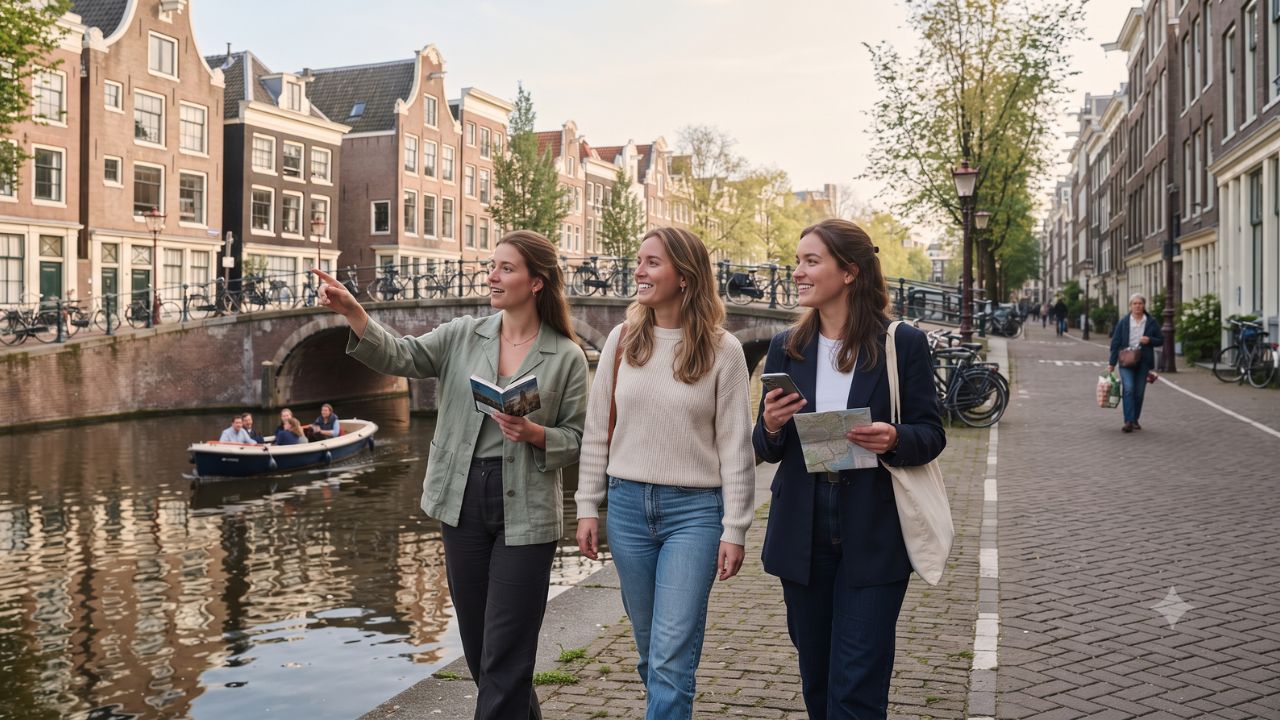
With 23.7 million tourist overnight stays recorded in 2025—blowing past the city's legal statutory ceiling of 20 million by 18.5%—Amsterdam has slammed the brakes on unregulated short-stay rentals across its historic canal belt. Rather than barring international travelers at Schiphol Airport, municipal leaders in the Dutch capital have slashed annual private home-sharing allowances from 30 nights down to just 15 nights across eight central quarters, with a ninth district currently under public review. Combined with a steep national value-added tax hike that pushed lodging VAT from 9% to 21% on 1 January 2026, visiting Amsterdam now demands careful planning to avoid illegal listings, navigating a city determined to preserve residential peace over unchecked visitor volume.
The 20-Million Ceiling and the 2028 Visitor Surge
The regulatory clampdown stems directly from official municipal data published by Amsterdam's Research and Statistics Department. In May 2026, urban planners projected that without aggressive intervention, annual overnight stays could climb between 25 million and 29.4 million by 2028. For a compact city of approximately 900,000 residents, that trajectory threatened to permanently displace neighborhood shops, family housing, and community services.
Nationally, the picture looks markedly different. The Netherlands Board of Tourism & Conventions projected approximately 53 million total overnight guests across the country for 2026. While domestic leisure nights dipped by 1% to 30 million, international arrivals are forecast to grow by 2.4% to 23 million guests, led by European markets that represent 80% of foreign demand. Long-haul travelers from the United States are expanding fastest with a 5% projected increase in overnight stays, outpacing 1% growth from the United Kingdom, 1% from Belgium, and 0.5% from Germany, which remains the country's dominant foreign market supplying nearly eight million visitors.
This tension between national growth ambitions and capital-city limits defines Dutch travel in 2026. While national authorities welcome overseas visitor spending, the City of Amsterdam is strictly policing accommodation supply to protect neighborhood liveability.
| Key Tourism Indicator | Verified Metric (2025–2026) | Statutory Cap or Forecast Target | Municipal Policy Impact |
|---|---|---|---|
| Amsterdam Overnight Stays | 23.7 million (in 2025) | 20.0 million statutory ceiling | Exceeded threshold by 3.7 million (18.5% over legal limit). |
| Projected 2028 Overnights | Municipal forecast (May 2026) | 25.0 to 29.4 million stays | Triggers hotel construction halts and short-stay caps. |
| National Total Guests (2026) | ~53 million guests nationwide | +0.5% overall national growth | Foreign guests up 2.4% (23M); domestic down 1% (30M). |
| US Source Market Growth | +5.0% projected in 2026 | Outpaces European markets | Expanding long-haul demand facing tighter room supply. |
| UK & Belgium Inbound Growth | +1.0% each (2026 forecast) | UK stays below 2019 levels | British travelers demonstrate elevated price sensitivity. |
| German Overnight Volume | ~8 million guests (+0.5%) | Leading international market | Shifting toward camping and lower-cost regional provinces. |
| National Lodging VAT Rate | 21% (effective 1 Jan 2026) | Increased from previous 9% rate | Hotel revenue fell 2% in Q2 2026; camping/rentals up 1.5%. |
Inside the 15-Night Neighborhood Rental Cap
The municipal government's sharpest weapon is its residential rental restriction. Since 1 April 2026, the city enforced a strict 15-night annual ceiling on entire-home short-stay rentals across eight historic quarters:
- Haarlemmerbuurt
- Jordaan
- Grachtengordel-West
- Grachtengordel-Zuid
- Weteringschans
- Burgwallen-Nieuwe Zijde
- Nieuwmarkt / Lastage
- Oude Pijp
In these protected enclaves, property owners cannot rent their homes on platforms like Airbnb or Vrbo for more than 15 calendar nights per year, with a maximum occupancy of four guests. Every legal listing must display an official municipal registration number, and hosts must log every booking with city hall prior to guest check-in. In outer districts, the annual allowance generally remains capped at 30 nights.
On 5 October 2026, the city published a formal proposal to extend the 15-night limit to Helmersbuurt in Oud-West, where municipal surveys revealed that at least 30% of residents reported severe nuisances from holiday rentals. Public consultation on Helmersbuurt continues until 8 November 2026, with enactment scheduled for 1 January 2027.
Compounding room scarcity, the national government raised value-added tax on hotel and short-stay accommodations from 9% to 21% on 1 January 2026. Statistics Netherlands reported that overall accommodation turnover contracted 0.9% in the second quarter of 2026, with hotel turnover falling 2% as budget-conscious European vacationers trimmed trip lengths.
Preserving the Seventeenth-Century Canal Ring
The concentration of visitor restrictions directly protects the historic Seventeenth-Century Canal Ring Area of Amsterdam inside the Singelgracht, inscribed on the World Heritage List through the UNESCO World Heritage Centre. Built during the Dutch Golden Age, the concentric waterways of the Herengracht, Keizersgracht, and Prinsengracht were engineered as residential and commercial transport networks, not outdoor party arcades.
Excessive wheel-suitcase noise on narrow cobblestones, late-night rowdiness, and commercial buyouts of residential apartments eroded local community cohesion. By capping short-term vacation rentals and freezing hotel expansions within the historic center, municipal planners aim to preserve a living, breathing residential city where local bakers, bicycle mechanics, and multi-generational families can continue living alongside historic waterways.
Visitor Insider Tips: Navigating Amsterdam Beyond the Crowds
- Verify Registration Numbers on Apartment Bookings: If booking a short-stay apartment in the Jordaan, De Pijp, or the canal ring, verify that the online listing displays a valid 24-digit municipal registration number. Unregistered rentals face immediate shutdown by municipal inspectors, leaving unsuspecting travelers stranded without accommodation on arrival.
- Base Yourself Outside the Ring in Amsterdam-Noord or Oost: Avoid overpriced, crowded hotel rooms in the red-light district or Dam Square. Take the free three-minute public ferry behind Central Station to Amsterdam-Noord, a creative district of converted industrial shipyards, film museums, and waterfront brewpubs, or base yourself in multicultural Amsterdam-Oost near Oosterpark.
- Master Dutch Biking Etiquette: Cycling in Amsterdam is serious daily commuter transit, not casual sightseeing. Stay strictly within designated red asphalt cycle lanes, keep right, signal turns with a flat hand, and never stop abruptly in the middle of a bike lane to check smartphone maps. If you are uncomfortable cycling alongside fast commuter traffic, use the world-class GVB tram and metro network instead.
- Visit Traditional Bruine Kroegen for Evening Hospitality: Skip generic tourist bars along Leidseplein. Seek out a historic bruine kroeg (brown cafe) such as Café Chris (established in 1657 in the Jordaan) or Café De Dokter. Order a glass of draft pilsner or genever paired with piping-hot bitterballen (deep-fried beef ragout croquettes served with sharp mustard).
- Take the Train to Regional Historic Cities: Dutch Railways (NS) connects Amsterdam to breathtaking medieval cities in under thirty minutes. Take a 15-minute train to Haarlem for quiet hofjes (courtyard almshouses), or a 25-minute train to Utrecht to experience subterranean canal-side wharf cellars with half the tourist congestion of the capital.
Cultural and Environmental Context: Promoting Balanced Urbanism
Amsterdam's regulatory tightening represents a leading edge in Europe's broader struggle with overtourism. Rather than relying on symbolic marketing campaigns, the municipality uses zoning laws, housing enforcement teams, and digital surveillance to protect residential housing stock from speculative commercial exploitation.
Environmentally, the city is transitioning its canal traffic to 100% emission-free electric propulsion, while expanding low-emission zones for commercial delivery vans. By encouraging visitors to distribute their travel spending into neighboring municipalities and rural provinces—such as Friesland, Gelderland, and Overijssel—the Netherlands is cultivating a decentralized visitor economy that respects planetary and social limits.
FAQ: Navigating Amsterdam's New Visitor Rules in 2026–2027
Can international tourists still rent apartments in Amsterdam?
Yes. Vacation rentals remain legal, but properties in eight central neighborhoods cannot exceed 15 nights annually and must display an official municipal registration number.
Did hotel prices increase in the Netherlands in 2026?
Yes. On 1 January 2026, the national VAT on short-stay accommodation increased from 9% to 21%, increasing overall hotel bills across the country.
Which neighborhoods enforce the 15-night holiday rental limit?
The limit applies in Haarlemmerbuurt, Jordaan, Grachtengordel-West, Grachtengordel-Zuid, Weteringschans, Burgwallen-Nieuwe Zijde, Nieuwmarkt/Lastage, and Oude Pijp, with Helmersbuurt proposed for 2027.
Does Amsterdam have an outright ban on foreign tourists?
No. There are no entry restrictions on international visitors. The rules govern property licensing, hotel construction caps, and short-stay rental allowances.
Along the quiet morning mist of the Prinsengracht, Amsterdam's true character reveals itself to travelers who walk softly, respecting the living city behind the historic facade.
Related Travel Guides
Disclaimer
This article is for informational and educational purposes only. It does not constitute legal, financial, or professional advice. While we strive to provide accurate and up-to-date information, travel policies, regulations, and conditions change rapidly. Always verify information with official sources before making travel decisions. Nomad Lawyer makes no representations about the accuracy, reliability, completeness, or suitability of the information provided. Readers should consult qualified professionals for advice specific to their circumstances. The views expressed in this article are those of the author and do not necessarily reflect the views of Nomad Lawyer.
Preeti Gunjan
Contributor & Community Manager
A passionate traveller and community builder. Preeti helps grow the Nomad Lawyer community, fostering engagement and bringing the reader experience to life.
Learn more about our team →