
Oregon's Lost Lake Loop Tops America's Most Peaceful Nature Destinations for 2026

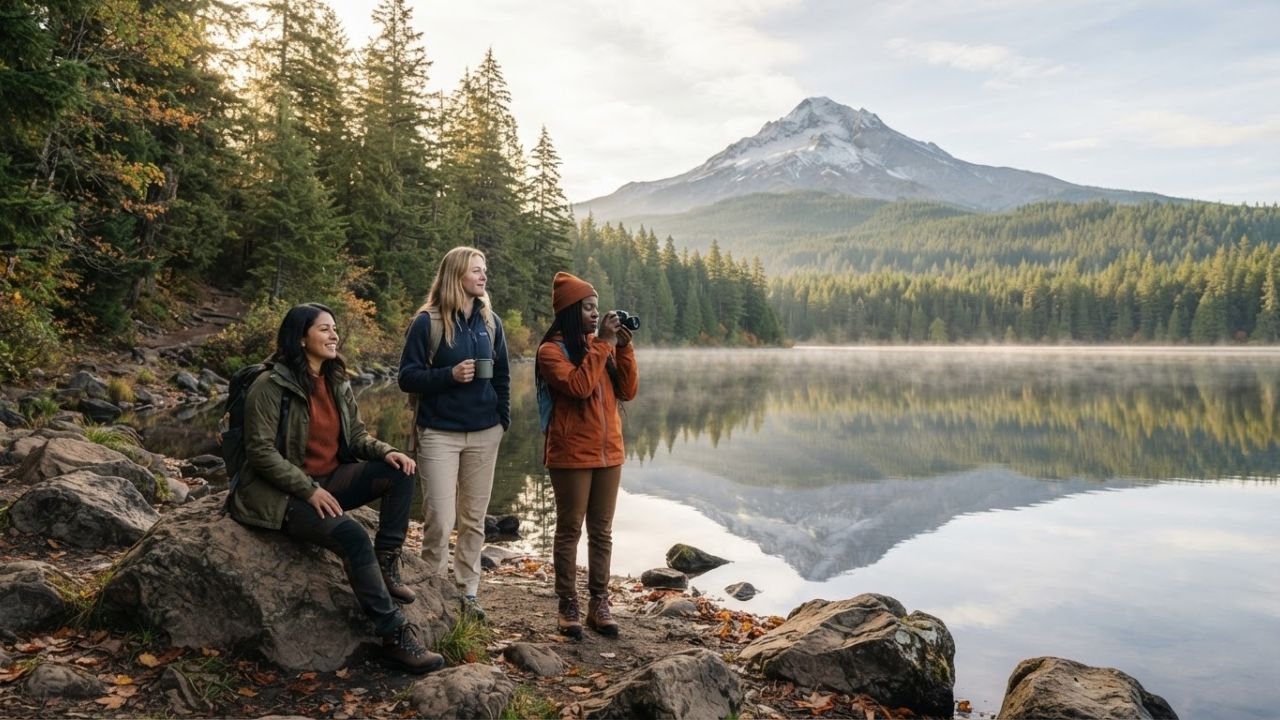
Oregon's Lost Lake Loop in Mount Hood National Forest has been identified as the most tranquil outdoor destination in the United States, recording 307 relaxation-associated visitor endorsements to lead a nationwide review analysis of serene natural sanctuaries. Outperforming iconic national park waterways including Maine's Jordan Pond and Colorado's Emerald Lake, the ranking underscores a growing preference for slow travel, acoustic conservation, and restorative outdoor recreation.
Conducted through an extensive linguistic analysis of thousands of visitor reviews evaluating terms such as "peaceful," "quiet," and "relaxing," the study highlights natural locations where travelers successfully unplug from hyper-urbanization. Spanning Pacific Northwest old-growth canopies, Rocky Mountain alpine basins, coastal dunes, and Southern bottomland swamps, the benchmark provides autumn travelers with an intentional roadmap for low-impact nature immersion.
Top 10 Peaceful Nature Destinations in the United States
The ranking evaluates visitor-reported calm across America's federal and state wilderness reserves:
| Rank | Destination | Protected Area & State | Relaxation Mentions | Signature Natural Attraction |
|---|---|---|---|---|
| 1 | Lost Lake Loop | Mount Hood National Forest, Oregon | 307 | 3.1-mile trail with reflections of Mount Hood |
| 2 | Jordan Pond | Acadia National Park, Maine | 230 | Glacial lake nestled beneath the North & South Bubbles |
| 3 | Emerald Lake | Rocky Mountain National Park, Colorado | 200 | Alpine basin reached past Nymph and Dream Lakes |
| 4 | Hoh Rain Forest | Olympic National Park, Washington | 149 | Moss-draped temperate rainforest canopy |
| 5 | Bear Lake | Rocky Mountain National Park, Colorado | 134 | Accessible subalpine circuit framed by Hallett Peak |
| 6 | Sleeping Bear Dunes | National Lakeshore, Michigan | 118 | Towering freshwater sand bluffs above Lake Michigan |
| 7 | Congaree National Park | South Carolina | 109 | Old-growth bottomland hardwood forest and canoe trails |
| 8 | Tuolumne Meadows Trails | Yosemite National Park, California | 104 | High-elevation subalpine granite meadows |
| 9 | Gooseberry Falls | State Park, Minnesota | 97 | Cascading river waterfalls on Lake Superior's North Shore |
| 10 | Trail of the Cedars | Glacier National Park, Montana | 88 | Accessible boardwalk winding through ancient red cedars |
Oregon's Crown: Why Lost Lake Loop Leads the Nation
Securing the premier position with 307 mentions, the 3.1-mile Lakeshore Trail encircling Lost Lake offers an ideal balance of gentle topography and majestic scenery. Winding through dense canopies of western red cedar, Douglas fir, and western hemlock, the path frames mirror-smooth morning reflections of Mount Hood's glaciated north flank.
A major contributor to Lost Lake's serenity is its strict motorized vessel prohibition. By allowing only non-motorized watercraft—such as canoes, rowboats, kayaks, and paddleboards—the lake maintains pristine acoustic clarity, insulating hikers from the engine roar typical of larger recreational reservoirs.
Acoustic Conservation and Slow Travel Ethics
As overtourism and noise pollution encroach upon public lands, preserving natural soundscapes has become an essential conservation goal:
- Natural Soundscape Stewardship: Organizations like the National Park Service Natural Sounds and Night Skies Division actively monitor acoustic health. In destinations like Washington's Hoh Rain Forest—famed for the "One Square Inch of Silence"—natural ambient sound levels routinely drop below 30 decibels, broken only by rain, bugling Roosevelt elk, and wind rustling spruce boughs.
- Leave No Acoustic Trace: Modern trail etiquette emphasizes silent travel habits: using personal headphones instead of external Bluetooth speakers, silencing mobile alerts, and speaking softly along narrow boardwalks like Glacier's Trail of the Cedars and South Carolina's Congaree.
- Supporting Local Trail Stewardship: Visiting these secondary and shoulder-season havens channels recreation fees into nonprofit partners, including the Pacific Northwest Trail Association, Friends of Acadia, and the Rocky Mountain Conservancy.
Local Insider Tips for Experiencing America's Quiet Sanctuaries
- The Early-Morning Stillness Window: To experience the tranquil atmosphere that defined the survey, arrive at trailheads before 07:30 AM. Early arrivals at Oregon's Lost Lake and Maine's Jordan Pond encounter glassy, windless water surfaces, zero parking stress, and active wildlife, including river otters and loons.
- Navigating Lost Lake Logistics: Lost Lake sits approximately 90 minutes east of Portland via Hood River. A Northwest Forest Pass or daily recreation fee is required; pay stations are available at the resort entrance. Visit on mid-week mornings between late September and mid-October to witness autumn foliage without weekend day-tripper traffic.
- Acadia Shuttle Alternative: Parking at Jordan Pond fills completely by 09:00 AM during peak autumn foliage. Leave your vehicle in Bar Harbor and ride the fare-free Island Explorer shuttle bus, which drops passengers directly at the historic Jordan Pond House. Sample traditional tea and hot popovers with Maine wild blueberry jam on the lawn overlooking the Bubbles.
- Timing the Hoh Rain Forest: During summer and early autumn, queues at Olympic National Park's Hoh entrance gate can exceed two hours by mid-morning. Arrive by 08:00 AM or after 16:00 PM. Always pack seam-sealed waterproof rain jackets and hiking boots, as the rainforest receives up to 140 inches of precipitation annually.
- Savor Regional Gateway Flavors: Pair nature excursions with regional food heritage: pick up fresh Marionberry pastries in Oregon's Hood River Valley, order a classic brown-butter lobster roll on Mount Desert Island in Maine, or warm up with a bowl of wild mushroom stew in Colorado's Estes Park.
Tourism Outlook for Restorative Travel
The national recognition of destinations like Lost Lake, Congaree, and Sleeping Bear Dunes marks a conscious evolution in traveler behavior. Travelers are looking beyond ticking off crowded bucket-list landmarks, choosing instead the therapeutic restoration found in ancient forests, clean water basins, and quiet mountain air. By embracing shoulder-season schedules and mindful trail habits, visitors protect the very tranquility that drew them into the wild.
Related Travel Guides
Disclaimer
This article is for informational and educational purposes only. It does not constitute legal, financial, or professional advice. While we strive to provide accurate and up-to-date information, travel policies, regulations, and conditions change rapidly. Always verify information with official sources before making travel decisions. Nomad Lawyer makes no representations about the accuracy, reliability, completeness, or suitability of the information provided. Readers should consult qualified professionals for advice specific to their circumstances. The views expressed in this article are those of the author and do not necessarily reflect the views of Nomad Lawyer.
Raushan Kumar
Founder & Lead Developer
Full-stack developer with 11+ years of experience and a passionate traveller. Raushan built Nomad Lawyer from the ground up with a vision to create the best travel and law experience on the web.
Learn more about our team →