Hawaii Slow Travel Transforms Maui and Oahu as Regenerative Tourism Drives $21.7 Billion Economic Yield: Latest Update

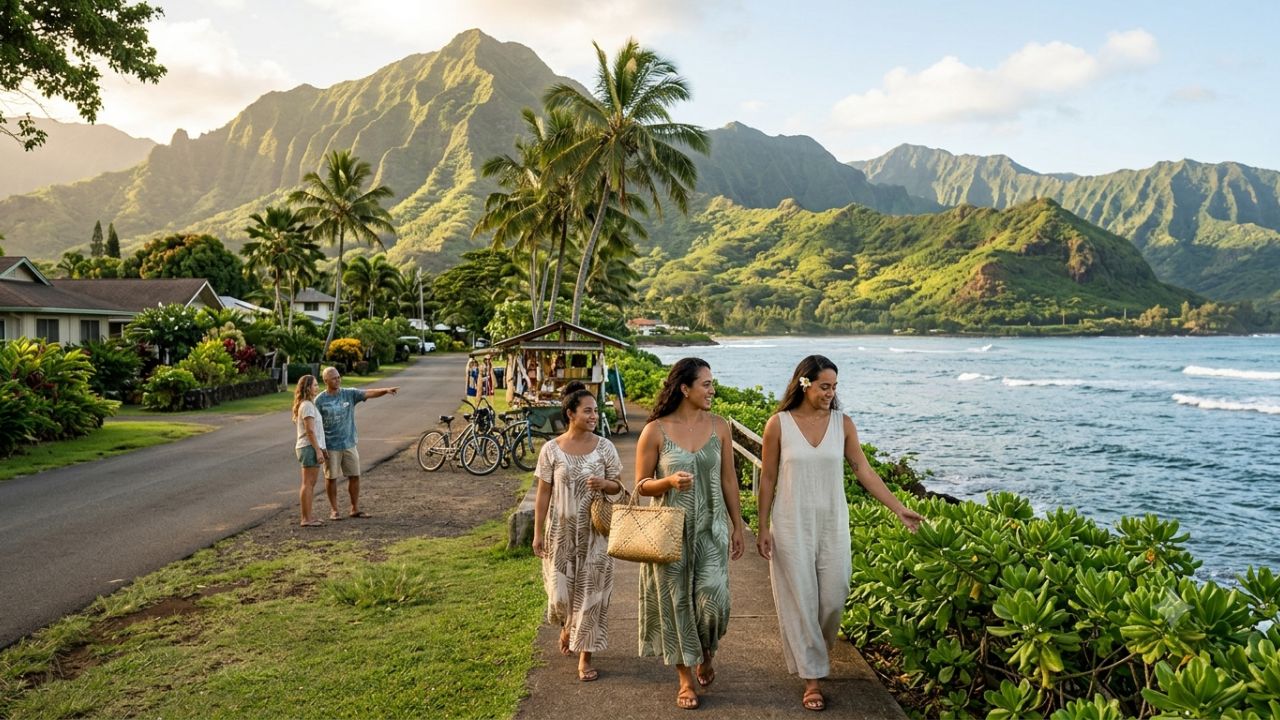
Hawaii's slow travel movement encourages longer single-island dwell times, managed access, and regenerative community stewardship.
Trading hurried multi-island itineraries for immersive single-neighborhood stays and regenerative stewardship, Hawaii’s visitor landscape is undergoing a structural transformation as travelers embrace slow travel principles across Oʻahu, Maui, Kauaʻi, and Hawaii Island. Backed by policy mandates instituted by the Hawaii Tourism Authority (HTA) and the Department of Business, Economic Development and Tourism (DBEDT), the state has anchored its tourism economy in a disciplined value-over-volume model, generating over $15.2 billion in visitor expenditures during the first eight months of the fiscal year and propelling cumulative annual spending past $21.7 billion.
Rather than pursuing unconstrained arrival headcounts that historically strained freshwater supplies, coastal ecosystems, and residential communities, state planners are utilizing advance reservation frameworks, transit pilots, and capacity caps at iconic natural reserves. By encouraging travelers to settle into single districts for extended periods, Hawaii is proving that reducing travel friction and cultivating deeper cultural engagement yields superior economic and environmental dividends.
The Value-Over-Volume Model: Higher Daily Yields Support Local Economies
The transition toward regenerative island exploration is supported by official macroeconomic indicators tracking visitor spending behaviors across primary feeder markets. Despite flat or deliberately moderated overall arrival volumes, daily per-person expenditures have risen significantly:
- U.S. West Feeder Market: Average daily visitor spending climbed to $277 per person per day, marking a robust 14.2% increase.
- U.S. East Feeder Market: Long-haul domestic travelers reached $314 per person per day, reflecting a 10.6% expansion.
- International Recovery (Japan Market): Inbound Japanese arrivals demonstrated steady momentum, expanding by 15.6% in comparative monthly monitoring windows with daily expenditures remaining firm near $246 per person.
This expenditure growth allows the state to surpass its targeted 4% to 5% annual financial benchmarks, delivering record tax revenues directly to public infrastructure while easing physical strain on local roads and beaches. By spending more on locally sourced dining, cultural workshops, and independent guides, visitor capital circulates directly within resident-owned enterprises rather than pooling in corporate mega-resorts.
Island-by-Island Stewardship: Managed Corridors and Community Recovery
Each island county has tailored its Destination Management Action Plans (DMAP) to address unique geographic carrying capacities and community priorities:
- Honolulu & Oʻahu County: Dispersing visitors away from the urban density of Waikīkī toward managed coastal corridors on the North Shore and in Kailua. Initiatives include "park once" transit pilots, community-operated shuttles, and structured access systems at sensitive ridges like Kaiwa Ridge to minimize neighborhood parking congestion.
- Maui County (Maui, Molokaʻi, Lānaʻi): Focusing heavily on regenerative community recovery following the devastating Lahaina wildfires. State and county bodies enforce advance reservation systems and local guide certifications along the Hāna Highway, Honolua Bay, and Līpoa Point, while partnering with community stewards in Keʻanae to foster respectful cultural exchange.
- Kauaʻi County: Utilizing strict parking caps and mandatory pre-reservation vouchers at Hāʻena State Park and along the North Shore, transforming congested recreation zones into tranquil, low-impact sanctuaries.
- Hawaii Island (Big Island): Directing visitor dollars away from crowded hotspots into rural agricultural cooperatives around Hilo and Kona, while managing access to culturally sensitive landmarks such as Keaukaha, Kealakekua Bay, and Ka Lae (South Point).
Feeder Market Economics and Length-of-Stay Matrix
Official data compiled by DBEDT highlights the changing demographic and spending profile across Hawaii's core traveler segments:
| Feeder Market / Sector | Recorded Average Daily Spend | Growth Trajectory vs Prior Periods | Length of Stay Dynamics | Key Policy & Traveler Impact |
|---|---|---|---|---|
| U.S. West Coast | $277 per person daily | +14.2% year-on-year increase | Stabilizing around 7.6 days | High repeat visitation favoring vacation rentals and condo stays |
| U.S. East Coast | $314 per person daily | +10.6% year-on-year increase | Extended stays of 8.0 to 9.2 days | Premium expenditure across cultural tours, dining, and eco-excursions |
| Japan Inbound Market | $246 per person daily | +15.6% monthly volume growth | Shorter urban-focused stays (5.5–6.5 days) | Educated on regenerative etiquette and mindful shopping habits |
| Statewide Average Stay | Stabilized at 7.6 days | Down from historic peaks of 8.4 days | Single-island dwell time replacing hopping | Discourages rapid island hopping to lower regional carbon emissions |
| Hotel Market Share | 55% to 62% accommodation share | Steady demand in primary resort cores | Traditional hotel stays | Condos, timeshares, and homestays capture remaining 38%–45% |
Statewide length-of-stay metrics have stabilized near an average of 7.6 days, down from historic pandemic-era highs of 8.4 days. Rather than attempting to visit three or four islands in a single week, travelers increasingly spend their entire itinerary exploring a single island's distinct microclimates, establishing deeper connections with community elders and local conservation initiatives.
Regulating Transpacific Air Capacity: Managing the One-Million-Seat Flow
A critical regulatory mechanism underpinning Hawaii’s slow travel architecture is the strategic coordination of transpacific aviation capacity. State monitoring platforms track incoming air corridors, coordinating schedules for over 5,000 monthly flights that deliver more than one million passenger seats during peak monitoring windows.
Through close dialogue between the Hawaii Tourism Authority, airport administrators, and domestic and international airlines, seat allocation operates as an upstream control valve. Regulating inbound flight seat volume ensures that arrival flows never exceed local water supplies, electrical grids, and ground transit networks, guaranteeing that airport operations run smoothly without terminal congestion.
Practical Travel Advice for Practicing Mindful Slow Travel in Hawaii
Travelers seeking an authentic, regenerative journey through the Hawaiian Islands should incorporate several practical measures:
- Commit to a Single Island Itinerary: Eliminate inter-island flights from one-week vacations; dedicating a full trip to Maui, Oʻahu, Kauaʻi, or the Big Island reduces transit stress and lowers your personal carbon footprint.
- Secure Park Reservations Weeks Ahead: Pre-book mandatory vehicle and entry permits for high-demand natural sanctuaries, including Hāʻena State Park, Waianapanapa State Park, and Haleakalā sunrise viewing.
- Embrace "Park Once" Transit Options: On Oʻahu and Maui, utilize community shuttles, public transit buses, and bike rentals to explore local beach towns without adding rental car gridlock to coastal highways.
- Choose Locally Sourced Dining and Certified Guides: Direct expenditures into family-run food trucks, farmers markets, and cultural tours led by native Hawaiian cultural practitioners.
- Practice Malama Hawaii Principles: Dedicate a half-day of your vacation to volunteering with local non-profits—such as taro patch restoration, beach cleanups, or native tree planting—fostering reciprocal respect between visitors and the land promoted by Go Hawaii.
Looking Ahead: The Future of Regenerative Island Tourism
As Hawaii continues to refine its Destination Management Action Plans through 2027, the islands offer a compelling international blueprint for sustainable tourism management. By proving that cumulative revenues exceeding $21.7 billion can be achieved alongside capacity caps and ecological restoration, Hawaii demonstrates that true economic resilience does not require sacrificing community quality of life.
By replacing frantic sightseeing checklists with unhurried cultural immersion, visitors to Hawaii find a richer, more profound connection to the land—ensuring that the beauty, heritage, and spirit of aloha endure for generations to come.
Frequently Asked Questions
What is Hawaii's "value-over-volume" tourism strategy?
The strategy focuses on increasing per-person daily visitor spending and encouraging longer, respectful stays rather than chasing raw arrival numbers, protecting local infrastructure and natural resources while generating over $21.7 billion in economic yield.
How much do tourists spend per day in Hawaii?
According to official DBEDT tracking, U.S. West visitors spend an average of $277 per day (+14.2%), U.S. East travelers spend $314 per day (+10.6%), and international Japanese visitors spend approximately $246 per day.
Which popular Hawaii parks require advance reservations?
Mandatory advance booking and parking reservation systems are enforced at sensitive cultural and natural sites, including Hāʻena State Park on Kauaʻi, Waianapanapa State Park on Maui, and Kaiwa Ridge on Oʻahu.
Why is Hawaii discouraging rapid island-hopping?
Encouraging travelers to stay on a single island reduces inter-island aviation emissions, eases traffic gridlock on local roads, and ensures visitor dollars support small, family-owned businesses within regional communities.
Related Travel Guides
This article is for informational purposes. Flight routes, passenger regulations, visa rules, and transit advisories are subject to change by airlines and aviation authorities. Readers are advised to verify schedules and travel documentation with relevant carriers and border agencies before departure.
Related Stories

UK Noise Pollution Rankings 2026: Salford Loudest City While Scotland's Perth and Kinross Emerges as Ultimate Peaceful Travel Retreat

US Bipartisan Coalition Advances Film Tourism and Federal Tax Credits to Rival Overseas Production Hubs