
Why Americans Are Abandoning International Travel in 2026
Over half of U.S. travelers are cutting international trips in 2026. Rising costs, time constraints, and a shift toward domestic exploration are reshaping global tourism patterns and challenging destinations worldwide.

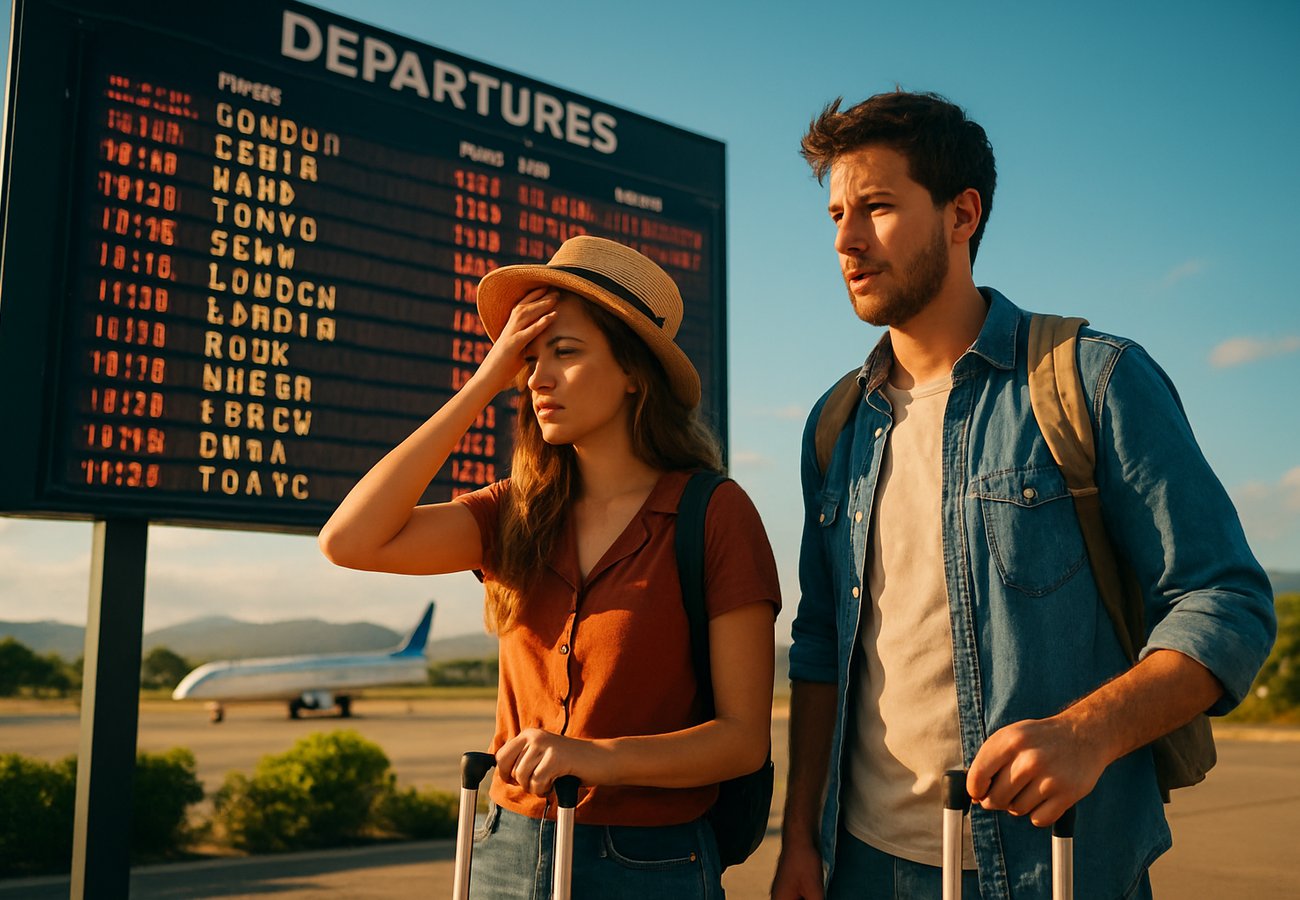
Image generated by AI
The Great Pause: Why Americans Are Staying Home in 2026
More than half of U.S. travelers are pressing pause on international adventures this year—and it's not because the world has become any less beautiful.
According to recent survey data, American travelers are fundamentally reordering their priorities. Rising airfare, budget constraints, work pressures, and a surprising appetite for domestic exploration are combining into a perfect storm that's reshaping global tourism patterns. For travel-dependent destinations from Italy to Thailand, this shift signals a critical moment.
The numbers tell a stark story: fewer Americans are crossing borders, shorter trips are becoming the norm, and wallet-conscious travelers are redirecting their exploration inward. For destinations reliant on American tourism dollars, the implications are profound.
Economic Reality Check: When Wanderlust Meets Inflation
Inflation has delivered a knockout punch to international travel aspirations.
Rising airfare, hotel rates, and destination fees have made overseas trips feel increasingly out of reach for average American households. A week-long European vacation now carries a price tag that forces families to choose between international flights and other financial priorities. Even shoulder-season destinations—once affordable safe havens—are seeing dramatic price increases.
Reddit: "I used to book Europe trips every other year. Now I'm looking at $3,000+ flights and $200+ hotel nights. I'd rather take three domestic trips for the same cost." — r/travel
For families planning school-break vacations, the math no longer works. The value proposition of expensive long-haul flights has eroded significantly. Currency fluctuations only amplify the problem—when the U.S. dollar weakens against European or Asian currencies, a week abroad becomes a financial gamble.
Travel planners now face clients comparing international costs directly against domestic alternatives, and domestic wins nearly every time.
The Time Crunch: Why Busy Americans Are Staying Put
Beyond money, there's another barrier that's proving nearly impossible to overcome: time.
International journeys demand significant time commitments—typically a week or more. For Americans juggling demanding careers, family obligations, and personal responsibilities, lengthy trips feel like luxuries they can no longer afford. Remote work has helped some travelers integrate journeys into their lives more fluidly, but rigid employer policies still constrain many others.
Short domestic getaways and long weekends now offer the optimal return on limited vacation days. A three-day road trip to the Grand Canyon or Yellowstone delivers memorable experiences without requiring a ten-day absence from work or family. This shift toward micro-travel reflects broader work-life balance recalibrations that prioritize accessibility over ambition.
The math is simple: fewer days away from home means fewer reasons to book expensive international flights.
The Domestic Travel Renaissance
While Americans slash international bookings, the U.S. domestic market is experiencing a quiet renaissance.
National parks are seeing record visitation. Scenic road trips loop through renewed popularity. Cultural festivals, beach towns, and historic cities are attracting visitors who might have previously booked transatlantic flights. From New Orleans' vibrant art scene to Santa Fe's cultural depth, domestic destinations offer diverse experiences without the logistical headaches of international travel.
Domestic exploration eliminates visa complications, removes health requirement uncertainty, and sidesteps unfamiliar safety concerns. Spontaneity becomes possible again. Coordination with work schedules becomes manageable.
What's striking is how Americans are discovering that extraordinary experiences don't always require passport stamps.
Quality Over Quantity: The Slow Travel Revolution
A fundamental mindset shift is underway: travelers no longer feel compelled to accumulate destination checkmarks.
Today's explorer—particularly Millennials and Gen Z—prioritizes depth over distance. Instead of rushing through multiple European cities in seven days, travelers are choosing longer stays in single locations that allow genuine cultural immersion, meaningful local connections, and authentic engagement with heritage.
This aligns with global travel trends observed across Europe, Japan, and Scandinavia, where slow travel philosophy has already gained traction. The pressure to collect destinations is evaporating, replaced by a hunger for transformative experiences.
A wellness retreat in the mountains beats a whirlwind tour of five countries. Deep cultural immersion beats rapid sightseeing. This isn't compromise—it's evolution.
International Destinations Sound the Alarm
The shift is creating measurable consequences for tourism-dependent economies.
Countries that typically attract massive American visitor flows—Italy, France, Mexico, Japan, and Thailand—are beginning to notice slight but concerning decreases in U.S. arrival numbers. Destination Marketing Organizations (DMOs) are responding with strategic recalibrations: increased promotional campaigns targeting alternative markets, adjusted pricing incentives, and repositioning efforts around culturally specific experiences.
For economies reliant on tourism revenue, this isn't a temporary dip—it signals potentially structural changes in how Americans allocate travel budgets. The World Travel & Tourism Council has documented these shifting patterns across multiple markets.
Tourism boards face a critical challenge: maintain destination vibrancy while adapting to fundamentally altered visitation patterns.
The Social Media Paradox: Inspiration and Exhaustion
Social media simultaneously fuels and exhausts travel desire.
Endless feeds of polished, Instagram-perfect international locations create psychological pressure to travel internationally "for the 'gram." Yet this same pressure often backfires, generating travel fatigue and unrealistic expectations. Many Americans now admit that pursuit of enviable travel content causes more stress than fulfillment.
This realization has sparked a counter-movement: travelers are increasingly drawn to under-the-radar domestic destinations, authentic local experiences, and heritage travel that resonate without excessive social comparison. Influencers are responding by highlighting genuine, accessible alternatives rather than perpetuating luxury destination hierarchies.
The pendulum is swinging from spectacle toward authenticity.
Currency Volatility: The Hidden Travel Dampener
Exchange rate fluctuations create invisible but powerful friction in international travel planning.
When the U.S. dollar weakens against European or Asian currencies, accommodation, dining, and attractions feel significantly more expensive. Mixed exchange rate patterns throughout 2026 have created budgeting unpredictability—prompting risk-averse travelers to hedge against perceived financial exposure by choosing domestic or closer destinations.
This economic uncertainty directly influences booking decisions. Travel advisors now must account for currency sentiment when counseling clients on international versus domestic options.
The Emerging Pattern: Intentional Over Impulsive
What's emerging isn't a travel collapse—it's a recalibration toward intentionality.
Americans are traveling differently, not traveling less. They're spending more strategically, planning more carefully, and demanding higher experiential returns on their investment. This mirrors travel behavior shifts already documented in Canada, Australia, and European markets, where quality of experience consistently outweighs destination prestige.
The traveler seeking deep connections with local communities finds more value in curated, purposeful journeys that might not require international flights at all.
The world isn't becoming less interesting to Americans—their definition of what makes travel worthwhile has fundamentally changed.
Related Travel Guides
American Airlines Offers AAdvantage Miles for FIFA World Cup 2026 Tickets
Disclaimer
This article is for informational and educational purposes only. It does not constitute legal, financial, or professional advice. While we strive to provide accurate and up-to-date information, travel policies, regulations, and conditions change rapidly. Always verify information with official sources before making travel decisions. Nomad Lawyer makes no representations about the accuracy, reliability, completeness, or suitability of the information provided. Readers should consult qualified professionals for advice specific to their circumstances. The views expressed in this article are those of the author and do not necessarily reflect the views of Nomad Lawyer.
Preeti Gunjan
Contributor & Community Manager
A passionate traveller and community builder. Preeti helps grow the Nomad Lawyer community, fostering engagement and bringing the reader experience to life.
Learn more about our team →