
American, Delta, and United Lead Major US Airline Network Expansion and International Route Shifts in September 2026
US carriers are aggressively reshaping their global footprints this September, with Delta and United restoring Tel Aviv links while American Airlines prepares a massive seven-route European expansion for 2027.

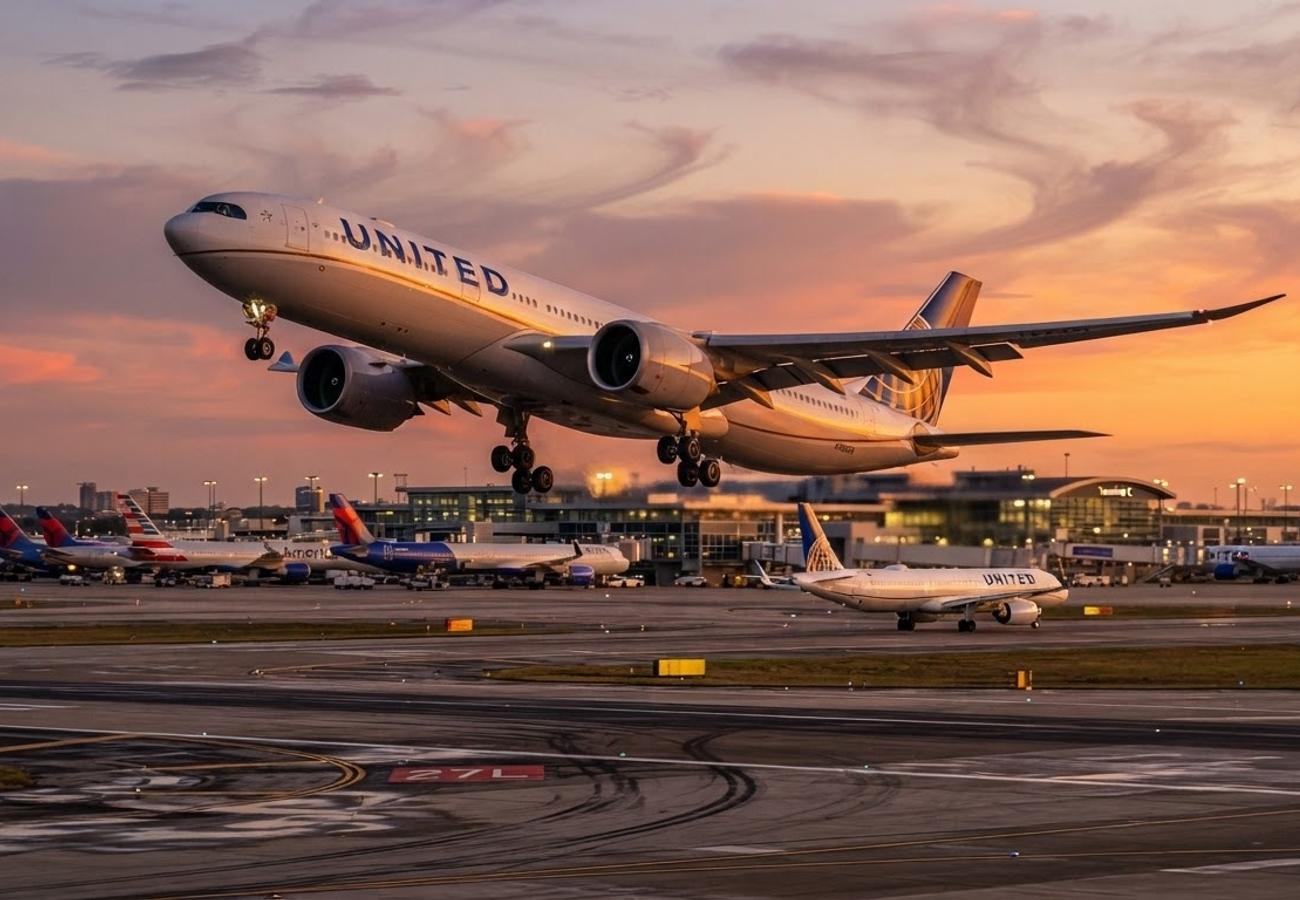
Image generated by AI
US aviation enters September with a massive strategic pivot, as Delta and United restore critical Middle East links and American Airlines unveils a seven-route international expansion for 2027. These shifts signal a broader industry move toward "disciplined growth," where carriers prioritize high-yield markets and the deployment of long-range narrowbody aircraft over generic capacity increases.
The current landscape reveals a bifurcated strategy: legacy carriers are aggressively reclaiming international territory, while low-cost carriers (LCCs) are carving out niches in underserved secondary markets. From the restoration of New York-based flights to Tel Aviv to the expansion of regional hubs in San Diego and Boise, the industry is recalibrating to match a volatile post-recovery demand curve.
Delta and United Restore Connectivity to Tel Aviv
The restoration of service to Israel marks a significant milestone for US legacy carriers this month. Delta Air Lines is scheduled to resume daily operations between New York-JFK and Tel Aviv starting September 6. This service will be operated using the Airbus A330-900neo, reflecting a calculated return to the region following a comprehensive security review. However, the airline is maintaining a cautious stance; flights from Atlanta to Tel Aviv remain suspended through December 18.
Following closely, United Airlines is set to restart its Newark to Tel Aviv service on September 8. These moves indicate that while regional instability persists, the demand for premium transatlantic and Middle Eastern connectivity remains high enough to justify the return of flagship widebody assets.
American Airlines Targets European Growth for 2027
While Delta and United focus on immediate restorations, American Airlines is utilizing September to lay the groundwork for a substantial 2027 offensive. The carrier has announced seven new international routes slated for the summer 2027 season, with a heavy emphasis on diversifying its Philadelphia hub.
Key additions include:
- Philadelphia to Porto
- Philadelphia to Reykjavik
- Philadelphia to Vienna
- New York-JFK to Amsterdam
- New York-JFK to Nice
Additionally, American is increasing its capacity to London Heathrow by restoring a fourth daily flight from JFK. A pivotal element of this strategy is the integration of the Airbus A321XLR. By using this long-range narrowbody, American can serve "long-thin" routes—destinations with high demand but not enough volume to fill a traditional widebody aircraft—thereby increasing profitability and frequency.
Strategic Fleet Transitions and Narrowbody Innovation
The industry is witnessing a fundamental shift in how long-haul flights are operated. United Airlines is currently transitioning into a new operational phase with the introduction of the Airbus A321XLR. This aircraft is expected to underpin five new European routes in 2027, specifically departing from Washington Dulles and Newark.
This shift toward the A321XLR allows airlines to bypass the financial risk of operating half-empty jumbo jets on secondary international routes. For the traveler, this means more direct, nonstop options to mid-sized European cities that were previously only accessible via major hubs like London or Frankfurt.
Domestic Network Shifts: Southwest, Alaska, and Hawaiian
On the domestic front, the focus has shifted toward leisure hubs and regional synergy. Southwest Airlines is aggressively scaling its presence at San Diego International Airport, reaching a record peak of 139 departures per day during the August-September window. The carrier is also bolstering its California-to-Hawaii links and adding new service to Santa Barbara, while increasing flight frequencies to Seattle, Salt Lake City, and Portland.
Simultaneously, the integration of Alaska Airlines and Hawaiian Airlines is manifesting in new, targeted seasonal routes. The combined network is now offering nonstop flights from Honolulu to smaller mainland markets, including Boise and Spokane. Furthermore, Alaska Airlines is launching a Seattle to Long Beach route on September 8, leveraging its Pacific Northwest dominance to feed into Hawaiian’s island infrastructure.
Low-Cost Carrier Expansion in Secondary Markets
The ultra-low-cost carrier (ULCC) sector is avoiding the hub-and-spoke battle, instead targeting "underserved city pairs."
- Frontier Airlines: Beginning September 10, Frontier will launch service between Boise and Las Vegas with four weekly flights. The airline has also re-established its presence in Oakland with new Las Vegas connections.
- Breeze Airways: Eschewing traditional hubs, Breeze is launching a route between Charleston and Trenton on September 20, followed by Trenton to Vero Beach on September 30.
- Allegiant Air: On September 1, Allegiant announced new year-round services from Flint to Orlando and Flint to Fort Myers, scheduled to begin in February 2027, alongside increased capacity to St. Pete-Clearwater and Sarasota.
Summary of September Network Changes
| Airline | Key New/Restored Route | Effective Date | Aircraft Type |
|---|---|---|---|
| Delta | New York-JFK $\rightarrow$ Tel Aviv | Sept 6, 2026 | Airbus A330-900neo |
| United | Newark $\rightarrow$ Tel Aviv | Sept 8, 2026 | Widebody |
| Alaska | Seattle $\rightarrow$ Long Beach | Sept 8, 2026 | Narrowbody |
| Frontier | Boise $\rightarrow$ Las Vegas | Sept 10, 2026 | Narrowbody |
| Breeze | Charleston $\rightarrow$ Trenton | Sept 20, 2026 | Narrowbody |
| Breeze | Trenton $\rightarrow$ Vero Beach | Sept 30, 2026 | Narrowbody |
| American | 7 New Intl Routes (incl. Porto, Vienna) | Summer 2027 | A321XLR |
Why This Matters: The Shift to Commercial Discipline
For the modern traveler, these changes represent a move away from the "growth at all costs" era of aviation. The deployment of the A321XLR by American and United means that passengers will see a rise in nonstop flights to secondary cities, reducing the fatigue of layovers in massive hubs. However, it also means airlines are becoming more selective; if a route doesn't meet strict profitability metrics, it is being cut or shifted to a seasonal schedule.
From a logistical standpoint, the restoration of Tel Aviv flights demonstrates that the industry is now capable of rapid pivoting based on real-time security assessments. The focus on secondary markets by Breeze and Allegiant indicates a permanent shift in US travel habits, where passengers are increasingly willing to fly out of smaller regional airports to avoid the congestion of major metros.
Ultimately, September 2026 serves as a blueprint for the future of US aviation: a blend of high-tech fleet modernization, surgical international expansion, and a ruthless focus on leisure-driven domestic demand.
The aviation industry is no longer just recovering; it is redesigning itself for a more fragmented, demand-driven era.
Related Travel Guides
Disclaimer
This article is for informational and educational purposes only. It does not constitute legal, financial, or professional advice. While we strive to provide accurate and up-to-date information, travel policies, regulations, and conditions change rapidly. Always verify information with official sources before making travel decisions. Nomad Lawyer makes no representations about the accuracy, reliability, completeness, or suitability of the information provided. Readers should consult qualified professionals for advice specific to their circumstances. The views expressed in this article are those of the author and do not necessarily reflect the views of Nomad Lawyer.
Raushan Kumar
Founder & Lead Developer
Full-stack developer with 11+ years of experience and a passionate traveller. Raushan built Nomad Lawyer from the ground up with a vision to create the best travel and law experience on the web.
Learn more about our team →