
American Airlines Merger Buzz with United: Impact on US Routes, Fares, Competition 2026
American Airlines pilot union signals openness to merger with United Airlines. Analysis of regulatory hurdles, traveler impact, and competitive reshaping in US aviation industry.

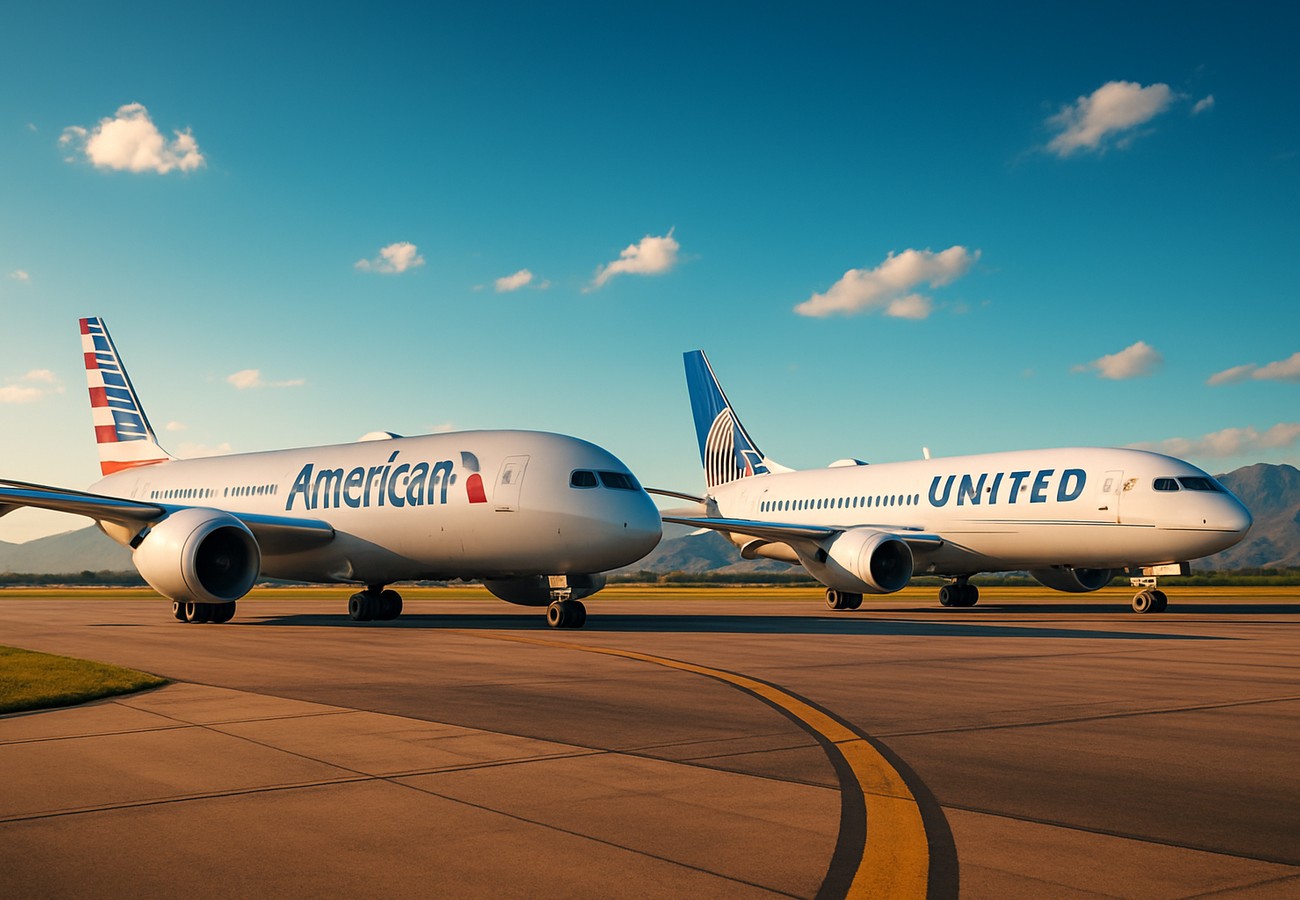
Image generated by AI
American Airlines Merger With United Airlines Gains Traction: Pilot Union Signals Openness to Bold Strategic Restructuring—What It Means for US Travelers, Routes, and Fares in 2026
Pressure Mounts on American as Rival Carriers Strengthen Networks; Regulatory Hurdles Loom Over Potential Deal
United States — In a dramatic shift that could reshape American aviation, the Allied Pilots Association (APA) representing thousands of American Airlines pilots has publicly acknowledged a potential merger with United Airlines as a viable "bold vision," intensifying internal pressure on airline leadership to pursue aggressive strategic changes. While no deal is imminent and regulatory approval remains highly unlikely, the union's openness signals deep frustration with American Airlines' competitive position and hints at seismic changes ahead for the U.S. aviation industry.
What Just Happened: The American-United Merger Debate Explodes
The conversation about a possible American Airlines-United Airlines merger first surfaced in early 2026 during closed-door discussions in Washington, reportedly initiated by United Airlines CEO Scott Kirby. American Airlines leadership, under CEO Robert Isom, swiftly rejected the proposal—but that rejection has not ended the debate. Instead, it has intensified it.
The Allied Pilots Association's recent public acknowledgment that a merger represents a "bold vision" marks a critical turning point. Rather than endorsing the deal outright, union leadership is pressuring American's executive team to seriously evaluate all strategic alternatives—mergers, partnerships, fleet expansions, or structural overhauls.
This internal revolt reveals a brewing crisis: American Airlines is losing ground to competitors on routes that matter most to pilots and passengers alike.
The Competitive Gap Widening Between American, United, and Delta
American Airlines faces a mounting crisis of relevance. While United Airlines and Delta Air Lines have aggressively expanded their long-haul international networks, American has failed to keep pace.
The scale of the gap:
- United operates significantly more transoceanic destinations than American, dominating routes to Europe, Asia, and Latin America
- Delta has strengthened its global fleet with newer widebody aircraft, improving efficiency on premium long-haul routes
- American's long-haul capacity lags both competitors, limiting pilot scheduling opportunities and career earnings potential
- International route gaps directly translate to fewer premium-cabin revenues and lower passenger choice
For pilots, this translates into fewer long-haul assignments, reduced scheduling flexibility, and slower career progression. For travelers, it means fewer direct flight options, less competitive pricing on key international routes, and reduced service quality on premium cabins.
Internal Pressure: Employee Frustration Reaches Boiling Point
The pilot union's public statement is only the latest sign of internal turmoil. Months of mounting frustration among American's workforce—pilots, flight attendants, ground crews—have erupted into open criticism of leadership strategy.
Earlier in 2026, pilot representatives demanded "decisive action" from management. Flight attendants and other employee groups have echoed similar complaints: the airline is stagnating while competitors soar.
This employee revolt carries enormous weight. Unions at American Airlines have historically wielded significant leverage in industry negotiations. Their public acknowledgment of merger discussions signals they are willing to use that power to force strategic change.
Regulatory Reality Check: Why a Merger Faces Near-Impossible Odds
Despite the pilot union's openness, a merger between American and United would collide with a wall of regulatory opposition. Here's why approval remains highly improbable:
Antitrust Concerns:
- American and United combined would create a mega-carrier with overlapping networks at major hubs
- The Department of Justice and Federal Trade Commission would scrutinize route concentration at key airports
- Chicago O'Hare International Airport, Los Angeles International Airport, and other major gateways would face reduced competition
Political Headwinds:
- Congress and the Biden-Harris administration have expressed skepticism about major airline consolidation
- Public concern about fare increases and reduced service options would mobilize political opposition
- Recent airline industry criticism over baggage fees and customer service gives politicians reason to block deals that reduce choice
Historical Precedent:
- Regulators blocked the proposed Frontier-Spirit merger in 2024, citing competitive concerns
- The regulatory environment is tighter than during the wave of consolidation in 2010–2015
Bottom Line: A formal merger announcement would face years of regulatory battles and likely rejection.
What's Actually at Stake for American Travelers
While a formal merger remains unlikely, the conversation reveals genuine structural problems—and real opportunities for change.
Potential Advantages if Strategic Consolidation Occurs (Through Merger or Partnership)
| Traveler Benefit | How It Works | Realistic? |
|---|---|---|
| Expanded Route Network | Combined carrier serves more destinations, especially international | Possible through partnership |
| Improved Long-Haul Service | More direct flights to Europe, Asia, Latin America | Likely via expansion, not merger |
| Better Connections | Streamlined codeshare networks reduce layovers | Very likely |
| Operational Efficiency | Consolidated systems reduce delays, improve on-time performance | Depends on execution |
| Enhanced Premium Cabins | Better business/first class on long-haul routes | Possible short-term |
Real Risks for Travelers if Consolidation Occurs Without Regulation
| Traveler Risk | What Could Happen | Probability |
|---|---|---|
| Higher Fares | Reduced competition leads to price increases on overlapping routes | High if merger approved |
| Route Cuts | Duplicate routes consolidated; smaller markets lose service | Very high |
| Fewer Alternatives | Passengers on key routes have fewer airline choices | Very high |
| Reduced Capacity | Flights consolidated; fewer seats available on popular routes | Medium-high |
| Service Degradation | Integration chaos causes delays, cancellations, customer service decline | High during transition |
Global and Regional Aviation Context
The American Airlines situation reflects broader structural challenges in global aviation:
United States Market Dynamics
American Airlines ranks as the third-largest U.S. carrier by passenger volume, behind Southwest and Delta. Its vulnerability to merger speculation signals that scale alone no longer guarantees competitiveness in an era where network efficiency and international reach dominate investor valuations.
North Atlantic Route Competition
On transatlantic routes—the profit engine for major carriers—American faces intensifying competition from United, Delta, and European carriers (Lufthansa, IAG, Air France-KLM). Any strategic weakness in long-haul service directly affects American's ability to retain high-value business travelers.
Asian Gateway Exposure
Similarly, American's position on Asia-Pacific routes remains weak compared to rivals. United and Delta offer more flight options and better connectivity to key Asian hubs (Tokyo, Shanghai, Singapore, Seoul). This gap will widen unless American commits to aggressive fleet investment and route expansion.
The Practical Impact: How American Travelers Could Be Affected
Scenario 1: Merger Actually Happens (Highly Unlikely)
- Short-term (6-12 months): Operational chaos—schedule overlaps, system integration failures, customer service deterioration
- Medium-term (1-2 years): Route consolidation, job losses in redundant positions, fare uncertainty
- Long-term (2+ years): Potentially stronger global carrier, but likely higher fares on consolidated routes
Scenario 2: American Pursues Internal Transformation (Most Likely)
- Aggressive expansion of long-haul routes without a merger partner
- Fleet modernization with new widebody aircraft
- Partnership agreements (codeshare expansion) with global carriers
- Modest fare increases to fund expansion; improved service quality
Scenario 3: Strategic Partnership Without Merger (Plausible)
- American and United expand codeshare agreements
- Joint venture on Atlantic/Pacific routes
- Fleet sharing and maintenance partnerships
- Travelers benefit from better connectivity; competition remains intact
Why the Pilot Union Matters More Than You Think
The Allied Pilots Association represents approximately 14,000 American Airlines pilots. Their endorsement of merger discussions—or even exploration of "bold strategic options"—carries enormous weight because:
-
Contract Negotiations: Pilot contracts are coming up for renegotiation. Union pressure on strategy gives them leverage on wages, scheduling, and working conditions.
-
Public Credibility: Union statements shape how investors, analysts, and the public perceive management competence. Pilot criticism signals operational or strategic problems.
-
Operational Power: Pilots can slow operations, file grievances, and create friction during contract disputes. Public pressure for change gives them a negotiating advantage.
-
Industry Signal: When pilot unions break ranks with management publicly, it signals genuine crisis. Other unions take notice.
American's leadership cannot simply ignore union pressure without risking operational disruption.
What Industry Experts Say About American's Future
Consensus View:
- American must expand long-haul capacity and international presence to remain competitive
- A formal merger with United faces insurmountable regulatory barriers
- Strategic partnerships and internal expansion are more realistic paths forward
- Fare increases are likely as American invests in competitive positioning
- Network expansion benefits premium-cabin passengers most; economy passengers face mixed outcomes
Analyst Perspectives: Aviation analysts at major investment banks are divided. Some argue American's strongest option is aggressive internal investment—ordering new widebody aircraft, expanding to underserved international markets, and improving premium services. Others suggest that without a dramatic structural change (merger, major partnership, or acquisition by a larger conglomerate), American will remain the "third wheel" in the U.S. big three.
What Happens Next: Possible Outcomes Over the Next 12-24 Months
Outcome A: Leadership Signals Strategic Review (80% Probability)
American Airlines management may announce a "comprehensive strategic review" to address employee concerns and investor pressure. This signals openness to partnerships, route expansion, and operational improvements without committing to a merger.
Timeline: Q3-Q4 2026
Traveler Impact: Moderate; potential for new long-haul routes, service improvements
Outcome B: Major Partnership Announcement (60% Probability)
American could announce a significant partnership with an international carrier or finalize expanded codeshare agreements with United or other carriers. This would improve connectivity without triggering regulatory scrutiny.
Timeline: Late 2026–Early 2027
Traveler Impact: Positive; better connections, more international options
Outcome C: New Aircraft Orders (Very High Probability)
American will likely announce orders for new widebody aircraft (Boeing 787 or Airbus A350) to expand long-haul capacity. This is the most realistic path to competitive parity.
Timeline: Q2-Q3 2026
Traveler Impact: Long-term positive; 3-5 years for new routes to materialize
Outcome D: Merger Formally Proposed and Blocked (20% Probability)
If American's situation deteriorates, a formal merger proposal could emerge. Regulators would block it within 12-18 months, but the process would create uncertainty for travelers and employees.
Timeline: Unlikely before 2027
Traveler Impact: Negative; uncertainty, potential short-term fare increases
The Bigger Picture: What This Means for Global Aviation
American Airlines' struggle reflects a broader consolidation in global aviation. Large carriers have become more concentrated, reducing consumer choice on major routes. At the same time, budget carriers (Southwest, Spirit, Frontier) have gained market share on short-haul routes, fragmenting the competitive landscape.
This creates a paradox: The "big three" carriers (American, United, Delta) dominate long-haul and premium markets but face increasing pressure to justify premium pricing. Merger speculation signals that size alone no longer guarantees profitability—carriers must have network density, fleet efficiency, and global reach.
For travelers, this consolidation wave means:
- International routes: More concentration, potentially higher fares
- Domestic routes: Continued competition from low-cost carriers
- Premium services: Better products, but at higher prices
- Network connectivity: Improved codeshare options, but fewer independent carriers
Conclusion: American at a Crossroads; Travelers Should Watch Carefully
The Allied Pilots Association's openness to merger discussions signals that American Airlines faces genuine competitive pressure. While a formal merger with United remains highly improbable due to regulatory barriers, the conversation reveals deep structural challenges: American is losing ground on international routes, long-haul capacity, and fleet modernity.
What happens next will reshape American aviation for the next decade. Whether through mergers, partnerships, or aggressive internal investment, American must dramatically improve its competitive position. Pilots are demanding it. Investors expect it. And passengers deserve it.
For travelers, the key takeaway is this: Change is coming to American Airlines, either through aggressive expansion or forced restructuring. In the near term, expect strategic announcements, partnership news, and potentially higher fares as American invests in competitiveness. In the medium term, look for new long-haul routes and improved service quality. The merger itself? It remains a catalyst for change rather than a likely outcome.
The U.S. aviation industry is not consolidating further—it's optimizing. And American Airlines is at the center of that optimization battle.
Key Takeaways
- Pilot Union Pressure: The Allied Pilots Association publicly acknowledged merger as a "bold vision," signaling internal demands for strategic change
- Regulatory Reality: American-United merger faces near-insurmountable antitrust hurdles; approval remains highly unlikely
- Competitive Gap: American lags United and Delta on long-haul routes, international destinations, and fleet modernity
- Most Likely Outcome: Internal expansion through new aircraft orders, partnerships, and long-haul route development—not a merger
- Traveler Impact: Short-term uncertainty; medium-term potential for new routes and better services; possible fare increases to fund expansion
- Timeline: Strategic announcements expected by Q3 2026; major partnership news likely
Disclaimer
This article is for informational and educational purposes only. It does not constitute legal, financial, or professional advice. While we strive to provide accurate and up-to-date information, travel policies, regulations, and conditions change rapidly. Always verify information with official sources before making travel decisions. Nomad Lawyer makes no representations about the accuracy, reliability, completeness, or suitability of the information provided. Readers should consult qualified professionals for advice specific to their circumstances. The views expressed in this article are those of the author and do not necessarily reflect the views of Nomad Lawyer.
Kunal K Choudhary
Co-Founder & Contributor
A passionate traveller and tech enthusiast. Kunal contributes to the vision and growth of Nomad Lawyer, bringing fresh perspectives and driving the community forward.
Learn more about our team →