
US Airlines Enter a New Era of Flight Planning: How Rising Fuel Costs Reshape American, United, and Southwest Networks in 2026
As elevated jet fuel prices squeeze operational margins, American Airlines, United, and Southwest trim flight capacity, prioritizing route profitability over expansion.

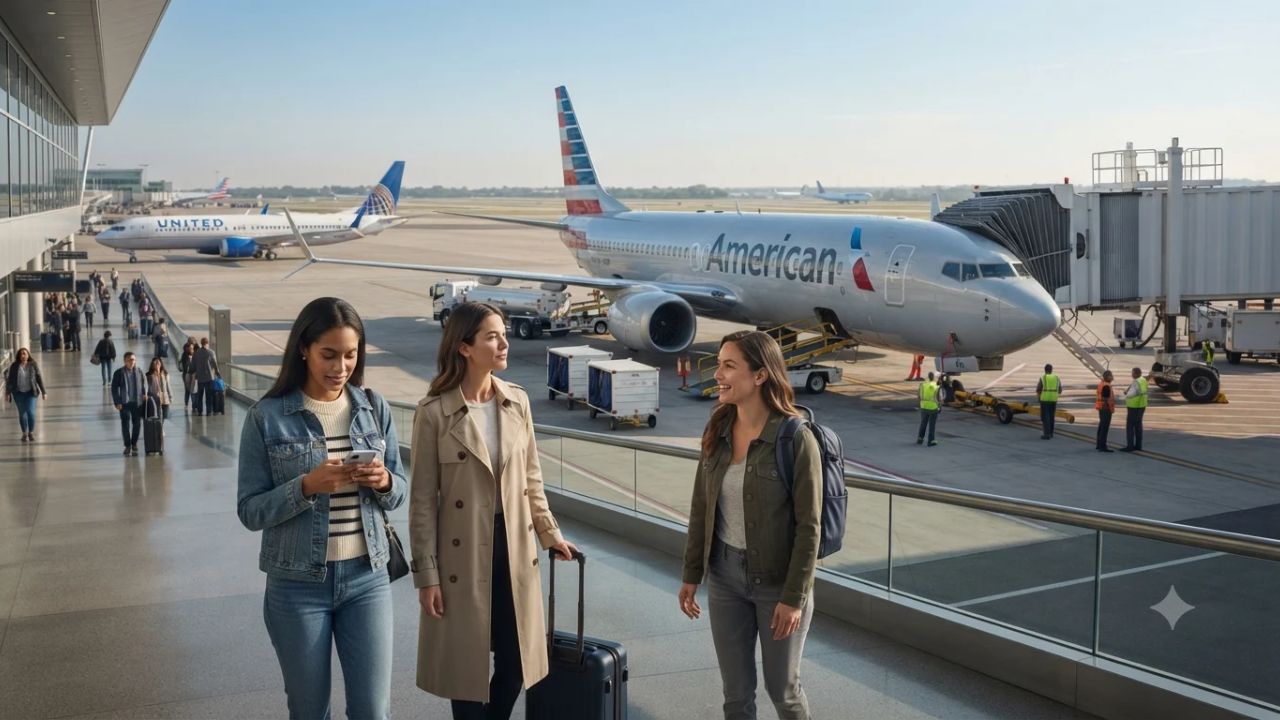
Image generated by AI
The post-pandemic era of American commercial aviation—characterized by aggressive network expansions and airlines flooding secondary cities with excess seating capacity—has come to an abrupt halt as soaring jet fuel expenses force legacy and low-cost carriers into strict operational discipline. Facing persistent commodity market volatility tracked by the U.S. Energy Information Administration, major carriers including American Airlines, United Airlines, and Southwest Airlines have initiated coordinated schedule adjustments. Rather than competing for vanity market share, airline executives are pruning low-margin routes, grounding underperforming regional frequencies, and consolidating flight banks around core high-demand fortress hubs.
For travelers across the United States, this operational pivot signals a profound transition. The era of abundant last-minute domestic seat sales is yielding to higher load factors, fuller cabins, and tightly calibrated departure schedules. Understanding how carriers navigate this cost environment is essential for booking reliable itineraries, protecting connection windows, and managing travel budgets across North American corridors.
The Economics of Airline Fuel: Disciplined Capacity Replaces Aggressive Growth
Jet fuel represents an airline's largest and most volatile operating expense, directly determining the viability of every scheduled flight. When crude markets spike due to supply pressures and geopolitical instability, operating profit margins evaporate rapidly on flights operating with soft load factors. Airlines can no longer absorb empty seats on marginal regional routes in hopes of future market dominance.
In response, major carriers are implementing differentiated capacity strategies. American Airlines has publicly recognized that elevated fuel expenses are driving up overall operating expenditures, requiring comprehensive route-by-route profitability reviews that may lead to additional schedule consolidations. United Airlines has explicitly shifted its corporate philosophy toward prioritizing unit profitability over raw volume, systematically cutting back flights that fail to deliver sustainable returns. Even Southwest Airlines, long the champion of high-frequency short-haul point-to-point routes, has deliberately slowed its planned capacity expansion to preserve cash and maintain balance-sheet resilience.
This industry-wide restraint reflects a mature approach to financial stability. Instead of attempting to unilaterally inflate airfares—which risks dampening price-sensitive leisure demand—carriers are managing unit revenues by limiting supply. By retiring less efficient older aircraft and deploying modern, fuel-efficient models like the Airbus A321neo and Boeing 737 MAX, airlines protect their bottom lines while ensuring high seat utilization across remaining departures.
What Sets This New Operating Strategy Apart for Travelers
The transformation taking place across American skies is not an across-the-board shutdown; it is a tactical recalibration. Mainline carriers are protecting premier business corridors, high-yield transcontinental hops, and profitable transatlantic routes, while reducing daily frequencies between secondary and tertiary cities. A route that previously enjoyed five daily regional jet flights might now see three mainline frequencies with higher capacity, altering passenger schedules.
To mitigate air traffic gridlock and fuel burn on the ground, the Federal Aviation Administration is deploying advanced predictive traffic management technologies. These digital systems help air traffic control optimize arrival sequencing and minimize airborne holding patterns, which directly saves thousands of gallons of aviation fuel during bad weather.
Concurrently, passengers are noticing shifts inside the cabin. As carriers focus on premium revenue to buffer fuel volatility, airlines are expanding premium economy and domestic first-class seating layouts. Travelers willing to invest in premium amenities are subsidizing seat economics, giving carriers strong incentives to enhance priority check-in, dedicated lounges, and onboard dining even as overall seat supply tightens.
Visitor Insider Tips
Navigating domestic flights during an era of capacity discipline requires strategic booking habits and proactive airport planning.
- Book 6 to 8 Weeks Ahead for Domestic Travel: With airlines limiting seat capacity to match seasonal demand, last-minute seat dumping is increasingly rare. Secure domestic flights six to eight weeks in advance, particularly when traveling over peak holiday weekends or summer breaks.
- Build 90-Minute Connection Buffers: As airlines trim flight frequencies, missing a connection due to delays can leave you stranded until the following day. When connecting through massive connecting hubs like Dallas/Fort Worth (DFW), Chicago O'Hare (ORD), or Denver (DEN), avoid tight 45-minute transfers and book connection windows of at least 90 minutes.
- Target Mid-Week Departures: Tuesdays and Wednesdays consistently offer lower fares and less congested security checkpoints compared to frantic Monday morning business travel and Friday afternoon weekend rushes.
- Explore Alternate Secondary Terminals: In metropolitan regions served by multiple airports, look at secondary options where low-cost carriers maintain efficient operations. For example, choose Dallas Love Field (DAL) instead of DFW, Chicago Midway (MDW) instead of ORD, or Hollywood Burbank (BUR) instead of Los Angeles International (LAX) for faster gate turnarounds and lower ground stress.
- Monitor Airline Schedule Changes: Because carriers are continuously updating route profitability, flight times may shift weeks before departure. Check your airline reservation app weekly for notifications, as federal guidelines overseen by the U.S. Department of Transportation grant you the right to request a full refund or rebooking if an airline significantly alters your schedule.
Cultural and Environmental Context
The financial pressure of rising fuel costs accelerates the urgent need for environmental modernization across civil aviation. Fuel efficiency is no longer solely a corporate social responsibility initiative; it is an existential operational necessity. Major airlines are accelerating investments in sustainable aviation fuels (SAF) derived from non-food biomass, which can reduce lifecycle greenhouse gas emissions by up to eighty percent compared to conventional petroleum jet fuel.
At the community level, however, capacity discipline carries complex consequences. When carriers eliminate regional feeder flights connecting midwestern or rural towns to major hubs, local business investment and tourism in secondary communities suffer. Regional civic leaders and airport authorities are increasingly forced to provide minimum revenue guarantees to retain commercial service. By choosing airlines that invest in modern twin-engine fleets and supporting multimodal rail connections in densely populated corridors like the Northeast, travelers can foster a more sustainable, economically resilient transportation network.
FAQ: Navigating US Domestic Flights 2026
Why are American, United, and Southwest reducing flight capacity? Rising jet fuel expenses make low-demand flights unprofitable. Airlines are cutting marginal routes and slowing fleet growth to focus strictly on profitable, high-demand routes.
Will higher fuel costs cause major airfare spikes? While fuel pressure pushes fares upward, consumer demand and airline competition limit how high ticket prices can rise. Fares will be highest on high-demand peak travel dates.
How can I protect my travel plans against flight cancellations? Book non-stop flights whenever possible, schedule early morning departures that are less prone to cascading weather delays, and allow at least 90 minutes for hub connections.
What happens if an airline cancels my flight due to schedule adjustments? If an airline cancels or significantly alters your flight schedule, U.S. Department of Transportation regulations entitle you to a full cash refund if you choose not to accept the alternative itinerary.
As airlines chart a leaner, more disciplined path through volatile skies, thoughtful travelers who adapt their strategies will continue to discover America with confidence.
Related Travel Guides
JetBlue Repurposes Airbus A320 Fleet for VIP Sports Charters: 2026 Aviation Strategy
Why Qantas Never Bought the Boeing 777: The Untold Story of Australia's Long-Haul Fleet Strategy
10 Best Airport Hubs for Seamless Layovers in the US, According To Reddit
Disclaimer
This article is for informational and educational purposes only. It does not constitute legal, financial, or professional advice. While we strive to provide accurate and up-to-date information, travel policies, regulations, and conditions change rapidly. Always verify information with official sources before making travel decisions. Nomad Lawyer makes no representations about the accuracy, reliability, completeness, or suitability of the information provided. Readers should consult qualified professionals for advice specific to their circumstances. The views expressed in this article are those of the author and do not necessarily reflect the views of Nomad Lawyer.
Preeti Gunjan
Contributor & Community Manager
A passionate traveller and community builder. Preeti helps grow the Nomad Lawyer community, fostering engagement and bringing the reader experience to life.
Learn more about our team →