
American Airlines Steps Up as British Airways Refuses to Board Solo Wheelchair Passenger
Breaking airline news and aviation industry updates for 2026.

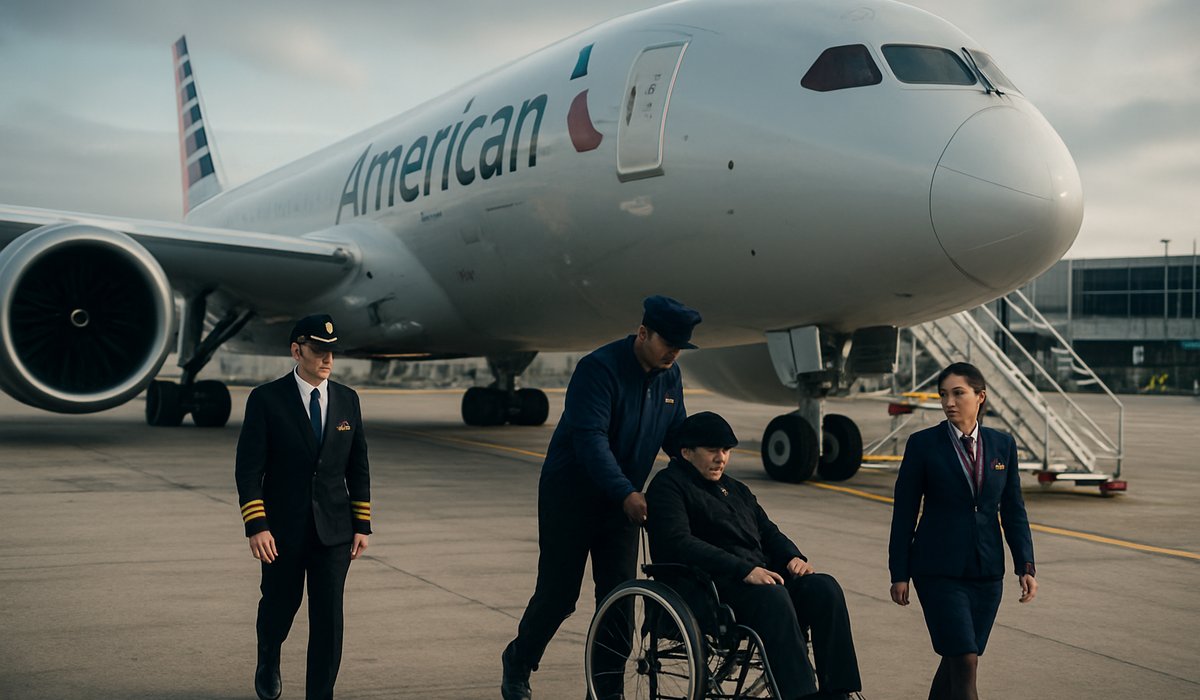
Image generated by AI
American Airlines Steps Up as British Airways Refuses to Board Solo Wheelchair Passenger
A troubling accessibility incident in New York highlights ongoing disability discrimination in commercial aviation
A wheelchair-using passenger faced rejection at the gate when British Airways refused to allow them to board a flight departing from a New York airport, citing crew concerns about in-flight mobility and emergency evacuation procedures. The denial prompted American Airlines to intervene, ultimately accommodating the passenger on an alternative service—exposing a significant gap in disability rights compliance across the aviation industry.
The Incident: Accessibility Denied
The passenger, traveling independently without a companion, was barred from their scheduled British Airways flight based on crew assertions that cabin staff would be unable to provide adequate assistance with lavatory access or emergency evacuation procedures. The airline's position that a solo disabled traveler posed logistical challenges for onboard operations represents a stark violation of disability accommodation standards upheld by aviation regulators globally.
British Airways' decision underscores a persistent problem within commercial aviation: the conflation of disability with dependency. Despite decades of accessibility legislation, including the Air Carrier Access Act in the United States and equivalent EU regulations, major carriers continue to impose arbitrary restrictions on passengers with disabilities traveling unaccompanied.
American Airlines Responds Where British Airways Failed
Rather than accepting the initial denial, American Airlines recognized the passenger's right to air travel and booked them on an alternative flight, effectively demonstrating that accommodating wheelchair users without companions is both feasible and legally mandated. The carrier's responsiveness contrasts sharply with British Airways' gatekeeping approach.
This intervention raises critical questions about inconsistent disability policies across international carriers. While American Airlines proved that solo wheelchair passengers can be safely transported, British Airways' refusal suggests either inadequate crew training, insufficient onboard accessibility infrastructure, or both.
Broader Industry Implications
The incident arrives amid heightened scrutiny of airline passenger treatment and accessibility standards. Disability rights advocates have long documented systematic discrimination in aviation, with carriers using vague safety concerns to justify denials that disproportionately affect disabled travelers.
Regulatory bodies including the U.S. Department of Transportation and the European Union Aviation Safety Agency must address this enforcement gap. Airlines operating international routes cannot maintain divergent accessibility standards based on individual crew discretion or corporate policy whims.
What's Next
British Airways faces potential regulatory investigation and reputational fallout from this accessibility failure. For the broader aviation sector, the incident serves as a reminder that accessibility isn't optional—it's a fundamental right to which every passenger is entitled, regardless of disability status or whether they travel with companions.
FAQ: Airline Accessibility and Passenger Rights
Can airlines legally deny boarding to disabled passengers traveling alone? No. Under U.S. Air Carrier Access Act regulations and similar international laws, airlines cannot discriminate based on disability. Solo travel status does not override these protections.
What accommodations must airlines provide for wheelchair users? Airlines must provide accessible seating, boarding assistance, equipment storage, and lavatory access information. Crew must receive proper disability sensitivity training.
What should passengers do if denied boarding due to disability? Document the incident, request written explanation from the airline, file complaints with aviation authorities (DOT in the U.S.), and contact disability rights organizations.
Are all airlines required to follow the same accessibility standards? International carriers must comply with regulations in their operating countries. However, enforcement varies, leading to inconsistencies like the British Airways incident.
How can travelers report airline accessibility violations? In the U.S., file complaints with the Department of Transportation. Internationally, contact your national aviation authority or file with the International Air Transport Association.
Related Travel Guides
External Resources
Disclaimer
This article is for informational and educational purposes only. It does not constitute legal, financial, or professional advice. While we strive to provide accurate and up-to-date information, travel policies, regulations, and conditions change rapidly. Always verify information with official sources before making travel decisions. Nomad Lawyer makes no representations about the accuracy, reliability, completeness, or suitability of the information provided. Readers should consult qualified professionals for advice specific to their circumstances. The views expressed in this article are those of the author and do not necessarily reflect the views of Nomad Lawyer.
Preeti Gunjan
Contributor & Community Manager
A passionate traveller and community builder. Preeti helps grow the Nomad Lawyer community, fostering engagement and bringing the reader experience to life.
Learn more about our team →