
American Airlines to Install Seatback Entertainment Screens on 800+ Narrowbody Jets by 2028
American Airlines is reversing its personal-device streaming strategy by reinstalling seatback entertainment screens across more than 800 narrowbody aircraft starting in 2028.

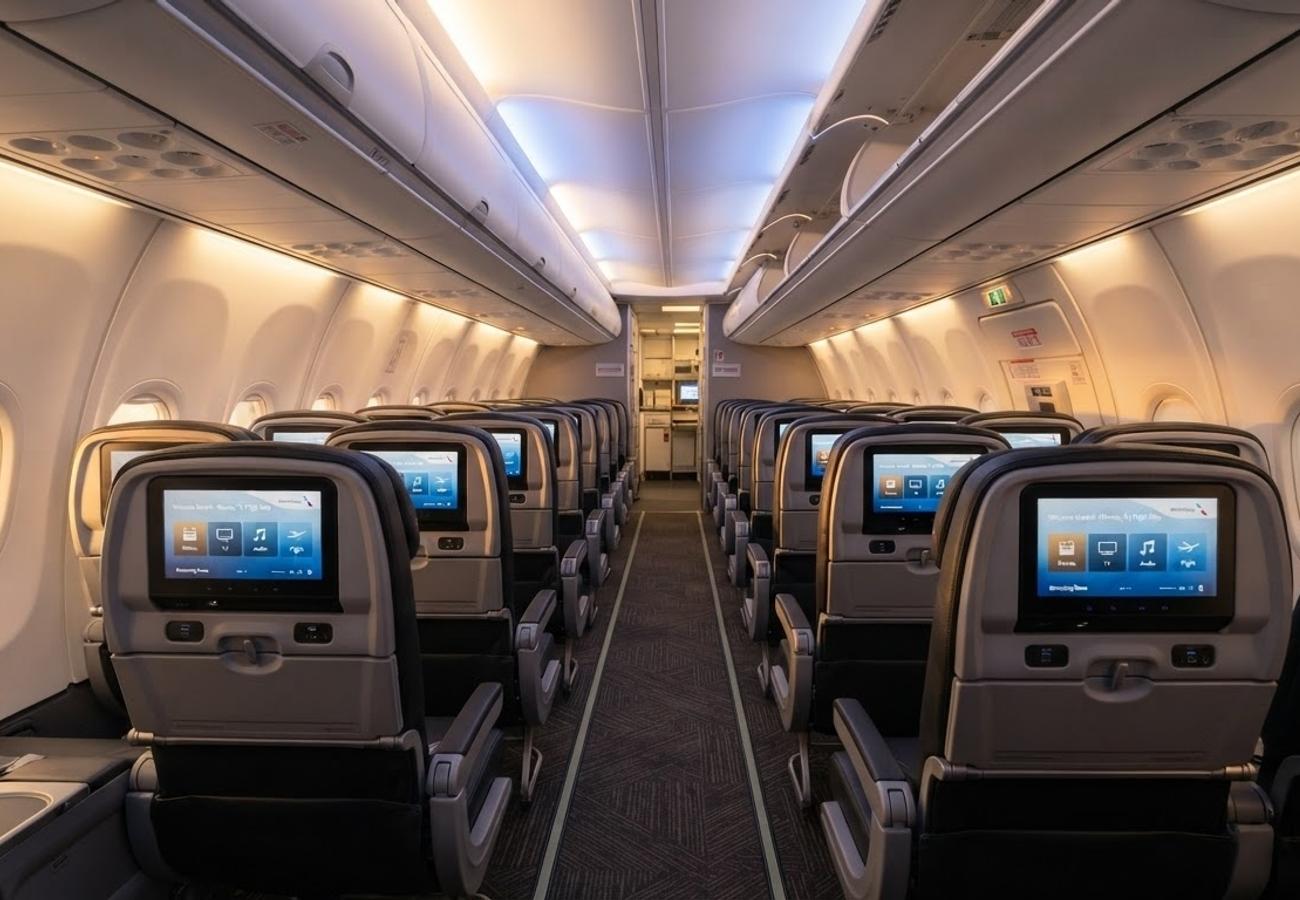
Image generated by AI
American Airlines is abandoning its "bring-your-own-device" entertainment philosophy by committing to reinstall seatback screens on more than 800 narrowbody aircraft beginning in 2028. This massive hardware pivot marks a strategic retreat from a decade-long effort to offload entertainment costs onto passengers' personal smartphones and tablets.
For years, the carrier prioritized a streaming-only model for its single-aisle fleet, arguing that passengers preferred their own devices. However, shifting consumer expectations and aggressive cabin investments from primary domestic competitors have forced a change in direction. The upcoming rollout will ensure that a significant portion of the mainline domestic fleet offers a standardized, built-in viewing experience.
Strategic Reversal of Cabin Design Philosophy
Industry reports and corporate disclosures indicate that American Airlines will now equip both newly delivered and retrofitted Boeing and Airbus narrowbody jets with individual screens at every seat. This decision directly contradicts the airline's previous trajectory, which saw the removal of embedded systems to reduce aircraft weight and maintenance overhead.
The initiative is not a standalone hardware update but part of a comprehensive narrowbody cabin redesign. This broader project aims to modernize the passenger environment, moving away from the minimalist approach of the last ten years. While the mainline fleet will receive these upgrades, reports suggest that regional aircraft operating under the American Eagle brand will be excluded from this specific screen rollout, keeping the focus on larger, high-capacity jets.
The shift is widely viewed as a defensive move to maintain parity with Delta Air Lines and United Airlines. Both rivals have spent the last several years aggressively upgrading their narrowbody cabins with high-resolution screens and enhanced connectivity, creating a perceived "product gap" that American Airlines can no longer ignore if it wishes to attract high-value loyalty members.
Modernizing the Narrowbody Passenger Experience
The new seatback systems will serve as the centerpiece of a wider interior refresh. Beyond the screens, the airline is integrating redesigned seating and expanded charging capabilities to meet the power demands of modern travelers. The entertainment systems are expected to feature high-definition video, an extensive library of current films and television shows, and a user interface designed to work in tandem with onboard Wi-Fi.
To mitigate the operational impact, the airline is coordinating these installations with existing cabin density adjustments. This includes modifications to first-class configurations and the expansion of extra-legroom seating options. By bundling the entertainment hardware installation with other interior work, the carrier can reduce the total amount of time aircraft spend grounded for maintenance.
Technical data suggests that the airline is opting for a new generation of hardware that is significantly lighter and more energy-efficient than the systems removed years ago. This addresses the primary concern that originally drove the shift toward personal devices: the impact of heavy hardware on fuel consumption and carbon emissions.
Rollout Timeline and Fleet Integration
The installation phase is scheduled to commence in 2028. This will be a multi-year endeavor involving more than 800 aircraft, encompassing a mix of new deliveries from Boeing and Airbus and a rigorous retrofitting schedule for planes already in active service.
Given that narrowbody aircraft handle the vast majority of American's North American departures, this move will eventually standardize the onboard experience. Once the rollout is complete, passengers will no longer have to guess whether their specific aircraft offers a screen or requires a personal tablet.
While a final completion date has not been publicized, the scale of the project suggests that the transition will extend well into the early 2030s. The pace of the rollout will likely be dictated by manufacturer delivery timelines and the airline's internal maintenance cycles.
Addressing Passenger Demand and Market Pressure
The debate over "screens vs. streaming" has persisted in the aviation industry for years. While some tech-savvy travelers prefer their own devices, a significant portion of the traveling public views seatback screens as a baseline requirement for a full-service carrier. This is particularly true on longer domestic hauls, where battery depletion and limited device storage often frustrate passengers.
Frequent flyers and travel forum users have largely reacted positively to the news, citing increased convenience and a higher perceived value of the ticket price. There is a growing sentiment that a lack of screens on mainline jets feels "budget," a perception that American Airlines is now moving to correct.
From a competitive standpoint, the move is essential for capturing the "status-conscious" traveler. In the high-stakes battle for business-class loyalty, the presence of a modern, integrated entertainment system often outweighs the flexibility of streaming, as it provides a more seamless and luxurious environment.
Financial Investment and Operational Logistics
Equipping 800+ aircraft with hardware is a capital-intensive project. However, financial analysts suggest the airline views this as a necessary investment to drive revenue from premium cabins. By improving the overall amenity package, American can more effectively justify higher fares for premium and extra-legroom seats.
The airline intends to offset the upfront costs through increased customer loyalty and a stronger competitive position on high-volume routes. The use of lightweight, modern components is also expected to keep long-term operating expenses lower than the legacy systems used in the early 2000s.
Operationally, the carrier will phase the upgrades during scheduled heavy maintenance checks. This sequenced approach ensures that the airline does not suffer massive capacity losses while attempting to modernize its fleet.
Why This Matters for the Modern Traveler
For the passenger, this shift signals the end of the "device anxiety" era on American Airlines flights. No longer will travelers need to worry about whether their tablet is fully charged or if they have enough offline storage for a cross-country flight.
From a logistical perspective, the return of the seatback screen simplifies the cabin environment. It removes the clutter of wires and devices from laps and trays, potentially improving the ergonomics of the seat. More importantly, it restores a sense of "full-service" luxury to the domestic experience, bridging the gap between the high-end amenities found on international widebody flights and the often-sparse offerings on domestic narrowbodies.
For the business traveler, this means a more consistent workspace and relaxation area, ensuring that the onboard experience matches the premium price point of a first-class or business-class ticket.
The return of the screen marks a victory for passenger convenience over airline weight-saving measures.
Related Travel Guides
Disclaimer
This article is for informational and educational purposes only. It does not constitute legal, financial, or professional advice. While we strive to provide accurate and up-to-date information, travel policies, regulations, and conditions change rapidly. Always verify information with official sources before making travel decisions. Nomad Lawyer makes no representations about the accuracy, reliability, completeness, or suitability of the information provided. Readers should consult qualified professionals for advice specific to their circumstances. The views expressed in this article are those of the author and do not necessarily reflect the views of Nomad Lawyer.
Raushan Kumar
Founder & Lead Developer
Full-stack developer with 11+ years of experience and a passionate traveller. Raushan built Nomad Lawyer from the ground up with a vision to create the best travel and law experience on the web.
Learn more about our team →