
American Airlines Flight AA1779 to Miami International Airport Ends in FBI Investigation Over Nude Passenger
The FBI has launched an investigation into an unruly passenger on American Airlines flight AA1779 who allegedly stripped naked and acted indecently mid-flight from Baltimore to Miami.

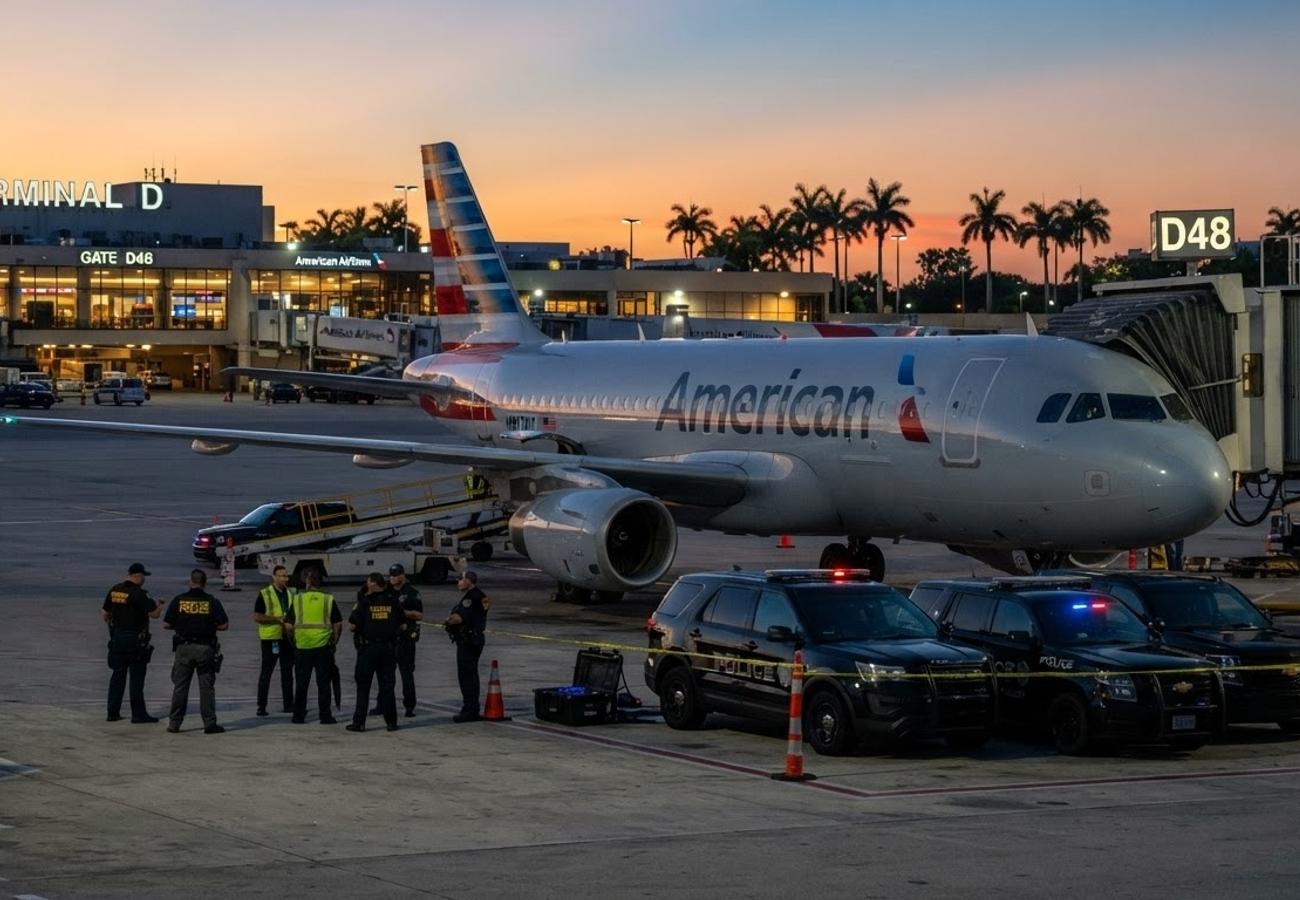
Image generated by AI
[Miami, September 15, 2026] — The Federal Bureau of Investigation (FBI) has assumed jurisdiction over a case involving an unruly passenger on American Airlines flight AA1779 who allegedly stripped naked and engaged in indecent behavior during a flight to Miami. The incident, which took place on September 11, resulted in the passenger being taken into custody by law enforcement immediately upon landing at Miami International Airport.
The flight, operated by an Airbus A319, departed from Baltimore/Washington International Thurgood Marshall Airport (BWI) and was plagued by issues from the start, including a departure delay of over an hour. While the aircraft did not divert, the flight crew reported a severe breach of the carrier's contract of carriage and dress code policies involving a female passenger seated in 9D.
The Mid-Air Breach of Conduct
The situation escalated mid-flight when flight attendants notified the cockpit that a passenger in the front of the cabin had removed all clothing. According to pilot reports, the individual was observed by other passengers touching herself in an indecent manner. The flight crew immediately alerted the Integrated Operations Center (IOC) and requested that law enforcement meet the aircraft upon arrival.
The pilots' official report stated: "FA1 REPORTS THAT PAX IN SEAT 9DEF HAS TAKEN OFF ALL HER CLOTHES AND WAS SEEN BY OTHER PAX TOU* HERSELF IN AN INDECENT MANNER. FOM SAYS THIS MUST BE REPORTED TO IOC/OSM AND HAVE LAW ENFORCEMENT."
While the official cockpit report did not mention the use of alcohol or narcotics, the incident has sparked significant debate among travelers regarding the use of sleep aids or sedatives, such as Ambien, which can cause incoherent behavior or "sleep-walking" episodes in some users.
Impacted Routes and Operations
The disruption occurred on a high-traffic corridor between the Mid-Atlantic and Florida. The specific details of the flight are as follows:
| Detail | Specification |
|---|---|
| Flight Number | AA1779 |
| Aircraft Model | Airbus A319 |
| Origin | Baltimore/Washington International (BWI) |
| Destination | Miami International Airport (MIA) |
| Scheduled Departure | 7:10 p.m. ET |
| Actual Departure | 8:45 p.m. ET |
| Arrival Gate | Gate D2, North Terminal |
| Arrival Time (Law Enforcement) | 11:32 p.m. ET |
The incident is part of a broader trend of instability for the carrier. According to FlightAware, American Airlines has recently struggled with operational consistency, reporting 494 delays and three cancellations around the time of this event.
What This Means for Travelers
For passengers booking with American Airlines, this incident serves as a stark reminder of the strict "Contract of Carriage" that governs air travel. The airline's policy explicitly forbids "offensive clothing" and "bare feet," and mandates that passengers behave respectfully toward crew and fellow travelers.
In plain language, this means:
- Zero Tolerance: Airlines are increasingly likely to involve federal authorities for "indecent" behavior, regardless of whether the cause is medical or substance-related.
- Boarding Denials: Violations of dress codes or erratic behavior at the gate can lead to immediate denial of boarding or removal from the terminal.
- Post-Flight Detention: Passengers who breach safety or conduct rules may be prevented from deboarding with other passengers and instead be handed directly to law enforcement.
The Federal Aviation Administration (FAA) has seen a rise in unruly passenger reports over recent years, leading to stricter enforcement of onboard conduct. Travelers are advised that "medical emergencies" resulting from prescription medication may not exempt them from legal prosecution if the behavior is deemed a security threat or a violation of federal law.
The Path to Prosecution
Upon landing at 11:32 p.m. ET, the aircraft taxied to Gate D2. In a departure from standard deboarding procedures, passengers were held on the aircraft while officers from the Miami-Dade Sheriff's Office boarded the plane to take the passenger into custody.
The Miami-Dade Sheriff’s Office later confirmed that because the disturbance occurred while the aircraft was in flight, the matter falls under federal jurisdiction. Consequently, the FBI has taken over the investigation to determine if federal aviation laws were violated.
This event follows another high-profile disruption on September 9, where a passenger on a flight between Dallas and New Jersey had to be duct-taped to their seat, forcing a diversion to Baltimore. The frequency of these events has led to increased scrutiny of onboard security protocols and passenger screening.
FAQ: American Airlines Conduct Rules 2026
What happens if a passenger violates the American Airlines dress code? The airline may deny boarding, remove the passenger from the terminal, or, in extreme cases of indecent exposure, involve law enforcement for legal prosecution.
Can a passenger be arrested for behavior on a flight that doesn't cause a diversion? Yes. As seen in flight AA1779, law enforcement can meet the aircraft at the destination gate to take a passenger into custody even if the flight completes its planned route.
Who investigates "indecent" behavior on a commercial flight? While local police (like the Miami-Dade Sheriff's Office) initially respond, the FBI typically takes over investigations for incidents that occur in the air, as they involve federal airspace.
Is a medical emergency a defense for unruly behavior on a plane? While it may be considered during sentencing or charging, airlines and federal authorities prioritize the safety and comfort of the crew and other passengers, often treating the behavior as a security breach first.
Federal authorities continue to probe the circumstances surrounding the mid-air meltdown on AA1779.
Related Travel Guides
Disclaimer
This article is for informational and educational purposes only. It does not constitute legal, financial, or professional advice. While we strive to provide accurate and up-to-date information, travel policies, regulations, and conditions change rapidly. Always verify information with official sources before making travel decisions. Nomad Lawyer makes no representations about the accuracy, reliability, completeness, or suitability of the information provided. Readers should consult qualified professionals for advice specific to their circumstances. The views expressed in this article are those of the author and do not necessarily reflect the views of Nomad Lawyer.
Kunal K Choudhary
Co-Founder & Contributor
A passionate traveller and tech enthusiast. Kunal contributes to the vision and growth of Nomad Lawyer, bringing fresh perspectives and driving the community forward.
Learn more about our team →