
American Airlines Jet Suffers Multiple Blown Tires During Landing at Chicago O'Hare in 2026
An American Airlines flight experienced a landing emergency at Chicago O'Hare International Airport on August 18, 2026, after multiple tires blew, triggering runway closures and passenger evacuations.

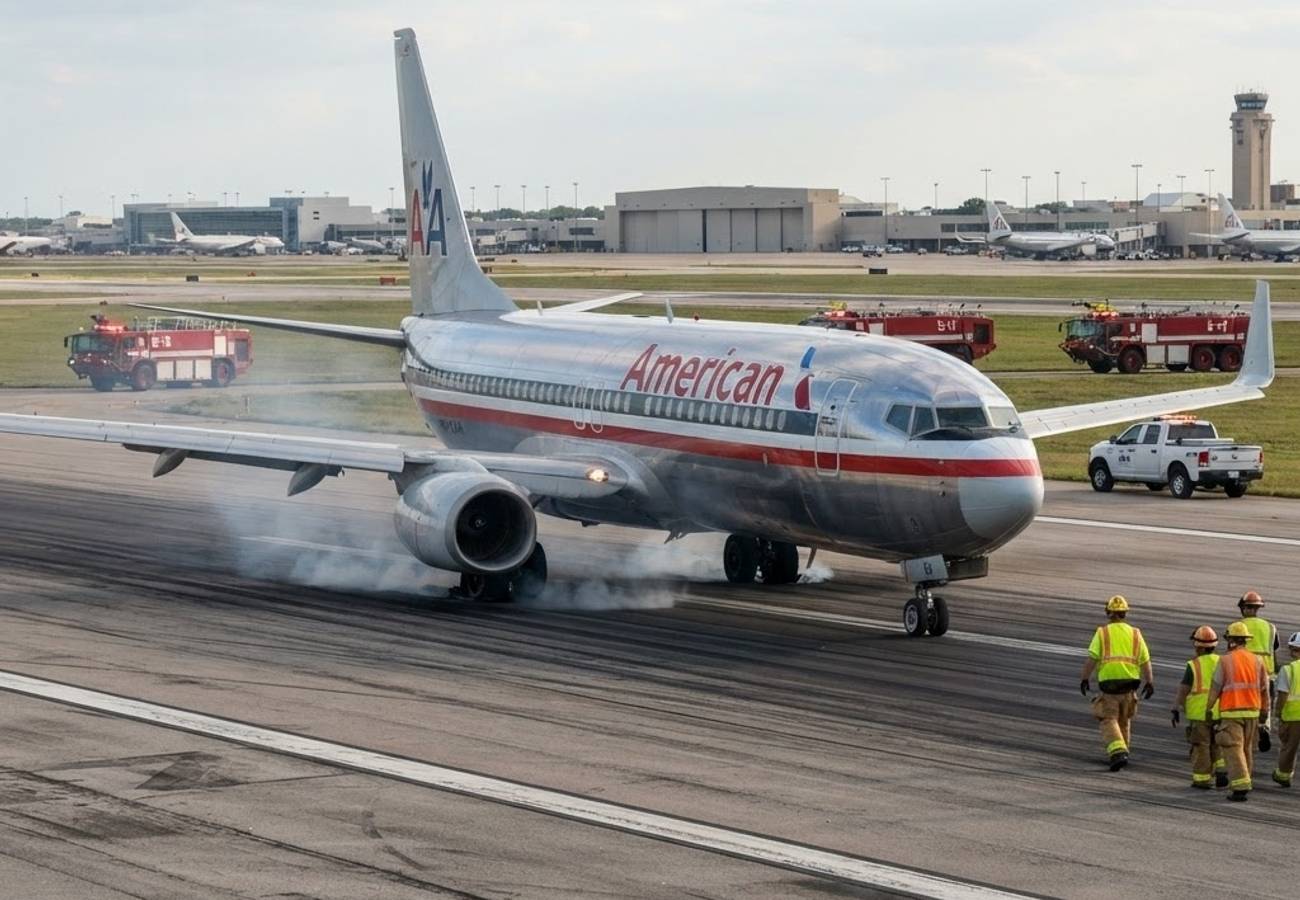
Image generated by AI
A landing emergency at Chicago O’Hare International Airport on Tuesday, August 18, 2026, saw an American Airlines aircraft suffer multiple blown tires upon touchdown, forcing an immediate runway shutdown and emergency response. While the incident caused operational ripples across one of the world's busiest hubs, early reports confirm there were no serious injuries among passengers or crew.
The event occurred as the jet touched down, with witnesses and passengers reporting audible bangs and plumes of smoke emanating from the main landing gear. Despite the loss of several tires, the flight crew successfully maintained the aircraft's position on the centerline, bringing the plane to a controlled stop on the paved surface.
Emergency Response and Passenger Evacuation at ORD
Immediately following the touchdown, emergency vehicles converged on the aircraft as a precautionary measure. Ground crews moved in to assess the structural integrity of the landing gear and ensure there was no risk of fire or fuel leakage.
Passengers remained on the aircraft for a period of time while safety officials evaluated the scene. Once cleared, they were evacuated via shuttle buses to the terminal. Social media imagery from the scene indicated that at least two tires on a single main landing gear assembly were completely deflated or severely damaged.
While some passengers reported minor injuries, officials noted these were primarily the result of the abrupt deceleration and the subsequent evacuation process rather than a structural failure of the cabin. No hospitalizations were reported immediately following the event.
Operational Disruptions and Runway Inspections at O'Hare
The tire failure necessitated the immediate closure of the affected runway. At a major hub like Chicago O’Hare, the loss of a single runway often creates a cascading effect on flight schedules. Airport authorities initiated standard safety protocols to inspect the runway surface for "Foreign Object Debris" (FOD).
Industry observers note that when tires blow at high speeds, fragments of rubber and metal components can be scattered across the tarmac. If left unchecked, this debris can be ingested by the engines of following aircraft or cause further tire punctures, posing a severe safety risk.
Flight-tracking data indicated that several arriving flights were placed into holding patterns, while others were rerouted to alternative runways. A small number of flights were forced to divert to nearby airports while the disabled American Airlines jet was towed clear and the runway was scrubbed of debris. Operations began to normalize several hours later, though residual delays persisted as airlines worked to reposition aircraft.
Technical Analysis of the American Airlines Aircraft
While the specific aircraft model and flight number have not been fully disclosed in public technical reports, the flight was identified as a domestic American Airlines service. Most commercial jets utilized for domestic hub-to-hub routes feature multi-wheel landing gear assemblies specifically engineered to allow the plane to land and stop safely even if one or more tires fail.
However, the simultaneous failure of multiple tires on a single assembly is classified as an abnormal event. This triggers a deeper investigation into the aircraft's maintenance logs, the specific wear levels of the tires, and the braking actions taken by the pilots during the landing roll.
Historical data from aviation safety databases shows that American Airlines has dealt with various ground-related incidents at O'Hare in the past, including runway excursions. While this tire blowout is a distinct event, investigators will likely compare the telemetry from this flight with previous braking performance data at the Chicago hub to identify any patterns.
Potential Causes of Landing Gear Failure
Aviation experts point to several common catalysts for tire blowouts during the landing phase. These include:
- Underinflation or Excessive Wear: Tires that are below the required pressure or near the end of their service life are more prone to failure under the stress of touchdown.
- Thermal Stress: Heavy braking, especially during short-field landings or on contaminated runways, can lead to extreme heat buildup, causing the tire carcass to fail.
- Runway Debris: Despite rigorous maintenance at O'Hare, small metallic objects or debris can puncture a tire at high velocity.
- Touchdown Velocity: Landing at speeds exceeding the aircraft's design parameters can place unsustainable loads on the gear.
Modern aircraft tires are equipped with thermal fuses designed to release pressure if temperatures spike, preventing a catastrophic explosion. The fact that multiple tires failed suggests a systemic issue during the landing roll or a significant external factor on the runway surface.
Investigation Process and Passenger Impact
The incident will undergo a formal review involving federal safety regulators, American Airlines, and the tire manufacturer. The standard investigative sequence involves:
- Component Analysis: Securing the damaged tires and wheels for laboratory testing.
- Data Recovery: Downloading the Flight Data Recorder (FDR) and Cockpit Voice Recorder (CVR) to analyze braking pressure and descent rates.
- Personnel Interviews: Questioning the flight crew and the maintenance team responsible for the aircraft's last pre-flight check.
For the travelers involved, the primary fallout was the stress of the emergency response and the disruption of their itineraries. American Airlines typically handles such disruptions through rebooking and, depending on the circumstances, providing travel credits or compensation according to their customer service policies.
From a broader perspective, this event puts the spotlight on the high-cycle nature of aircraft serving the Chicago hub. Analysts will be watching to see if the final report suggests a need for revised maintenance intervals or improved runway scrubbing protocols at O'Hare to prevent similar occurrences.
The investigation into the mechanical failure remains ongoing as officials analyze the wreckage.
Related Travel Guides
Disclaimer
This article is for informational and educational purposes only. It does not constitute legal, financial, or professional advice. While we strive to provide accurate and up-to-date information, travel policies, regulations, and conditions change rapidly. Always verify information with official sources before making travel decisions. Nomad Lawyer makes no representations about the accuracy, reliability, completeness, or suitability of the information provided. Readers should consult qualified professionals for advice specific to their circumstances. The views expressed in this article are those of the author and do not necessarily reflect the views of Nomad Lawyer.
Kunal K Choudhary
Co-Founder & Contributor
A passionate traveller and tech enthusiast. Kunal contributes to the vision and growth of Nomad Lawyer, bringing fresh perspectives and driving the community forward.
Learn more about our team →