
American Airlines Flight AAL2754 Boeing 737-823 Diverts to Tulsa International Airport from Chicago to Dallas in 2026
American Airlines flight AAL2754, a Boeing 737-823 traveling from Chicago O’Hare to Dallas/Fort Worth, was forced to divert to Tulsa International Airport on July 12, 2026, due to undisclosed operational disruptions.

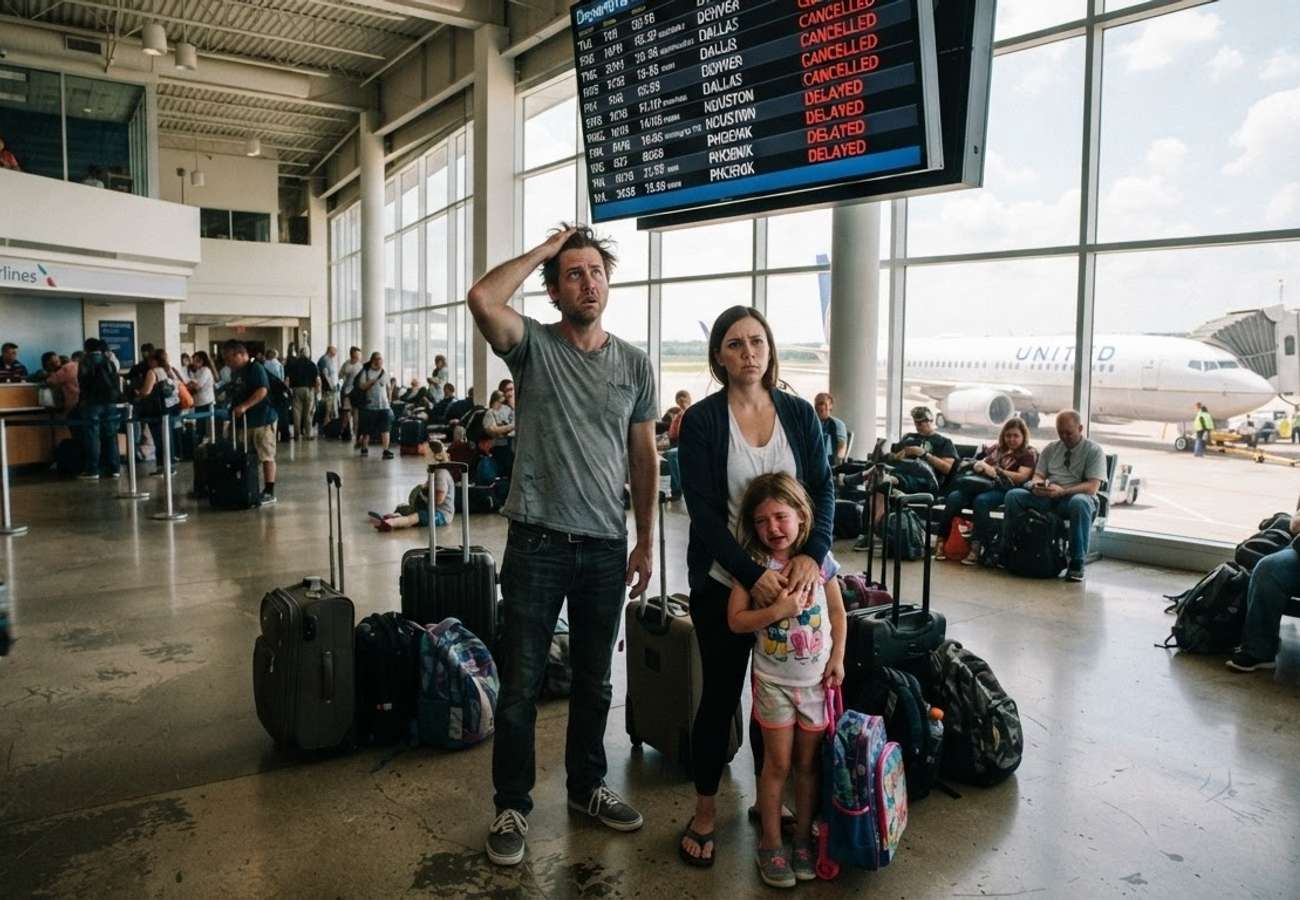
Image generated by AI
[Tulsa, OK] — An American Airlines flight traveling from Chicago to Dallas was forced to divert to Tulsa International Airport on July 12, 2026, following an unexpected operational disruption. Flight AAL2754, operated by a Boeing 737-823, landed safely in Oklahoma after deviating from its planned trajectory to Dallas/Fort Worth International Airport.
The diversion occurred mid-journey, shifting the aircraft's destination from its primary hub in Texas to the facilities in Tulsa. While the aircraft arrived safely and no injuries or emergencies were reported, the airline has not yet disclosed the specific catalyst for the route change.
Operational Timeline of Flight AAL2754 from Chicago O’Hare
The domestic service was scheduled to depart from Chicago O’Hare International Airport (ORD) at 15:49 local time on July 12, 2026. Under normal operating conditions, the flight was slated to touch down at Dallas/Fort Worth International Airport (DFW) by 18:25 local time.
However, flight tracking data indicates that the aircraft did not reach its intended destination. Instead, the flight was rerouted, resulting in a landing at Tulsa International Airport at 17:05 local time. This unplanned stop interrupted the journey for all passengers on board, who were redirected to Oklahoma before their final destination could be reached.
American Airlines maintains a massive operational footprint at both Chicago O’Hare and Dallas/Fort Worth. As two of the carrier's primary hubs, these airports manage a high volume of daily traffic, making them susceptible to a variety of variables including air traffic congestion, sudden weather shifts, and technical operational hurdles.
Analysis of the Boeing 737-800 Aircraft N924AN
The aircraft utilized for this specific route was a Boeing 737-800, registered under the tail number N924AN. This narrow-body jet is a cornerstone of the American Airlines domestic fleet, favored for its efficiency on short-to-medium haul flights and its ability to handle high-frequency rotations between major U.S. cities.
The use of registration N924AN allowed industry observers and tracking platforms to pinpoint the exact airframe involved in the July 12 diversion. The 737-800 series is engineered for versatility, providing the necessary capacity and performance metrics required for the demanding corridors connecting the Midwest and the South.
Factors Leading to the Tulsa International Airport Diversion
Neither American Airlines nor the Federal Aviation Administration (FAA) has released a formal statement detailing why the Boeing 737-823 was diverted. In the absence of an official report, aviation analysts point to several standard reasons why a flight might change course.
Common triggers for such diversions include:
- Technical Maintenance: Precautionary landings to address mechanical anomalies.
- Medical Emergencies: The need to transport a passenger or crew member to the nearest suitable medical facility.
- Weather Constraints: Sudden deterioration of visibility or severe turbulence along the flight path.
- Air Traffic Control (ATC) Instructions: Directives from controllers due to congestion or airport closures.
Tulsa International Airport is frequently utilized as a strategic alternative for flights traversing the central United States. Its runway capacity and infrastructure make it an ideal "divert" location for aircraft that cannot safely or efficiently proceed to their original destination.
Passenger Impact and Recovery Procedures
The diversion to Tulsa created an immediate disruption for passengers traveling from Chicago to Dallas. Once an aircraft makes an unscheduled landing, the airline must execute a recovery plan. This typically involves a multi-step assessment to determine if the original aircraft is fit for flight or if a replacement jet must be dispatched from a nearby hub.
American Airlines employs standardized protocols for these scenarios, which include:
- Passenger Reaccommodation: Rebooking affected travelers on the next available flight to Dallas/Fort Worth.
- Ground Support: Providing assistance and communication through customer service channels at the diversion airport.
- Logistical Coordination: Managing the movement of luggage and crew.
Because Tulsa is integrated into the broader domestic network, the airline possesses the operational flexibility to mitigate delays, though the initial diversion inevitably caused significant scheduling shifts for those on board AAL2754.
Safety Assessment and Official Findings
Current data confirms that the landing at Tulsa International Airport was executed safely. There have been no reports of accidents, emergency declarations, or safety-critical failures associated with N924AN during this event.
Diversions are a routine aspect of commercial aviation and are often the result of proactive safety decisions. Pilots and dispatchers are trained to prioritize safety over schedule; if a potential risk is identified, diverting to the nearest suitable airport is the standard operating procedure.
The following data summarizes the flight specifics:
| Flight Detail | Information |
|---|---|
| Flight Number | AAL2754 |
| Aircraft Model | Boeing 737-823 (737-800) |
| Registration | N924AN |
| Departure Airport | Chicago O’Hare (ORD) |
| Intended Destination | Dallas/Fort Worth (DFW) |
| Diversion Airport | Tulsa International (TUL) |
| Departure Time | 15:49 (Local) |
| Actual Landing Time | 17:05 (Local) |
| Scheduled Arrival | 18:25 (Local) |
| Date | July 12, 2026 |
Why This Matters: The Broader Aviation Perspective
This incident underscores the inherent volatility of high-frequency hub-and-spoke operations. When a flight between two primary hubs like Chicago and Dallas is disrupted, the ripple effect can impact connecting flights and crew scheduling across the entire network.
The decision to divert to Tulsa rather than attempting to push through to Dallas highlights the "safety-first" culture of modern aviation. Even in the absence of a declared emergency, the precautionary diversion of a Boeing 737-800 demonstrates that airlines prefer the logistical headache of a diversion over the marginal risk of an in-flight anomaly. For passengers, this event serves as a reminder that while domestic travel is highly efficient, operational disruptions remain a variable that requires robust airline recovery infrastructure.
The aviation industry continues to monitor the operational reliability of narrow-body fleets in high-density corridors.
Related Travel Guides
Disclaimer
This article is for informational and educational purposes only. It does not constitute legal, financial, or professional advice. While we strive to provide accurate and up-to-date information, travel policies, regulations, and conditions change rapidly. Always verify information with official sources before making travel decisions. Nomad Lawyer makes no representations about the accuracy, reliability, completeness, or suitability of the information provided. Readers should consult qualified professionals for advice specific to their circumstances. The views expressed in this article are those of the author and do not necessarily reflect the views of Nomad Lawyer.
Kunal K Choudhary
Co-Founder & Contributor
A passionate traveller and tech enthusiast. Kunal contributes to the vision and growth of Nomad Lawyer, bringing fresh perspectives and driving the community forward.
Learn more about our team →