
American Airlines Flight AA2815 Diverts to Houston George Bush Intercontinental Airport in 2026
American Airlines Flight AA2815, an Airbus A321 traveling from Charlotte to Dallas, was forced to divert to George Bush Intercontinental Airport on July 12, 2026.

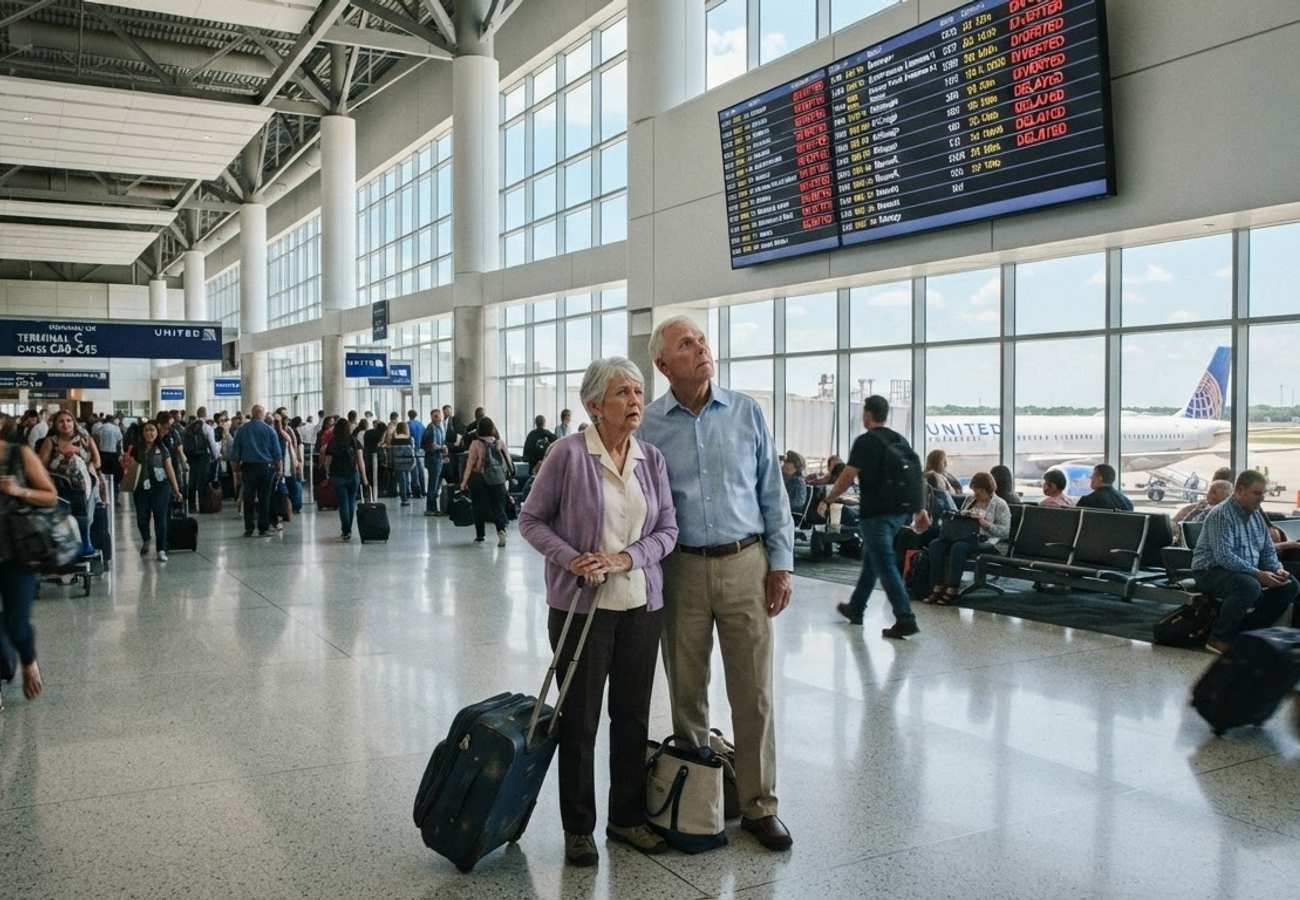
Image generated by AI
An American Airlines operation between two of the United States' most significant aviation hubs was interrupted on July 12, 2026, when Flight AA2815 was forced to divert. The aircraft, an Airbus A321, shifted its destination from Dallas to George Bush Intercontinental Airport in Houston.
The diversion impacted a high-traffic corridor connecting Charlotte and Dallas, which serves as a primary artery for both corporate travel and leisure tourism in the southeastern and central U.S. Despite the unexpected change in routing, the aircraft landed safely, and all operations were concluded without further incident.
Flight Details and Diversion Timeline
Flight AA2815 was scheduled to connect Charlotte Douglas International Airport with Dallas/Fort Worth International Airport. The aircraft utilized for this leg was an Airbus A321, registered as N170US.
According to flight data, the aircraft departed Charlotte at 4:38 PM local time. While the original arrival time in Dallas was estimated for 6:45 PM, the flight instead touched down at George Bush Intercontinental Airport at 6:36 PM local time.
Flight AA2815 Operational Summary
| Detail | Information |
|---|---|
| Flight Number | AA2815 |
| Aircraft Model | Airbus A321 |
| Registration | N170US |
| Departure City | Charlotte, NC |
| Original Destination | Dallas, TX |
| Diversion Airport | George Bush Intercontinental (IAH), Houston |
| Departure Time | 4:38 PM local time (July 12, 2026) |
| Actual Arrival Time | 6:36 PM local time (July 12, 2026) |
| Scheduled Arrival | 6:45 PM local time (July 12, 2026) |
Analysis of the Diversion Impact
The shift to Houston created immediate logistical disruptions for passengers, particularly those with tight connecting windows at Dallas/Fort Worth. Because these cities act as primary gateways, any diversion on this route ripples through the network, affecting onward travel to global destinations.
George Bush Intercontinental Airport served as the critical safety valve in this instance. As one of Texas's largest aviation facilities, its ability to absorb diverted traffic is essential for maintaining the integrity of the domestic airspace.
While the specific trigger for the diversion has not been publicly disclosed, aviation safety protocols dictate that pilots divert when a destination becomes unsuitable. Common drivers for such decisions include:
- Technical Requirements: The need for an immediate mechanical assessment.
- Medical Emergencies: Onboard health crises requiring urgent hospital access.
- Weather Constraints: Sudden deterioration of visibility or wind conditions at the target airport.
- Air Traffic Control (ATC) Mandates: Restrictions or congestion at the primary destination.
Infrastructure Resilience in US Aviation
This incident underscores the interdependence of the "hub-and-spoke" model used by major carriers like American Airlines. The seamless transition from a Dallas-bound flight to a Houston landing demonstrates the strength of the US aviation infrastructure.
For the tourism sector, these operational redundancies are vital. Charlotte Douglas International provides the primary entry point for North Carolina and the Southeast, while Dallas and Houston act as the twin pillars of Texas aviation. When one node experiences a disruption, the other provides the necessary support to ensure passenger safety.
Effective coordination between ground crews in Houston and American Airlines' operational center allowed for the safe handling of the Airbus A321 and its passengers, minimizing the duration of the travel chaos.
Passenger Implications and Travel Readiness
For the travelers on AA2815, the diversion likely resulted in missed connections and rescheduled ground transportation. In such scenarios, airline ground teams are tasked with managing aircraft repositioning and passenger re-accommodation.
This event serves as a reminder for frequent flyers to utilize real-time tracking tools and maintain flexible itineraries, especially during peak travel seasons where network congestion is higher.
The safe landing of Flight AA2815 highlights the efficacy of established safety procedures over destination adherence.
Related Travel Guides
Disclaimer
This article is for informational and educational purposes only. It does not constitute legal, financial, or professional advice. While we strive to provide accurate and up-to-date information, travel policies, regulations, and conditions change rapidly. Always verify information with official sources before making travel decisions. Nomad Lawyer makes no representations about the accuracy, reliability, completeness, or suitability of the information provided. Readers should consult qualified professionals for advice specific to their circumstances. The views expressed in this article are those of the author and do not necessarily reflect the views of Nomad Lawyer.
Raushan Kumar
Founder & Lead Developer
Full-stack developer with 11+ years of experience and a passionate traveller. Raushan built Nomad Lawyer from the ground up with a vision to create the best travel and law experience on the web.
Learn more about our team →