
American Airlines Flight AA9788 Boeing 737 MAX 8 Diverts to Tulsa International Airport After Mid-Air Incident
American Airlines flight AA9788 performed a four-hour air turnback to Tulsa International Airport on 10 July 2026 after a technical incident forced the Boeing 737 MAX 8 to abort its Miami route.

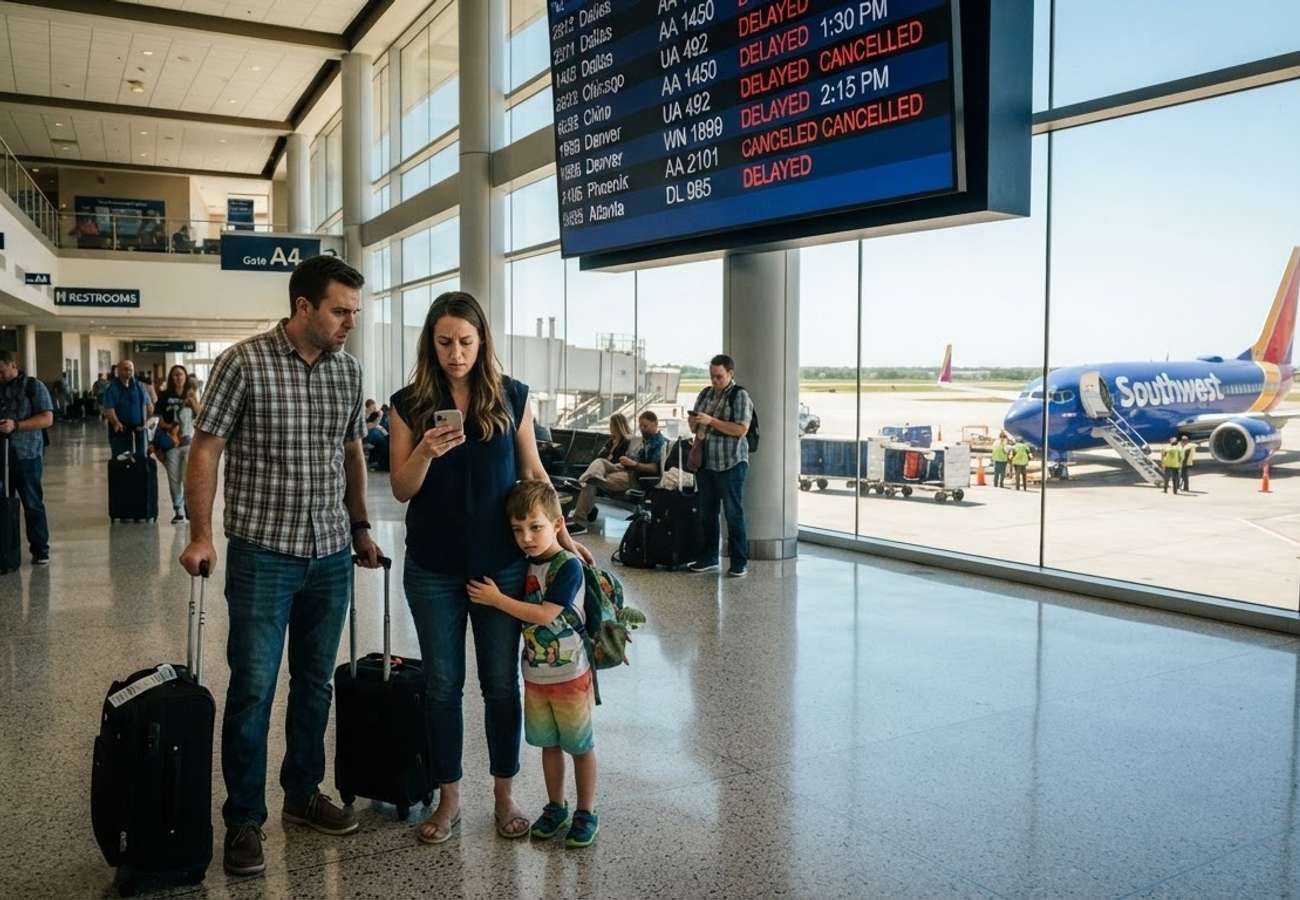
Image generated by AI
[Tulsa, July 11, 2026] — A scheduled American Airlines flight experienced a significant operational disruption on 10 July when a Boeing 737 MAX 8 was forced to abort its journey to Miami and return to Tulsa International Airport. The aircraft remained airborne for nearly four hours following a mid-air incident, requiring the crew to execute strict safety and fuel-management protocols before landing.
The event underscores the complex decision-making process pilots face when technical anomalies occur shortly after takeoff. In this instance, the aircraft's inability to land immediately due to weight restrictions turned a standard diversion into a prolonged airborne operation.
Flight AA9788 Aborts Route to Miami International Airport
On the morning of 10 July 2026, American Airlines flight AA9788 departed from Tulsa International Airport (TUL) with a destination of Miami International Airport (MIA). The aircraft, a Boeing 737 MAX 8 registered as N343RY, began its journey with a push-back at 09:00 and officially took off at 09:17.
Shortly after departure, the flight crew encountered an unexpected technical event that necessitated a Return to Origin (RTO) protocol. Rather than continuing toward Florida or diverting to a secondary airport, the pilots opted to return to Tulsa. The aircraft did not touch down until 13:04, marking a total flight time of nearly four hours for a trip that should have been significantly shorter.
Industry observers note that the four-digit flight identifier (AA9788) often indicates non-scheduled operations, such as charter flights or maintenance ferry movements. This classification, combined with the return to Tulsa—which serves as a primary engineering and maintenance hub for American Airlines—suggests a strategic decision to bring the aircraft directly to a facility equipped for complex repairs.
Technical Triggers and the Air Turnback Protocol
In commercial aviation, an air turnback is triggered when a mechanical, electrical, or pressurization failure is detected that cannot be safely managed throughout the duration of the flight. While minor system faults may allow a plane to proceed to its destination, critical discrepancies require an immediate return to a facility with specialized engineering capabilities.
The decision to return to the origin airport rather than a closer intermediate stop is typically driven by fleet logistics. Landing at a remote outstation can lead to "Aircraft on Ground" (AOG) scenarios where a plane is stranded for days awaiting parts. By returning to a primary technical base, the airline ensures that manufacturer-certified engineers and the necessary replacement components are available immediately, minimizing the duration of the aircraft's downtime.
Managing Structural Landing Weight and Fuel Burn
One of the most critical aspects of the AA9788 diversion was the four-hour duration of the flight. This delay was not a result of pilot indecision but was a requirement of physics and safety regulations regarding Maximum Structural Landing Weight (MSLW).
When a Boeing 737 MAX 8 takes off for a long-haul trip to Miami, it carries a heavy fuel load. The maximum takeoff weight is substantially higher than the weight at which the aircraft can safely land. Attempting to land a fully fueled aircraft can result in catastrophic structural damage to the fuselage, wing boxes, and landing gear due to the excessive force of impact.
To mitigate this risk, flight crews must reduce the aircraft's weight. This is achieved through two primary methods:
- Holding Patterns: Circling in a designated area to burn off fuel through engine consumption.
- Fuel Jettisoning: Using specialized valves to dump fuel into the atmosphere (available on specific aircraft types).
The flight logs for AA9788 indicate that the crew utilized a holding pattern to burn off thousands of gallons of propellant, ensuring the Boeing 737 MAX 8 reached a safe landing weight before arriving back at Tulsa International Airport.
Precision in Aircraft Identification and Fleet Monitoring
During the initial reporting of the incident, some sources incorrectly identified the aircraft as an Airbus. However, official aviation database records confirm the aircraft was a Boeing 737 MAX 8 (Tail N343RY).
This distinction is vital for safety analysts and investigators. Boeing and Airbus aircraft have entirely different flight computer architectures, aerodynamic profiles, and mechanical layouts. Misidentifying the airframe can lead to incorrect assumptions about the nature of a technical failure. By tracking specific tail numbers like N343RY, American Airlines and regulatory bodies can identify if a particular aircraft has a recurring system anomaly or if a specific batch of components is failing across the wider fleet.
Operational Timeline of Flight AA9788
| Event | Time (10 July 2026) | Location/Status |
|---|---|---|
| Push-back | 09:00 | Tulsa International Airport (TUL) |
| Takeoff | 09:17 | Tulsa International Airport (TUL) |
| Incident Occurrence | Shortly after takeoff | Mid-air / En route to MIA |
| Landing | 13:04 | Tulsa International Airport (TUL) |
| Total Air Time | ~3 Hours 47 Minutes | Return to Origin (RTO) |
Why This Matters: The Intersection of Safety and Logistics
The diversion of Flight AA9788 provides a clear window into the "safety-first" hierarchy of modern aviation. The decision to circle for four hours—effectively delaying passengers and disrupting schedules—was a calculated move to prevent a structural failure upon landing.
From an industry perspective, this incident highlights the importance of maintaining centralized maintenance hubs. The strategic choice to return to Tulsa, rather than diverting to a closer city, demonstrates how airlines prioritize long-term fleet health and rapid recovery over short-term convenience. Had the aircraft landed at a smaller airport without a Boeing-certified engineering team, the operational disruption would have likely extended from a few hours to several days.
Furthermore, the event reinforces the necessity of precise data in aviation reporting. The initial confusion regarding the aircraft manufacturer (Airbus vs. Boeing) illustrates how easily misinformation can spread in the digital age, and why verified tail-number tracking is the only reliable method for analyzing aviation safety trends.
Proactive piloting and adherence to weight restrictions successfully averted a technical anomaly from becoming a structural disaster.
Related Travel Guides
Disclaimer
This article is for informational and educational purposes only. It does not constitute legal, financial, or professional advice. While we strive to provide accurate and up-to-date information, travel policies, regulations, and conditions change rapidly. Always verify information with official sources before making travel decisions. Nomad Lawyer makes no representations about the accuracy, reliability, completeness, or suitability of the information provided. Readers should consult qualified professionals for advice specific to their circumstances. The views expressed in this article are those of the author and do not necessarily reflect the views of Nomad Lawyer.
Preeti Gunjan
Contributor & Community Manager
A passionate traveller and community builder. Preeti helps grow the Nomad Lawyer community, fostering engagement and bringing the reader experience to life.
Learn more about our team →