
American Airlines Flight 308 Aborts Takeoff After Near-Collision at Miami International Airport
A routine departure to Bermuda nearly turned into a disaster at Miami International Airport when a communication breakdo

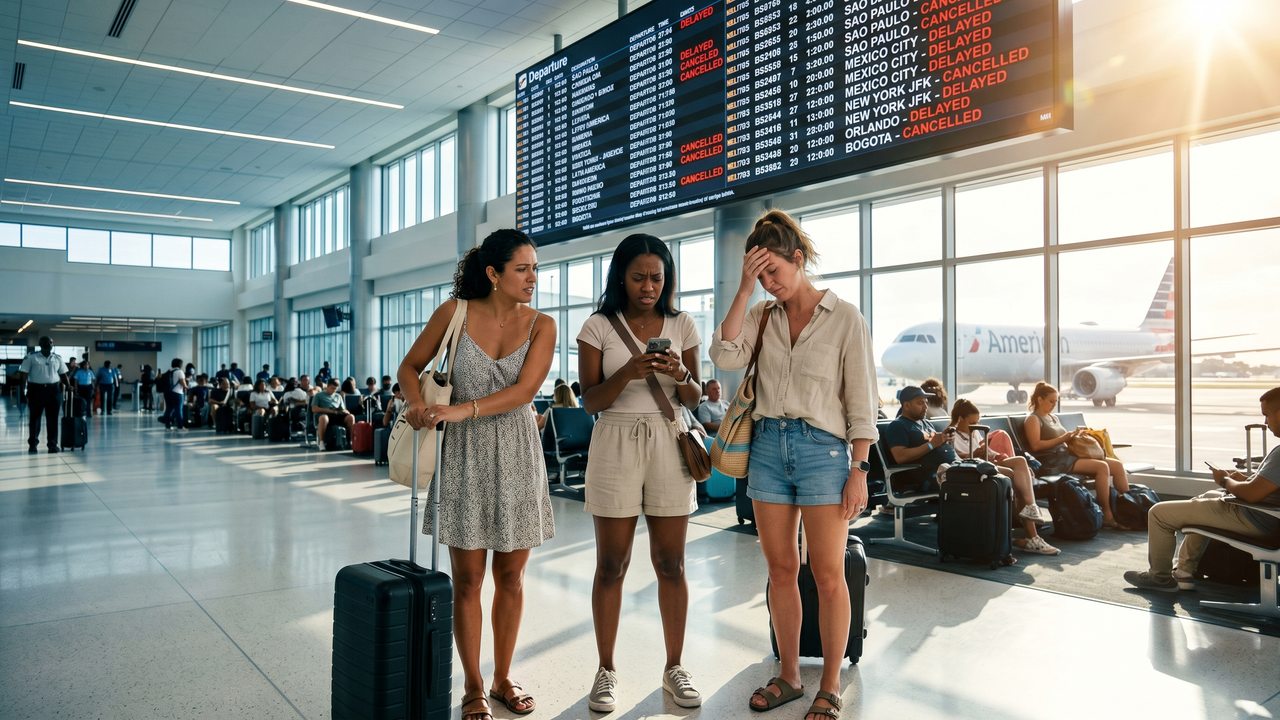
Image generated by AI
Narrow Escape During Bermuda Departure
Passengers aboard American Airlines Flight 308 experienced a terrifying moment this past Saturday when the aircraft abruptly aborted its takeoff roll at Miami International Airport. As the plane accelerated for departure to Bermuda, the flight crew was forced to engage emergency braking to avoid a collision with another aircraft on the active runway.
The incident occurred when a NetJets business jet entered the runway directly in the path of the departing American Airlines flight. Reports indicate the two aircraft came within approximately one-third of a mile of each other before the American Airlines pilots successfully brought their aircraft to a halt.
Communication Failures and Operational Errors
Air traffic control (ATC) recordings reveal a significant breakdown in communication that precipitated the event. The NetJets pilot claimed to have received instructions to cross the runway; however, the controller immediately disputed this, stating that the clearance had actually been granted to a different aircraft, Amerijet 461.
Following the incident, NetJets clarified that the aircraft in question was being operated by a third-party maintenance vendor. The company has launched a formal review into the actions and decision-making of the operators involved.
FAA Safety Protocols and Incursion Classification
The Federal Aviation Administration (FAA) defines a runway incursion as any occurrence where an unauthorized aircraft, vehicle, or person enters a protected runway area. These events are categorized by severity, with the most critical being those that result in a near-collision.
The FAA and the National Transportation Safety Board (NTSB) utilize these incidents to identify "hotspots" and systemic weaknesses in airport ground operations. The investigation process typically involves:
- Analysis of flight data logs and maintenance records.
- Detailed interviews with the flight crews and ATC personnel.
- Review of radio transmissions to identify linguistic or procedural errors.
Technological Safeguards in Modern Aviation
To mitigate the risk of human error, the FAA employs several layers of technological protection on the ground:
- Runway Status Lights (RWSL): Automated lighting systems that provide visual warnings to pilots and drivers when it is unsafe to enter or remain on a runway.
- Aviation Risk Identification and Assessment (ARIA): Specialized software designed to capture and analyze data regarding potential collisions to drive data-driven safety improvements.
The Critical Role of Situational Awareness
Aviation authorities emphasize that technology cannot replace "situational awareness." Pilots are required to maintain current airport diagrams and minimize cockpit distractions during taxiing.
Industry standards dictate that if a pilot experiences any doubt regarding a clearance or their position on a complex airport layout, they must stop the aircraft immediately and seek clarification from the tower.
Flight Outcome and Aftermath
Despite the high-stress nature of the event, American Airlines Flight 308 eventually departed for Bermuda after a significant delay. No injuries were reported, and the aircraft remained intact. This event serves as a stark reminder of the precision required in surface operations and the potential consequences of a single miscommunicated instruction.
Incident Summary
| Detail | Information |
|---|---|
| Flight Number | American Airlines Flight 308 |
| Destination | Bermuda |
| Location | Miami International Airport (MIA) |
| Incursion Aircraft | NetJets Business Jet (Operated by 3rd party vendor) |
| Proximity | Approximately 1/3 of a mile |
| Primary Cause | Communication error/Misinterpreted ATC clearance |
Key Takeaways
- Rapid Response: Quick pilot action prevented a catastrophic ground collision between a commercial airliner and a business jet.
- Systemic Failure: A communication error led a NetJets operator to believe they had clearance to cross a runway that was active for departure.
- Accountability: NetJets is currently investigating the third-party maintenance vendor responsible for operating the jet.
- Safety Layers: The event highlights the necessity of both automated systems (RWSL) and strict pilot adherence to airport diagrams.
FAQ
What is a runway incursion? A runway incursion is any unauthorized presence of an aircraft, vehicle, or person within the protected area of a runway.
Was anyone injured during the Flight 308 incident? No, there were no reported injuries. The pilots successfully aborted the takeoff before a collision occurred.
Who is investigating the incident? The FAA and NTSB typically oversee the investigation of runway incursions to determine the cause and prevent future occurrences.
Related Travel Guides
Disclaimer
This article is for informational and educational purposes only. It does not constitute legal, financial, or professional advice. While we strive to provide accurate and up-to-date information, travel policies, regulations, and conditions change rapidly. Always verify information with official sources before making travel decisions. Nomad Lawyer makes no representations about the accuracy, reliability, completeness, or suitability of the information provided. Readers should consult qualified professionals for advice specific to their circumstances. The views expressed in this article are those of the author and do not necessarily reflect the views of Nomad Lawyer.
Preeti Gunjan
Contributor & Community Manager
A passionate traveller and community builder. Preeti helps grow the Nomad Lawyer community, fostering engagement and bringing the reader experience to life.
Learn more about our team →