
American Airlines Denies Boarding to Canadian Family After Medical Emergency at LaGuardia Airport 2026
A Canadian family was stranded at LGA for 24 hours after a healthcare professional assisted an American Airlines employee, highlighting a growing tension between airline boarding rigidity and Good Samaritan actions.

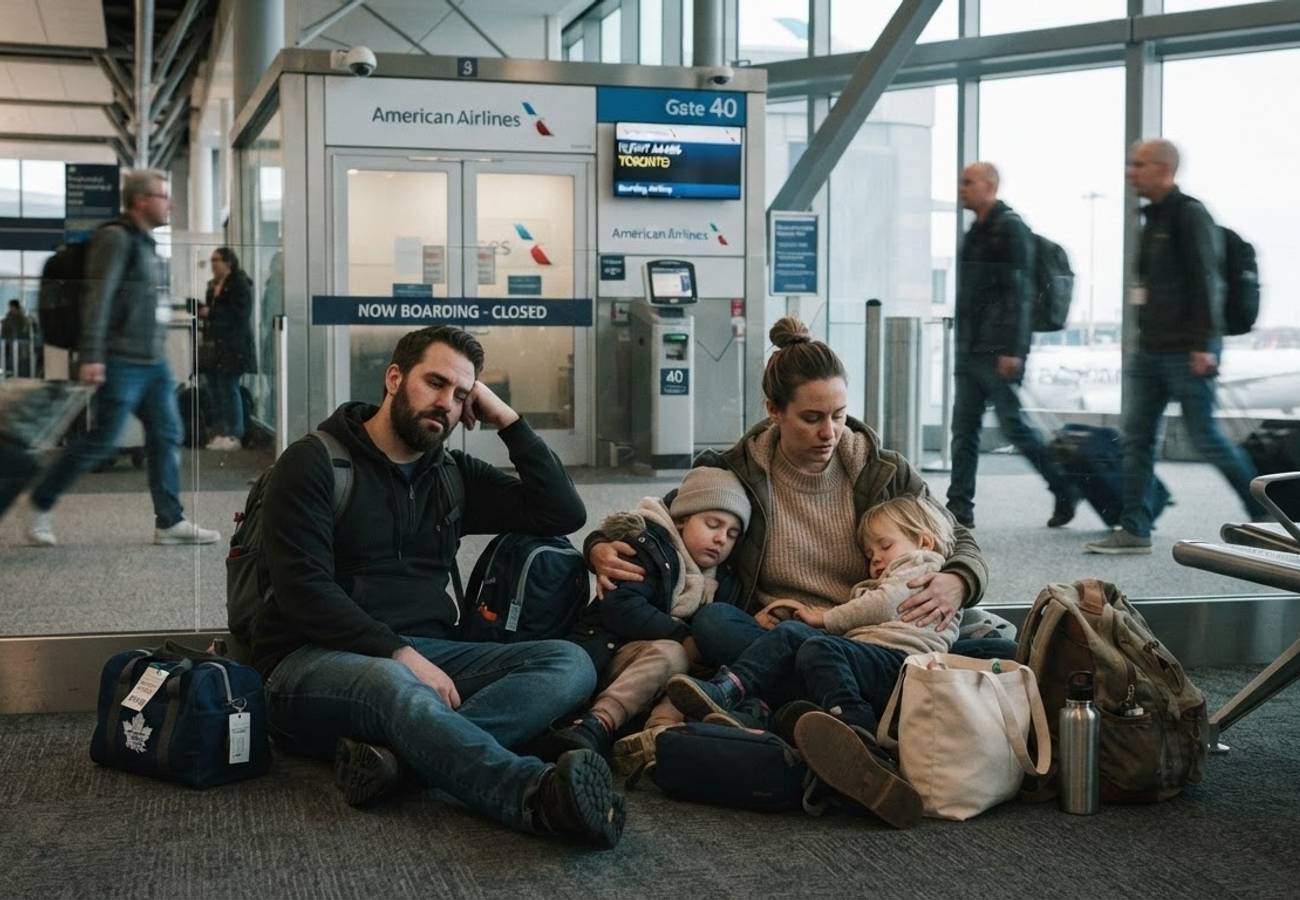
Image generated by AI
While airline boarding protocols have become increasingly digitized to reduce turnaround times, the rigidity of these systems often clashes with human emergencies, as seen in a recent incident where a family was stranded for 24 hours despite providing life-saving assistance. This event at New York's LaGuardia Airport (LGA) underscores a systemic failure in how carriers balance strict gate closure windows with the unpredictable nature of airport operations.
The Boarding Denial in Numbers
The incident involved a Toronto-based family—consisting of two adults and two young children—who were denied boarding at LGA. The catalyst was a medical emergency involving an American Airlines gate agent who suffered a seizure. The traveler's wife, a trained healthcare professional, intervened to provide necessary medical aid.
Despite this intervention, the airline proceeded to close the gate. The resulting impact on the passengers was a total displacement of 24 hours before they could secure another flight out of New York. This case is not an isolated instance of boarding friction; in May 2026, another passenger reported a denial of boarding due to an organizational error where the carrier's own support line failed to resolve a technical glitch before the gate closed. Additionally, separate reports indicate passengers being denied boarding due to mobile check-in failures.
These data points suggest a pattern where the "hard close" of a gate takes precedence over situational anomalies, regardless of whether the delay was caused by airline error or a medical crisis.
Comparative Analysis of Passenger Treatment
The response to medical volunteers varies wildly across the industry. While American Airlines' immediate reaction in this instance was to deny boarding and "blame" the passengers, other carriers have historically utilized medical assistance as an opportunity for brand loyalty building.
According to anecdotal industry data from frequent flyers, the "reward" for medical intervention ranges from zero to monetary compensation. For example, some travelers report receiving complimentary drinks and snacks from legacy carriers, while others claim Delta Air Lines has paid medical professionals up to $200 for in-flight assistance.
| Carrier/Entity | Typical Response to Medical Volunteer | Outcome for Passenger |
|---|---|---|
| American Airlines (LGA Incident) | Gate closure / Denied boarding | 24-hour stranding |
| Delta Air Lines (Reported) | Monetary compensation | $200 payment |
| Legacy Carriers (General) | Complimentary amenities | Snacks/Drinks |
| Retail (Whole Foods) | Gift certificates | $50.00 voucher |
This disparity highlights a critical gap in standardized "Good Samaritan" protocols within airport terminals compared to the more structured environments of in-flight emergencies.
What This Means for Travelers
For the modern traveler, this incident serves as a warning that "doing the right thing" does not automatically override the automated timers of an airline's Departure Control System (DCS). If you are traveling through major hubs like LGA, JFK, or ATL, the following data-backed advice applies:
- The "Hard Close" is Absolute: Most airlines now enforce a strict 15-to-20 minute gate closure rule. Even if you are delayed by an event occurring at the gate, the system may automatically mark you as a "no-show."
- Document Everything in Real-Time: In the event of a boarding dispute, immediately take photos of unstaffed counters (as the Toronto family did with the "Special Services" counter) and record the names of the agents involved.
- Understand Your Legal Shield: If you are a medical professional, you are protected by the Aviation Medical Assistance Act of 1998, which shields you from damages in federal or state court for good-faith care. However, this primarily applies to the aircraft. Once you are in the terminal, you fall under state laws, such as New York Public Health Law § 3000-a.
- Prioritize Boarding Windows: Given the trend of "organizational errors" leading to denied boarding, ensure your digital check-in is confirmed 24 hours in advance to avoid last-minute technical hurdles that agents are increasingly unwilling to override.
Legal Projections for Airport Emergencies
The tension between the International Air Transport Association (IATA) standards for on-time performance and passenger rights is reaching a breaking point. As airlines face immense pressure to maintain slot timings at congested airports like LaGuardia, the "human element" is being phased out of the boarding process.
We are likely to see a shift toward more explicit "Good Samaritan" policies for ground staff. Currently, the legal protections provided by the CDC and state statutes protect the provider of the medical care from being sued, but they do not protect the passenger from the contractual terms of the carriage agreement (i.e., the requirement to be at the gate by a certain time).
The trajectory suggests that unless airlines integrate "emergency override" codes into their gate agent software, passengers who assist in emergencies will continue to risk their seats. The current reliance on "DM apologies" on social media is an insufficient remedy for the logistical nightmare of being stranded with children.
FAQ: American Airlines Boarding Denials 2026
Can an airline legally deny me boarding for helping someone? Yes. While Good Samaritan laws protect you from liability for the medical care provided, they do not force an airline to keep a flight waiting. Airlines operate under a contract of carriage that mandates boarding by a specific time.
What should I do if I am denied boarding due to an airline error? Immediately request a written statement of the reason for denial. If you are stranded, the airline is typically responsible for rebooking you on the next available flight and, depending on the jurisdiction, providing meal or hotel vouchers.
Are medical professionals protected when helping at the airport? In New York, New York Public Health Law § 3000-a protects those who voluntarily render first aid from liability, provided there is no gross negligence. However, this is a legal shield against lawsuits, not a guarantee of flight boarding.
Which airlines have better records of rewarding medical volunteers? Reports vary, but Delta and some international carriers have a documented history of providing vouchers or small monetary payments to doctors who assist in-flight, whereas ground-level assistance remains a grey area.
The intersection of automated efficiency and human empathy remains the most volatile variable in the 2026 travel experience.
Related Travel Guides
Disclaimer
This article is for informational and educational purposes only. It does not constitute legal, financial, or professional advice. While we strive to provide accurate and up-to-date information, travel policies, regulations, and conditions change rapidly. Always verify information with official sources before making travel decisions. Nomad Lawyer makes no representations about the accuracy, reliability, completeness, or suitability of the information provided. Readers should consult qualified professionals for advice specific to their circumstances. The views expressed in this article are those of the author and do not necessarily reflect the views of Nomad Lawyer.
Preeti Gunjan
Contributor & Community Manager
A passionate traveller and community builder. Preeti helps grow the Nomad Lawyer community, fostering engagement and bringing the reader experience to life.
Learn more about our team →