
American Airlines Flight AA437 Urgent Diversion: Airbus A321 Returns to Las Vegas Triggering Sudden Travel Chaos and Airport Disruptions: Airline News
American Airlines Flight AA437 executes an urgent mid-flight return to Las Vegas after a sudden operational issue, stranding Philadelphia-bound passengers and triggering sudden travel chaos.

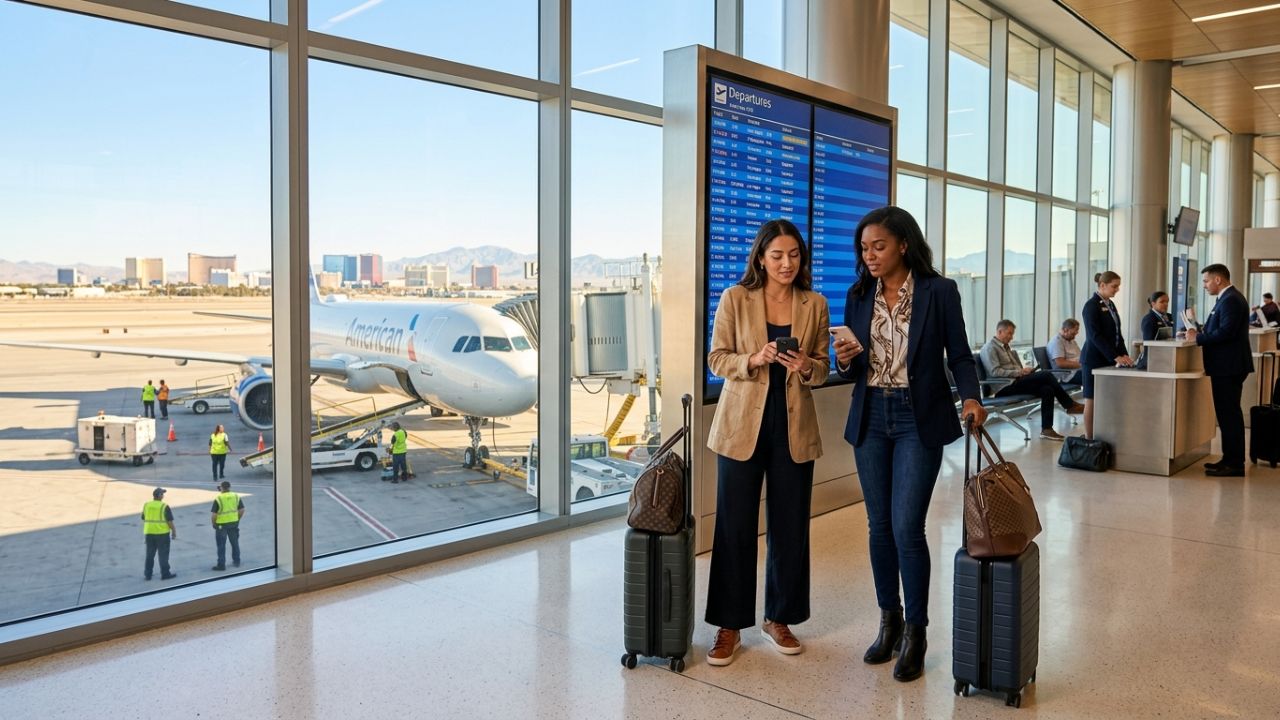
Image generated by AI
In a dramatic demonstration of the strict safety protocols governing the US domestic aviation network, a transcontinental flight departing Nevada was abruptly aborted, triggering sudden travel chaos and localized airport disruptions. Reported on June 21, 2026, as passengers frantically monitor the latest airline news to decipher the cause of their grounded itinerary, American Airlines Flight AA437 was forced to execute an urgent mid-flight return. The aircraft, an Airbus A321 heavily loaded with passengers bound for Philadelphia, suddenly aborted its long-haul trajectory on June 19, returning safely to Harry Reid International Airport in Las Vegas following an undisclosed operational alert. For travelers attempting to navigate this unexpected logistical nightmare and secure reliable onward transit without succumbing to the threat of compounding flight cancellations, understanding the exact operational parameters of this precautionary diversion is the ultimate tactical method to decode today's breaking aviation updates.
By mandating that flight crews execute immediate return-to-origin protocols at the first sign of technical irregularity, major carriers systematically insulate passengers from catastrophic mid-air emergencies. The decision to ground the aircraft at a major operational hub like Las Vegas guarantees access to maintenance infrastructure, supporting the broader domestic transportation network without succumbing to massive aviation risk.
Context: Navigating a Sudden Transcontinental Diversion
For the modern domestic traveler, relying on high-capacity, long-haul routes connecting the West Coast to East Coast hubs is routinely an exercise in trusting the carrier's proactive maintenance algorithms.
Historically, the US aviation model relies heavily on seamless transcontinental connectivity. When operations run smoothly, an Airbus A321 crossing the country from Las Vegas to Philadelphia is a highly efficient routine. However, when sudden mid-flight operational issues strike an aircraft like American Airlines Flight AA437, the resulting travel chaos instantly severs this critical link. Aborting a flight mid-air and executing an emergency return traps passengers back at their origin point, instantly invalidating their entire itinerary. Today's disruption at Harry Reid International Airport perfectly illustrates the sheer fragility of this interconnected network. The grounding of Flight AA437 immediately trapped hundreds of East Coast-bound passengers, forcing American Airlines to scramble ground resources to execute massive rebooking operations while stranded travelers compete for a rapidly shrinking pool of available seats on alternative flights. The incident highlights that even without a confirmed emergency (such as fire or severe turbulence), a strict adherence to safety protocols can heavily destabilize passenger schedules.
To view live flight recovery schedules, verify the active deployment of replacement aircraft, or track potential rebooking options prior to facing massive customer service lines, stranded travelers must consult the official American Airlines application. For direct updates regarding how this localized disruption might shield your onward itinerary from further flight cancellations out of Philadelphia or other major hubs, travelers should aggressively utilize the digital portals of the airline's network. To explore live transit tracking and monitor the exact severity of the aircraft's flight path, passengers can consult the official FlightAware tracking service.
Section-Wise Breakdown: The Tactical Route Disruption
The Origin Incident: Harry Reid International Airport (Las Vegas)
The operational timeline of this diversion centers entirely on Harry Reid International Airport (formerly McCarran International). Flight AA437 departed Las Vegas normally on June 19, 2026, initiating its climb toward cruising altitude. However, shortly after departure, the flight crew detected an anomaly that violated the carrier's strict safety tolerances. Instead of pushing forward and attempting to cross the vast expanse of the American Midwest with a potential mechanical or system issue, the crew made the conservative, safety-first decision to abort the flight. The aircraft executed a swift return pattern and landed safely back in Las Vegas, immediately overwhelming the gate agents with hundreds of stranded passengers.
The Destination Impact: Philadelphia International Airport
On the destination side, the failure of Flight AA437 to arrive created a massive logistical void in Philadelphia. Passengers waiting in Pennsylvania for the turnaround flight (using the same Airbus A321) were instantly subjected to severe flight cancellations or cascading delays. Furthermore, passengers originally aboard AA437 who were relying on Philadelphia as a connecting hub for onward flights to Europe or the US East Coast instantly missed their connections, compounding the travel chaos exponentially across the American Airlines network.
Technical Roster: Official Flight Disruption Matrix
To ensure absolute factual accuracy regarding the specific aircraft, the impacted carrier, and the verified operational metrics defining this domestic diversion, the following matrix details the strictly verified data sourced from flight analytics:
Official Flight Disruption & Diversion Matrix
| Flight Disruption Metric | Verified Operational Data |
|---|---|
| Operating Carrier | American Airlines |
| Flight Number | AA437 |
| Aircraft Type | Airbus A321 |
| Aircraft Registration | N995AN |
| Origin Airport | Harry Reid International Airport (Las Vegas) |
| Destination Airport | Philadelphia International Airport |
| Incident Date | June 19, 2026 |
| Incident Status | Mid-flight precautionary return / Aircraft Grounded |
Data accurately reflects the verified FlightAware telemetry logs and the explicit operational diversion executed by American Airlines regarding the June 19, 2026 operational environment.
Industry Analysis: The Lethal Ripple of Precautionary Returns
Aviation analysts monitoring the highly interconnected US domestic network note that the return of Flight AA437 is a textbook example of a "precautionary return-to-origin protocol."
Analysts emphasize that commercial aviation is built entirely around proactive safety systems. Modern jets like the Airbus A321 generate vast amounts of real-time performance data. Even minor abnormalities—such as subtle pressurization concerns, environmental control system irregularities, or electrical faults—will trigger cockpit alerts. Industry frameworks under FAA oversight dictate that flight crews must act early rather than wait for situations to worsen. Because continuing a cross-country flight with unresolved technical concerns introduces unacceptable risk, returning to a major hub like Las Vegas is the most efficient tactical solution. In Las Vegas, American Airlines maintains the necessary maintenance teams and operational resources to immediately diagnose the aircraft. While this creates immediate travel chaos for the passengers, analysts universally agree that a delayed arrival is always preferable to accepting avoidable risks in the air.
Actionable Advice for Domestic Travelers
Because sudden mid-flight diversions fundamentally alter the logistics of domestic transit, all passengers must execute this strategic travel checklist immediately upon returning to the terminal:
- Exploit Airline Recovery Logistics: Upon landing back in Las Vegas, do not join the massive physical queue forming at the gate. Immediately engage the American Airlines mobile application. Use the app's automated recovery systems to instantly secure seats on the next available flight to Philadelphia or reroute through an alternative hub like Dallas/Fort Worth or Charlotte.
- Audit Onward Connections Aggressively: When facing a return-to-origin disruption, explicitly audit the status of your major hub connections. If you were connecting in Philadelphia to an international flight, you will instantly miss that leg. Proactively demand that American Airlines reroutes your entire itinerary, potentially shifting you to a partner airline (like British Airways for European flights) from a different origin point.
- Understand Passenger Rights: Familiarize yourself with airline compensation policies regarding mechanical delays. If the diversion is caused by an issue within the airline's control (such as a technical fault with the aircraft), you are legally entitled to specific rebooking options, meal vouchers, and potential hotel accommodations in Las Vegas depending on the length of the grounding.
FAQ: American Airlines AA437 Diversion
Which aircraft was involved in the American Airlines diversion out of Las Vegas?
The incident involved American Airlines Flight AA437, operated by an Airbus A321 (registration N995AN).
Why did Flight AA437 return to Las Vegas?
The flight executed a precautionary return-to-origin shortly after departure due to an undisclosed mid-flight operational issue. The crew prioritized safety and discontinued the flight to Philadelphia.
Were there any injuries or emergencies reported on Flight AA437?
No. There is no public evidence of a severe emergency, fire, or injuries. The aircraft landed safely and the return was purely a precautionary safety measure.
The Reality of Fragile Transcontinental Transit
The sudden travel chaos triggered by the return of American Airlines Flight AA437 in Las Vegas proves definitively that succumbing to the severe fragility of the modern aviation grid is a constant threat. By actively aborting the flight to prioritize safety, the airline inadvertently collapsed itineraries spanning across the country to Philadelphia. As stranded passengers frantically attempt to secure their onward transit, they must accept a critical new reality: surviving the massive disruptions of modern domestic aviation demands tactical adaptability. Navigating the highly regulated US travel sector requires a complete refusal to accept passive stranding, and the absolute discipline to aggressively seek stable, alternative rebooking solutions when major carriers inevitably ground their aircraft to prevent catastrophic failures.
Key Takeaways
- Targeted Diversion: American Airlines Flight AA437 (Airbus A321, N995AN) executed an urgent return to Las Vegas on June 19, 2026.
- Route Severed: The precautionary return completely severed the direct transcontinental link to Philadelphia.
- Safety First Protocol: The crew aborted the flight due to an undisclosed operational issue, prioritizing passenger safety over schedule adherence.
- No Emergency Status: The incident did not result in injuries or emergency evacuations; it was a standard precautionary procedure.
- Proactive Defense: Stranded passengers must utilize official airline applications to bypass physical lines and secure immediate rebooking options out of the Las Vegas hub.
Related Travel Guides
Massive Travel Chaos Paralyzes Chicago O'Hare with 1,425 Disruptions
Disclaimer
This article is for informational and educational purposes only. It does not constitute legal, financial, or professional advice. While we strive to provide accurate and up-to-date information, travel policies, regulations, and conditions change rapidly. Always verify information with official sources before making travel decisions. Nomad Lawyer makes no representations about the accuracy, reliability, completeness, or suitability of the information provided. Readers should consult qualified professionals for advice specific to their circumstances. The views expressed in this article are those of the author and do not necessarily reflect the views of Nomad Lawyer.
Kunal K Choudhary
Co-Founder & Contributor
A passionate traveller and tech enthusiast. Kunal contributes to the vision and growth of Nomad Lawyer, bringing fresh perspectives and driving the community forward.
Learn more about our team →