
Alteon Secures $2.5 Million to Develop Autonomous Aircraft Capable of Flying for Months
Deep-tech aerospace startup Alteon has raised $2.5 million in pre-seed funding to pioneer autonomous dynamic soaring aircraft designed to remain airborne for months without refueling.

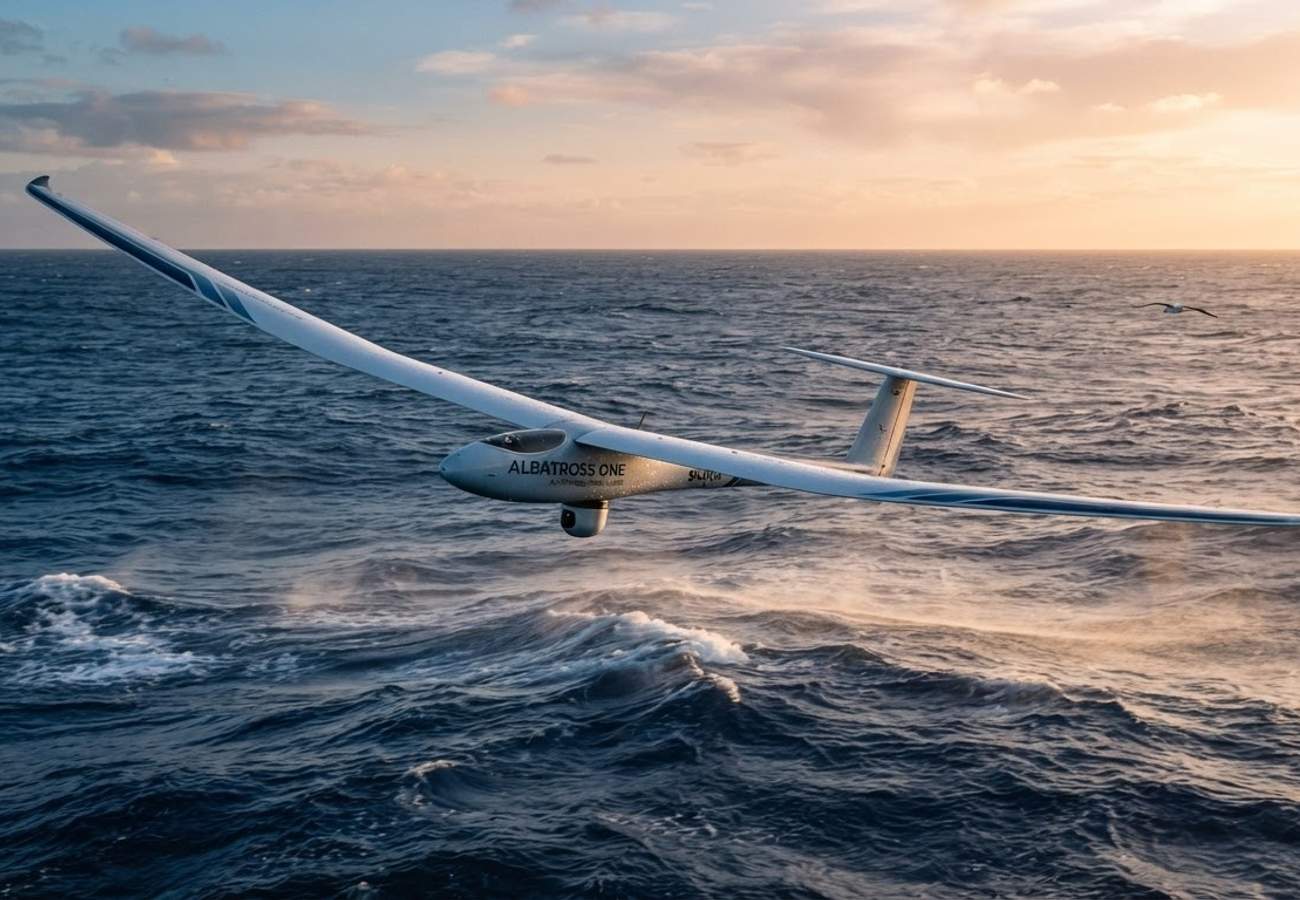
Image generated by AI
Bengaluru, September 2, 2026 — A deep-tech aerospace venture is attempting to eliminate the most fundamental constraint of aviation: the need to land for fuel. Alteon has secured $2.5 million in pre-seed funding to develop autonomous aircraft capable of remaining airborne for several months at a time, utilizing a specialized flight technique known as dynamic soaring.
The investment round was led by Lachy Groom, with additional capital provided by Together Fund. This financial injection follows a successful flight test in early August, during which an Alteon prototype demonstrated the ability to maintain autonomous flight at an altitude of less than one metre above the ocean's surface.
Mimicking Nature to Achieve Perpetual Flight
While the aviation industry has historically focused on increasing velocity and fuel efficiency, the requirement for periodic landing for maintenance and refueling remains an absolute barrier to persistent aerial presence. Alteon is challenging this paradigm by designing aircraft that do not rely on traditional propulsion for long-term endurance.
The company's technology is inspired by the albatross, a bird capable of traversing thousands of miles of open ocean with minimal energy expenditure. Albatrosses achieve this through dynamic soaring, a process of extracting kinetic energy from the wind gradients found just above the water's surface. By oscillating between different wind speeds and directions, these birds can maintain flight almost indefinitely.
Replicating this biological feat with autonomous systems requires extreme precision. The aircraft must operate in the "boundary layer" of the ocean, where wind speeds change rapidly over very short vertical distances. Operating within one metre of a moving ocean surface presents significant engineering risks, making the August flight test—which saw the aircraft complete consecutive autonomous loops—a critical validation of the system's reliability.
From High School Experiments to Aerospace Startup
The origins of Alteon are unconventional. Founder Samay Sanghvi began exploring these aerospace concepts in 2023, immediately following his high school graduation. Lacking a formal degree in engineering, Sanghvi adopted a trial-and-error approach, building and crashing numerous radio-controlled prototypes to understand the physics of wind energy extraction.
This hands-on experimentation eventually attracted the attention of Emergent Ventures and 1517, leading to the official launch of Alteon in 2025. Today, the company has grown into a 20-member professional team operating out of Bengaluru.
According to Sanghvi, achieving flight times measured in months rather than hours requires a systemic upgrade in reliability. He notes that ultra-high endurance is the result of ultra-high efficiency and precision, asserting that the company learns from every failure to move closer to the goal of an aircraft that can stay aloft for over a year.
Strategic Applications for Persistent Aerial Networks
The goal of Alteon is not merely to build a long-flying plane, but to deploy fleets of "parked" aircraft in the sky. This would create a continuous, real-time intelligence network over the world's oceans—the largest unmonitored surfaces on Earth.
Industry observers and investors suggest that this technology could replace expensive, resource-heavy infrastructure. Currently, ocean monitoring requires large ships, professional crews, and costly satellite arrays. A fleet of autonomous soaring aircraft could provide the same data at a fraction of the cost.
Potential applications include:
- Environmental Monitoring: Real-time oceanographic data collection and weather forecasting.
- Maritime Security: Tracking illegal fishing activities, smuggling, and unauthorized maritime traffic.
- Critical Infrastructure: Surveillance of undersea cables and offshore energy installations.
- Defense and Emergency Response: Providing early detection of threats and coordinating rescue operations.
Lachy Groom, co-founder of Physical Intelligence and an investor in Alteon, highlighted that these aircraft could essentially serve as permanent sky-based sensors, transforming how nations observe their maritime borders.
Enhancing National Security and Maritime Law Enforcement
The ability to maintain a persistent aerial presence has direct implications for national security. Traditional surveillance missions are episodic; they provide a snapshot of a location at a specific time. In contrast, Alteon’s technology allows for constant vigilance.
This capability is particularly relevant for preventing maritime crimes and enhancing coastal defense. By providing a permanent eye in the sky, authorities can identify and respond to threats more rapidly. For instance, such a network could have mitigated the vulnerabilities exposed during high-profile security breaches, such as the 26/11 Mumbai attacks, by providing continuous surveillance of approaching maritime vessels.
Shubham Gupta, Co-founder of Together Fund, emphasized that the primary bottleneck in ocean surveillance has always been endurance. By removing the need to land, Alteon is removing the single biggest limitation of aerial intelligence.
The Path Toward Propulsion-Free Aviation
The next phase of Alteon's development will focus on moving beyond the August tests toward fully propulsion-free flight. The company intends to use its new funding to refine the autonomy and structural integrity of its aircraft, ensuring they can withstand the harsh environments of the open sea for months on end.
As the company scales, the focus will shift toward managing large-scale fleets. This involves not only the flight of individual units but the coordination of multiple aircraft to ensure seamless coverage of vast oceanic regions.
The transition from fuel-dependent flight to wind-harvesting autonomy could mark the most significant shift in aerospace since the invention of the jet engine.
Related Travel Guides
Disclaimer
This article is for informational and educational purposes only. It does not constitute legal, financial, or professional advice. While we strive to provide accurate and up-to-date information, travel policies, regulations, and conditions change rapidly. Always verify information with official sources before making travel decisions. Nomad Lawyer makes no representations about the accuracy, reliability, completeness, or suitability of the information provided. Readers should consult qualified professionals for advice specific to their circumstances. The views expressed in this article are those of the author and do not necessarily reflect the views of Nomad Lawyer.
Kunal K Choudhary
Co-Founder & Contributor
A passionate traveller and tech enthusiast. Kunal contributes to the vision and growth of Nomad Lawyer, bringing fresh perspectives and driving the community forward.
Learn more about our team →