
Algeria Airspace Closure to UAE Carriers: Emirates, Etihad Rerouting, and Algiers Travel Guide
Following a midnight decree closing Algerian airspace to UAE aircraft, Emirates and Etihad navigate route diversions while commercial flights to Algiers operate under an exemption through December 31, 2026.

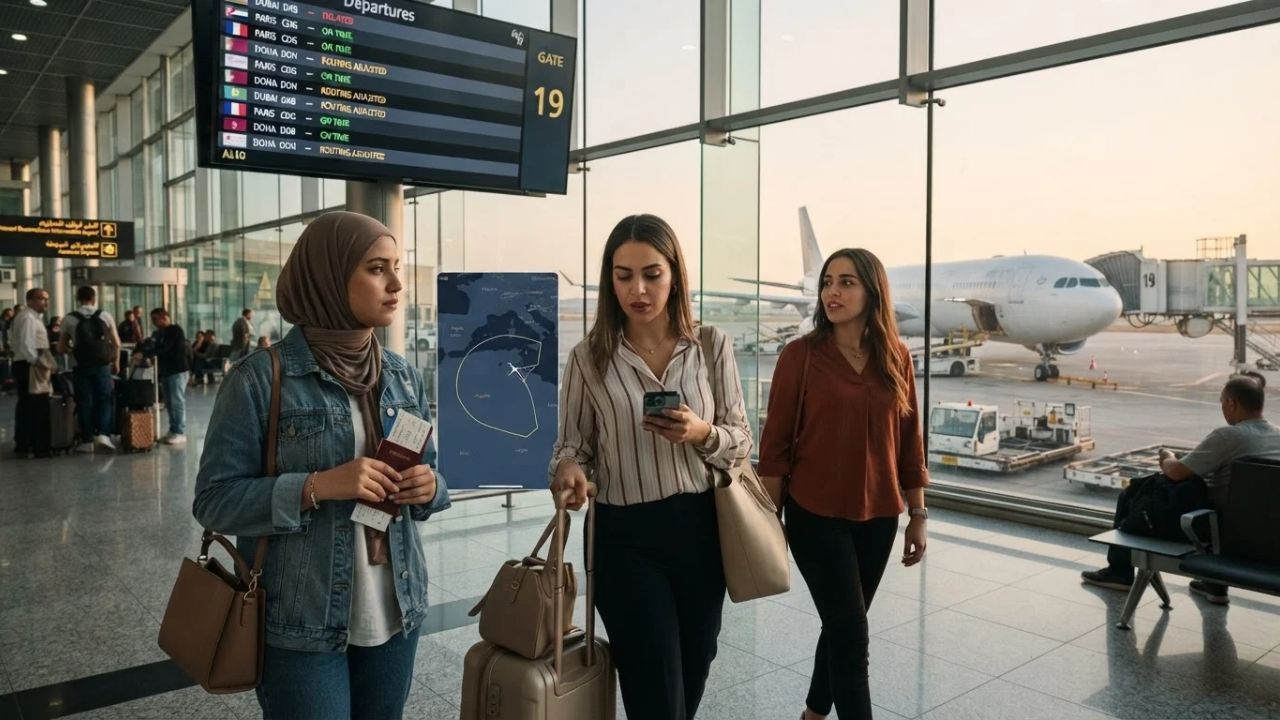
Image generated by AI
While travelers gazing across the Bay of Algiers can still watch Mediterranean ferries glide into the harbor beneath terraced Ottoman palaces, the sovereign skies directly overhead have transformed into an exclusionary diplomatic arena: effective at midnight on September 11, 2026, Algeria officially closed its airspace to all civilian and military aircraft registered in the United Arab Emirates. Stemming from the formal severance of bilateral diplomatic relations over contested regional involvement in Libya, Sudan, and the Sahel, the executive decree directly impacts major Gulf carriers, including Emirates and Etihad Airways. However, in a measured operational compromise, commercial flights routed specifically through Algiers Houari Boumediene Airport (ALG) have been granted a transitional exemption slated to expire on December 31, 2026, preserving essential passenger connections while long-haul air corridors are recalibrated across North Africa.
Geopolitics in the Skies: Decoding the Algeria-UAE Airspace Ban
The abrupt airspace prohibition represents the culmination of a deteriorating political relationship between Algiers and Abu Dhabi. Disagreements over regional foreign policy alignment across North Africa and the Sahel had progressively eroded diplomatic ties. Despite official denials from Emirati authorities regarding regional destabilization allegations, bilateral engagement broke down completely, resulting in the formal termination of the foundational bilateral air services agreement first drafted in 2013 and ratified in 2014. That historic agreement had governed commercial flight frequencies, overflight rights, and market reciprocity between the two nations for more than a decade.
The midnight decree marks a significant acceleration beyond previously expected transition periods. Emirates, which had originally anticipated a gradual operational wind-down timeline extending into early 2027, now operates under a hard year-end deadline. Under current Notice to Air Missions (NOTAM) directives, UAE-registered aircraft are prohibited from overflying the vast Algerian Flight Information Region (FIR), forcing airline flight dispatchers to implement lateral diversion routes.
The operational consequences primarily affect long-haul corridors connecting the Persian Gulf with the western Mediterranean and the Iberian Peninsula. Services such as Etihad’s route linking Abu Dhabi (AUH) with Malaga (AGP), along with multi-sector linkages connecting into Casablanca Mohammed V International Airport (CMN) in Morocco, must bypass sovereign Algerian boundaries entirely. Flight plans now skew northward across European Mediterranean airspace or southward through sub-Saharan sectors, adding block hours, increasing fuel burn rates, and elevating contingency fuel requirements. As monitored by the International Civil Aviation Organization, the weaponization of transit airspace introduces operational risk premiums into trans-Mediterranean flight planning.
What Makes Algiers Different: The Unconquered White City of the Maghreb
For cultural travelers touching down at Houari Boumediene Airport under the current commercial exemption, Algiers—affectionately known as El Bahdja or Alger la Blanche—reveals a striking Mediterranean metropolis largely insulated from the distortions of mass tourism. Built amphitheater-style overlooking a deep crescent bay, the city features sweeping French Haussmannian boulevards with white-stone arcades that cascade down to the water, crowned by the soaring concrete ribs of the Martyrs' Memorial (Makam Echahid).
The historical core of the city resides in the ancient Casbah of Algiers, inscribed on the UNESCO World Heritage Centre register. This extraordinary hillside urban citadel preserves a steep, pedestrian labyrinth of whitewashed alleys, covered archways, historic mosques, and hidden Ottoman palaces with central marble courtyards lined with hand-painted ceramic tiles. During the Algerian War of Independence, these narrow passages served as the secret nerve center for freedom fighters, immortalized in historic cinema and memorialized in humble neighborhood shrines.
Just seventy kilometers west along the shimmering coastal highway lie the ruins of Tipasa, an ancient Phoenician trading post and Roman seaside colony. Here, crumbling stone amphitheaters, paleo-Christian basilicas, and classical temples sit directly on the Mediterranean cliffs, framed by towering eucalyptus and pine trees that inspired author Albert Camus to write eloquently of gods living in the sun and sea spray.
Visitor Insider Tips: Navigating Travel to Algiers Amid Aviation Shifts
Reaching and exploring Algeria as an independent traveler requires practical foresight and an appreciation for local administrative norms:
- Smart Flight Alternatives: If you hold an itinerary on an affected Gulf carrier with connections through Abu Dhabi or Dubai, confirm whether your ticket operates under the temporary exemption ending December 31, 2026. Alternatively, book direct flights to Algiers Houari Boumediene Airport through major European hubs, including Paris, Marseille, Frankfurt, Rome, or Istanbul, aboard Air Algérie, Air France, Lufthansa, or Turkish Airlines, which operate outside the UAE airspace dispute.
- The Currency Exchange Reality: While international credit cards are accepted in high-end international hotels, everyday life in Algeria operates almost exclusively in cash. The country maintains a well-known dual-currency structure: exchanging foreign currency (such as Euros or US Dollars) on the informal market at Square Port Saïd in downtown Algiers yields a substantially higher exchange rate than official bank tellers. Always travel with crisp, uncreased foreign banknotes and ask a trusted local contact or guesthouse host to guide you.
- Explore the Casbah with a Local Guide: The upper Casbah is a complex, steep network of winding stairs and dead-end alleys where digital GPS tracking frequently fails. Hire an accredited local resident guide; they provide safe passage, unlock access to restored seventeenth-century private palaces, introduce you to master woodworkers, and share authentic oral histories of the independence struggle.
- Local Etiquette and Decorum: Algerians possess deep cultural pride and legendary hospitality. Always greet people with a warm "Salam Alaykum" before asking for directions. Dress modestly by covering shoulders and knees when exploring traditional quarters or entering sacred mosques like Djamaa el Kebir. Never photograph military installations, police officers, or government buildings, as security personnel strictly enforce public photography restrictions.
- Regional Culinary Delights: Skip generic hotel dining and seek out rechta, Algiers' iconic celebratory dish featuring fine, hand-rolled ribbons of steamed pasta smothered in a fragrant white sauce made of tender chicken, sweet white turnips, chickpeas, and a hint of cinnamon. For breakfast, stop at a traditional street stall for hot sfenj (crisp, airy Berber donuts) paired with strong espresso or mint tea scented with orange blossom water.
Cultural and Environmental Context: Sovereignty, Sahel Geopolitics, and Sustainable Heritage
Algeria’s uncompromising closure of sovereign airspace underscores a foreign policy heritage rooted in anti-colonial self-determination. As the largest nation in Africa by landmass, spanning over 2.38 million square kilometers, Algeria views its airspace and territorial borders as inviolable symbols of hard-won national sovereignty. The nation’s strategic vigilance along its southern frontiers in the Sahel and Sahara directly informs its geopolitical decisions across the Mediterranean basin.
In contrast to neighboring commercialized destinations, Algeria has deliberately avoided rapid, mass coastal tourism, prioritizing heritage conservation and environmental integrity overseen by the National Tourism Office. In Algiers, ongoing municipal restoration campaigns in the lower Casbah carefully shore up historical stone-and-cedar foundations against sea-salt humidity and seismic shifts without displacing resident families.
Further south, in the vast Saharan wilderness of Tassili n'Ajjer and the Hoggar mountains, ancient sandstone massifs house one of the world's most significant collections of prehistoric rock art, depicting elephants, giraffes, and pastoral life dating back over twelve thousand years. By keeping visitor numbers controlled and prioritizing low-impact cultural expeditions, Algeria protects its ancient Saharan ecology and fragile archaeological wonders, ensuring that travelers who arrive find an authentic, untamed North African sanctuary.
FAQ: Traveling to Algeria in 2026
Are commercial flights still operating between the UAE and Algiers?
Yes. Commercial passenger flights between the UAE and Algiers Houari Boumediene Airport operate normally under a transitional exemption that remains in effect until December 31, 2026.
Do international travelers need a visa to enter Algeria?
Yes. Most foreign passport holders require a tourist visa obtained in advance from an Algerian consulate, submitting accommodation vouchers, return flight tickets, and travel insurance before arrival.
What is the best time of year to visit Algiers and northern Algeria?
April through June and September through November provide pleasant Mediterranean temperatures between 20°C and 26°C, perfect for walking the Casbah and touring seaside Roman ruins.
How can travelers travel comfortably within Algiers?
Algiers features a modern, clean underground metro line, scenic public cable cars scaling steep hillsides, and affordable commuter trains connecting downtown to coastal towns like Tipasa.
High above the clouds, geopolitical maps may shift at midnight, but along the sun-bleached coastal terraces of Algiers, ancient Maghrebi hospitality remains as enduring as the Mediterranean tides.
Related Travel Guides
- Gulf Airspace Flight Suspensions: How KLM, Cathay Pacific, and Global Carriers Are Navigating Middle East Travel in 2026
- Safe Streets and Solo Autonomy: How Women Are Redefining Independent Travel Across South Korea
- Spain's Alicante Tourism at a Crossroads: Weak Regulation, 90,000 Holiday Rentals, and the Battle for Local Housing
Disclaimer
This article is for informational and educational purposes only. It does not constitute legal, financial, or professional advice. While we strive to provide accurate and up-to-date information, travel policies, regulations, and conditions change rapidly. Always verify information with official sources before making travel decisions. Nomad Lawyer makes no representations about the accuracy, reliability, completeness, or suitability of the information provided. Readers should consult qualified professionals for advice specific to their circumstances. The views expressed in this article are those of the author and do not necessarily reflect the views of Nomad Lawyer.
Raushan Kumar
Founder & Lead Developer
Full-stack developer with 11+ years of experience and a passionate traveller. Raushan built Nomad Lawyer from the ground up with a vision to create the best travel and law experience on the web.
Learn more about our team →