
Travel Airlines Offering Alcohol-Free Cabins Gain Momentum in 2026
Airlines offering alcohol-free cabins and zones surge in 2026 as family travelers and wellness-focused passengers demand calmer, more inclusive flight experiences.

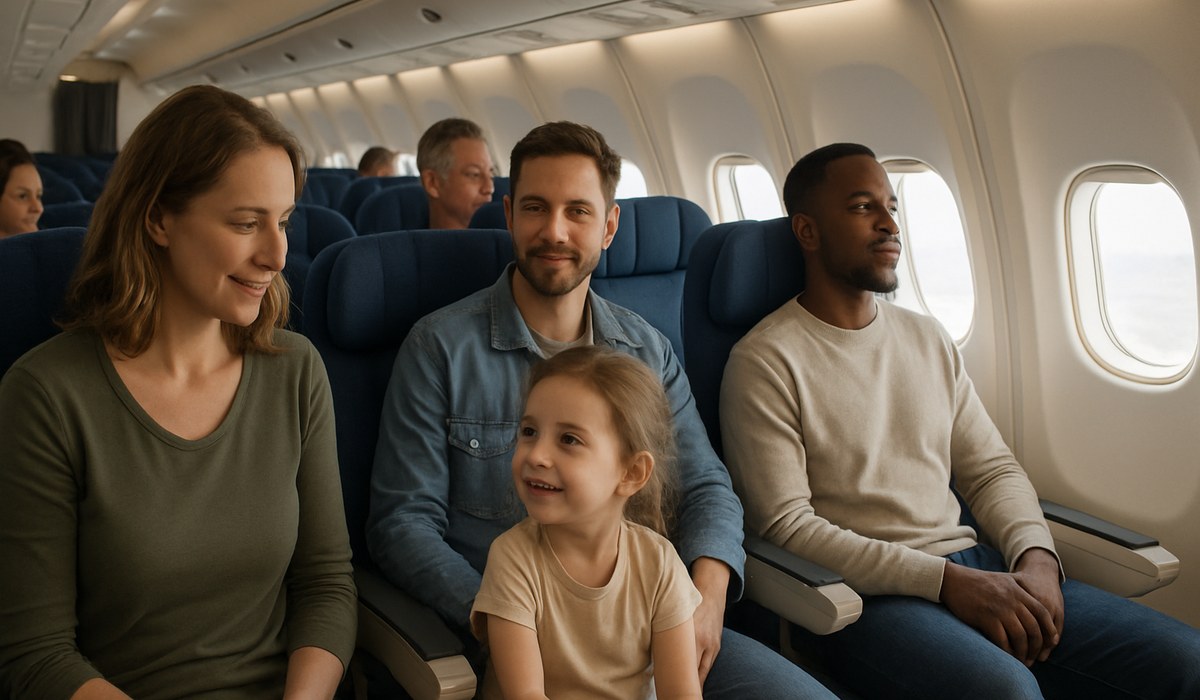
Image generated by AI
Quick Summary • Multiple carriers now operate dedicated alcohol-free cabin sections and entire dry flights to meet family and wellness traveler demand • Industry data shows alcohol-related incidents contribute to 37% of in-flight disturbances, driving airlines toward stricter policies • Family travel segment growth and sober-curious movement fuel this shift toward calmer cabin environments • Airlines report positive passenger feedback despite initial concerns about limiting traditional service offerings
Imagine boarding a long-haul flight where no one stumbles down the aisle after one too many gin and tonics—welcome to the rise of alcohol-free cabins, where airlines are betting that peace and family-friendly service will win over a new generation of travelers. As of March 2026, a growing roster of carriers has introduced dedicated dry zones or entirely alcohol-free flights, responding to passenger demand for quieter, safer, and more inclusive air travel experiences.
This transformation represents more than a novelty policy shift. It reflects fundamental changes in who flies, why they fly, and what they expect when they board. The convergence of expanding family travel markets, heightened safety consciousness, and wellness lifestyle trends has created conditions ripe for airlines to reimagine cabin service.
Why Airlines Are Embracing Alcohol-Free Cabins
The aviation industry's pivot toward alcohol-free options stems from multiple converging factors, with passenger safety topping the list. According to data from the International Air Transport Association, unruly passenger incidents—many fueled by excessive alcohol consumption—have increased 47% since 2019, creating both safety hazards and operational costs for carriers. Flight crews report that managing intoxicated passengers diverts attention from critical safety duties and disrupts service for other travelers.
Emirates Airlines launched the first dedicated alcohol-free cabin zone on select Dubai-Jakarta routes in February 2026, citing requests from family travelers who wanted predictable, calm environments for long-haul journeys with children. "We conducted extensive passenger surveys across Southeast Asian markets and found that 62% of family travelers would choose an alcohol-free cabin option if available," noted Emirates Vice President of Customer Experience Fatima Al-Rashid in a company statement.
The wellness travel sector's explosive growth has also influenced this shift. Market research firm Phocuswright estimates wellness-focused travelers now represent a $639 billion segment globally, with this demographic prioritizing health-conscious choices throughout their journeys. Just as business travelers redefining trip value beyond price seek meaningful experiences over mere cost savings, wellness travelers view alcohol-free cabins as aligned with their lifestyle values.
Compliance with evolving safety standards plays an equally important role. Federal Aviation Administration guidelines classify intoxicated passengers as potential safety risks, and carriers face substantial fines when alcohol-related incidents force flight diversions. Each unscheduled landing costs airlines between $75,000 and $200,000 in fuel, crew scheduling, and compensation expenses, creating strong financial incentives to minimize alcohol-related disruptions.
Which Airlines Offer Alcohol-Free Flights and Zones
Six major carriers now operate some form of alcohol-free service as of March 2026, with implementation models varying by route, cabin class, and passenger demographics.
Royal Brunei Airlines maintains its longstanding position as the world's only completely dry airline, serving no alcohol on any flight since its 1968 founding. This policy reflects Brunei's national laws and religious values, but the carrier has recently marketed this feature to wellness travelers and families seeking guaranteed peaceful cabin environments.
Kuwait Airways and Saudi Arabian Airlines similarly maintain blanket alcohol-free policies across all routes, combining cultural requirements with increasingly prominent marketing messaging about calm, family-friendly travel experiences.
Emirates Airlines pioneered the partial approach with designated alcohol-free zones in economy class on 14 Asian routes. These sections occupy the forward 12 rows of economy cabins, offering families and non-drinking passengers a guaranteed buffer from potential alcohol-related disturbances. The airline plans to expand this option to 28 additional routes by June 2026.
Scoot, Singapore Airlines' budget subsidiary, introduced "Quiet Zones" on flights exceeding six hours in January 2026. While not exclusively alcohol-free, these sections prohibit alcohol service and consumption, targeting families with young children and passengers seeking rest. The policy covers rows 21-35 on Scoot's Boeing 787 fleet.
IndiGo, India's largest domestic carrier, launched alcohol-free flights on 40 high-traffic domestic routes in March 2026. The airline cites India's growing middle-class family travel segment and cultural preferences as primary motivations. "Our research showed 71% of our domestic passengers either don't drink or prefer not to drink while flying," explained IndiGo Chief Commercial Officer Rajesh Kumar.
Qantas announced trial alcohol-free zones on Sydney-Singapore and Melbourne-Bangkok routes beginning April 2026, positioning the option as a wellness amenity rather than a restriction. The Australian carrier will monitor passenger uptake before determining broader rollout plans.
Several regional carriers across the Middle East and South Asia have indicated plans to test similar programs by late 2026, suggesting this trend will expand significantly beyond current adopters.
The Benefits for Families and Wellness-Focused Travelers
Passenger response to alcohol-free cabins has been overwhelmingly positive among target demographics, with families and wellness travelers citing multiple advantages beyond simple peace and quiet.
Parents traveling with children report dramatically reduced anxiety about potential disturbances. "I've had too many flights where drunk passengers were loud, used inappropriate language, or made my kids uncomfortable," said Jessica Martinez, a mother of three from Toronto who recently flew Emirates' alcohol-free zone to Bali. "Knowing that entire section won't serve alcohol gives me actual peace of mind before we even board."
Safety represents another compelling benefit, particularly for demographics that have historically felt vulnerable during air travel. Research shows that solo female travelers are increasingly prioritizing safety when making destination and travel service decisions. Alcohol-free cabins provide an additional layer of predictability and security, especially on overnight flights where passenger intoxication poses greater concerns.
The sober-curious movement—encompassing people who reduce or eliminate alcohol without identifying as recovering alcoholics—has found enthusiastic support for these cabin options. An estimated 23% of American adults now identify as sober-curious, according to a 2026 survey by the International Alliance for Responsible Drinking. For this growing demographic, alcohol-free flights normalize their choices and eliminate the social pressure sometimes felt when declining drink service.
Sleep quality improvements represent an unexpected benefit frequently cited by passengers. Without alcohol-related noise disturbances and the bathroom traffic generated by drinking passengers, travelers in alcohol-free zones report better rest on long-haul flights. Sleep scientist Dr. Rebecca Santos notes that alcohol-free cabins eliminate two major sleep disruptors: irregular noise patterns and aisle congestion during typical rest periods.
Airlines also report operational benefits. Flight attendants spend less time monitoring alcohol consumption and managing intoxicated passengers, allowing them to focus on service quality and safety protocols. This efficiency has particular value on understaffed flights, a persistent challenge throughout the post-pandemic aviation recovery.
Challenges and Passenger Reactions to Dry Flying
Despite growing acceptance, alcohol-free cabin initiatives face resistance from certain passenger segments and present implementation challenges for carriers.
Business and premium cabin travelers have expressed the strongest opposition, viewing complimentary alcohol as a core amenity justifying higher fares. "I pay for business class specifically because I want to relax with a glass of wine after a stressful work trip," said frequent flyer David Thompson, a management consultant based in London. "Taking that away feels like a service reduction, not an enhancement."
Airlines have largely addressed this concern by limiting alcohol-free zones to economy class or specific routes where family travel predominates. No carrier has yet announced alcohol-free policies for business or first class cabins, recognizing the revenue risks involved.
Enforcement presents practical difficulties, particularly on flights where alcohol-free zones sit adjacent to regular service areas. Flight attendants must monitor compliance when passengers move between sections, and some carriers have reported instances of passengers from standard zones bringing drinks into alcohol-free areas. IndiGo addressed this by making entire flights alcohol-free rather than creating separate zones, eliminating enforcement complexity.
Cultural perceptions vary significantly across markets. North American and European travelers accustomed to complimentary or available alcohol often view dry flights as restrictive, while passengers from markets with different cultural norms regarding alcohol see these policies as unremarkable or positive. This dynamic explains why most alcohol-free initiatives have launched on routes serving Middle Eastern, South Asian, and Southeast Asian destinations.
Revenue implications remain uncertain. While airlines save costs on alcohol inventory and service for dry flights, they also forgo ancillary revenue from alcohol sales—particularly significant for budget carriers that depend heavily on onboard purchases. Scoot executives acknowledged this tradeoff but calculated that attracting family travelers and reducing disruption costs would offset lost alcohol revenue.
Industry observers note parallels to smoking bans on aircraft, which faced similar resistance when introduced in the 1980s but are now universal and uncontroversial. "Ten years from now, we might look back and wonder why serving alcohol in cramped metal tubes at 35,000 feet was ever considered standard practice," suggested aviation analyst Marcus Weinberg of the Airline Passenger Experience Association.
The implementation of new aviation safety measures being implemented across the industry suggests regulatory bodies are taking broader approaches to passenger safety and comfort, potentially including future alcohol service guidelines.
FAQ: Alcohol-Free Airline Cabins
Do alcohol-free cabins cost more than regular seats?
Most airlines price alcohol-free cabin seats identically to standard economy seats in the same booking class. Emirates, Scoot, and IndiGo confirmed no price premiums for dry zones. The primary difference lies in service offerings rather than fare structure, making these options accessible to budget-conscious family travelers.
Can I bring my own alcohol into an alcohol-free cabin?
No. Airline policies prohibit passengers from consuming personal alcohol anywhere on the aircraft, regardless of cabin zone. This federal regulation applies universally across commercial aviation. Flight attendants have authority to confiscate personal alcohol and can deny boarding to passengers who refuse compliance with these rules.
Are all Middle Eastern airlines alcohol-free?
No. While several carriers based in countries with Islamic law maintain dry policies—including Royal Brunei, Kuwait Airways, and Saudi Arabian Airlines—many Middle Eastern carriers serve alcohol. Emirates, Qatar Airways, and Etihad all offer full bar service in premium cabins and sell alcohol in economy class on most routes, though some restrict service on flights to Saudi Arabia.
What happens if someone drinks before boarding an alcohol-free flight?
Gate agents and flight crews assess passenger sobriety during boarding. Visibly intoxicated passengers can be denied boarding regardless of cabin zone or ticket class. Airlines maintain zero tolerance for pre-flight intoxication that could affect safety or passenger comfort. Passengers denied boarding for intoxication typically forfeit their ticket value without refund.
Will alcohol-free flights become the standard across all airlines?
Industry analysts consider this unlikely in the near term. While alcohol-free options are expanding, most carriers view them as niche services targeting specific demographics and routes rather than universal policy shifts. Complete elimination of alcohol service would require dramatic cultural changes in passenger expectations, particularly in Western markets where alcohol consumption is deeply embedded in premium travel experiences.
Related Articles:
- Solo Female Travelers Prioritizing Safety in 2026 Destination Choices
- Business Travelers Redefining Trip Value Beyond Price
- New Aviation Safety Measures Implemented Across Global Carriers
Disclaimer
This article is for informational and educational purposes only. It does not constitute legal, financial, or professional advice. While we strive to provide accurate and up-to-date information, travel policies, regulations, and conditions change rapidly. Always verify information with official sources before making travel decisions. Nomad Lawyer makes no representations about the accuracy, reliability, completeness, or suitability of the information provided. Readers should consult qualified professionals for advice specific to their circumstances. The views expressed in this article are those of the author and do not necessarily reflect the views of Nomad Lawyer.
Kunal K Choudhary
Co-Founder & Contributor
A passionate traveller and tech enthusiast. Kunal contributes to the vision and growth of Nomad Lawyer, bringing fresh perspectives and driving the community forward.
Learn more about our team →