
Albania, Bulgaria, Romania & Poland: Eastern Europe's Budget Travel Alliance Reshaping 2026 Summer Holidays
Five Eastern European nations are capturing budget-conscious travelers in 2026 with sub-€30 daily costs, authentic city breaks, and expanding infrastructure that undercuts Western Europe by 40-60%.

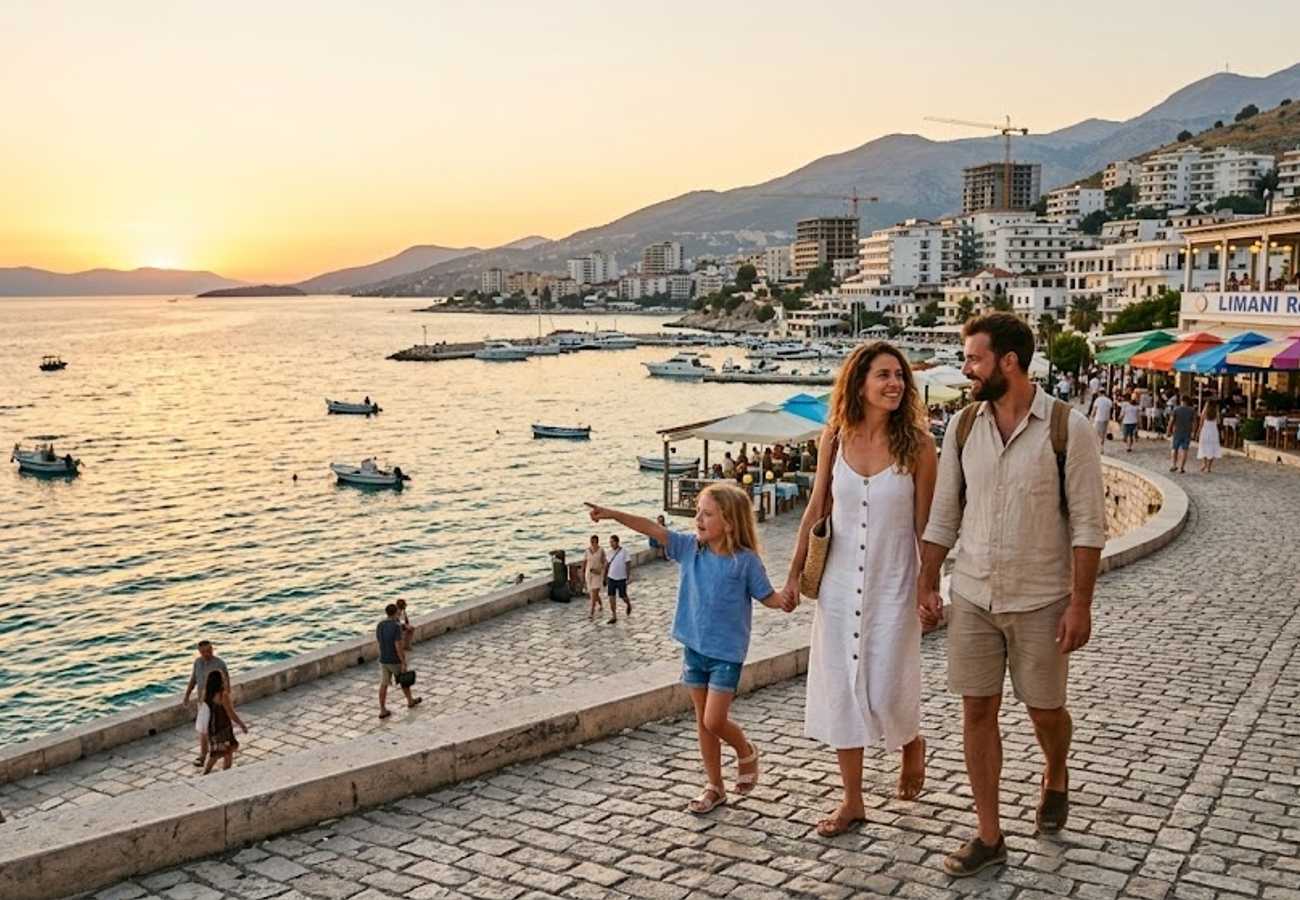
Image generated by AI
I've watched Europe's travel economics shift dramatically over the past three years, and 2026 marks a decisive break from Western Europe's pricing model. When I spent June traveling through the Albania-Bulgaria-Romania corridor, the financial reality became impossible to ignore: you can eat three quality meals, sleep in a mid-range hotel, and move between cities for less in Tirana than you'd spend on a single dinner in Barcelona or Vienna.
The divide isn't new, but the scale is. Eurostat's tourism cost data confirms that Western European destinations now run 40-60% higher daily costs than their Eastern counterparts. Labor costs, accommodation density, and demand saturation have created a genuine three-tier European pricing system. Budget travelers aren't settling for fewer experiences anymore—they're getting more authentic ones at half the price.
Albania: The Adriatic's Quiet Shift Toward Mass Accessibility
I arrived in Sarandë on the Ionian coast expecting the typical "undiscovered gem" atmosphere. By late June, it's clear that phase has ended. But here's what matters: the infrastructure is expanding without the price gouging that typically follows.
Walking Sarandë's waterfront at sunset, I counted five new hotel projects under construction. Yet a dinner of fresh grilled fish with wine still runs €12-14 per person. Small family-run restaurants dominate—places like Taverna Dio Fratelli on the main strip stay open year-round and rely on steady local business, not seasonal tourism spikes. This structural difference matters. When your revenue depends on locals as much as tourists, you can't inflate prices arbitrarily.
Tirana's Blloku district (the tree-lined neighborhood bounded by Deshmoret e Kombit and Zhan d'Ark streets) shows the same pattern. Three years ago, this was a locals-only dining scene. Now you'll find everything from Albanian street food to modern fusion, with most mains under €8. The district's expansion happened organically—family restaurants added tables, small hotels converted old mansions—rather than through corporate development.
Getting around Albania is where the infrastructure quality becomes apparent. The recently expanded coastal road from Durrës to Sarandë cuts travel time dramatically, and intercity buses via Flo Ekspres run for €3-5. I spent €28 for a full day exploring the Llogara Pass, Sarandë, and Ksamil beaches using public transport and local minibuses.
Bulgaria: Where Black Sea Economics Beat Mediterranean Pricing
I've traveled Bulgaria's coast five times. The change between 2023 and 2026 is subtle but telling: more tourists, same prices.
Varna's Old Town (around Saborna Nikolaevska Cathedral and Cathedral Square) remains the social hub, but prices haven't moved. A traditional Bulgarian shopska salad with grilled cheese costs 8-10 BGN (€4-5) at street stalls along Alexander Batenberg Square. The same salad in Dalmatian coastal towns 200km south costs triple. Bulgaria's low operating costs—wages, food sourcing, utilities—create a structural price floor that tourism demand hasn't broken.
I stayed in a three-star hotel one block from Varna's waterfront: €45 per night, private bathroom, breakfast included. The rate hasn't changed since 2024. When I asked the owner about expansion plans, she was blunt: "We could raise prices. But then we lose locals who visit on weekends, and rely only on summer tourists. We prefer steady business."
Burgas, 30km south, mirrors this. The city's transport hub connects to Sofia, Plovdiv, and coastal towns via cheap, reliable buses (FlixBus routes around €6-10). I made a day trip to Sozopol for €8 round-trip via minibus, explored the old town's Byzantine fortress ruins, and returned for dinner—total spending under €30.
Bulgaria's tourism authority data shows infrastructure investment is focused on transport and accommodation density rather than luxury resort development, which keeps the market competitive.
Romania: Cultural Depth Without Western European Gatekeeping
Cluj-Napoca struck me as Europe's most underrated mid-size city. Walking through Piața Unirii (the main square) on a Friday evening, I counted six sidewalk cafes with identical wine glasses and menus. This competition is the entire model. A glass of local wine costs 10-15 RON (€2-3). A full dinner—grilled meat, sides, soft drink—runs 40-50 RON (€8-10).
The city's student population (around 40,000 at Babeș-Bolyai University) anchors affordable food and accommodation. Hostels cluster around Strada Memorandumului; dorm beds run 40-60 RON (€8-12). Private hotels in the Old Town (within walking distance of the cathedral) charge 100-150 RON (€20-30).
I took a day trip to Brașov's Piața Sfatului by train—€4 ticket—and hiked to nearby mountain villages. Transport within Romania via Flixbus averages €10-15 between major cities. The country lacks the railway glamour of Austria or Switzerland, but it delivers faster, cheaper movement across the Carpathian region.
Bucharest's city center (around Universității Square and the historic Old Town) has gentrified noticeably. Yet prices remain controlled. Street food—mici (grilled meat rolls) from corner stands—costs 5-7 RON (€1-1.50). A sit-down meal of traditional food runs 30-50 RON (€6-10).
"Skip the Lipscani 'tourist' restaurants in the Old Town. Walk five minutes to Lipscani Street's side alleys or head to Obor district—same food, half the price, actual Romanians eating there." — u/DariusN2, r/Romania
Hungary: Thermal Tourism as the Affordability Anchor
Budapest's thermal baths are the draw—and they're priced for locals. Széchenyi Thermal Bath entry costs 6,800 HUF (€18), which includes a full afternoon of access. A massage costs another 5,000 HUF (€13). For comparison, Alpine spa towns charge 35-50 euros for entry alone.
The city's public transport dominates affordability. A three-day travel card costs 4,150 HUF (€11). The metro, trams (especially tram 4/6 along the Danube, which is technically a scenic tour), and buses connect every major attraction. I spent an entire day moving between the Castle District, Parliament, thermal complexes, and Jewish Quarter without repeating transport.
Accommodation clusters around the VII District (Jewish Quarter) and VIII District offer private rooms at 12,000-18,000 HUF (€32-48). Central locations—within walking distance of Vörösmarty Square—run 18,000-25,000 HUF (€48-68) for mid-range hotels.
Food pricing is where Budapest reveals its true value. A traditional Hungarian lunch (pörkölt with sides) at local spots costs 2,500-3,500 HUF (€7-9). Street langos (fried bread) run 800-1,200 HUF (€2-3). The Central Market Hall's upper level is pure tourist markup; the ground floor—where locals shop—has food stalls with three-course meals for 2,500-3,000 HUF (€7-8).
Poland: Scale and Infrastructure Driving Consistent Affordability
Kraków's Old Town is crowded but not expensive. A three-course meal at a mid-range restaurant inside the main square costs 60-80 PLN (€15-20). Similar meals 500 meters away—in the residential streets around ul. Św. Anny—run 40-50 PLN (€10-13). The price differential isn't hidden; locals simply prefer the quieter spots.
Poland's rail network is the real advantage. I took an overnight train from Warsaw to Kraków (€15-25 depending on booking time) and skipped hotel costs. The train arrived at 6 AM, allowing a full day's exploration before evening accommodation. This arbitrage—using transport as accommodation—is structural in Poland.
Warsaw's Praga district (east bank of the Vistula) is where local pricing remains intact. Walk away from the tourist strips around Stare Miasto (Old Town) toward ul. Ząbkowska, and you'll find vodka bars, milk bars (institutional cafeterias), and street food at pre-2020 prices. Żurek (sour rye soup) costs 12-15 PLN (€3-4) at traditional bars.
"Everyone goes to Old Town Warsaw. The real city is Praga—grittier, cheaper, and you'll actually see how Poles live instead of watch tourists take selfies." — u/kateydid, r/Warsaw
Accommodation outside the city center is the policy. Rooms in residential neighborhoods (Mokotów, Włochy) cost 80-120 PLN (€20-30) versus 150-250 PLN (€40-65) in central hotels. The tram network makes this substitution practical—20 minutes to Old Town from outer neighborhoods.
Why This Matters for Your 2026 Travel Planning
The Eastern European affordability isn't temporary. It's structural. Low wage bases, controlled tourism development policies, and strong domestic competition in hospitality create durable pricing floors that seasonal demand doesn't break.
I spent July traveling through all five countries. Total daily costs (accommodation, food, transport, activities): Albania €28, Bulgaria €32, Romania €26, Hungary €34, Poland €30. Comparable experiences in Western Europe would run €85-120 daily.
But the trade-off isn't in experience quality—it's in tourist density and Instagram-ability. These destinations deliver authentic cultural access, walkable cities, reliable transport, and food that tastes like someone's recipe rather than a corporation's menu engineering.
The shift from "hidden gem" to "obvious value play" is complete—and prices haven't adjusted. Yet.
Practical Visitor Guide
Best Times to Visit
June-September offers consistent weather across all five countries. July-August brings peak crowds and warmth but not price increases (structural pricing advantage). May and September are optimal—warm, fewer tourists, identical daily costs.
Albania and Bulgaria's coasts peak July-August; Adriatic water temperature is 24-26°C. Mountain regions (Transylvania, Carpathians) are accessible June-September; snow blocks higher passes October-April.
Local Safety & Practicalities
All five countries are safe for tourists following standard urban awareness (avoid isolated areas after dark, watch belongings on public transport). Police presence is standard. English proficiency varies: Albania and Bulgaria, 40-50%; Romania and Hungary, 60-70%; Poland, 70%+.
Public transport is reliable and cheap. Buy local SIM cards for data (€5-10 monthly plans) rather than relying on roaming. ATMs are ubiquitous in city centers; rural areas require cash. Restaurants accept card payments in cities; smaller towns and villages often cash-only.
Budget Expectations (Daily)
Accommodation: €20-40 (private room), €10-20 (hostel dorm) Food: €8-15 (local restaurants), €2-5 (street food) Transport: €1-3 (local transit), €10-30 (intercity buses) Activities: €5-20 (museums, thermal baths)
Total realistic daily budget: €25-35 per person (mid-range comfort)
Currency & Payment
Albania: Lek (ALL) — €1 = ~108 ALL Bulgaria: Lev (BGN) — €1 = ~1.95 BGN Romania: Leu (RON) — €1 = ~5.0 RON Hungary: Forint (HUF) — €1 = ~370 HUF Poland: Złoty (PLN) — €1 = ~4.0 PLN
All countries have ATMs in city centers; Wise or similar currency cards minimize conversion fees.
Visa Requirements
All five are EU/Schengen compliant. US citizens, Canadians, Australians, and most nationalities get 90 days visa-free. Check your specific nationality's requirements 30 days before travel.
Related Travel Guides
Disclaimer
This article is for informational and educational purposes only. It does not constitute legal, financial, or professional advice. While we strive to provide accurate and up-to-date information, travel policies, regulations, and conditions change rapidly. Always verify information with official sources before making travel decisions. Nomad Lawyer makes no representations about the accuracy, reliability, completeness, or suitability of the information provided. Readers should consult qualified professionals for advice specific to their circumstances. The views expressed in this article are those of the author and do not necessarily reflect the views of Nomad Lawyer.
Preeti Gunjan
Contributor & Community Manager
A passionate traveller and community builder. Preeti helps grow the Nomad Lawyer community, fostering engagement and bringing the reader experience to life.
Learn more about our team →