
Global Travel Alert 2026: U.S. Maintains Broad Warnings as Iran Conflict Reshapes International Security
The 2026 Middle East conflict has triggered a severe 'Worldwide Caution' from the U.S. State Department. As airspace closures disrupt flights and rhetoric targets tourist destinations, travelers globally must navigate a radically altered security map.

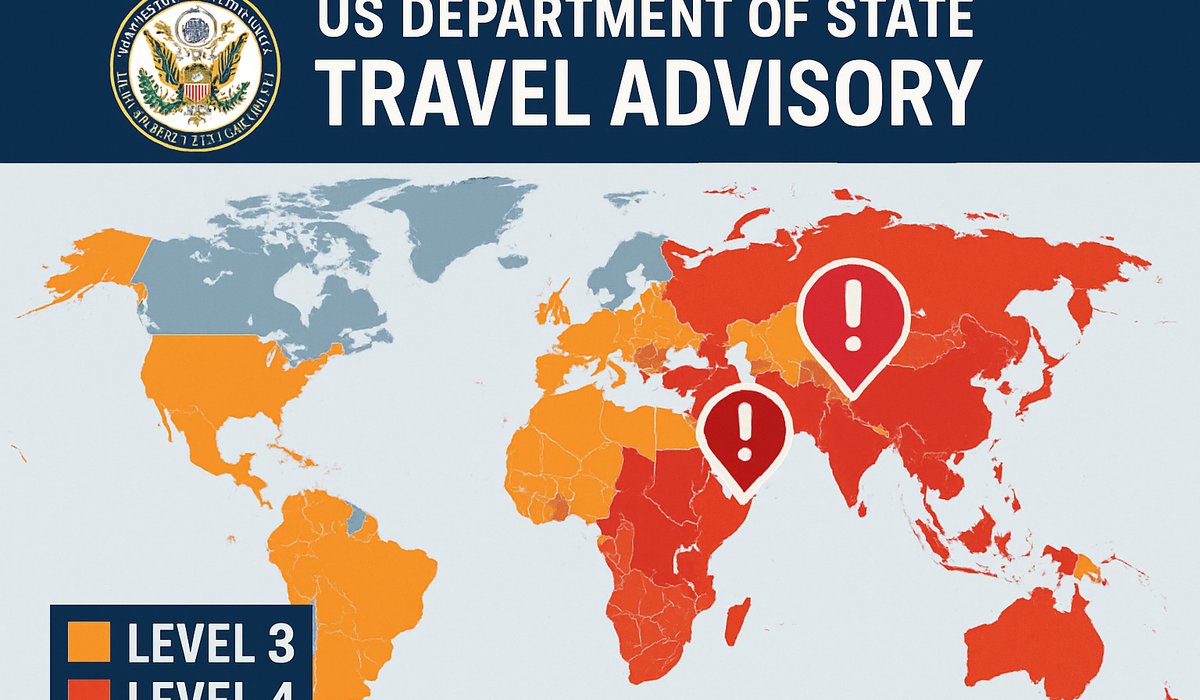
Image generated by AI
U.S. State Department Extends "Worldwide Caution" Amid Escalating Geopolitics
A rare and incredibly broad "Worldwide Caution" has been issued and maintained by the U.S. Department of State for all American citizens traveling abroad as of April 1, 2026. Following severe military escalation involving the United States, Israel, and Iran, international travel safety protocols have been fundamentally rewritten. What began in late February as regional aggression has rapidly evolved, effectively redrawing the map regarding which destinations can safely accommodate leisure and corporate travelers.
The interactive U.S. standard travel advisory map is now heavily populated by Level 3 and Level 4 warnings extending far beyond the immediate battle zones. For globetrotters, the era of traveling with passive assumptions regarding safety and connectivity has decisively ended.
The Four-Tier Warning System: Broad Expansions
The State Department has aggressively expanded its risk categorizations across multiple continents due to the threat of regional spillover.
Level 4 — Do Not Travel: The strictest classification applies well beyond the immediate Iranian borders. Countries including Iraq, Lebanon, Russia, and Yemen are heavily flagged for active combat elements and the high statistical risk of "arbitrary detention." The U.S. government has explicitly warned it possesses "limited to no ability" to extract citizens from these sovereign territories.
Level 3 — Reconsider Travel: A sprawling portion of the previously stable Middle East has been elevated. Saudi Arabia, Oman, Kuwait, and Bahrain now operate under Level 3 mandates. Primary concerns involve the sudden disruption of civilian infrastructure via potential missile strikes or drone activity, making non-essential travel highly discouraged.
Level 2 — Exercise Increased Caution: The conflict's shadow extends even to the traditional tourism capitals of Western Europe. The United Kingdom, France, and Italy maintain Level 2 advisories. Authorities cite sharply heightened "risks of terrorism" linked to localized extremist factions energized by Middle Eastern events.
The Logistical Nightmare: Navigating Closed Airspace
One of the most immediate disruptions to 2026 global movement is taking place thousands of feet in the air. The vast closure of Middle Eastern airspace has created a bottleneck for the crucial connection corridors bridging Asia with Europe and North America.
Super-hubs including Dubai International Airport (DXB), Abu Dhabi (AUH), and Doha's Hamad International (DOH) operate under constant threat of instantaneous, unannounced closures. Carriers rerouting to avoid volatile airspace face significant operational penalties:
- Extended Journey Times: Averting active military fly zones adds a punishing 2 to 4 extra hours to long-haul transcontinental flights.
- Mandatory Refueling Downs: Aircraft that previously operated non-stop (e.g., London to Singapore) are increasingly forced into disruptive technical stops for fuel due to extended circuitous routes.
A Chilling Rhetorical Shift Targeting Tourism
Perhaps the most alarming development for the travel sector involves a distinct change in aggressive rhetoric. Iranian state television recently broadcasted chilling warnings indicating that "parks, recreational areas, and tourist destinations" are no longer considered immune from targeting.
This unprecedented pivot toward threatening civilian leisure environments—rather than traditional military or governmental compounds—has drastically escalated traveler anxiety entering the spring and summer holiday seasons. Holidaymakers are explicitly urged to maintain hyper-vigilance in large crowds, even within historically "safe" European or Asian tourism hubs.
What Guests Get
- Immediate alerts via STEP from the closest U.S. Embassy regarding local security conditions
- Real-time flight rerouting matrices provided by major international aviation carriers
- Flexible cancellation protocols (CFAR) mandated by top-tier travel insurance providers
- Expedited repatriation advisory support in newly elevated Level 4 zones
- Civil defense application guidance customized for transit through volatile regional corridors
Middle East Travel Corridors: 2026 Snapshot
| Nation | Flight Route Status | U.S. Advisory Level | Principal Threat Factor |
|---|---|---|---|
| Iran | Complete Closure | Level 4: Do Not Travel | Active combat, detention risk |
| Lebanon | Severely Restricted | Level 4: Do Not Travel | Infrastructure vulnerability |
| Saudi Arabia | Subject to Rerouting | Level 3: Reconsider | Border area spillover |
| UAE | Periodic Disruptions | Level 2: Exercise Caution | Unannounced airspace closure |
| Israel | Highly Restricted | Level 3: Reconsider | Missile alerts, military conflict |
What This Means for Travelers
In 2026, traveling across international borders demands proactive, defense-oriented planning. Non-refundable tickets are statistically unreasonable liabilities in the current climate. Travelers must exclusively adopt flexible bookings or purchase policy-verified "Cancel For Any Reason" (CFAR) travel insurance.
Furthermore, registration with the Smart Traveler Enrollment Program (STEP) is no longer a bureaucratic afterthought—it is a mandatory survival tool. If you are transiting near the Sinai Peninsula, Eastern Mediterranean, or the Persian Gulf, install localized civil defense mobile applications immediately upon landing, as they frequently outpace international news tickers regarding localized threats. Lastly, adopt a "go-bag" mentality when packing: expect longer layovers, pack essential medications in carry-on items, and assume flight itineraries will mutate while you are airborne.
FAQ: Global Travel Alert 2026
What does a Level 4 'Do Not Travel' advisory actually mean? A Level 4 advisory means the U.S. government assesses a severe, life-threatening risk within the territory and strongly advises against any entry. Importantly, it means the U.S. Embassy and military have extremely limited or zero capacity to provide emergency extraction or diplomatic assistance if you are detained or trapped.
Why are flights between Europe and Asia taking so much longer? Major Middle Eastern airspace corridors are closed to civilian aircraft due to military crossfire. Commercial airlines must fly vastly longer circumventions across northern or extreme southern latitudes, drastically adding flight hours and necessitating extra refueling stops.
Is it safe to travel to Western Europe (Level 2) this summer? Yes, but with heightened awareness. A Level 2 'Exercise Increased Caution' advisory for nations like France and the UK indicates a heightened risk of politically motivated terror attacks. Travelers are advised to avoid enormous demonstrations, remain vigilant at major transit hubs, and immediately locate exits when entering crowded venues.
Related Travel Guides
Middle East Travel Alerts 2026: Current Restrictions and Safe Corridors
Travel Insurance Claims: Processing Tips for Flight Disruptions
Surviving Flight Cancellations: The Ultimate Rebooking Strategy
Disclaimer
This article is for informational and educational purposes only. It does not constitute legal, financial, or professional advice. While we strive to provide accurate and up-to-date information, travel policies, regulations, and conditions change rapidly. Always verify information with official sources before making travel decisions. Nomad Lawyer makes no representations about the accuracy, reliability, completeness, or suitability of the information provided. Readers should consult qualified professionals for advice specific to their circumstances. The views expressed in this article are those of the author and do not necessarily reflect the views of Nomad Lawyer.
Raushan Kumar
Founder & Lead Developer
Full-stack developer with 11+ years of experience and a passionate traveller. Raushan built Nomad Lawyer from the ground up with a vision to create the best travel and law experience on the web.
Learn more about our team →