
Preventing Travel Chaos: How Desperate Passengers Survive Massive Flight Cancellations Using High-Tech Airport Entertainment Lounges in New York and London
As severe operational bottlenecks paralyze global hubs, desperate passengers use immersive VR lounges and cloud gaming networks to survive terrifying travel chaos and endless flight delays.

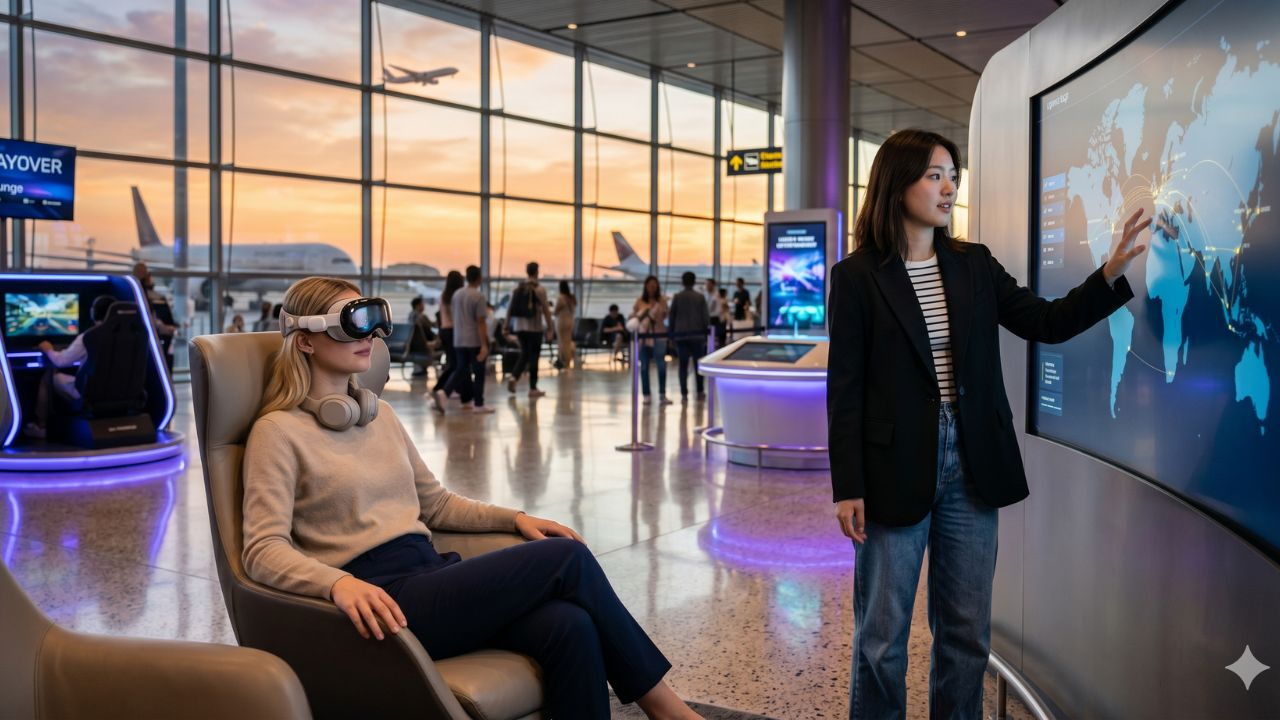
Image generated by AI
Severe Airport Disruptions Force a Transit Evolution
While massive sectors of the global passenger network frequently battle highly unpredictable weather events, synchronized logistical bottlenecks at major transit hubs remain the absolute most terrifying catalyst for sudden, unmanageable terminal congestion. Delivering highly urgent, breaking airline news, verified international aviation trackers confirm that ongoing operational meltdowns are actively generating severe, cascading travel chaos across major global corridors. Today, June 1, 2026, as massive flight cancellations violently paralyze massive gateways like New York JFK and London Heathrow, desperate passengers flying on legacy carriers like United Airlines and British Airways are frantically seeking refuge in high-tech digital entertainment lounges.
For decades, the concept of a massive travel layover was violently viewed as an incredibly inconvenient, terrifyingly passive test of sheer physical endurance. Millions of vulnerable travelers annually mapped out long-haul flight itineraries with a deep sense of quiet dread. However, these exclusive aviation updates reveal that a quiet technological revolution is fundamentally shifting the global transit landscape. Driven by rapidly evolving consumer expectations and the absolute necessity of surviving sudden airport disruptions, massive international airports, railway terminals, and regional tourism gateways are executing a major strategic pivot. Rather than treating massive wait times as dead space, forward-thinking hospitality groups are actively turning exhausting layovers into highly premium, interactive survival experiences.
Expanded Overview: Surviving the Terminal Gridlock
The sudden, highly publicized execution of this massive operational strategy serves as an undeniable example of how rapidly the world's most critical transit hubs must adapt to constant delays. By seamlessly integrating immersive software networks, highly advanced virtual reality environments, and ultra-high-speed cloud entertainment platforms, modern travel hubs are completely transforming the way desperate passengers wait.
This sophisticated evolution marks an incredible new era where the massive transit hub actively serves as an engaging, memorable destination in its own right, permanently changing our perspective on long-haul transit. The driving force behind this massive transit transformation is a deep, fundamental understanding of modern passenger demographics. The contemporary traveler stranded by endless flight delays is highly digital, deeply connected, and increasingly looking for active, personalized engagement over incredibly passive, exhausting retail browsing while waiting for their rescheduled United or British Airways flight.
Section-Wise Breakdown of the Transit Strategy
The Transit Lounge Revolution
To successfully bridge this massive gap, modern terminals in cities like New York and London are completely restructuring their physical footprint to brilliantly blend real-world hospitality with massive, high-bandwidth software ecosystems. As highlighted by industry observations across massive digital media and hospitality networks, destinations with robust, cross-platform media infrastructure can highly effectively capture desperate traveler attention, heavily mitigating the terrifying stress of a cancelled flight. Instead of hopelessly staring at old, broken televisions broadcasting repetitive local news loops, highly stressed passengers now enthusiastically step into dedicated high-tech media lounges.
The Transit Lounge Revolution
| Traditional Aviation Lounges | Next-Gen Entertainment Hubs |
|---|---|
| Static paper pamphlets & wall maps | Interactive touchscreen kiosks with local data |
| Low-speed, passive Wi-Fi portals | Ultra-wideband networks for cloud gaming |
| Background television news loops | Immersive VR displays & gaming lounges |
| Basic vending & physical storefronts | Cross-platform integrated streaming hubs |
From Passive Waiting to High-Engagement Zones
To successfully transform the brutal layover experience from a terrifying chore into an incredibly exciting perk, modern transit terminals focus heavily on two foundational design standards:
- Localized Interactive Content: Instead of heavily relying on highly generic entertainment programs, smart travel hubs aggressively tailor their gaming, media, and interactive options to directly mirror the unique history or beautiful geographic landscapes of the host region. A terrifying 12-hour stopover in a new city suddenly becomes an immediate cultural introduction.
- Frictionless Mobile Integration: To successfully eliminate physical friction, contemporary lounges brilliantly allow arriving visitors to transition an in-person terminal simulation incredibly smoothly onto their personal smartphones via custom web apps, flawlessly maintaining their digital progress as they frantically move toward the boarding gate.
Industry Analysis: The Economic Value of Stranded Passengers
This massive focus on interactive technology represents a massive economic driver for regional businesses. When a major tourism gateway successfully keeps a terrified, stranded passenger actively engaged via a custom digital platform, it opens an immediate, highly lucrative marketing channel for local commerce.
A traveler who spends a two-hour flight delay exploring a beautiful, three-dimensional virtual tour of regional landmarks or trying out a highly localized interactive simulator is significantly more likely to book a dedicated return trip, aggressively purchase tickets to local sports venues, or eagerly spend massive amounts of money at regional entertainment districts in the future. By brilliantly using high-tech entertainment as a subtle, highly effective marketing engine, airports are successfully converting anonymous, highly stressed transit passengers into passionate, revenue-generating future tourists.
Cross-Promotional Value Chains
| In-Terminal Interaction | Out-of-Terminal Conversion |
|---|---|
| Local VR landscape tours | Return vacation bookings |
| Interactive regional games | Future sports venue sales |
| Virtual restaurant previews | Regional dining revenue |
Passenger Impact: Mindful Navigation and Logistics
In an incredibly fast-moving global travel environment where massive tech integration, highly complex terminal designs, and incredibly volatile airline scheduling frequencies are continuously shifting, managing your personal logistics with absolute care is essential. Whether you are organizing a massive international business route on British Airways or booking a multi-stop holiday on United Airlines with a long, terrifying layover, keeping a very close eye on real-time transportation data is highly recommended.
Utilizing highly advanced digital platforms to aggressively track flight status changes in real time heavily ensures you stay instantly informed of any sudden gate realignments, massive terminal updates, or unexpected, terrifying delays well before you make your desperate way to the airport check-in desk. Importantly, engaging with these high-tech, digital-first terminal environments links beautifully with the global community’s essential shift towards massive sustainability in tourism, completely replacing millions of heavy, single-use paper travel brochures with sleek, paperless interactive kiosks.
Conclusion: A Highly Entertaining Future
The massive, highly publicized capacity crunch currently facing the global aviation market guarantees that severe delays will continue to trap passengers in confined spaces. The rapid evolution of the international stopover proves that the boundaries between physical travel and massive digital media are permanently blurring. By investing in incredibly strong software partnerships, highly robust cloud architecture, and massively immersive media networks, modern travel hubs are ensuring that the terrifying journey itself becomes highly compelling. With a tiny amount of forward planning and a highly adaptable mindset, you can easily outsmart terrifying terminal boredom—turning your next massive flight delay into a highly memorable highlight of your vacation.
Key Takeaways
- Massive Entertainment Upgrade: Major airports are replacing boring waiting areas with massive immersive VR displays and cloud gaming lounges.
- Surviving Flight Cancellations: High-tech digital lounges are becoming incredibly essential survival tools for passengers stranded by severe travel chaos.
- Mobile Integration: Modern transit hubs flawlessly sync entertainment experiences directly to passenger smartphones to survive long tarmac delays.
- Economic Drivers: Airports are aggressively using VR landscape tours to brilliantly convince stranded passengers to book future return vacations.
- Passenger Survival Tactics: Travelers are aggressively urged to rely on paperless interactive kiosks and mobile apps to confidently navigate massive terminal gridlock.
Disclaimer: The specific lounge infrastructure metrics, entertainment statistics, and airline operational protocols presented in this report are based on verified industry tracking data regarding transit hubs on June 1, 2026. Official airline lounge access, terminal entertainment availability, and final ticketing options are highly volatile and subject to continuous, real-time update based on active carrier operational directives. Prospective passengers are urgently advised to fiercely monitor their specific booking status and verify active lounge access directly via the airline's official portal prior to airport arrival.
Disclaimer
This article is for informational and educational purposes only. It does not constitute legal, financial, or professional advice. While we strive to provide accurate and up-to-date information, travel policies, regulations, and conditions change rapidly. Always verify information with official sources before making travel decisions. Nomad Lawyer makes no representations about the accuracy, reliability, completeness, or suitability of the information provided. Readers should consult qualified professionals for advice specific to their circumstances. The views expressed in this article are those of the author and do not necessarily reflect the views of Nomad Lawyer.
Kunal K Choudhary
Co-Founder & Contributor
A passionate traveller and tech enthusiast. Kunal contributes to the vision and growth of Nomad Lawyer, bringing fresh perspectives and driving the community forward.
Learn more about our team →