
Airlines Cannibalize Brand-New Airbus A320neo Aircraft to Recoup Value From High-Demand Engines
Breaking airline news and aviation industry updates for 2026.

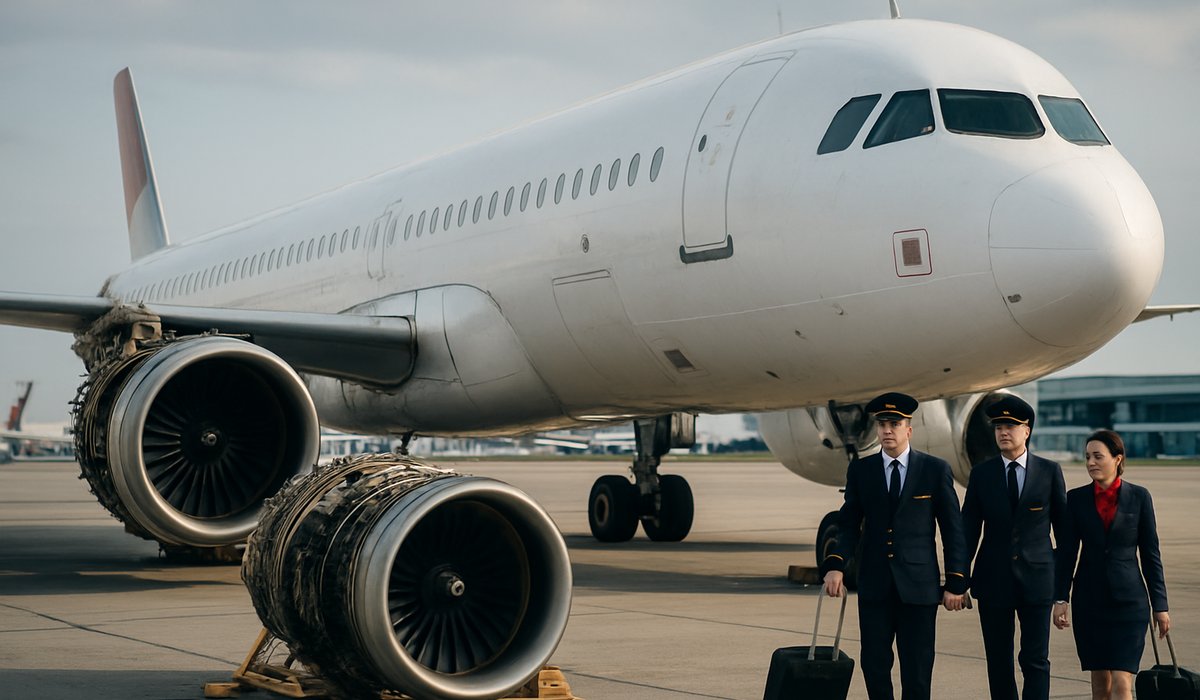
Image generated by AI
Airlines Cannibalize Brand-New Airbus A320neo Aircraft to Recoup Value From High-Demand Engines
Supply chain crisis forces carriers to dismantle modern jets as Pratt & Whitney engine shortage creates unprecedented market opportunity
The Unprecedented Crisis: When New Aircraft Are Worth More in Parts
The global aviation industry is witnessing an extraordinary phenomenon: airlines are systematically dismantling nearly pristine Airbus A320neo aircraft to extract their Pratt and Whitney geared turbofan (GTF) engines—a decision that underscores the severity of the ongoing powerplant shortage and the dramatic shift in aircraft economics.
The logic is starkly financial. With Pratt & Whitney struggling to meet global demand for its next-generation GTF engines, these high-efficiency components have become so valuable that their resale price now exceeds the operational value of entire aircraft to some carriers. This represents a fundamental rupture in aviation industry norms, where airframes typically retain considerable value even after years of service.
Why Pratt & Whitney Engines Command Premium Prices
The GTF engine technology, engineered specifically for the A320neo family, represents a significant advancement in aviation propulsion. These powerplants deliver improved fuel efficiency, reduced maintenance costs, and lower emissions compared to conventional turbofan engines—making them essential for airlines navigating volatile jet fuel prices and regulatory pressure to decarbonize.
However, Pratt & Whitney has grappled with persistent manufacturing challenges and supply chain complications, creating a bottleneck that has reverberated across the industry. Airlines facing multi-year delays for new aircraft deliveries or replacement engines have found themselves caught between operational necessity and financial pragmatism.
The Ripple Effect on Aviation Economics
This dismantling strategy carries broader implications for aircraft values, spare parts availability, and the global aviation supply chain. As newer-generation jets are stripped for components, the availability of compatible spare engines decreases, potentially exacerbating delivery delays for carriers awaiting aircraft deliveries.
The phenomenon also reflects the turbulence affecting Airbus A320neo program economics, where production schedules face mounting pressure from supply constraints. Airlines holding these aircraft—whether leased or owned—confront difficult decisions about whether retention or liquidation maximizes shareholder value.
Industry Uncertainty Ahead
Aviation analysts view this development as symptomatic of deeper vulnerabilities in aircraft manufacturing resilience. The crisis highlights how critical engine supply has become to fleet planning and how interconnected modern aviation supply chains truly are.
For passengers, the implications may eventually materialize as higher baggage charges and airline fees compensate for the financial losses carriers absorb. Rising aircraft acquisition costs and engine shortages historically correlate with increased ancillary service pricing.
FAQ: Understanding the Airline Engine Shortage
Why are Pratt & Whitney GTF engines in such short supply? Manufacturing defects, supply chain disruptions, and increased global demand have created a multiyear bottleneck for the next-generation powerplants.
How does this shortage affect airline fees and baggage charges? Supply chain pressures increase operating costs, which airlines often recover through increased baggage charges, seat selection fees, and other ancillary revenue streams.
What impact does this have on jet fuel costs and airline pricing? While directly unrelated, both engine shortages and fuel price volatility create cumulative pressure on airline economics, driving overall travel costs upward.
Which airlines are most affected by Pratt & Whitney engine delays? Carriers operating A320neo-family fleets dependent on GTF engines face the most significant supply constraints and operational disruptions.
Is this crisis affecting aircraft delivery schedules globally? Yes—Airbus delivery timelines face compression due to insufficient engine availability, impacting airlines' fleet modernization strategies worldwide.
Related Travel Guides
Flight Delay Compensation Guide 2026
Understanding Airline Route Changes
Airport Security Process Updated (2026)
External Resources
Disclaimer
This article is for informational and educational purposes only. It does not constitute legal, financial, or professional advice. While we strive to provide accurate and up-to-date information, travel policies, regulations, and conditions change rapidly. Always verify information with official sources before making travel decisions. Nomad Lawyer makes no representations about the accuracy, reliability, completeness, or suitability of the information provided. Readers should consult qualified professionals for advice specific to their circumstances. The views expressed in this article are those of the author and do not necessarily reflect the views of Nomad Lawyer.
Preeti Gunjan
Contributor & Community Manager
A passionate traveller and community builder. Preeti helps grow the Nomad Lawyer community, fostering engagement and bringing the reader experience to life.
Learn more about our team →