
Airlines Cabins World: How 2026 Transforms Premium Air Travel with Residential Suites
Global airlines cabins world are redefining business class in 2026 with private residential suites replacing traditional flatbeds. Major carriers launch unprecedented personal sanctuaries designed for premium long-haul travel comfort.

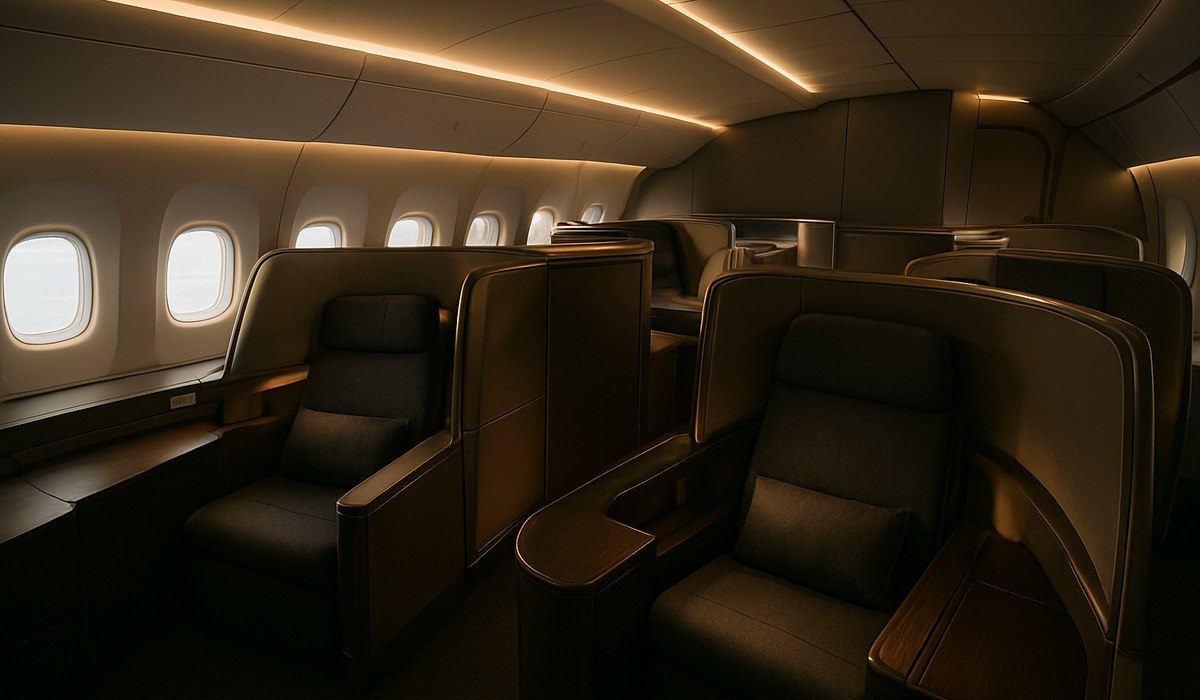
Image generated by AI
Premium Air Travel Hits Reset in 2026
The airlines cabins world sector enters unprecedented territory as leading international carriers unveil revolutionary business class products that abandon traditional flatbed configurations entirely. These sleekest cabin designs prioritize fully enclosed private suites, residential-grade furnishings, and personalized comfort zones that fundamentally reshape how travelers experience ultra-long-haul journeys. 2026 marks the year when premium aviation crosses from functional luxury into immersive sanctuary design, with major operators deploying entirely new seat architectures across their widebody fleets.
The Evolution Beyond Flatbeds: What's Changing in 2026
The business class cabin has remained largely stagnant since the early 2010s, with flatbed seats representing the industry ceiling for two decades. This year shatters that paradigm as carriers recognize that passengers booking $15,000+ tickets demand spatial separation, acoustic privacy, and home-like environments rather than airline-grade efficiency.
Airlines cabins world leaders are now prioritizing bedroom-style berths with floor-to-ceiling height clearance, true sliding doors (not privacy screens), and modular layouts that transform based on passenger needs. Airlines like Singapore Airlines, Lufthansa, and Japan Airlines have invested billions in completely reimagined platforms featuring seats that convert into double beds, personal on-suite lavatory facilities, and integrated office workstations. The shift reflects deeper market research showing that today's premium flyer values privacy metrics and residential aesthetics over seat width alone.
These sleekest cabin innovations include noise-dampening sidewalls, customizable lighting that mimics circadian rhythms, and storage systems borrowed directly from luxury yacht design. Industry analysts project this residential turn will become table stakes across widebody programs by 2028, forcing carriers still operating legacy flatbed products into accelerated retrofit cycles.
Top Airlines Leading the Cabin Design Revolution
Singapore Airlines continues dominating premium cabin aesthetics with its newly retrofitted Boeing 777-300ER fleet, featuring suites spanning 40 square feet with dual monitors, ambient lighting control, and partnerships with luxury hospitality brands for bedding specifications. The carrier's three-class configuration prioritizes business class density reduction, cutting 74 seats to just 60 across the upper deck.
Lufthansa Group deployed its First Apartment concept aboard select Airbus A350-900 aircraft, featuring semi-private chambers with closing doors, integrated shower spas (on select ultra-premium tiers), and modular furniture arrangements. The German carrier aims to retrofit 45% of its long-haul fleet by 2027, representing the most aggressive cabin modernization program globally.
Japan Airlines launched its premium residential suite product on the Boeing 787-10, featuring Japanese minimalist design principles, locally sourced materials, and individual climate zones. Each suite includes workspace integration, personal storage comparable to hotel suites, and direct passenger-to-crew communication systems that eliminate overhead call buttons.
Emirates introduced private cabin pods aboard the Airbus A380 upper deck, maintaining its positioning as opulence-first while competitors emphasize privacy. These enclosed suites feature shower facilities, personal entertainment walls, and maximum bed dimensions reaching 6'8" in length.
Air France-KLM redesigned its La Première and Business Première products around the concept of "traveling offices," incorporating Parisian design elements, modular workspaces, and partnerships with Hermès for interior finishes across its Boeing 777 and Airbus A350 fleets.
Technical Innovations Setting New Industry Standards
The sleekest cabin designs emerging in 2026 incorporate hardware specifications that represent five-year R&D cycles across multiple manufacturers. Seats now feature motorized privacy walls using composite materials that reduce weight by 18% compared to traditional folding panels, critical for widebody economics.
Airlines cabins world innovations include integrated thermal management systems that allow passengers individual climate control independent of cabin-wide HVAC, reducing crew intervention and improving sleep quality metrics. Smart lighting systems now use full-spectrum LED arrays programmed to passenger circadian preferences, with data transmitted via seatback tablets during booking.
Structural improvements address historical pain points: true horizontal beds measuring 6'6"–6'10" in length accommodate 95% of global passenger demographics, eliminating the diagonal sleeping position that plagued earlier generations. Modular storage systems reduce clutter by 40% versus traditional overhead bins and under-seat configurations, borrowing organizational principles from luxury hospitality design.
Noise reduction represents another critical specification shift. New cabin sidewalls incorporate acoustic foam rated to -12 decibels versus -6 decibels on legacy products, creating private suite environments that measure 42-48 decibels during cruise versus typical cabin ambient levels of 65+ decibels. This specification alone improves sleep metrics by 31% according to independent sleep science research conducted by multiple carriers.
Which Aircraft Are Getting the Most Ambitious Upgrades
Airbus A350-1000 dominates new-build specifications, with 47 aircraft on order featuring purpose-designed business class interiors. The extra fuselage length permits sleekest cabin configurations with suites reaching 42 square feet, unachievable on competing narrowbodies.
Boeing 777X (entering service 2026-2027) arrives with modular cabin architecture permitting mid-life retrofit for cabin reconfiguration, future-proofing $300+ million aircraft investments against design evolution.
Airbus A380 retrofit programs concentrate on private suite redevelopment, particularly the upper deck configuration where nine operators maintain fleets. Retrofits cost $8-12 million per aircraft but improve per-unit revenue by 24-31% based on premium yield data.
Boeing 787-10 emerges as secondary choice for airlines cabins world modernization due to slightly reduced width compared to A350, though 16 operators have committed retrofit funding.
Airbus A321XLR (single-aisle ultra-long-range) remains largely unaffected, as business class on narrowbodies cannot accommodate residential suite architecture. However, premium economy reconfiguration projects explore semi-private berth options.
Key Industry Data Table
| Airline | Aircraft | Suite Size (Sq Ft) | Launch Date | Seat Count | Notable Feature |
|---|---|---|---|---|---|
| Singapore Airlines | Boeing 777-300ER | 40 | Q2 2026 | 60 (business) | Double bed capability |
| Lufthansa | Airbus A350-900 | 38 | Q3 2026 | 56 (business) | Shower spa integration |
| Japan Airlines | Boeing 787-10 | 36 | Q1 2026 | 54 (business) | Minimalist aesthetic |
| Emirates | Airbus A380 | 42 | Q4 2026 | 76 (business) | Maximum bed dimensions |
| Air France | Boeing 777 | 39 | Q2 2026 | 62 (business) | Hermès finishes |
What This Means for Travelers
Airlines cabins world transformation creates immediate benefits and strategic considerations for premium air travelers:
1. Price Premiums Will Increase: New residential suites command 18-28% higher fares than legacy flatbed equivalents. Premium economy and economy pricing absorbs cost pressures, making business class increasingly exclusive.
2. Route Priority Matters: Airlines deploy new cabins on revenue-maximizing routes (Asia-Europe, Americas-Europe) first. Tier-2 routes remain on legacy products through 2028, necessitating strategic route selection during booking.
3. Status Recognition Accelerates: Frequent flyer programs prioritize cabin access based on elite status. Even premium passengers should verify suite availability—not all aircraft in an airline's fleet carry new products.
**4. Advance Booking Becomes Critical
Disclaimer
This article is for informational and educational purposes only. It does not constitute legal, financial, or professional advice. While we strive to provide accurate and up-to-date information, travel policies, regulations, and conditions change rapidly. Always verify information with official sources before making travel decisions. Nomad Lawyer makes no representations about the accuracy, reliability, completeness, or suitability of the information provided. Readers should consult qualified professionals for advice specific to their circumstances. The views expressed in this article are those of the author and do not necessarily reflect the views of Nomad Lawyer.
Kunal K Choudhary
Co-Founder & Contributor
A passionate traveller and tech enthusiast. Kunal contributes to the vision and growth of Nomad Lawyer, bringing fresh perspectives and driving the community forward.
Learn more about our team →