
Aircraft Engine Efficiency: Modern Jets Use 25% Less Fuel Than Legacy Models
Aircraft engine efficiency has revolutionized aviation in 2026. Modern jet engines consume 25% less fuel than legacy models, making engine upgrades a smarter investment than purchasing new aircraft for many airlines.

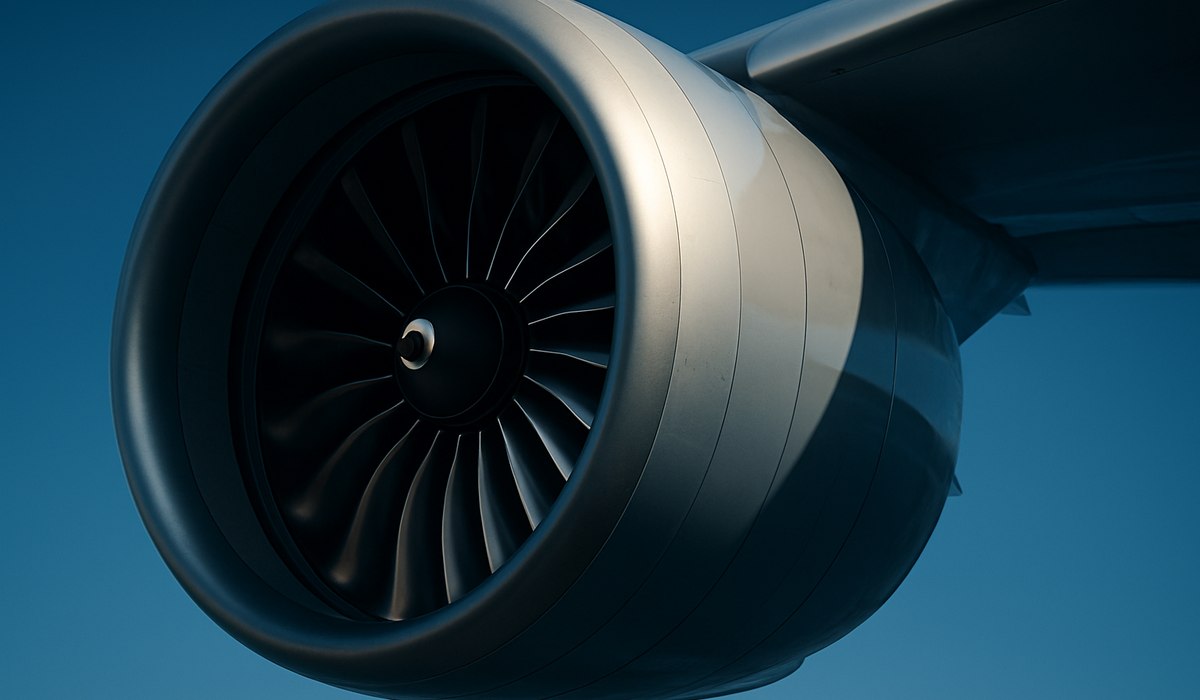
Image generated by AI
Modern Jet Engines Deliver Game-Changing Fuel Savings for Global Aviation
Aircraft engine efficiency has become the primary driver of operational savings across commercial aviation in 2026. While aerodynamic improvements and advanced composite materials contribute to fuel economy, the jet engine itself remains the most critical factor determining how much fuel an aircraft consumes per flight. Today's newest turbofan engines achieve roughly 25% better fuel efficiency compared to models from the 1990s and early 2000s—a gap so significant that retrofitting older aircraft with modern powerplants often makes more financial sense than purchasing entirely new aircraft. This technological revolution has fundamentally shifted how airlines approach fleet planning and sustainability goals.
The aviation industry's priorities have transformed dramatically since the Jet Age began. Early generations of commercial jet engines prioritized thrust and power above all else, treating fuel efficiency as a secondary concern. Contemporary engine design flips this equation entirely. Manufacturers now engineer every component—from the fan blade to the combustor to the turbine stages—with fuel consumption and environmental impact as primary objectives. This philosophical shift reflects decades of innovation, rising fuel costs, and intensifying environmental regulations that now shape aircraft purchasing decisions worldwide.
The Evolution of Aircraft Engine Efficiency Standards
The transformation in aircraft engine efficiency spans multiple generations of technological advancement. The CFM56 turbofan, introduced in the 1970s and still powering thousands of aircraft globally, established baseline efficiency for wide-body jets. Those engines deliver approximately 12-15 liters of fuel per 100 kilometers of flight, considered respectable for their era. Fast-forward to 2026, and the GE9X—the world's largest and most powerful commercial turbofan—achieves fuel burns under 9 liters per 100 kilometers while generating substantially more thrust.
The Rolls-Royce Trent 1000, standard equipment on Boeing 787 Dreamliners, and the newer CFM RISE program engines represent the current frontier of efficiency gains. These powerplants incorporate advanced materials including ceramic matrix composites that withstand extreme temperatures while reducing weight. Variable compression systems, improved combustion technology, and AI-optimized blade geometries work together to maximize energy extraction from every unit of jet fuel. Airlines operating these newer engines report fuel cost reductions of 20-30% compared to equivalent routes flown on aging aircraft.
For more detailed technical specifications, aviation professionals consult the FAA's Engine Certification Database.
How Modern Engines Compare to Legacy Models: A Detailed Analysis
Direct comparison between engine generations reveals why aircraft engine efficiency improvements drive purchasing decisions. Consider a Boeing 777 powered by General Electric engines from 1995 versus a 2026-era model equipped with the GE9X. The older aircraft burns roughly 4.5 to 5.2 metric tons of jet fuel per hour in cruise conditions. The newer variant, despite carrying similar payload, consumes only 3.4 to 3.8 metric tons per hour—a 20-30% reduction.
The CFM56 family illustrates this progression even more starkly. Early variants installed on Airbus A320s in the 1980s achieved 12-hour operational lives before requiring maintenance. Modern CFM56-7B engines on 2020s-vintage A320s extend maintenance intervals to 15-18 hours while burning 8% less fuel per kilometer. The forthcoming CFM LEAP engine, already in service on newer A320neo and Boeing 737 MAX aircraft, achieves an additional 16% efficiency gain over CFM56-7B models.
Engine manufacturers have achieved these improvements through iterative refinement rather than revolutionary breakthroughs. Larger fan diameters draw more air through the engine with lower pressure ratios, reducing fuel consumption. Higher turbine temperatures—now exceeding 1,500 degrees Celsius—extract more useful work from combustion energy. Geared turbofan architectures allow the massive fan to rotate at optimal speeds independently from core compressor and turbine sections.
Explore current flight performance data through FlightAware's Real-Time Dashboard.
Real-World Fuel Savings and Environmental Impact for Airlines and Passengers
Airlines operating fleets with modern engines report substantial operational advantages beyond simple fuel cost reductions. A major international carrier transitioning from CFM56-equipped Airbus A320s to CFM LEAP-equipped A320neo aircraft saves approximately €2.1 million annually per aircraft through reduced fuel consumption alone. Multiply that across a fleet of 40-50 aircraft, and the operational savings reach €80-100 million yearly—funds that airlines increasingly redirect toward passenger comfort and route expansion.
Environmental benefits parallel the economic gains. Each liter of jet fuel burned produces approximately 3.16 kilograms of carbon dioxide. A fleet-wide upgrade from legacy CFM56 engines to modern alternatives reduces annual emissions by thousands of metric tons. For airlines carrying 50 million passengers annually, this translates to 180,000-240,000 metric tons of CO2 prevented per year. Within the context of international aviation decarbonization targets, this environmental impact ranks as significant.
Passengers benefit indirectly through lower ticket prices on competitive routes where carriers have modernized their fleets. Airlines also experience reduced maintenance costs, lower noise pollution at departure and arrival airports, and improved on-time performance—newer engines suffer fewer mechanical delays. Several international carriers have already announced that ticket surcharges covering fuel costs have decreased year-over-year, partially attributable to fleet modernization initiatives centered on installing more efficient engines.
The U.S. Department of Transportation's Aviation Consumer Protection Division monitors how fuel cost savings translate to consumer pricing.
The Future of Engine Innovation and Hybrid-Electric Propulsion
The next frontier in aircraft engine efficiency extends beyond traditional turbofan refinement toward hybrid-electric and fully electric propulsion systems. Manufacturers including General Electric, Rolls-Royce, and CFM are developing engines incorporating electric motor-generators that augment conventional combustion cycles. These hybrid systems promise 30-50% additional fuel efficiency gains over current-generation engines while maintaining compatibility with existing aircraft platforms.
Sustainable aviation fuel (SAF) compatibility has become standard in modern engine development. SAF reduces lifecycle carbon emissions by 50-80% compared to conventional jet fuel while operating in contemporary engines without modification. Several airlines flying on GE9X and Trent 1000-powered aircraft already blend 10-50% SAF into fuel purchases. As SAF production scales from specialized refineries to mainstream petrochemical operations, the combination of efficient modern engines and low-carbon fuel represents a realistic pathway to 50% aviation emissions reductions by 2050.
Material science breakthroughs will further enhance efficiency. Ceramic matrix composites currently used in high-temperature zones of modern engines will eventually expand throughout entire engine architectures, reducing weight and enabling higher operating temperatures. Three-dimensional printing technology allows manufacturers to produce complex internal cooling passages and lightweight blade structures impossible with conventional manufacturing—innovations already incorporated into engines entering service in 2026 and beyond.
| Metric | CFM56 (1980s) | Trent 1000 (2010s) | GE9X (2020s) |
|---|---|---|---|
| Fuel Burn (kg/hour) | 5,100 | 3,800 | 3,200 |
| Efficiency vs. CFM56 | Baseline | +25% | +37% |
| Overall Pressure Ratio | 30:1 | 42:1 | 50:1 |
| Fan Diameter (meters) | 1.7 | 2.4 | 3.4 |
| Typical Aircraft | A320, B757 | B787, A350 | B777X |
Disclaimer
This article is for informational and educational purposes only. It does not constitute legal, financial, or professional advice. While we strive to provide accurate and up-to-date information, travel policies, regulations, and conditions change rapidly. Always verify information with official sources before making travel decisions. Nomad Lawyer makes no representations about the accuracy, reliability, completeness, or suitability of the information provided. Readers should consult qualified professionals for advice specific to their circumstances. The views expressed in this article are those of the author and do not necessarily reflect the views of Nomad Lawyer.
Preeti Gunjan
Contributor & Community Manager
A passionate traveller and community builder. Preeti helps grow the Nomad Lawyer community, fostering engagement and bringing the reader experience to life.
Learn more about our team →