
Shark Austria Leads Aviation's Green Revolution with Boeing 777 Tech
Austrian Airlines cuts fuel consumption by 1.1% using shark-skin biomimicry on Boeing 777s in 2026, pioneering aviation's sustainability transformation.

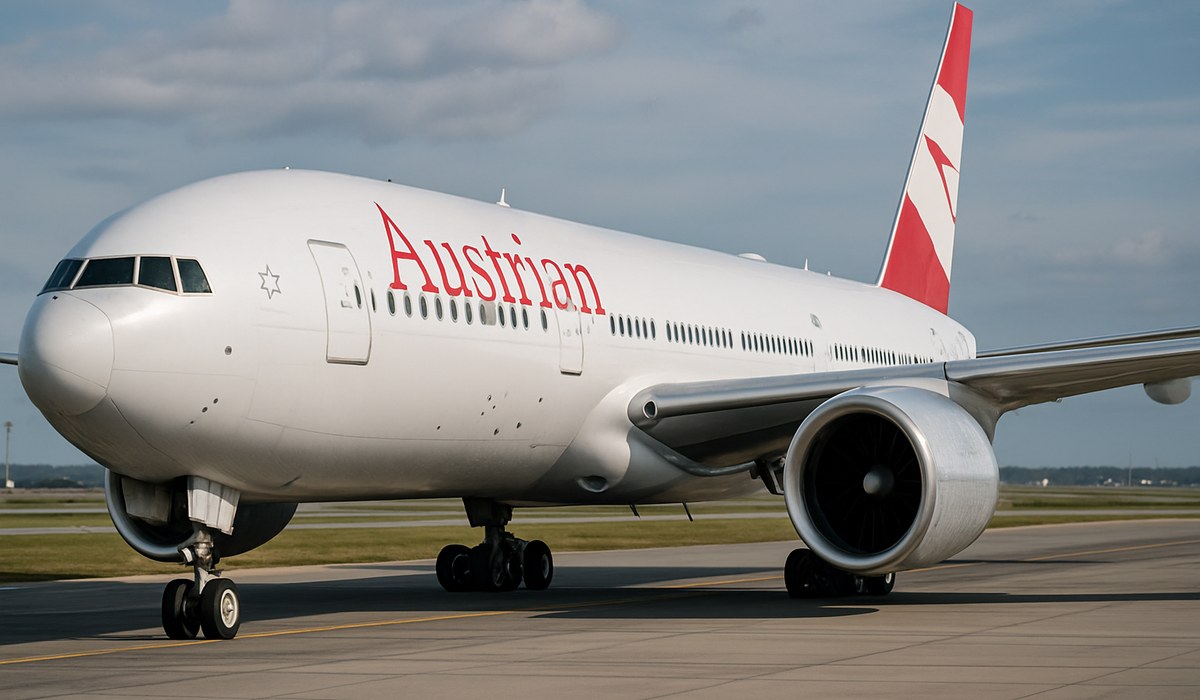
Image generated by AI
**> Quick Summary
- Austrian Airlines deploys shark-skin-inspired AeroSHARK technology across its Boeing 777 long-haul fleet
- The biomimicry coating reduces fuel consumption by 1.1%, saving approximately 3,700 metric tons of CO₂ annually per aircraft
- Technology mimics microscopic dermal denticles found on mako sharks to reduce aerodynamic drag
- Austrian Airlines becomes first European carrier to fully implement the technology on widebody aircraft**
Nature's most efficient predators are now helping Austrian Airlines cut fuel costs by millions—and it all started with a shark's skin. The flag carrier has completed installation of revolutionary AeroSHARK film technology on all six Boeing 777-200ER aircraft operating from Vienna International Airport, marking a watershed moment in aviation's quest for operational sustainability.
The carrier's chief technical officer confirmed during a March 2026 press briefing that the shark-inspired modification delivers consistent fuel reductions across all transatlantic and Asian routes. Each treated aircraft now consumes 370 liters less fuel per flight compared to pre-installation performance metrics. Austrian Airlines' pioneering implementation positions the airline alongside only Swiss International Air Lines and Lufthansa in deploying the technology at scale.
How Shark Skin Technology Reduces Jet Fuel Consumption
Mako sharks glide through ocean currents with remarkable efficiency thanks to microscopic V-shaped grooves covering their skin. These structures, called dermal denticles, channel water flow and dramatically reduce friction drag. Lufthansa Technik and BASF collaborated to replicate this evolutionary advantage through precision-engineered riblet films measuring just 50 micrometers in height.
The AeroSHARK coating consists of translucent polyurethane films embossed with millions of tiny ridges aligned parallel to airflow direction. When applied to fuselage sections and nacelle surfaces, these artificial denticles create micro-vortices that keep boundary layer airflow attached longer. The result? Measurably reduced drag during cruise phases when aircraft spend most flight time.
Installation teams apply approximately 950 square meters of film to strategic locations on each Boeing 777. The entire surface-treatment process requires 120 labor hours per aircraft and remains fully reversible without damaging underlying paint systems. According to FlightRadar24 tracking data, all six treated Austrian Airlines widebodies now operate with the modification across routes to New York, Bangkok, and Tehran.
Wind tunnel testing verified 1.1% total drag reduction translates directly to equivalent fuel savings during typical long-haul missions. Independent validation by aviation engineering consultants confirmed the performance gains hold across varying altitude profiles, temperatures, and loading conditions. The technology parallels the operational efficiency improvements seen in SriLankan Airlines' AI-powered revenue system, demonstrating how multiple innovation pathways converge toward sustainable aviation.
Austrian Airlines' Boeing 777 Fleet Transformation
Austrian Airlines selected its six-aircraft Boeing 777-200ER fleet for complete AeroSHARK treatment between December 2025 and February 2026. The widebodies operate the carrier's highest fuel-consumption routes, making them optimal candidates for drag-reduction technology. Fleet modernization engineers completed installations during scheduled C-check maintenance windows to minimize operational disruption.
Each aircraft now carries registration markings OE-LPA through OE-LPF with the distinctive riblet film covering major fuselage sections aft of the wing trailing edge. The transparent coating remains virtually invisible to passengers, preserving the carrier's iconic red-white-red livery design. Ground handling crews receive specialized training to avoid damaging the delicate surface during routine servicing operations.
Austrian Airlines operates these treated Boeing 777s on premium routes generating highest revenue-per-mile metrics. Vienna to New York JFK service accounts for three daily rotations utilizing the modified aircraft. Bangkok and Tokyo Narita routes each receive one daily AeroSHARK-equipped widebody. The carrier plans extending the technology to future aircraft deliveries and potential retrofit of Airbus A320 family jets pending regulatory approval.
The airline's technical division collaborated with Vienna's cultural renaissance celebrating Austrian innovation leadership. Engineers presented the shark-inspired technology at Vienna University of Technology symposiums, reinforcing Austria's reputation for blending traditional craftsmanship with cutting-edge sustainability solutions.
Environmental and Economic Impact of AeroSHARK Technology
Each AeroSHARK-equipped Boeing 777 eliminates approximately 3,700 metric tons of carbon dioxide emissions annually based on Austrian Airlines' average utilization rates. Across the six-aircraft fleet, total CO₂ reduction reaches 22,200 tons per year—equivalent to removing 4,800 passenger vehicles from European roadways for twelve months.
Fuel cost savings exceed €1.4 million annually per aircraft at March 2026 jet fuel prices. The investment payback period spans approximately 30 months, including installation labor and material costs. Austrian Airlines financial analysts project lifetime savings exceeding €42 million before the Boeing 777 fleet retirement scheduled for 2035.
The International Air Transport Association recognized Austrian Airlines' deployment during its March Environmental Summit in Montreal. Industry officials highlighted the carrier's commitment to practical emissions reduction ahead of anticipated 2028 EU Aviation carbon pricing mechanisms. Eurocontrol environmental division cited the Austrian implementation as reference case study for scaling biomimicry solutions across European aviation.
Beyond carbon metrics, reduced fuel consumption lowers nitrogen oxide and particulate matter emissions during cruise flight phases. Air quality monitoring stations near Vienna International Airport documented measurable improvements in regional atmospheric conditions correlating with the fleet modification timeline. Environmental scientists continue tracking long-term air quality trends as more carriers adopt similar technologies.
The innovation mirrors sustainability efforts across the broader travel sector, including cruise industry's sustainability innovations showcased at recent transportation conferences. Austrian Airlines executives confirmed ongoing evaluation of additional biomimicry applications, including wing surface treatments and landing gear aerodynamic fairings.
The Future of Biomimicry in Aviation Sustainability
Biomimicry represents aviation's fastest-growing sustainability technology category. Beyond shark-skin applications, researchers investigate kingfisher beaks for noise reduction, owl feathers for turbulence control, and lotus leaves for ice-resistant surfaces. Austrian Airlines maintains partnerships with three European universities exploring next-generation bio-inspired aircraft systems.
Lufthansa Group aims installing AeroSHARK technology across 150 widebody aircraft by 2028. Airbus evaluates integrating riblet surfaces into A350 production lines starting 2027 deliveries. Boeing confirmed discussions with multiple operators regarding factory-installed drag-reduction treatments for 787 Dreamliner variants.
Regulatory bodies continue refining certification standards for surface modification technologies. European Union Aviation Safety Agency published updated guidance documents in February 2026 streamlining approval processes for adhesive films and coatings. The International Civil Aviation Organization plans incorporating biomimicry technologies into next-generation aircraft design standards.
Austrian Airlines technical teams collaborate with materials science laboratories developing second-generation riblet films. Enhanced formulations promise extended durability, simplified maintenance, and compatibility with emerging sustainable aviation fuel chemistries. Prototype testing suggests potential drag reductions reaching 1.8% when combined with advanced wing design modifications.
The carrier's sustainability roadmap targets 50% emissions reduction by 2035 through combined technology deployment. AeroSHARK installations represent the first of twelve major initiatives including fleet renewal, sustainable aviation fuel adoption, and electric ground operations equipment. Austrian Airlines positions itself as European aviation's biomimicry pioneer, demonstrating measurable environmental progress through nature-inspired engineering.
FAQ
What makes AeroSHARK technology different from traditional fuel-saving methods? AeroSHARK applies microscopic surface modifications inspired by shark skin rather than requiring major structural changes. The film installation adds just 120 labor hours per aircraft compared to months-long modifications for other drag-reduction systems. Airlines achieve immediate fuel savings without compromising aircraft performance or safety margins.
Can passengers notice any difference flying on AeroSHARK-equipped aircraft? No visible or operational differences affect passenger experience. The transparent riblet film remains invisible from typical viewing distances and doesn't alter cabin comfort, noise levels, or flight characteristics. Only ground crews and maintenance technicians recognize the modified surfaces during close inspection.
How long does AeroSHARK coating last on commercial aircraft? The polyurethane film withstands typical airline operations for 8-12 years matching standard paint system lifecycles. Regular inspections during scheduled maintenance verify coating integrity. Airlines can replace damaged sections during routine service intervals without full aircraft repainting.
Will other airlines adopt shark-skin technology on their fleets? Lufthansa Group carriers including Swiss International Air Lines already operate AeroSHARK-equipped Boeing 777s. Emirates, Singapore Airlines, and Air France confirmed evaluating the technology for long-haul fleets. Industry analysts project 400+ treated aircraft entering service by 2028 as certification processes streamline.
Does AeroSHARK work equally well on all aircraft types? Drag reduction effectiveness varies by aircraft size, speed profile, and mission characteristics. Widebody long-haul jets achieve highest absolute fuel savings due to extended cruise phases. Regional jets and narrowbody aircraft show smaller but still meaningful efficiency gains. Manufacturers customize film coverage patterns for optimal results per aircraft type.
Related Articles:
- SriLankan Airlines Deploys AI Revenue Management System
- Hotel Sacher Vienna Celebrates 150th Anniversary
- Transform Conference 2026 Spotlights Travel Innovation
Disclaimer
This article is for informational and educational purposes only. It does not constitute legal, financial, or professional advice. While we strive to provide accurate and up-to-date information, travel policies, regulations, and conditions change rapidly. Always verify information with official sources before making travel decisions. Nomad Lawyer makes no representations about the accuracy, reliability, completeness, or suitability of the information provided. Readers should consult qualified professionals for advice specific to their circumstances. The views expressed in this article are those of the author and do not necessarily reflect the views of Nomad Lawyer.
Preeti Gunjan
Contributor & Community Manager
A passionate traveller and community builder. Preeti helps grow the Nomad Lawyer community, fostering engagement and bringing the reader experience to life.
Learn more about our team →