
Airbus 2020 Million: A380 Superjumbo's Collapse From $445M to Scrap
The Airbus A380 superjumbo's resale value plummeted by 2026, with landing gear worth more than entire aircraft. Airlines face massive depreciation losses on double-decker jets once priced at $445 million.

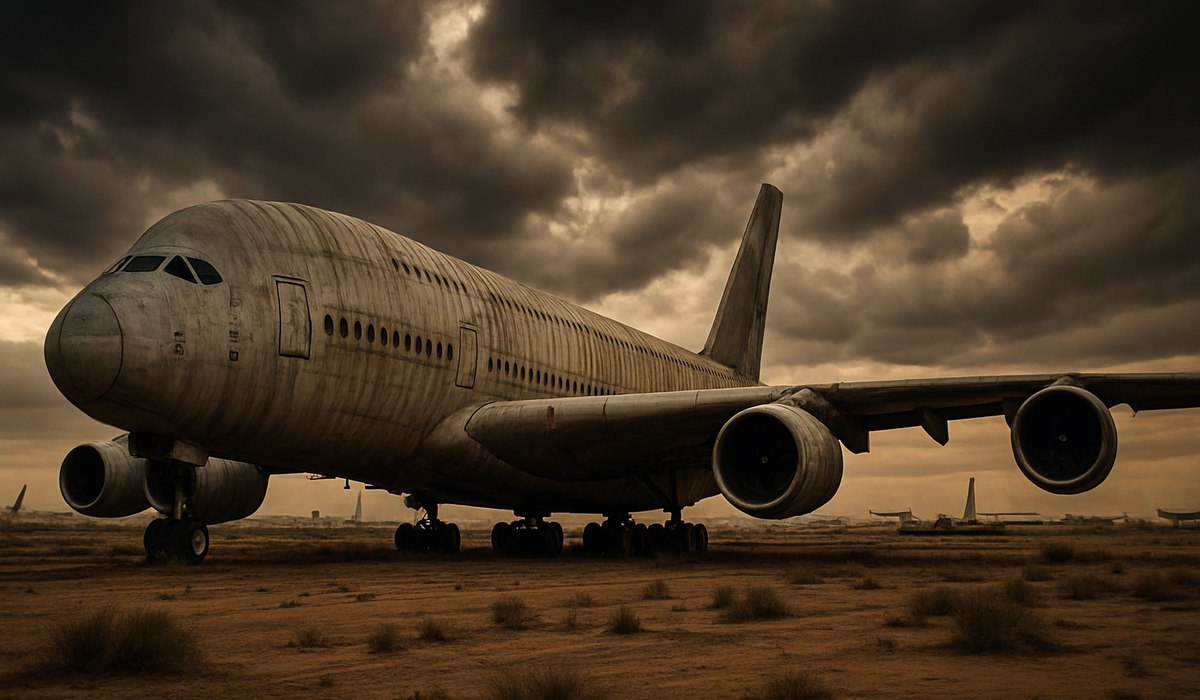
Image generated by AI
The A380's Catastrophic Market Collapse: From Aviation Icon to Worthless Fleet
The Airbus A380 superjumbo, once the crown jewel of commercial aviation, experienced an unprecedented financial meltdown. What began as a $445 million game-changing investment transformed into an aviation industry cautionary tale. By 2020, the aircraft's resale value had deteriorated so severely that individual landing gear components exceeded the entire airframe's worth—a stunning reversal that sent shockwaves through global airlines and fundamentally reshaped long-haul travel economics.
This dramatic collapse affected major carriers worldwide, including Emirates, Singapore Airlines, and Air France, each holding multibillion-dollar fleets of aging superjumbos with rapidly evaporating book values. The crisis exposed fundamental flaws in demand forecasting, operational efficiency, and passenger preference for smaller, more fuel-efficient aircraft.
The A380's Failed Promise: From Aviation Marvel to Scrap Value
The Airbus A380 debuted in 2007 with revolutionary aspirations. Airlines envisioned a future where massive double-decker aircraft would carry over 500 passengers on transcontinental routes, revolutionizing long-haul capacity and profitability. The superjumbo represented peak manufacturing ambition—advanced avionics, twin engines, and architectural innovation compressed into a 570-ton behemoth.
Yet market realities diverged sharply from engineering dreams. Fuel efficiency became paramount after 2008's global financial crisis. Newer twin-engine jets like the Boeing 787 and Airbus A350 offered comparable range with 40% lower operating costs. Airlines discovered they could operate two smaller aircraft more profitably than one massive plane. Airport congestion, maintenance complexity, and limited route profitability created a perfect storm.
By 2015, Airbus acknowledged lukewarm demand. Production rates slowed. By 2020, the secondary market for used A380s had essentially collapsed. Airlines desperate for liquidity discovered virtually no buyers. The aircraft's specialized infrastructure requirements—reinforced runways, unique ground support equipment, gate compatibility—further restricted resale opportunities across the global aviation network.
How a $445 Million Aircraft Lost Its Worth Entirely
The financial mathematics proved brutal. Initial A380 development consumed over $25 billion in Airbus investment. Individual aircraft carried sticker prices approaching $445 million in 2010. By 2020, used A380s fetched scrap metal valuations—some estimates placed residual value below $10 million for intact airframes.
This extraordinary depreciation reflected multiple converging factors. Passenger preference shifted decisively toward direct flights on smaller, more efficient aircraft. Point-to-point routing replaced hub-and-spoke models. COVID-19 pandemic disruptions in 2020 accelerated the timeline, as airlines mothballed older aircraft and defaulted on new orders.
The aerospace supply chain partially explains the landing gear paradox. Landing gear systems for superjumbos cost $15-20 million as new components. Used landing gear retained value because compatibility with other heavy aircraft and legitimate aftermarket demand persisted. Complete aircraft, by contrast, had zero buyers—making individual components worth more than the assembly containing them.
Landing Gear Worth More Than the Plane: The Bizarre Valuation Paradox
This counterintuitive scenario illustrates economics at extremes. A complete A380 airframe with zero acquisition demand possesses negative value—airlines must pay to dismantle and recycle it. Landing gear, conversely, represents transferable value across multiple aircraft platforms through aerospace recyclers and component brokers.
Examine the math directly. A single landing gear assembly from a retired A380 might sell for $18 million in the aftermarket. Four landing gear sets total $72 million in theoretical value. The complete aircraft—airframe, fuselage, wings, engines, avionics, interior—sold for less because no airline would operate it at any price point. The aircraft became a burden requiring expensive decommissioning, storage, and environmental remediation.
This phenomenon created peculiar incentives. Some operators dismantled A380s specifically for component resale. FlightAware tracking showed increasing numbers of A380s repositioned to aircraft boneyards in the Middle East and Asia-Pacific, where recycling operations could extract maximum component value efficiently.
What This Means for Airlines and Aviation's Future Direction
The A380 collapse carries profound implications for aviation economics and traveler experience. Airlines holding aging A380 fleets absorbed substantial financial write-downs. Emirates, the world's largest A380 operator with over 100 aircraft, faced mounting pressure to justify the investment against newer, more economical alternatives.
For passengers, the A380 retirement trend means fewer ultra-high-capacity flights on premium long-haul routes. Airlines increasingly deploy newer twin-aisle jets offering superior fuel efficiency, lower noise profiles, and enhanced passenger amenities per seat. The disappearance of superjumbo service from major routes actually benefits individual travelers through premium cabin availability and more frequent departure options on diverse aircraft types.
The regulatory landscape shifted accordingly. The FAA and international aviation authorities adapted certification standards, infrastructure requirements, and operational procedures as A380 fleets contracted. Airports worldwide could reduce specialized maintenance facilities previously required exclusively for superjumbo support.
For aviation investors and industry analysts, the A380 saga demonstrates how technological capability alone cannot guarantee commercial success. Market forecasting requires deep understanding of evolving passenger preferences, fuel economics, and operational flexibility. Manufacturers learned critical lessons about diversifying platform portfolios rather than betting massive capital on singular revolutionary designs.
Traveler Action Checklist: How to Navigate the Changing Long-Haul Landscape
As superjumbo retirement accelerates, travelers should understand available options and plan strategically:
-
Book A380 experiences while available – Airlines like Emirates and Singapore Airlines still operate limited A380 routes; reserved premium cabins offer unique spaciousness before retirement.
-
Expect cabin reconfiguration – Airlines replacing A380s with A350 or 787 aircraft may alter seating configurations, business class layouts, and onboard amenities; verify cabin specs before booking.
-
Monitor route announcements – Check your preferred airlines' fleet deployment plans on their official websites; A380 routes consolidate onto newer aircraft with different schedules.
-
Consider alternative airports – As superjumbo networks contract, some regional hubs may lose daily A380 service; connecting through primary hubs might become necessary.
-
Evaluate frequent flyer redemptions – Superjumbo business class awards become harder to book; use points strategically before availability disappears entirely.
-
Research aircraft specifications – Use FlightAware to identify which aircraft operate your preferred routes; compare cabin configurations across different aircraft types.
-
File complaints for service disruptions – If flight cancellations affect your itinerary during A380 retirements, document issues and file claims through the US DOT consumer portal for potential compensation.
Key Data: A380 Market Collapse By Numbers
| Metric | 2010 Value | 2020 Value | Change |
|---|---|---|---|
| New A380 Price | $445.6 million | N/A (production ceased) | -100% |
| Used A380 Resale Value | $200-250 million | <$10 million | -95%+ |
| A380 Landing Gear Value | $18 million | $18-20 million | +10% |
| Annual Production Rate | 45 aircraft | 0 aircraft | -100% |
| Emirates A380 Fleet Size |
Disclaimer
This article is for informational and educational purposes only. It does not constitute legal, financial, or professional advice. While we strive to provide accurate and up-to-date information, travel policies, regulations, and conditions change rapidly. Always verify information with official sources before making travel decisions. Nomad Lawyer makes no representations about the accuracy, reliability, completeness, or suitability of the information provided. Readers should consult qualified professionals for advice specific to their circumstances. The views expressed in this article are those of the author and do not necessarily reflect the views of Nomad Lawyer.
Raushan Kumar
Founder & Lead Developer
Full-stack developer with 11+ years of experience and a passionate traveller. Raushan built Nomad Lawyer from the ground up with a vision to create the best travel and law experience on the web.
Learn more about our team →