
Air India Express Flight IX 415 Returns to Kochi After Engine Issue

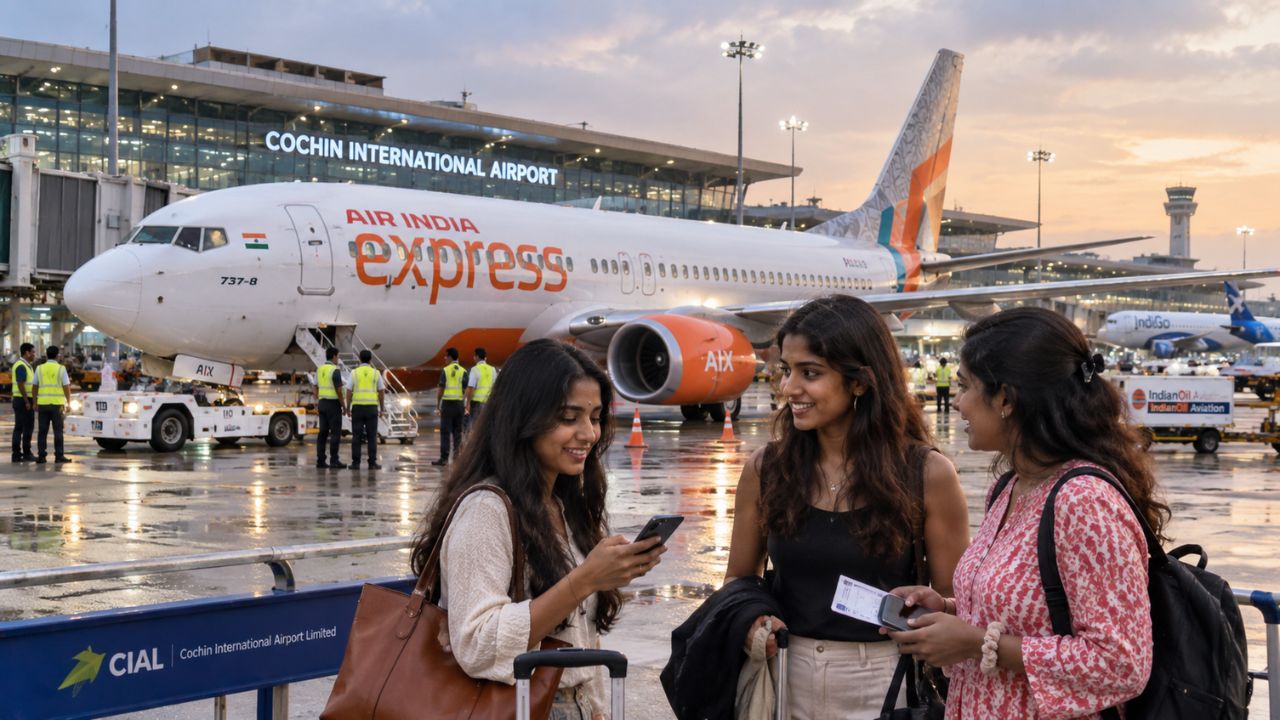
Operating an international passenger service from Kochi to Abu Dhabi on September 7, 2026, Air India Express flight IX 415 executed a controlled precautionary turnback and single-engine landing at Cochin International Airport after flight deck sensors alerted pilots to a rapid loss of oil quantity in its number one engine. Cruising at 36,000 feet approximately 50 minutes into the journey, the flight crew completed non-normal checklist protocols, shut down the affected powerplant mid-flight, and guided the Boeing 737 to a smooth touchdown with zero casualties among passengers or crew.
The incident highlights the rigorous fail-safe systems and procedural disciplines governing commercial airline operations along the heavy Gulf-bound expatriate corridors. When cockpit monitoring systems flagged oil pressure entering the caution band, the pilots opted against continuing the Arabian Sea oceanic crossing to the United Arab Emirates, prioritizing passenger welfare by returning directly to Kochi’s well-equipped ground maintenance hub.
The Local Trend Revealed: Managing In-Flight Powerplant Anomalies
The disciplined execution of flight IX 415 illustrates standard airline operating procedures when managing high-altitude technical events:
- Flight Departure and Initial Anomaly: Operating a Boeing 737 narrow-body aircraft, Air India Express flight IX 415 departed Cochin International Airport (COK) bound for Abu Dhabi International Airport (AUH). As the jet reached its planned cruising altitude of approximately 36,000 feet, roughly 50 minutes after departure, the flight crew identified a steep drop in Engine 1 oil volume.
- Precautionary Air Turnback Decision: Facing worsening oil pressure indicators, the flight crew contacted air traffic control to report the situation and request clearance to reverse course. Avoiding a trans-oceanic crossing on compromised powerplant parameters, the captain initiated a turnback toward Kerala.
- In-Flight Engine Shutdown: As oil parameters fluctuated and crossed manufacturer warning thresholds, the pilots followed standard Boeing Non-Normal Checklist procedures and completed a controlled in-flight shutdown of Engine 1 to prevent mechanical friction damage.
- Safe Single-Engine Recovery: Commercial twin-engine aircraft like the Boeing 737 are fully certified under international civil aviation regulations to fly, descend, and land safely on a single operating powerplant. The aircraft completed an uneventful touchdown at Cochin International Airport, where ground support units escorted the jet to the terminal gate for passenger disembarkation.
| Flight Event Matrix | Incident Record & Technical Parameters |
|---|---|
| Operating Carrier | Air India Express |
| Flight Number | IX 415 |
| Aircraft Model | Boeing 737 |
| Origin & Destination | Cochin International Airport (COK) to Abu Dhabi (AUH) |
| Cruising Altitude | Approximately 36,000 feet |
| Elapsed Flight Time | Approximately 50 minutes from departure |
| Nature of Defect | Rapid decrease in Engine 1 oil quantity and pressure |
| Operational Action | Controlled airborne shutdown of Engine 1 and airport turnback |
| Casualties & Damage | Zero injuries; aircraft parked for regulatory technical probe |
Following the landing, the aircraft was temporarily removed from commercial rotation to undergo detailed mechanical disassembly, oil filtration testing, and data recorder inspection overseen by airline maintenance engineers and the Directorate General of Civil Aviation (DGCA).
Cultural & Environmental Value: Sustaining Expatriate Lifelines and Green Gateways
The Kochi–Gulf air bridge represents a cultural and economic pillar linking Kerala to the wider Middle East:
- Connecting the Pravasi Diaspora: Hundreds of thousands of Non-Resident Keralites (Pravasis) depend on direct Gulf flights from Kochi, Kozhikode, and Thiruvananthapuram for family reunions, trade, and remittances. Reliable flight safety oversight ensures continuity for diaspora families whose livelihoods depend on routine transatlantic connections.
- Pioneering Solar-Powered Aviation Infrastructure: Cochin International Airport Limited (CIAL) stands as the world's first fully solar-powered airport, recognized by the United Nations with the "Champions of the Earth" award. The facility generates surplus clean electricity through vast solar farms, combining heavy international air operations with zero-carbon ground terminal power.
- Showcasing Kerala Heritage: Terminal 3 at CIAL features traditional Kerala architectural elements, incorporating wooden Charupadi railings, brass lamps, and murals that welcome returning residents and international travelers arriving to explore Kerala’s heritage waterways and spice hills.
Visitor Insider Tips: Navigating Cochin Airport and Flight Irregularities
- Know Your DGCA Passenger Rights: Under the DGCA Passenger Charter, travelers experiencing air turnbacks or significant mechanical cancellations are entitled to complimentary refreshments, meals, and alternative rebooking on the next available flight to their destination, or a full refund without penalty fees.
- Airport Culinary Delicacies: If an unexpected delay keeps you at CIAL Terminal 3, head to the domestic and international departures food courts to taste authentic Malabar cuisine: order flaky Kerala parottas paired with aromatic vegetable stew or pepper chicken, accompanied by hot steamed Pazham Pori (sweet banana fritters).
- Terminal Transit and Rest Lounges: Cochin Airport’s international departures area offers comfortable premium transit lounges and dedicated quiet zones equipped with charging stations, making extended mechanical turnarounds manageable.
- Exploring Nearby Fort Kochi on Long Layovers: For passengers reassigned to flights departing the following day, pre-paid taxis outside the arrivals hall can reach historic Fort Kochi in roughly an hour. Visit the iconic 14th-century Chinese fishing nets (Cheena Vala), explore Dutch colonial architecture, or attend an authentic evening Kathakali classical dance recital.
- Luggage Collection Protocols: During precautionary engine turnbacks, hold baggage is typically unloaded and transferred to replacement aircraft. Keep vital medications, work laptops, power banks, and passport documents in your carry-on cabin baggage at all times.
Aviation Outlook for South Asian Corridors
The safe recovery of flight IX 415 underscores the effectiveness of pilot training regimens and modern cockpit telemetry in preventing technical anomalies from escalating. As Indian aviation regulators intensify oversight across high-frequency regional corridors, robust engineering audits and prompt in-flight decision-making will remain the defining pillars of passenger confidence.
Related Travel Guides
Disclaimer
This article is for informational and educational purposes only. It does not constitute legal, financial, or professional advice. While we strive to provide accurate and up-to-date information, travel policies, regulations, and conditions change rapidly. Always verify information with official sources before making travel decisions. Nomad Lawyer makes no representations about the accuracy, reliability, completeness, or suitability of the information provided. Readers should consult qualified professionals for advice specific to their circumstances. The views expressed in this article are those of the author and do not necessarily reflect the views of Nomad Lawyer.
Raushan Kumar
Founder & Lead Developer
Full-stack developer with 11+ years of experience and a passionate traveller. Raushan built Nomad Lawyer from the ground up with a vision to create the best travel and law experience on the web.
Learn more about our team →