
Air France and KLM Extend Middle East Flight Suspensions: Dubai, Riyadh, and Dammam Route Impact Through October 31

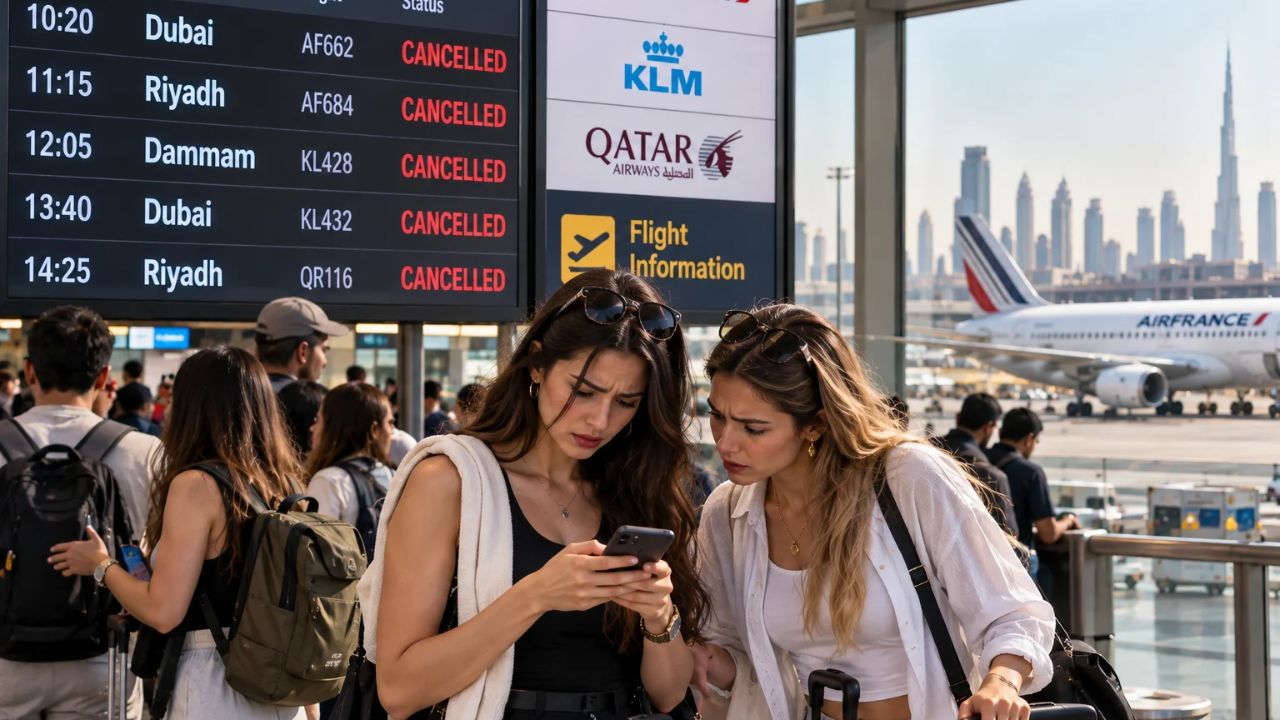
Air France and KLM have extended flight cancellations to Dubai, Riyadh, and Dammam through 31 October 2026 due to regional security assessments.
Rather than grounding long-haul aircraft during Middle Eastern airspace closures, European carriers are quietly shifting widebody fleets thousands of miles eastward toward East and Southeast Asia. That strategic pivot was cemented on 10 October 2026, when KLM Royal Dutch Airlines announced a seven-day extension of its flight freeze to Dubai, Riyadh, and Dammam, pushing its suspension cutoff from 24 October to 31 October 2026. Parallel updates confirm that SkyTeam alliance partner Air France has similarly extended its suspension of scheduled passenger flights between Paris Charles de Gaulle, Dubai, and Riyadh through 31 October inclusive. Together with adjustments made by Qatar Airways on 9 October regarding Riyadh schedules, these prolonged cancellations have disrupted autumn travel itineraries linking Western Europe with the Arabian Gulf.
Autumn Route Freeze: Air France, KLM, and Regional Fleet Realignments
The coordinated retreat by Air France-KLM from central Gulf gateways marks a deepening operational response to evolving security conditions. In its March 2026 schedule updates, Air France had already suspended operations to Tel Aviv and Beirut while redeploying widebody capacity toward high-yield Asian destinations including Bangkok, Singapore, Delhi, and Tokyo. The extension through 31 October reinforces that conservative risk posture across key routes serving the United Arab Emirates and Saudi Arabia.
KLM's formal announcement on 10 October carried direct consequences for passengers connecting through Amsterdam Schiphol. Beyond Dubai and Riyadh, KLM specifically included King Fahd International Airport in Dammam, a major corporate and petrochemical gateway in eastern Saudi Arabia. To manage the customer fallout, the Dutch carrier published a detailed rebooking framework. Travelers with tickets issued for travel between 28 February and 15 November 2026 can rebook without change fees for departures up to 15 December 2026 in the same cabin class, accept a travel voucher valid for one year on partner networks, or request a complete monetary refund.
Meanwhile, regional operators are adjusting their own schedules. On 9 October 2026, Qatar Airways issued a passenger advisory modifying selected services into Riyadh due to operational circumstances, directing customers to monitor digital flight trackers. These revisions follow an earlier update on 5 October, in which Emirates confirmed that its codeshare flights with flydubai serving Tel Aviv remain indefinitely suspended.
Route Disruption Comparison: Carrier Actions Across the Gulf
To assist travelers navigating fractured schedules between Europe and the Middle East, the operational status of major carriers across key destinations is organized below:
| Airline & Parent Group | Affected Corridors | Confirmed Operational Position | Customer Policy & Rebooking Rules |
|---|---|---|---|
| Air France | Paris CDG ↔ Dubai (DXB), Riyadh (RUH) | Suspended through 31 October 2026 inclusive | Rerouting via Asian gateways or full ticket refund |
| KLM Royal Dutch Airlines | Amsterdam (AMS) ↔ Dubai, Riyadh, Dammam | Suspended through 31 October 2026 (extended 7 days) | Free date change for departures by 15 Dec 2026, voucher, or full refund |
| Qatar Airways | Doha (DOH) ↔ Riyadh (RUH) | Operational schedule adjustments announced 9 Oct | Flight-by-flight monitoring via digital channels |
| Emirates / flydubai | Dubai (DXB) ↔ Tel Aviv (TLV) | Specified codeshare services suspended indefinitely | Dedicated partner rebooking or customer travel credits |
| European Passenger Rights | All departures from EU airports | Governed by EU Regulation 261/2004 | Right to reimbursement or rerouting; care duty applies |
Government transport advisories echo this cautious environment. The UK Foreign, Commonwealth & Development Office continues to warn of sudden regional airspace closures and flight diversions across the Gulf, while maintaining specific geographical advisories that warn against all travel within ten kilometers of the Saudi-Yemen border and all but essential travel within ten to eighty kilometers.
What Makes Dubai and the Gulf Different During Autumn
October marks the long-awaited arrival of autumn in the Arabian Peninsula, transforming the region from a scorching desert into a global center for tourism and outdoor life. In the United Arab Emirates, temperatures drop from summer highs exceeding 45°C down to pleasant daytime averages of 30°C to 34°C.
In Dubai, promoted internationally by the Visit Dubai Tourism Board, beach clubs along Jumeirah open their outdoor terraces, dhow cruises fill Dubai Creek, and major cultural centers like the Al Fahidi Historical Neighbourhood welcome walking tours. In Saudi Arabia, the arrival of autumn heralds the start of Riyadh Season, a massive national celebration of concerts, culinary pop-ups, and international sporting events across the capital.
Because both Dubai International Airport (DXB) and Riyadh’s King Khalid International Airport (RUH) function as premier aviation crossroads, flight cancellations here create global ripples. DXB has not closed its doors; dozens of regional and Asian carriers continue normal flight banks. However, the suspension of direct European flag carriers eliminates vital non-stop connections for holidaymakers, expatriate families, and corporate executives who depend on SkyTeam loyalty networks.
Visitor Insider Tips: Navigating Cancellations and European Rerouting
If your upcoming journey involves an Air France or KLM flight into Dubai, Riyadh, or Dammam before 1 November 2026, take proactive steps to safeguard your holiday:
- Choosing Refunds Versus Rerouting: Under European passenger regulations, you have the legal right to choose between a full cash refund and alternative transportation to your final destination at the earliest opportunity. If you must travel on your scheduled dates, request that Air France or KLM endorse your ticket onto operating Middle Eastern carriers (such as Etihad Airways via Abu Dhabi or Turkish Airlines via Istanbul) rather than taking a cash refund, which forces you to buy expensive last-minute replacement tickets.
- Hotel Cancellation Safeguards: In high-demand areas like Downtown Dubai or the Dubai Marina, non-refundable hotel reservations are common. Contact your hotel immediately with your official flight cancellation notice from the airline. Most reputable properties will freeze your deposit or permit penalty-free date adjustments when presented with confirmed flight disruptions.
- Transit and Visa on Arrival Realities: If you are rerouted through an unfamiliar gateway, double-check transit visa regulations. While British, European, and American passport holders generally qualify for a 90-day visa on arrival in the UAE within a 180-day window, requirements for land border crossings or non-airside terminal transfers vary widely.
- Airport Lounge and Ground Holds: If your rescheduled itinerary includes extended layovers at Paris Charles de Gaulle (Terminal 2E) or Amsterdam Schiphol (Lounge 1 or 2), verify whether your ticket qualifies for duty-of-care meal vouchers before leaving the transfer desk. Airlines must provide food and drink proportionate to waiting times during operational schedule suspensions.
- Luggage Re-tagging Caution: When accepting split-ticket alternatives arranged through travel agents, ensure your baggage will be checked straight through to your final destination. Avoid tight 90-minute layovers if you have to clear immigration, reclaim bags, and check in again with an unaffiliated regional carrier.
Cultural and Environmental Context: Tourism Resilience and Commercial Re-routing
The aviation challenges across the Middle East reveal the delicate balance between international leisure travel and regional geopolitical realities. Over the past two decades, Gulf nations have invested hundreds of billions of dollars to build the world's most sophisticated aviation hubs, successfully positioning their home cities as bridgeheads between East and West.
When airspace constraints emerge, the environmental and economic costs escalate rapidly. Aircraft forced to fly detours around closed flight corridors burn thousands of extra tons of aviation fuel, lengthening flight times between Europe and Asia by up to two hours. Simultaneously, local businesses—from traditional spice merchants in Deira to heritage craftspeople in Riyadh’s historic markets—experience sudden fluctuations in tourist arrivals.
Yet the Gulf's travel ecosystem has repeatedly demonstrated remarkable adaptability. Local tourism bodies have strengthened domestic travel campaigns and broadened marketing outreach across India, China, and Central Asia to offset European capacity reductions. For international visitors, navigating this period with informed flexibility ensures that journeys remain rewarding while respecting the complex operating conditions that govern commercial flight corridors.
FAQ: Visiting Dubai and Riyadh Amid October 2026 Flight Suspensions
Are Dubai and Riyadh airports closed to all international flights?
No. Both Dubai International Airport and King Khalid International Airport remain fully open. Cancellations are carrier-specific decisions made by airlines like Air France and KLM, while many other airlines continue scheduled operations.
What are my compensation rights if Air France or KLM cancels my flight?
Under EU Regulation 261/2004, you are entitled to a full ticket refund or rerouting to your destination at no extra cost, alongside hotel accommodation and meals if delayed overnight. Fixed cash compensation does not generally apply when cancellations result from security-related extraordinary circumstances.
Can I change my KLM ticket to fly to an alternative city in the region?
Yes. KLM's disruption policy allows eligible passengers booked through 15 November 2026 to change travel dates without fees for departures up to 15 December 2026, or to apply the full ticket value toward a one-year travel voucher.
Will flights definitely resume on 1 November 2026?
Not necessarily. The 31 October date marks the current operational evaluation window. Air France and KLM will conduct further safety reviews before deciding whether to restore normal schedules or extend suspensions into November.
In the skies over the desert, schedules may shift with the winds of regional change, but the ancient hospitality of the Gulf continues to welcome those who find their way.
Related Travel Guides
Gulf Aviation Disruptions: How 840 Flight Cancellations Impacted Saudi and UAE Travel
European Airline Network Adjustments: Finnair and KLM Middle East Winter Route Guide
Dubai Autumn Stopover Guide: Exploring Al Fahidi, Jumeirah, and Desert Safaris
Disclaimer
This article is for informational and educational purposes only. It does not constitute legal, financial, or professional advice. While we strive to provide accurate and up-to-date information, travel policies, regulations, and conditions change rapidly. Always verify information with official sources before making travel decisions. Nomad Lawyer makes no representations about the accuracy, reliability, completeness, or suitability of the information provided. Readers should consult qualified professionals for advice specific to their circumstances. The views expressed in this article are those of the author and do not necessarily reflect the views of Nomad Lawyer.
Raushan Kumar
Founder & Lead Developer
Full-stack developer with 11+ years of experience and a passionate traveller. Raushan built Nomad Lawyer from the ground up with a vision to create the best travel and law experience on the web.
Learn more about our team →