
Middle East Aviation Gridlock: 840 Flight Cancellations and 1,645 Delays Shake Riyadh, Doha, and Istanbul
Acute security alerts at Riyadh's King Khalid International Airport and regional airspace restrictions triggered 840 flight cancellations and 1,645 delays across major Middle Eastern transit hubs.

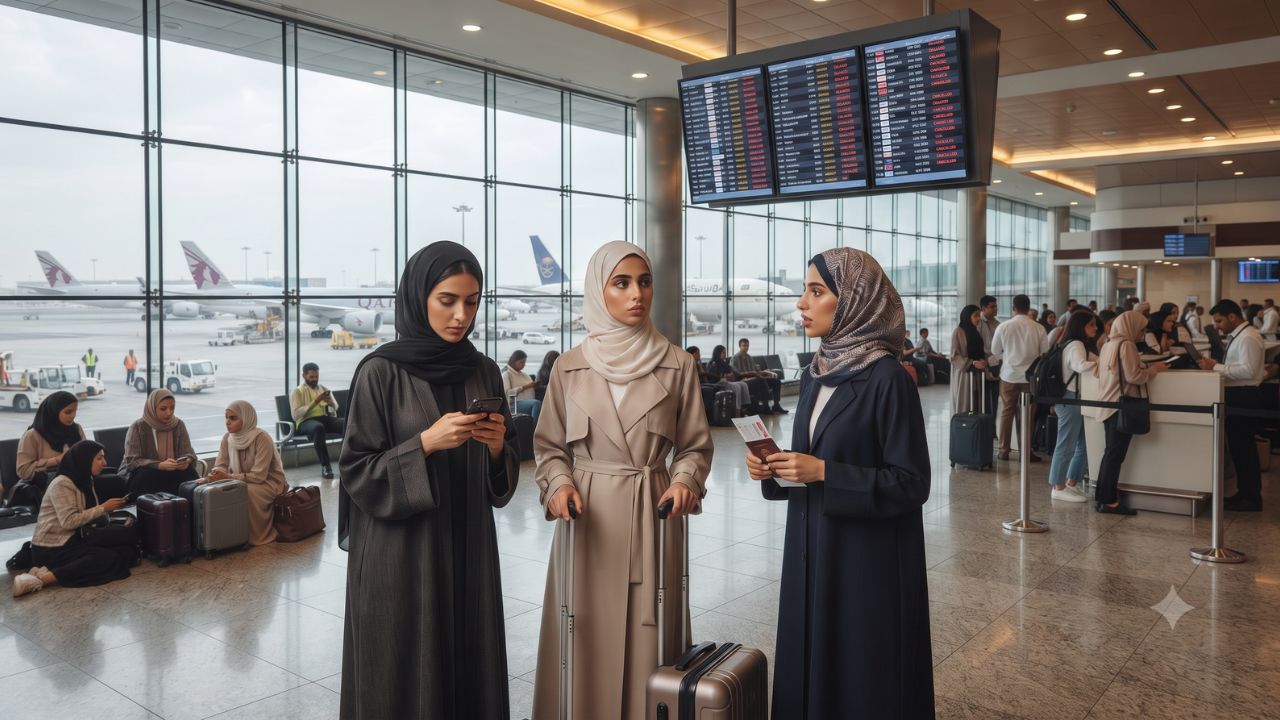
Image generated by AI
While the Persian Gulf's aviation mega-hubs are renowned for clockwork transit precision, an acute security emergency centered on Riyadh crippled regional air travel on October 10 and 11, 2026, forcing startup flag carrier Riyadh Air to cancel an astonishing 71% of its scheduled flights and knocking out 455 departures at King Khalid International Airport. The disruption radiated rapidly across the Arabian Peninsula, North Africa, and the Levant, accumulating 840 flight cancellations and 1,645 delays across key transfer gateways from Dammam and Doha to Istanbul and Cairo.
Security Shockwaves in Riyadh: How a Capital Shutdown Paralyzed Gulf Air Corridors
The origin of this regional paralysis was concentrated squarely in central Saudi Arabia. Threat advisories targeting King Khalid International Airport (RUH) in Riyadh forced airfield operations into an emergency freeze on October 10, altering commercial flight patterns across the Kingdom. Because Riyadh serves as the nerve center for domestic air transit and a vital bridge for international long-haul connections, the operational shutdown created an immediate vacuum. The airport logged 455 cancellations alongside 150 delays, stranding thousands of transiting flyers in departure concourses.
The disruption quickly engulfed neighboring Saudi gateways. King Abdulaziz International Airport (JED) in Jeddah, the primary maritime and aviation entry point on the Red Sea coast, registered 119 cancellations and 269 delays. On the eastern seaboard, King Fahd International Airport (DMM) in Dammam absorbed 34 cancellations and 82 delays, while Prince Mohammad Bin Abdulaziz International Airport (MED) in Medina recorded 25 cancellations and 48 delays.
Regional feeder airports across the Kingdom faced near-total disarray. Abha Regional Airport recorded 16 cancellations and 36 delays, Tabuk logged 16 cancellations and 15 delays, and Ta’if registered 11 cancellations and 12 delays. Outlying provincial airstrips saw their modest daily schedules wiped out entirely: Arar recorded nine cancellations and two delays; Gurayat and Al-Jouf each logged eight cancellations; Ha’il absorbed seven cancellations and ten delays; while Yanbu and Al-Baha each recorded six cancellations.
The commercial impact on Saudi-based carriers was severe. National flag carrier Saudia scrubbed 234 flights—representing 43% of its tracked flying schedule—while recording 162 delays (30%). Low-cost affiliate flyadeal cancelled 68 flights (34%) and delayed 50 more (25%), while independent carrier flynas registered 52 cancellations (17%) and 104 delays (35%). Most dramatically, Riyadh Air saw 20 cancellations and nine delays, leaving 71% of its tracked fleet grounded.
From the Bosporus to the Nile: Why Delays Cascaded into Istanbul and Cairo
Aviation across the Middle East operates as a tightly integrated network of flight rotations. When Saudi airspace authorities and the General Authority of Civil Aviation (GACA) implement tactical holding patterns or divert aircraft away from central corridors, connecting flights thousands of miles away experience compounding friction.
Istanbul Airport (IST) in Türkiye emerged as the single most delay-strained facility in the entire regional dataset, recording 362 delays and 22 cancellations. Flagship carrier Turkish Airlines absorbed 324 delays (19% of its network) alongside 14 cancellations, while low-cost competitor Pegasus Airlines recorded 244 delays (32%) and four cancellations. In Egypt, Cairo International Airport (CAI) served as an emergency diversion and holding point, absorbing 175 delays and 24 cancellations, with national carrier EgyptAir logging 75 delays (27%) and six cancellations.
The Arabian Gulf's premier international crossroads also struggled to maintain schedule integrity. Dubai International Airport (DXB) logged 37 cancellations and 220 delays, while nearby Sharjah International Airport recorded nine cancellations and 89 delays. Hamad International Airport (DOH) in Doha registered 13 cancellations and 100 delays, with Qatar Airways absorbing 88 delays (14%) and 13 cancellations. In the Sultanate of Oman, Muscat International Airport recorded six cancellations and 20 delays, while Queen Alia International Airport in Amman, Jordan, weathered nine cancellations and 43 delays.
Regional airspace safety bulletins issued by the European Union Aviation Safety Agency (EASA) warned commercial operators against transiting vulnerable corridors, forcing long-haul widebodies onto circuitous flight tracks over Egypt and the Red Sea. These extended flight paths rapidly burned crew duty hours, triggering secondary cancellations when replacement pilots were unavailable in connecting cities.
Middle East Airport and Carrier Disruption Metrics: October 10-11, 2026
The following data compiles verified flight tracking metrics captured on October 10 and 11, 2026, documenting the severity of cancellations and schedule setbacks across principal regional airports and operating airlines.
| Airport / Carrier | Regional Hub Category | Flight Cancellations | Flight Delays | Operational Impact Context |
|---|---|---|---|---|
| King Khalid Intl (Riyadh, RUH) | Saudi Arabian Capital Hub | 455 | 150 | Central Runway Shutdown |
| King Abdulaziz Intl (Jeddah, JED) | Western Commercial Gateway | 119 | 269 | Red Sea Transit Backlog |
| King Fahd Intl (Dammam, DMM) | Eastern Province Gateway | 34 | 82 | Gulf Air Corridor Strain |
| Prince Mohammad Bin Abdulaziz (Medina, MED) | Holy City Transit Station | 25 | 48 | Pilgrim Route Interruptions |
| Istanbul Airport (IST) | Eurasian Crossroads | 22 | 362 | Highest Regional Delay Count |
| Cairo International (CAI) | North African Mega-Hub | 24 | 175 | Diversion Holding Patterns |
| Dubai International (DXB) | Global Connector Hub | 37 | 220 | Long-Haul Feeder Delays |
| Hamad International (Doha, DOH) | Global Connector Hub | 13 | 100 | Flight Bank Congestion |
| Sharjah International (SHJ) | Regional Budget Gateway | 9 | 89 | Air Arabia Fleet Setbacks |
| Queen Alia Intl (Amman, AMM) | Levant Commercial Hub | 9 | 43 | Airspace Rerouting Strain |
| Muscat International (MCT) | Southern Arabian Hub | 6 | 20 | Oman Air / SalamAir Delays |
| Saudia | Saudi Flagship Carrier | 234 (43%) | 162 (30%) | Highest Overall Cancellation Volume |
| Riyadh Air | Saudi National Carrier | 20 (71%) | 9 (32%) | Highest Cancellation Percentage |
| flyadeal | Saudi Budget Carrier | 68 (34%) | 50 (25%) | Domestic Network Cuts |
| flynas | Saudi Budget Carrier | 52 (17%) | 104 (35%) | Regional Network Delays |
| Turkish Airlines | Turkish Flagship Carrier | 14 (0%) | 324 (19%) | Extensive European Connection Delays |
| Pegasus Airlines | Turkish Budget Carrier | 4 (0%) | 244 (32%) | Sabiha Gökçen Secondary Strain |
| Emirates | UAE Flagship Carrier | 11 (2%) | 95 (17%) | Long-Haul Turnaround Friction |
| flydubai | UAE Regional Carrier | 12 (3%) | 89 (28%) | Secondary Route Cancellations |
| Qatar Airways | Qatari Flagship Carrier | 13 (2%) | 88 (14%) | Connecting Bank Delays |
| Air Arabia | UAE Budget Carrier | 9 (3%) | 90 (37%) | Regional Schedule Disruption |
| EgyptAir | Egyptian Flag Carrier | 6 (2%) | 75 (27%) | Cairo Transit Setbacks |
| Royal Jordanian | Jordanian Flag Carrier | 8 (5%) | 19 (12%) | Levant Airspace Avoidance |
| Oman Air | Omani Flag Carrier | 4 (3%) | 13 (12%) | Muscat Connection Delays |
| SalamAir | Omani Budget Carrier | 2 (2%) | 5 (6%) | Gulf Feeder Reductions |
| Middle East Airlines (MEA) | Lebanese Flag Carrier | 3 (4%) | 8 (12%) | Beirut Corridor Restrictions |
Source: Official aviation tracking compilation, October 10–11, 2026. Regional total: 840 cancellations and 1,645 delays, following 326 cancellations and 2,272 delays logged during the previous day.
Transit Insider Tips: Surviving Middle East Airport Lockdowns
When military security alerts freeze flight corridors in the Gulf, travelers transiting through regional hubs must take rapid, informed action.
First, if you are transiting through Istanbul Airport (IST) during a period of 360-plus delays, understand that terminal scale is your biggest enemy. Walking from the central duty-free plaza to outer gate fingers in Concourse F or Concourse A takes 20 to 25 minutes. If your inbound flight touches down late, do not wait in standard customer service queues in the main transfer hall. Head directly to the international transfer transit desks located near the B and D gates, or utilize the automated digital boarding pass re-issue kiosks positioned along the central spine.
Second, monitor transit visa requirements closely if your layover stretches past 24 hours. If stranded in Doha (DOH) or Dubai (DXB) due to cancelled onward flights into Saudi Arabia, travelers holding Western, European, or select Asian passports can obtain visa-on-arrival entry to access airport transit hotels or city accommodations. However, passengers requiring pre-arranged entry visas cannot exit the airside transit zone. In Hamad International, locate the transit service desks near the iconic yellow Lamp Bear sculpture to request complimentary airside quiet room vouchers or hotel lodging inside the Oryx Airport Hotel.
Third, look for alternate overland or maritime corridors if domestic Saudi flights are cancelled. If you are stuck in Dammam and desperately need to reach Bahrain, skip the airport waiting hall. Hail a licensed cross-border taxi or book a SAPTCO international bus across the King Fahd Causeway into Manama. The 25-kilometer causeway remains fully operational even when regional air traffic freezes, allowing you to access alternative commercial flights out of Bahrain International Airport.
Fourth, assert your rebooking rights immediately through airline mobile applications rather than standing in airport queues. Both Saudia and Turkish Airlines update digital inventory on their smartphone apps faster than frontline desk staff can re-enter passenger records. If your flight cancels, accept rebooking on partner carriers or request immediate routing through alternative hubs like Muscat, Amman, or Cairo before remaining seats disappear.
Cultural and Environmental Dimensions of Arabian Air Gridlock
Air travel in the Middle East carries unique cultural weight that extends far beyond corporate business trips. Millions of Muslims worldwide save for decades to undertake Umrah pilgrimages to the holy sanctuaries of Makkah and Madinah. When King Abdulaziz International Airport in Jeddah logs 119 cancellations and Medina records 25 cancellations, the human impact is immense. Thousands of pilgrims, often elderly and traveling on strict group tour itineraries, find themselves marooned in crowded departure lounges, requiring emergency logistical assistance and shelter from local charitable endowments and civil defense teams.
Simultaneously, these regional flight cancellations disrupt vital economic migration corridors. The Gulf states host millions of expatriate workers from Egypt, Jordan, Pakistan, and India who rely on low-cost carriers like flynas, flyadeal, and Air Arabia for home visits and medical travel. A 34% cancellation rate on flyadeal or 43% on Saudia separates families and jeopardizes short employment leave periods that cannot easily be rescheduled.
From an environmental standpoint, tactical airspace closures exact a severe ecological toll. When central Saudi airspace is restricted, twin-engine widebodies heading between Europe and South Asia must divert south over the Arabian Sea or north around Anatolia. These lengthy detours add up to two hours of flight time, burning thousands of extra gallons of jet fuel and discharging tons of avoidable carbon emissions into the upper atmosphere, demonstrating the hidden environmental cost of regional geopolitical instability.
FAQ: Managing Middle East Travel Disruptions in 2026
What caused the widespread flight cancellations across the Middle East in October 2026? Security threats directed at King Khalid International Airport in Riyadh triggered emergency runway closures. Regional airspace safety advisories and tactical flight rerouting caused secondary cancellations and delays across Turkey, Qatar, Egypt, and the UAE.
Which airlines suffered the highest flight cancellation rates? Riyadh Air recorded the highest percentage with 71% of flights cancelled, followed by Saudia with 43% (234 cancellations) and flyadeal with 34% (68 cancellations).
Can I get a hotel room if my flight is cancelled due to airspace security? Because airspace security shutdowns are treated as extraordinary circumstances (force majeure), airlines are not legally required to provide hotel accommodation. However, major carriers like Emirates, Qatar Airways, and Saudia frequently offer transit hotel vouchers to stranded long-haul passengers when inventory permits.
Is it safe to transit through Dubai, Doha, and Istanbul during regional alerts? Yes. Major transit hubs in the UAE, Qatar, and Türkiye maintain strict security and modern facilities. However, travelers should plan for rolling flight delays and ensure connection windows are at least three to four hours long.
When flight paths close over ancient desert corridors, the seasoned traveler knows that patience, backup routing, and digital agility are the ultimate survival tools.
Related Travel Guides
Saudi Arabia Travel Warning 2026: Riyadh King Khalid Airport Security Alerts and Flight Logistics
10 Essential Transit Hacks for Navigating Gulf Airport Layover Delays Reddit 2026
Disclaimer
This article is for informational and educational purposes only. It does not constitute legal, financial, or professional advice. While we strive to provide accurate and up-to-date information, travel policies, regulations, and conditions change rapidly. Always verify information with official sources before making travel decisions. Nomad Lawyer makes no representations about the accuracy, reliability, completeness, or suitability of the information provided. Readers should consult qualified professionals for advice specific to their circumstances. The views expressed in this article are those of the author and do not necessarily reflect the views of Nomad Lawyer.
Kunal K Choudhary
Co-Founder & Contributor
A passionate traveller and tech enthusiast. Kunal contributes to the vision and growth of Nomad Lawyer, bringing fresh perspectives and driving the community forward.
Learn more about our team →