
Air Force One's Engines: The Engineering Marvel Protecting Presidential Flight at Extreme Altitudes
Breaking airline news and aviation industry updates for 2026.

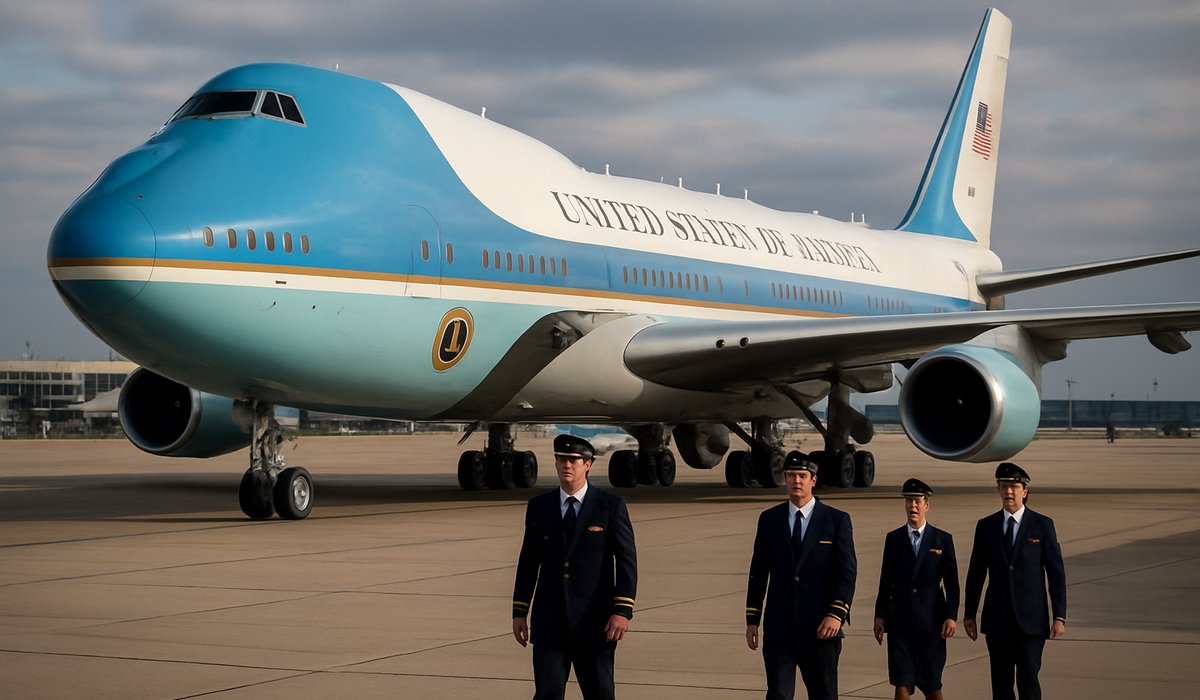
Image generated by AI
Air Force One's Engines: The Engineering Marvel Protecting Presidential Flight at Extreme Altitudes
Inside the technological fortress: How specialized powerplants ensure America's commander-in-chief remains airborne and secure
The Flying Command Center's Hidden Powerhouse
While Air Force One—officially designated the VC-25—captures public imagination through its role as a symbol of American presidential authority, the aircraft's true engineering marvel operates largely unseen: its pair of specially engineered turbofan engines designed to operate at altitudes and under conditions far more demanding than standard commercial aviation.
The presidential aircraft, based on the Boeing 747 airframe, operates at cruising altitudes marginally higher than conventional airliners, yet its engines must deliver far more than thrust. These powerplants function as the backbone of an airborne command center that simultaneously serves as a fortified bunker, advanced communications hub, and secure operations platform—all while maintaining the reliability margins required when the nation's chief executive is aboard.
Engineering for Presidential-Level Security
The engines powering VC-25 are engineered to specifications that transcend typical commercial requirements. They must maintain operational capability under conditions that include potential electromagnetic pulse exposure, extreme temperature variations, and continuous operation over extended transoceanic missions without intermediate landing capability.
Unlike the engines found on civilian 747s, the presidential aircraft's powerplants are fortified with redundancy systems and failure-mitigation technologies designed to ensure continuous operation even under catastrophic scenarios. This engineering philosophy extends beyond mere thrust production—it encompasses survivability as the fundamental design principle.
Reliability as National Security
The aircraft's engines operate within parameters that prioritize endurance and dependability above fuel efficiency or cost optimization. Presidential flights demand the ability to remain aloft for extended periods, maintain multiple simultaneous operational systems, and respond to dynamic security situations without ground-based support.
The maintenance protocols for VC-25's engines exceed commercial aviation standards by substantial margins. Each component undergoes exhaustive inspection cycles, with replacement intervals significantly shorter than those required for civilian aircraft. This rigorous approach ensures that engine performance degradation never compromises the aircraft's operational capability.
A Critical Infrastructure Component
Air Force One's engines represent more than mechanical systems—they embody the technological foundation upon which presidential continuity of government operations depend. As geopolitical tensions persist and aviation threats evolve, the engineering sophistication embedded within these powerplants ensures that one of the world's most critical aircraft maintains its operational readiness under virtually any imaginable circumstance.
The specialized nature of these engines demonstrates how national security requirements drive engineering innovation far beyond commercial aviation's scope.
Frequently Asked Questions
What makes Air Force One's engines different from commercial Boeing 747 engines? VC-25 engines incorporate military-grade redundancy systems, enhanced durability specifications, and failure-mitigation technologies designed for extreme operational scenarios not encountered in civilian aviation.
How often are Air Force One's engines maintained? Presidential aircraft engines operate under maintenance intervals significantly more frequent than commercial standards, with components replaced proactively rather than reactively to ensure maximum reliability.
Can Air Force One's engines operate continuously for extended periods? Yes—the engines are engineered for sustained operation over transoceanic distances without intermediate landings, supporting the aircraft's role as a fully autonomous command center.
Why is engine reliability critical to national security? Air Force One's engines must guarantee continuous operation during any potential crisis, ensuring the president can remain airborne and maintain command authority regardless of ground-based threats or complications.
Are Air Force One's engines classified technology? While specific performance parameters remain classified, the general engineering principles focus on survivability, redundancy, and operational independence rather than advanced propulsion technology.
Related Travel Guides
- Korean Air, United, Cathay Pacific Absorb Fuel Crisis as Asian-Atlantic Airfares Soar
- Breaking Airline News: Severe Travel Chaos Paralyzes Dallas Fort Worth as American Airlines Suffers Massive Flight Cancellations Following AA1555 Emergency Landing
- Qatar Airways, Emirates, and Saudia Suffer Devastating 46.6% Demand Collapse as Middle East Travel Chaos Drags Down Global Aviation: Latest Airline News
Disclaimer
This article is for informational and educational purposes only. It does not constitute legal, financial, or professional advice. While we strive to provide accurate and up-to-date information, travel policies, regulations, and conditions change rapidly. Always verify information with official sources before making travel decisions. Nomad Lawyer makes no representations about the accuracy, reliability, completeness, or suitability of the information provided. Readers should consult qualified professionals for advice specific to their circumstances. The views expressed in this article are those of the author and do not necessarily reflect the views of Nomad Lawyer.
Kunal K Choudhary
Co-Founder & Contributor
A passionate traveller and tech enthusiast. Kunal contributes to the vision and growth of Nomad Lawyer, bringing fresh perspectives and driving the community forward.
Learn more about our team →