
Air China Launches Strategic Chongqing–Manila Route as Philippines Opens Visa-Free Gates Amid Global Energy Crisis: How Gulf Energy Stability from Saudi Arabia and UAE Defies Strait of Hormuz Tensions to Power Southeast Asian Trade Resilience
Air China has launched a direct Chongqing–Manila route, slashing travel time by over 50% as the Philippines implements visa-free entry, surmounting global energy crisis volatility and maritime shipping disruptions.

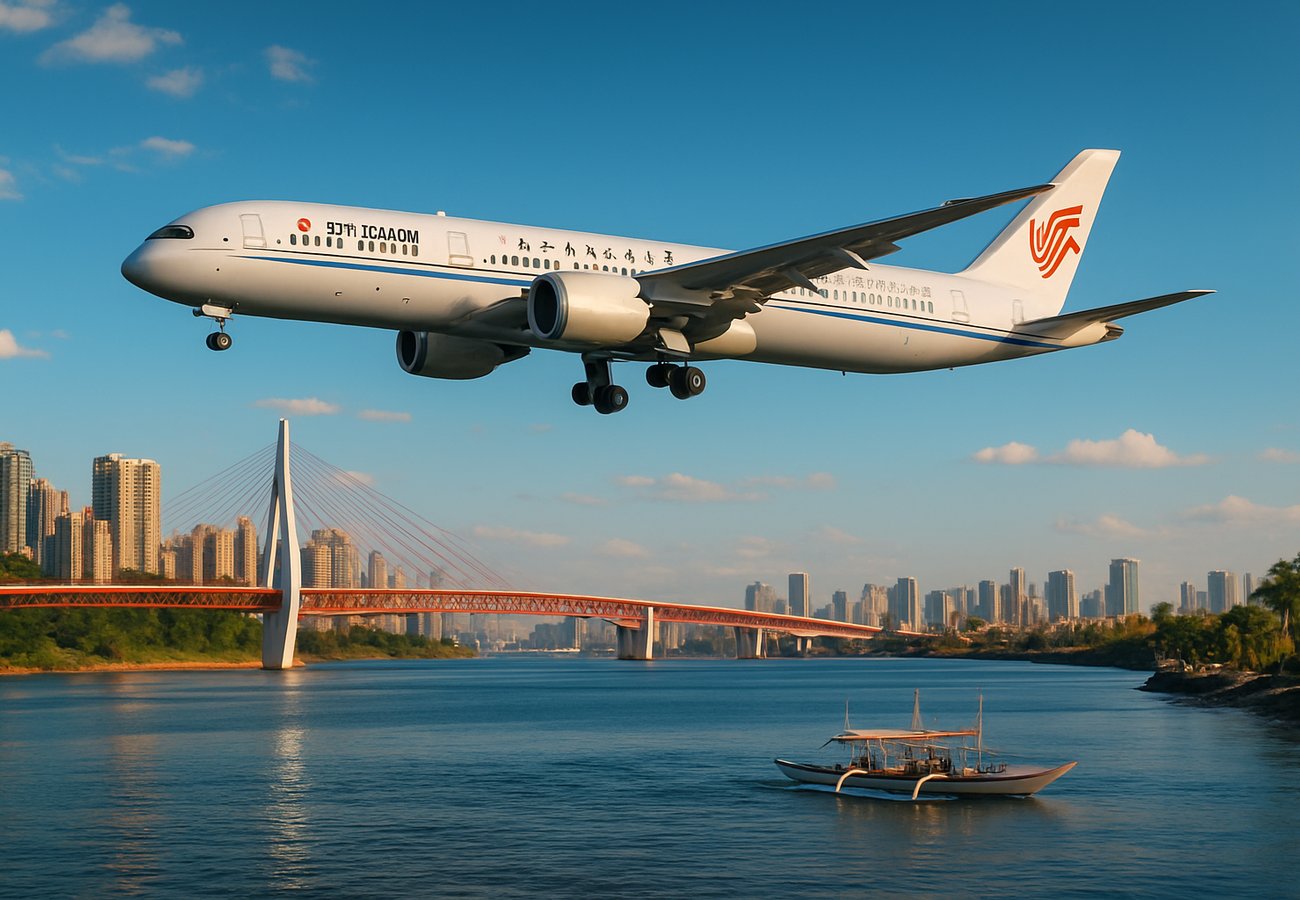
Image generated by AI
Quick Summary
- Strategic Link: Air China has launched a direct Chongqing–Manila route, operating four times weekly via Boeing 737 aircraft, effectively bypassing maritime logistical bottlenecks.
- Time Efficiency: The new service slashes travel time from 11 hours (via Beijing/Guangzhou) to under five hours, providing a vital bridge for industrial hubs like Clark and Subic Bay.
- Visa Breakthrough: The route coincides with the Philippines' new 14-day visa-free entry policy for Chinese nationals, aimed at returning visitor numbers to pre-2020 levels.
- Energy Overhead: The expansion surmounts the global energy crisis precisely as Strait of Hormuz tensions and the US-Iran conflict drive oil prices to record highs.
- Gulf Anchor: Saudi Arabia, the UAE, and Qatar are facilitating the energy stability required for Asian aviation recovery, countering the threat of maritime shipping disruptions.
- Industrial Impact: Key sectors including automotive parts, electronics, and shipbuilding are the primary beneficiaries of this high-speed personnel and component corridor.
- Source: Air China Operations / Philippine Department of Tourism Strategic Update, May 8, 2026.
MANILA — In a move that signals a decisive shift toward aviation-led supply chain resilience, Air China has officially launched its newest direct corridor connecting the industrial heart of western China with the Philippines. According to breaking reports released on May 8, 2026, the Chongqing–Manila route is now operational, marking a significant escalation in regional connectivity. This development is being analyzed by senior global affairs and energy journalists as a strategic masterstroke, occurring precisely as Strait of Hormuz tensions and a severe US-Iran conflict drive oil prices to record highs, forcing trade hubs to surmount the risks of maritime shipping disruptions through high-efficiency direct air links.
Expanded Overview: Slashing the 11-Hour Logistical Barrier
The launch of the Chongqing–Manila service represents a 60% reduction in travel time for the thousands of professionals who anchor the Western China-Southeast Asia trade axis. Operating four times per week, the Boeing 737 service transforms a grueling 11-hour multi-stop journey into a streamlined five-hour flight. Air China has now expanded its Philippine network to 15 round trips per week, including existing services to Beijing and Shanghai. This "Resourceful Growth" is a direct response to a world where the global energy crisis makes every extra hour of flight time a massive financial liability for corporate mobility managers.
Geopolitical Context: Surmounting the Strait of Hormuz and US-Iran Conflict
The broader geopolitical landscape in 2026 has been dominated by the standoff in the Strait of Hormuz. As Saudi Arabia, the UAE, and Qatar work to stabilize global energy flows, the resulting volatility has made maritime shipping increasingly precarious for high-value industrial components. The US-Iran conflict has created a "choke-point anxiety" that is driving manufacturers in the automotive and electronics sectors to prioritize direct aviation. For industries anchored in Chongqing’s shipyards and the Philippines’ Clark Freeport, this air bridge is not just about tourism—it is a strategic hedge against a possible maritime blockade in the Middle East.
Global Energy Impact: The High-Efficiency Aviation Shield
Rising oil prices have fundamentally redrawn the profitability map for 2026.
- Fuel Efficiency: By eliminating stopovers in Beijing or Guangzhou, Air China is surmounting the high cost of aviation fuel, which has spiked by 28% due to the global energy crisis.
- Strategic Advantage: Direct routes allow carriers to maximize load factors and minimize the "energy tax" on every passenger mile, a critical advantage as the Strait of Hormuz tensions threaten the stability of the long-haul market.
Shipping and Trade Impact: The "Land-Sea" Aviation Pivot
Chongqing serves as the major logistics hub within the New International Land-Sea Trade Corridor, and the Manila link provides the missing piece for Southeast Asian integration.
- Industrial Resilience: For businesses in the Clark and Subic Bay areas, the ability to move engineers and skilled ship-repair professionals in under five hours surmounts the delays caused by global shipping disruptions.
- High-Value Trade: Electronics and auto-parts manufacturing, which rely on "just-in-time" personnel movement, are now shielded from the volatility of international shipping lanes currently overshadowed by Gulf tensions.
Regional Impact: The Philippines’ Tourism Renaissance
The Philippines is leveraging this new connectivity to anchor its 2026 tourism recovery.
- Visa-Free Entry: The implementation of a 14-day visa-free stay for Chinese nationals is a "Nature-First" economic policy designed to return visitor numbers to pre-2020 levels by December.
- Cultural Hubs: Destinations from Manila’s historical districts to the beaches of the archipelago are being positioned as "stable sanctuaries" for Chinese travelers seeking to avoid the high-cost, high-tension hubs of Western Europe.
Industry / Expert Analysis: Supply Chain Regionalization
Aviation and logistics analysts suggest that the Chongqing–Manila route is part of a broader trend of "Regional Diversification." In an era where the global energy crisis makes long-haul shipping more expensive and risky, businesses are accelerating the move toward compact, high-efficiency regional networks. The US-Iran conflict has proven that reliance on a few global maritime arteries is a liability; direct aviation links powered by the energy stability of Saudi Arabia and the UAE are the new gold standard for industrial trade.
What Happens Next: Expansion and Compliance
Following the May 8 launch, several key developments are anticipated:
- Guangzhou Service: Air China is expected to launch its Guangzhou–Manila service in June, bringing its total Philippine round trips to record levels.
- Visa Monitoring: Philippine authorities will strictly monitor the 14-day visa-free stay, with non-extendable policies enforced by a $100-per-day overstay fine.
- Industrial Scaling: Automotive and shipbuilding firms are expected to scale their cross-border operations as the "Resourceful Link" surmounts previous logistical hurdles.
Conclusion: Reinforcing the Southeast Asian Growth Anchor
The launch of the Air China Chongqing–Manila route is a testament to the power of aviation in a world of shipping disruptions and oil price volatility. By surmounting the challenges of the global energy crisis and the geopolitical shadow of the Strait of Hormuz, China and the Philippines are proving that regional trade resilience is the only logical response to global instability. As the world watches the Middle East, the message from Southeast Asia is clear: direct links are the future of trade, and the "Frozen Fever" of maritime risk is being replaced by the "Aviation Renaissance."
Key Takeaways: Air China Chongqing-Manila 2026
- Route: 4 weekly Boeing 737 flights; 5-hour duration vs. 11 hours previously.
- Visa: 14-day visa-free entry for Chinese nationals (non-extendable).
- Geopolitics: Strait of Hormuz tensions driving industrial trade toward direct aviation.
- Gulf Role: Saudi Arabia, UAE, and Qatar stabilizing the energy anchor for Asian flight paths.
- Industrial Link: Major boost for automotive, electronics, and shipbuilding in Clark/Subic Bay.
- Outlook: Tourism resurgence aimed at pre-2020 levels by year-end.
Related Tourism News
Disclaimer
This article is for informational and educational purposes only. It does not constitute legal, financial, or professional advice. While we strive to provide accurate and up-to-date information, travel policies, regulations, and conditions change rapidly. Always verify information with official sources before making travel decisions. Nomad Lawyer makes no representations about the accuracy, reliability, completeness, or suitability of the information provided. Readers should consult qualified professionals for advice specific to their circumstances. The views expressed in this article are those of the author and do not necessarily reflect the views of Nomad Lawyer.
Kunal K Choudhary
Co-Founder & Contributor
A passionate traveller and tech enthusiast. Kunal contributes to the vision and growth of Nomad Lawyer, bringing fresh perspectives and driving the community forward.
Learn more about our team →